



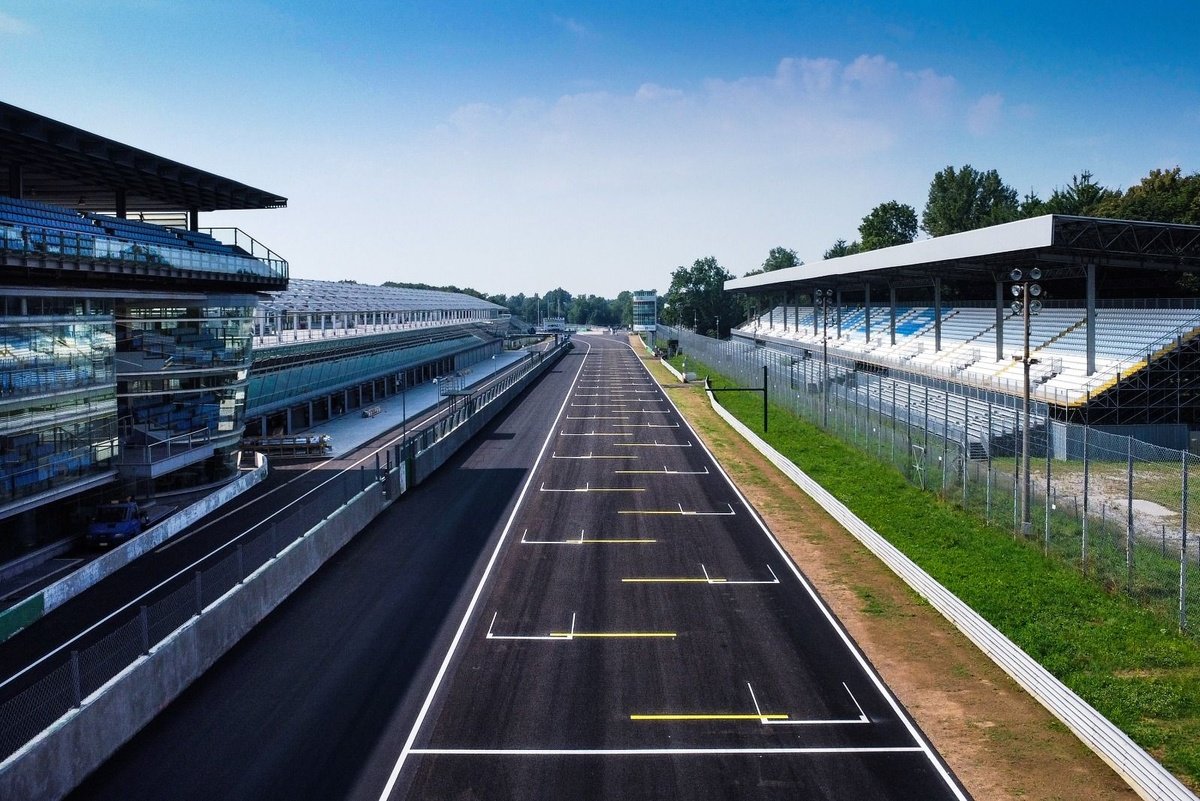
Monza’s high-speed 5.5km layout has always been seen as the ultimate test of speed and horsepower in Formula 1, with a throwback layout that hasn’t undergone too many dramatic changes over the last 50 years.
In 2026, though? It’s complicated. Long straights and high-speed circuits have had a difficult relationship with F1’s energy-starved power unit regulations. On the back of tricky weekends at the likes of Silverstone and Spa, drivers are wary Monza will be equally affected by the lack of energy on offer.
“Down the straights with the [drag] reduction system, it’s still quick, but then we lose this power,” Ferrari’s Lewis Hamilton said. “We arrive maybe 20km/h or 30km/h slower than we have in the past at the end going into the corners, which probably takes some getting used to.
“It was always amazing to arrive here and just hear the engine screaming at the end of the straight, and pulling just up to the braking zone. That won’t be the case this weekend.”
But stating that Monza will be very similar to the likes of Silverstone or Spa is only true to a certain extent. All are circuits with a high on-throttle percentage, but unlike its classic peers Monza has fewer high-speed corners which can be compromised by battery management games, and bigger braking zones.
While there may be earlier downshifting at the end of some of the straights, it is expected to be less painful optically as there won’t be a Stowe or Pouhon type of corner that can get its driving challenge ruined by dramatic harvesting.
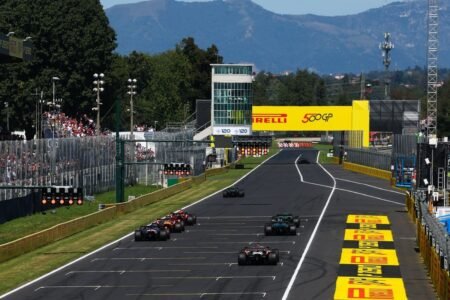
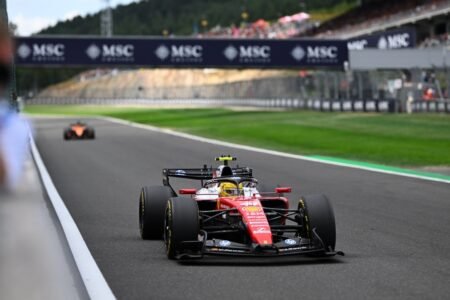
Monza 2025 race start
Photo by: Kym Illman / Getty Images
What it doesn’t mean is that Monza will be an easy weekend for energy management. The FIA has reduced the harvesting limit to 4MJ per lap, by far the lowest of the calendar so far, which should help mitigate issues.
Because there is less energy to spend anyway, it is expected there will be less “super clipping” – drivers harvesting the battery against the engine at full throttle, which leads to often dangerous speed discrepancies.
Instead, there simply won’t be much energy to play with anyway, and cars are expected to be slower on the straights.
“I’ve driven in the simulator and it’s not as bad as I expected,” said championship leader Kimi Antonelli. “There’s not so much super clip, because they have changed a little bit the harvest limit compared to other races. There will be a lot more flattening in terms of speed, but actually very little deceleration, so that’s a positive. It’s going to be much better than what we all anticipated.”
Haas’ Esteban Ocon concurred: “We are still not going to have to do lift-and-coast and these kinds of things by reducing that [harvest limit]. So, that’s good.”
But Alpine’s Franco Colapinto was still expecting this weekend to showcase the worst parts of these regulations. “It’s true that the harvest limit is very low, so the super clip is little, because you cannot harvest so the super clip is not as useful anymore,” said the Argentinian. “Personally, I think it’s going to be a tricky race. It’s another track that shows our weaknesses as Formula 1.”
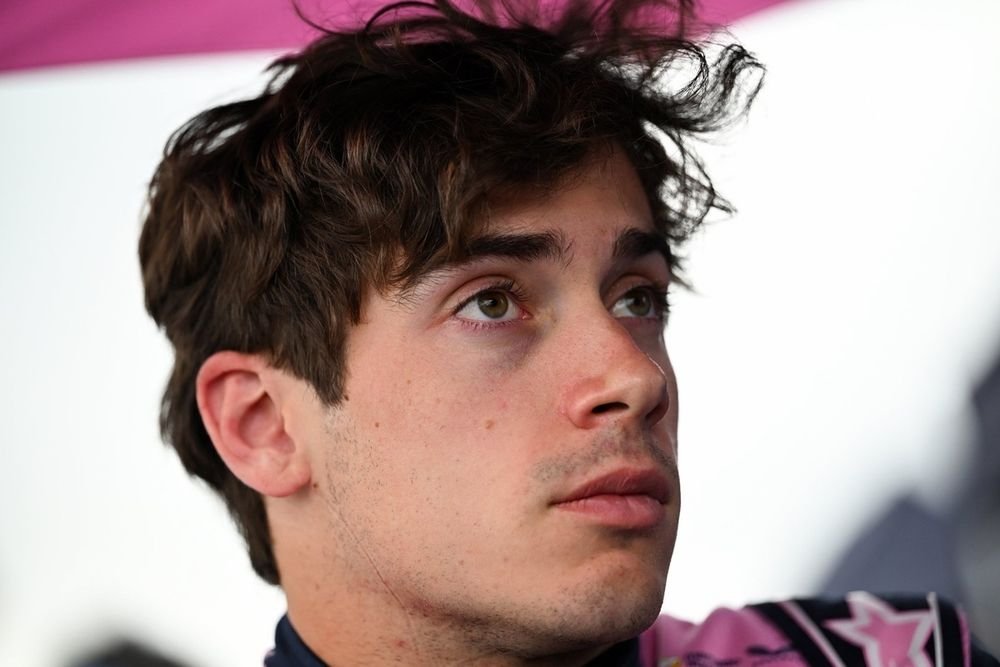
Franco Colapinto, Alpine
Photo by: Sam Bagnall / Sutton Images via Getty Images
None were as glum as Racing Bulls rookie Arvid Lindblad, though, who was worried this weekend would be a “sad” experience.
“It was worse than expected,” he reported, diverging from his peers. “There’s no speed drop-off actually. There’s just not much battery, so we don’t actually [lose speed] on the straights, we don’t use any. It’s quite slow.
“I think it is a bit sad, and we’ll see what it’s like on track, but the way I had to drive on the sim, there’s things that we’ve already done a little bit which have been a little bit unnatural, but you’ve kind of got away with it, whereas here it’s extreme, and it’s not Monza. There’ll be no 350km/h. So if you have any bets on breaking any speed trap records, don’t, because it’s not very fast.”
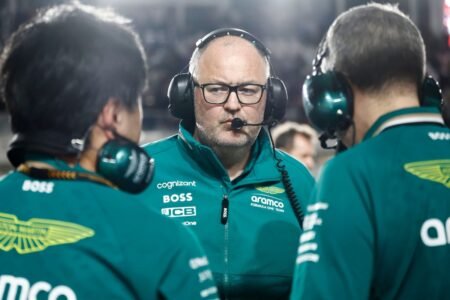
Monza’s drastic energy limitations have the consequence that slipstreaming will be even more crucial, both in qualifying and during the race, sowing the seeds of a potentially chaotic Saturday afternoon and an eventful grand prix. Aston Martin’s trackside chief Mike Krack expected a record number of overtakes as part of a wild MotoGP-style race.
“There are quite a lot of restrictions on the energy side this weekend, so I think it will be interesting to see how the teams will go about it,” Krack said. “First of all, in terms of tow deployment and then also in the race, how easy it will be passing.
“Especially the passing and repassing games probably will be a record of all times here, or like MotoGP.”
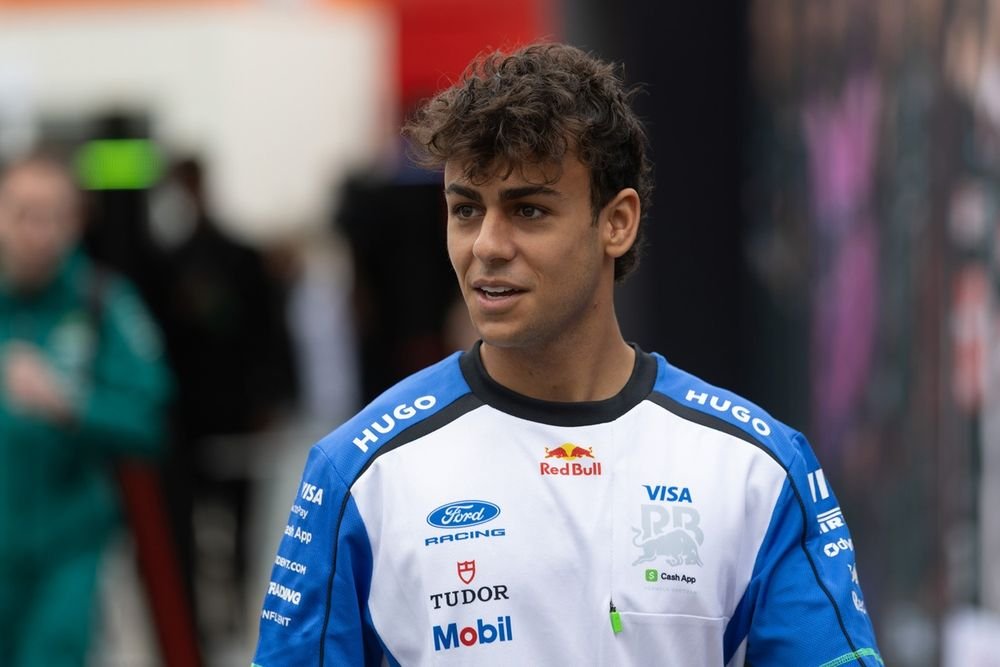
Racing Bulls rookie Arvid Lindblad was pessimistic about the racing product at this weekend’s Italian Grand Prix
Photo by: Eric Le Galliot
Lindblad wasn’t so convinced, though. Because Monza is a connection of heavy braking zones and long straights, some of the creative solutions to optimising energy deployment are limited and teams will likely converge even quicker on the optimal strategy.
When there’s only one optimal way to deploy what little battery power a car has left, where would the speed difference required for overtaking even come from?
“I don’t think there’s going to be much speed delta, because no one’s going to have any power,” Lindblad argued. “It’s not like on other tracks where it depends where you spend it. We just have no power. I think the difference to Spa was that you had two big straights, but you had lots of corners in between that you could charge up and then deploy everything.
“Unfortunately here, you basically have two long straights back to back, but even between them, there’s not really any corners. In theory, it’s almost four long straights, so there’s just no energy. There’s just no power. You don’t have an ability to charge. So it’s just slow.”
Lindblad is expecting big deployment differences in the opening stages of Sunday’s 53-lapper before things calm down.
“The first two laps will be interesting,” the teenager predicted. “Depending where you spend your energy, you’ll pass three cars and then lose [out] to three cars. I don’t know if there’s going to be much passing. If you use the boost, you gain on one straight, but then you’re so slow for the next three laps. You could call it yo-yo racing, but I just think it would be really bad yo-yo racing. I don’t know what to expect, but I’m not very optimistic.”
Additional reporting by Ronald Vording and Stuart Codling
We want to hear from you!
Let us know what you would like to see from us in the future.
Take our survey
– The Autosport.com Team
Read the full article here