




If it were up to my wife, I would leave on every ride lit up like the proverbial Christmas tree. Neon jersey, reflective everything, all the lights – and perhaps a small rotating beacon strapped to my helmet for good measure.
I don’t blame her. A few years ago I was T-boned by a car driver because he “hadn’t seen me.” Never mind that I had a green traffic light, was in the designated bicycle infrastructure, and had my bike lights flashing even though the sun wouldn’t set for another hour. After some days on the hospital trauma ward, I went home with a long list of injuries. It took nearly a year to recover, and frankly, I’ve never been quite right again.
It wasn’t the first time a driver had taken me out either, and experiences like these change the way you ride. You become more protective of your space on the road and wary of other road users. It also changes for the people who love you. You may be the one leaving to go for a ride, but your loved ones are left behind fearing you won’t come home. No matter how careful you are.
Before we continue, let me get one thing very, very clear: I do not believe cyclists should have to dress like flashing hazard signs to earn the right to use the road. No amount of neon colours or lights can compensate for a driver who isn’t looking, who’s on their phone, driving impaired or making reckless decisions.
Yet, I am also not willing to stop road cycling altogether. So if there are things I can do to make myself more seen, be proactive and aware of the road users around me, I’m interested. At the same time, I also want my gear to perform, be comfortable, look good, and generally be unobtrusive to my cycling experience. If I don’t feel good in it or it requires some cumbersome mounting or charging process, I know myself well enough to admit that I probably won’t use it consistently. And safety equipment left at home is no use to anyone.
The following is by no means an exhaustive list; they’re just a few items that have become personal staples in helping me feel a little more seen without sacrificing performance or style.
Brightly coloured jersey I actually want to wear
(Image credit: Anne-Marije Rook)
If visibility is the goal, clothing seems like the most logical place to start. It is already on your body, requires no batteries and covers one of the largest visible surfaces on any cyclist aside from the bike itself.
The difficulty is finding something bright that doesn’t scream, “I bought this in a desperate hope that a driver texting ‘OMW’ or scrolling TikTok won’t run me over.”
Castelli’s Espresso collection is my happy compromise.
I first tested the original Espresso kit in 2024, and it immediately felt like a different side of Castelli. Made for riding rather than racing, the Espresso range is softer, more forgiving in its sizing and light on the graphics. In short, it feels and looks good with a range of solid colours well beyond the standard black, navy and dark green palette that has dominated apparel for the past decade.
The Espresso 2 W Long Sleeve Jersey in purple has become a genuine favourite. It’s a summer-weight long-sleeve jersey in a purple that’s bright enough to stand out without feeling like Barney on two wheels.
The fit is flattering without being aggressively race-tight, and the Air_O stretch fabric is soft, breathable and comfortable for all-day adventures in the saddle. Castelli has refined the fit for this second generation, with a shorter front (less zipper bunching), a collar that sits slightly lower, and the rear pockets are more structured to reduce sagging.
Raw-cut sleeve endings keep things smooth and comfortable, while three rear pockets and a fourth zippered valuables pocket supply the expected practicalities.
Sizing remains worth discussing with Castelli. For a brand that’s known for its snugger-fitting size charts, the Espresso line is much more forgiving. In fact, you may even need to size down, so consult the size chart before purchasing.
Weather protection aside, the long sleeves are a visibility bonus. More sleeve means more colour, and therefore more of me for a driver to see.
For the warmest days (of which we’ve all had plenty this summer), I also like the short-sleeved Espresso 2 W Jersey in Giro pink. It is a girlier departure from my usual style, but the colour is done well: it’s cheerful, highly visible and unmistakably ‘cycling’ without being fluorescent.
Are these safety jerseys? No. They are performance jerseys that happen to come in colours less likely to blend into the background. I am not wearing them as penance for riding a bicycle on public roads. I wear them because they are comfortable, stylish and genuinely good. The fact that purple and pink are more noticeable than black is simply a very welcome advantage.
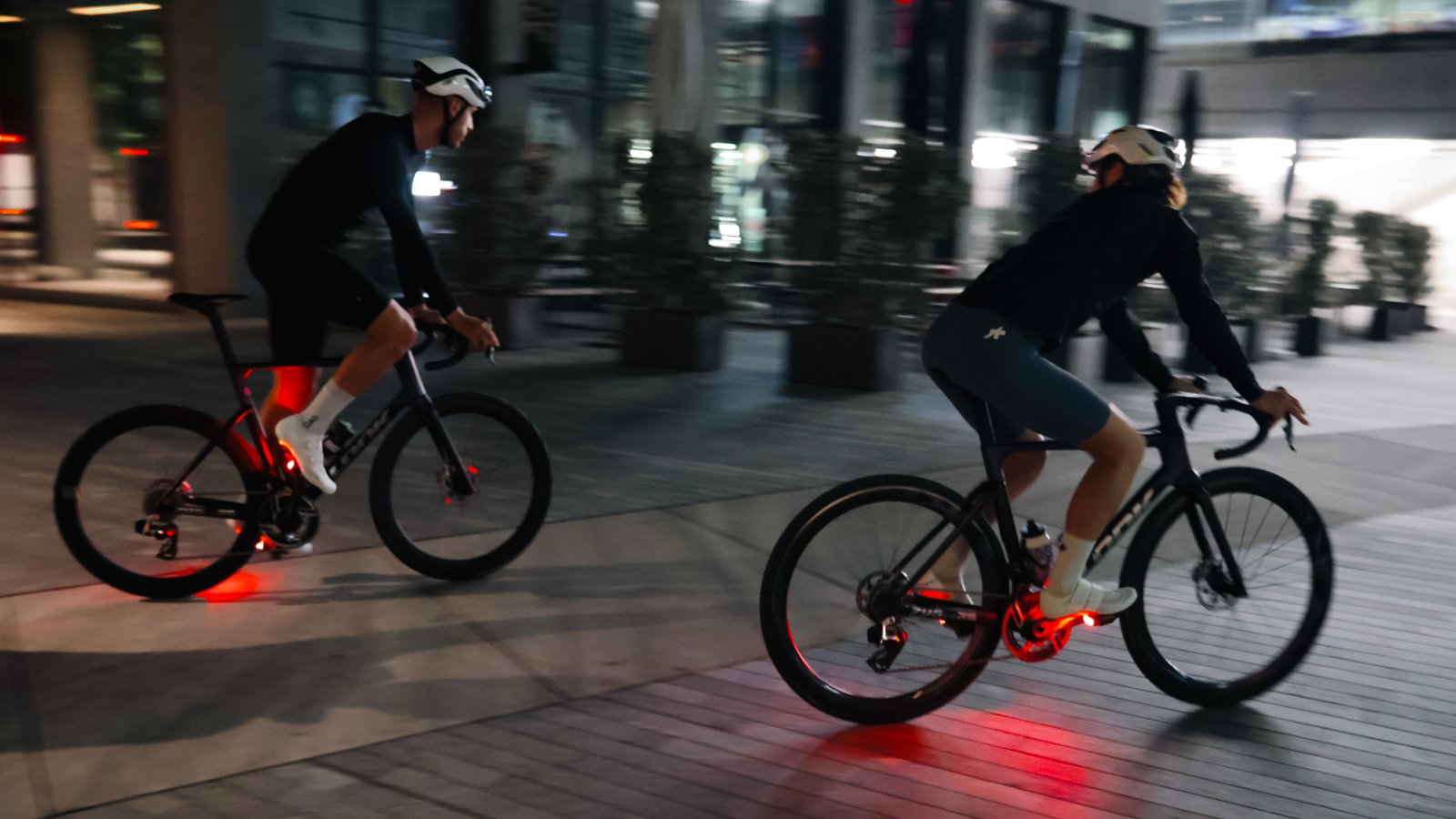
Look put lights in its pedals—and I wish it were a standard feature on all pedals
(Image credit: Look)
I have been a career-long Speedplay user on the road. Pedal preferences are deeply personal, and after enough years, clipping into a particular system becomes so instinctive that changing feels a little like deciding to write with the other hand. But then Look put lights in its pedals.
I saw Redshift do it first with its ArcLight commuter platform and was genuinely excited to see Look integrate lights into a performance clipless platform: the Keo Blade Ceramic Vision.
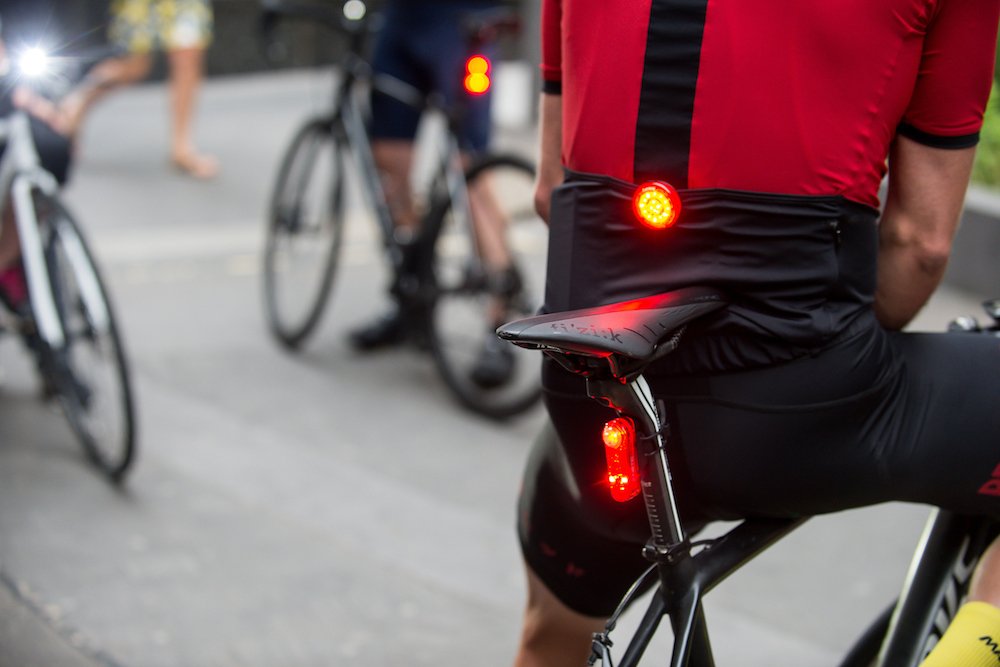
It’s one of those ideas that’s so obvious in hindsight. A traditional rear light sits in a fixed position. Your feet, meanwhile, are constantly moving. Two red lights tracing the pedalling motion immediately signal that the object ahead is not a mailbox or a traffic cone but a human being riding a bicycle.
Look calls this use of recognisable human movement “biomotion,” and claims that the dual moving lights make a cyclist 5.5 times more visible than a standard seatpost light. It can also be seen from up to a kilometre away.
Anecdotally, I do get comments on them quite frequently, which means they are indeed being noticed.
The lights can be clipped on and off the road pedal easily without having to take your pedals off the bike. They offer four steady or flashing modes, 180 degrees of visibility and a claimed battery life of up to 40 hours. And the lights add a mere 20 grams to a set of pedals compared to the non-lighted version.
Importantly, Look has integrated them into a proper high-performance pedal.
The Keo Blade Ceramic Vision has a carbon body, ceramic bearings and a broad contact area. And if you already use compatible Keo Blade V4 pedals, Look offers the lights as a retrofit kit, which is neat.
For me, the visibility element was enough to convince me to not only switch over from Speedplay, at least part of the time, but to learn how to clip in on a single-sided pedal as well.
Now I’m just waiting for someone to make an SPD-compatible light-up gravel pedal…
Lights, lights and more light
(Image credit: Geoff Waugh)
We test all sorts of bike lights at Cycling Weekly, including some powerful enough to turn night into day. But the ones I use day in, day out are less dramatic. Their greatest feature is not extraordinary output or clever software. It is that they are so unobtrusive that they’re always on my bike.
Knog Plus rear light
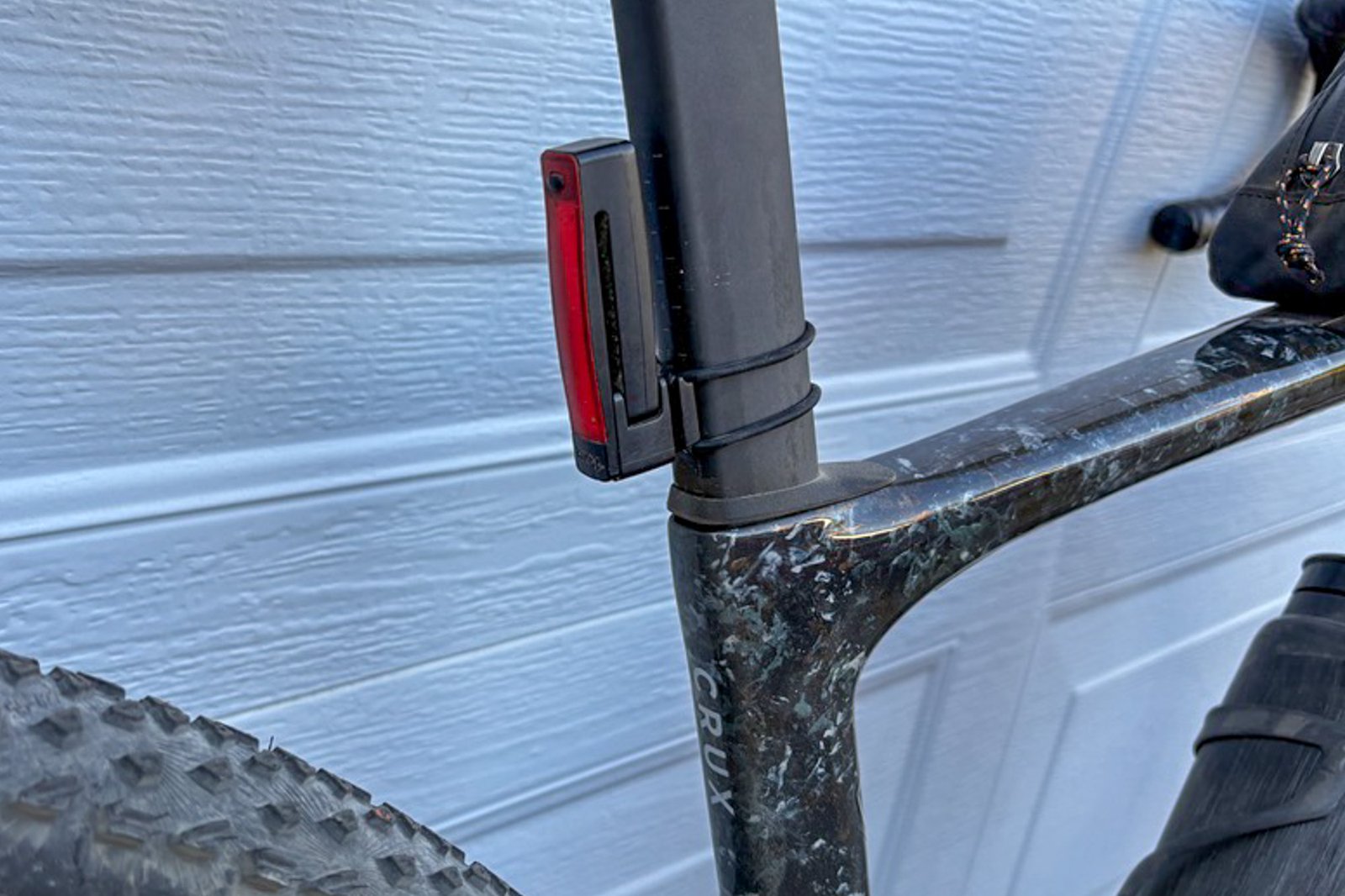
I’ve had this tiny Knog Plus light for years. It’s about the size of a pack of Wrigley’s gum, weighs a mere 18 grams and can be charged by sticking it directly into a USB port.
With a 20-lumen output, I treat it as a supplementary rear light. Paired with the Look light-up pedals, a more powerful light or as a backup, it’s always there in case I go through a tunnel, it’s rainy or just to have another flashy light on my bike or person.
(Image credit: Anne-Marije Rook)
The Plus light clips onto a jersey pocket, bag or the supplied magnetic bike mount, so it can follow me between bikes without demanding another permanent bracket.
The light offers five modes, a claimed runtime of up to 40 hours and enough water resistance to have survived seven winters in the Pacific Northwest.
The cleverest feature is its integrated USB-A plug. Pull the light from its mount and plug the whole thing directly into a USB port. No cables needed.
Magicshine HORI 900S
Now that most new bikes come with a semi- or fully integrated cockpit, I like to keep the handlebar clutter at a minimum. I’ve long been using a GoPro attachment on the bottom of an out-front computer mount to attach various lights, but this compact light negates the need for even that.
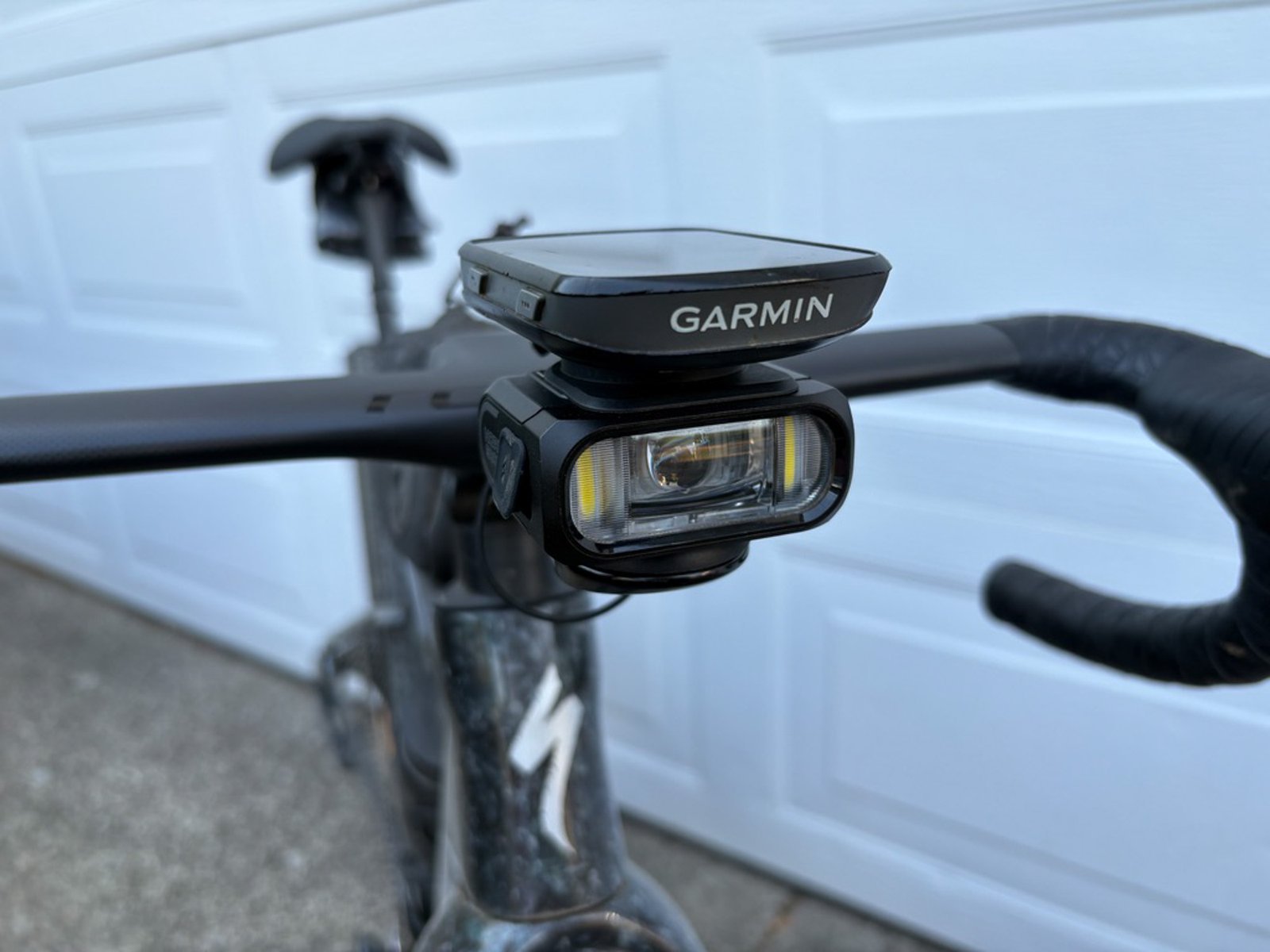
The dual-mount Magicshine HORI 900S clips directly into an out-front computer mount – either sandwiched between the mount and your head unit or on the bottom side of the mount. It doesn’t require a separate mount, it keeps my bars clear and my bar bag accessible should I choose to use one. And, with a mount on either side of the light unit, you can continue using your action cameras.
(Image credit: Anne-Marije Rook)
The 900-lumen output is bright enough to do more than flash politely during the day, while the cut-off beam is designed to put light on the road rather than into the eyes of oncoming riders and drivers. It also has a separate daytime running light, and a claimed runtime of up to 40 hours.
At 107 grams, this isn’t the smallest light, nor would it be my first choice for off-road riding at night. But for road riding, commuting and the inevitable occasion when a daytime ride runs later than planned, it strikes a good balance.
Mostly, I like that it requires very little thought. Mount it beneath the computer, charge it occasionally and switch it on. If you’re taking the bike, you’re taking the light.
Live tracking features
(Image credit: Anne-Marije Rook)
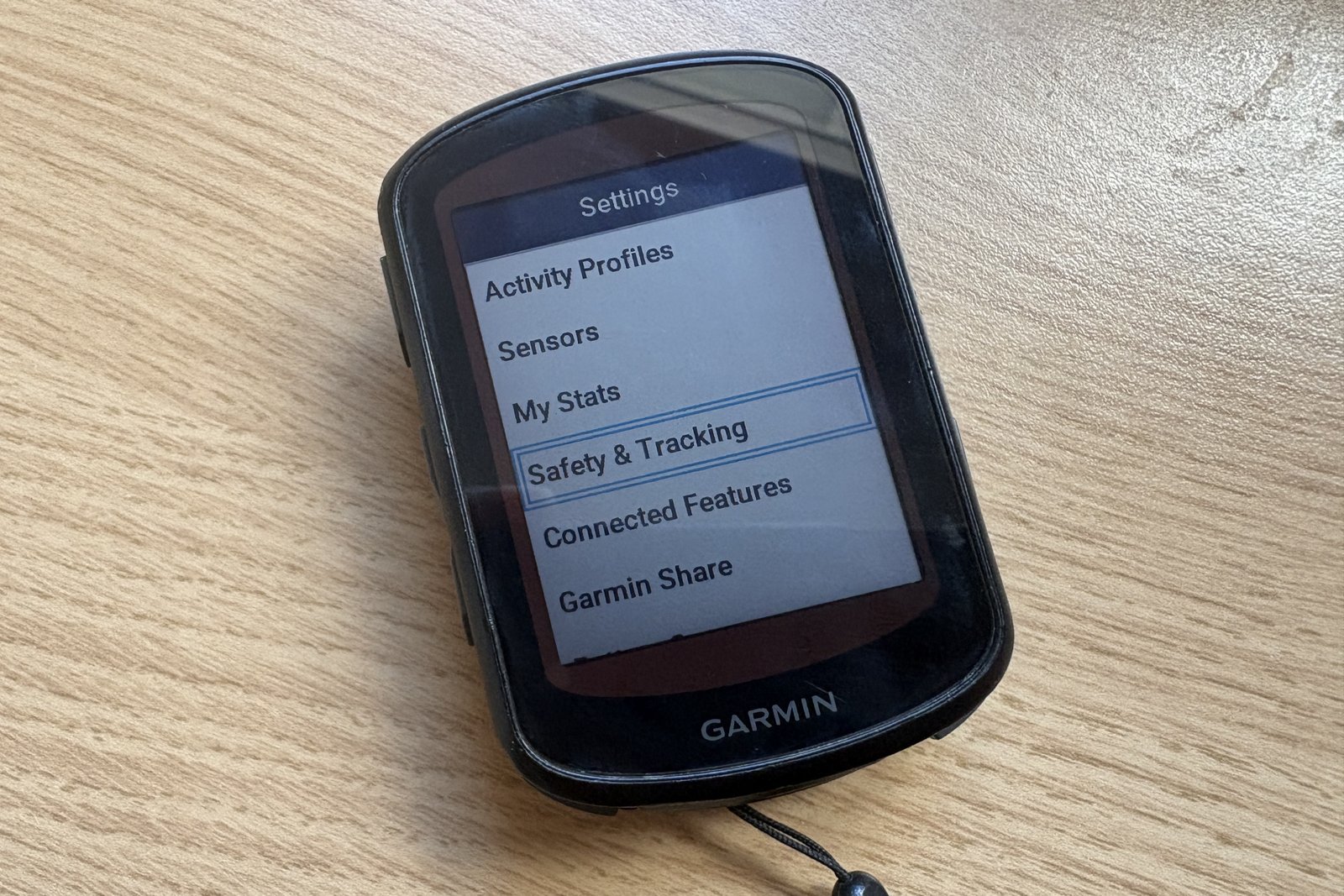
One safety feature I use without fail, and without even thinking about it, is Garmin LiveTrack. The moment I hit start on my Edge cycling computer, my pre-selected contact (in my case, my wife) receives an email with a tracking link. The link opens a browser-based map, so your designated worrier does not need a Garmin account or app to follow along. On compatible Edge units, they can even send messages that pop up on the screen. My wife no longer needs to ask where I am, although she may still ask why my two-hour ride is taking four.
Wahoo Live Track provides much the same peace of mind across its ELEMNT bike computers. Once enabled in the companion app, it creates a link you can share with family or friends. Like Garmin, Wahoo also offers auto-sharing, removing one more thing to remember as you get ready to ride.
Hammerhead has live tracking on the Karoo as well. Enable it on the computer and the Karoo Companion App can automatically share a unique link showing the unit’s live location. It is a more straightforward implementation than Garmin’s broader collection of LiveTrack, incident-detection and group-riding features, but it covers the essential requirement: allowing someone at home to see where you are.
You do not necessarily need a bike computer, either. Strava Beacon can share your live location with up to three safety contacts when recording through the Strava phone app. Beacon is free when used directly in the app, while using it through certain connected devices may require a Strava subscription. Apple’s Find My and Google Maps offer less cycling-specific alternatives, but they still provide the most important piece of information: where you are.
There is one substantial asterisk attached to nearly all these features: connectivity. Lose mobile coverage and the dot may stop moving until the connection returns. For genuinely remote rides, I rely on my Garmin inReach to communicate and share my whereabouts. It can share tracking information, exchange messages and summon assistance beyond cellular coverage. It does, however, add another device, another subscription and another battery to manage.
Oakley Meta Vanguard: for when things get hairy
(Image credit: Anne-Marije Rook)
Now for the controversial one.
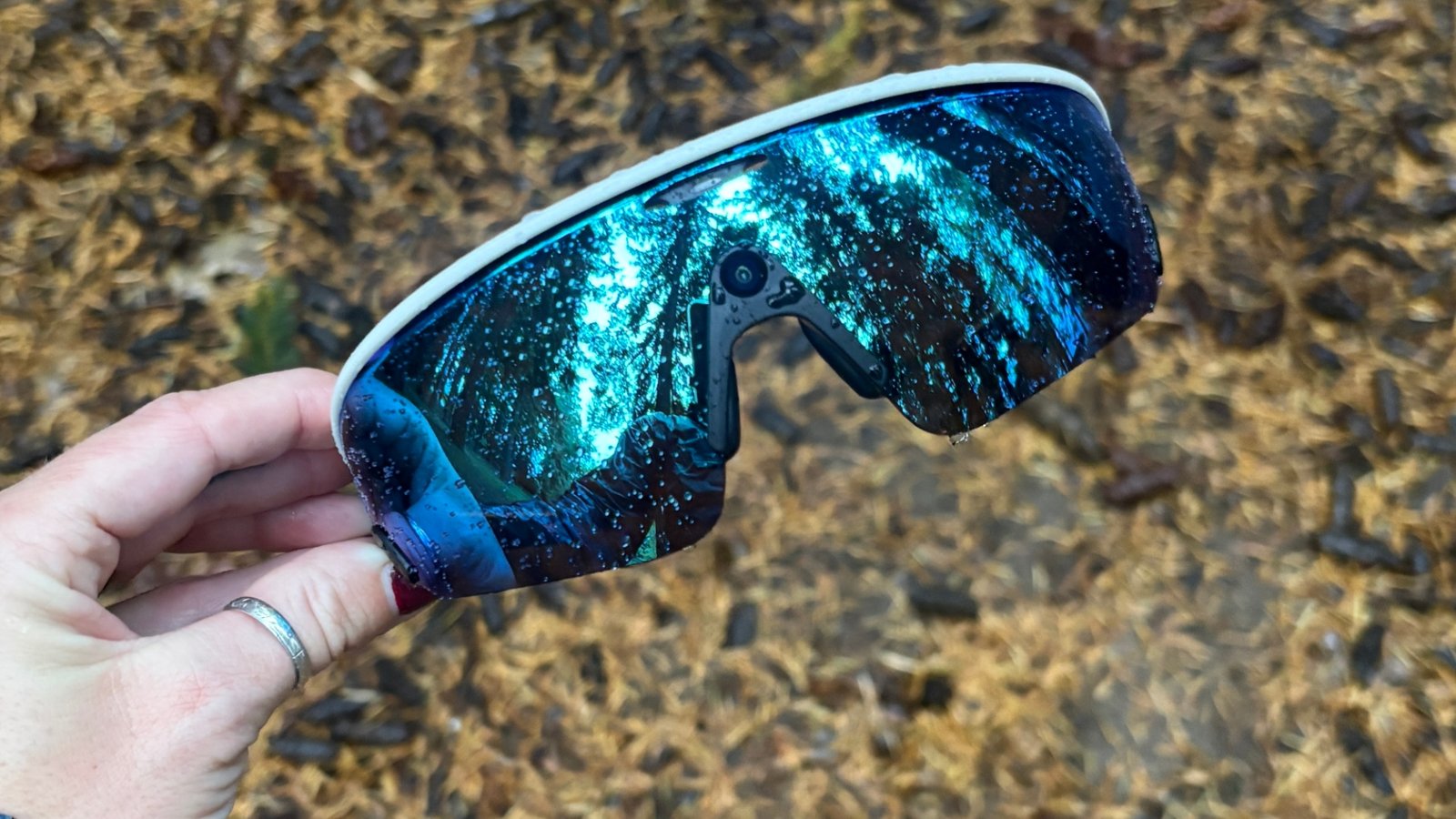
I have already argued that the Oakley Meta Vanguard glasses would be better without Meta and its always-on AI assistant. I have privacy concerns. And yet, I keep reaching for them when I ride on the road.
Underneath all the technology is a very good pair of sports sunglasses. Oakley’s Prizm lenses offer the contrast and road definition I expect from the brand. I also love the speakers built into the arms as they are surprisingly clear and automatically adjust to wind noise. The glasses can also pair with a Garmin, supply workout information and respond to voice commands.
Frankly, much of that is clever technology I could live without. It’s the camera (and the open-ear speakers if I’m being truly honest) that keep bringing me back.
Positioned between the eyes, the 12-megapixel ultra-wide camera records up to 3K video from my point of view. If I see something worth capturing, I can take a photo or begin recording using a quick physical control or voice command if I can’t remove my hands from the bars.
That is fun when the thing in front of me is a beautiful view, a friend getting shreddy or an animal beside the trail. It feels rather more consequential when the thing in front of me is an angry driver.
The easily accessible camera gives me an odd sense of reassurance in traffic. If an interaction starts getting hairy, I know I may be able to capture it almost immediately. There is comfort in the idea that, if things go sideways, some record could exist beyond my recollection of the event.
I know this reassurance has limits. A camera will not prevent a driver from hitting me. It cannot de-escalate a confrontation or guarantee that a license plate will be legible. Depending on what happens, I may not have time to activate it at all. Still, it makes me feel slightly more protected when the post-collision questioning tips borders on victim blaming: What were you doing? What were you wearing?
Of course, a conventional action camera can provide the same evidence without being connected to Meta’s ecosystem. Some can even record continuously, removing the need to anticipate an incident. But since I already have these sunglasses, it’s what I use – even if recommending them comes with a significant asterisk.
Perhaps that is the point of this whole exercise. None of these products offers perfect protection or an entirely compromise-free experience. They are simply the things I am willing to wear, charge and use because each makes riding on the road feel marginally less vulnerable.
My wife would still prefer the Christmas tree or traffic cone look.
Read the full article here