




Even if Edwin Diaz simply chose to chase a ring in Los Angeles rather than stay the course in a quest to bring down the mighty Dodgers — and certainly the evidence points in that direction — the fallout is the fallout for the Mets and especially their president of baseball operations.
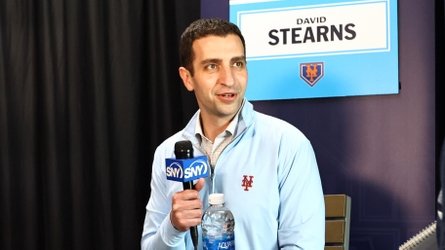
That is, the pressure has never been higher on David Stearns to prove he’s more than a value-driven analyst whose moves can give the impression he tries to be too smart for his own good at times.
That’s certainly the way a segment of the fan base views him these days anyway. Social media isn’t always the best way to measure the scope of such sentiment, but it would also be silly to ignore some of the anti-Stearns commentary on public platforms for the last few months.
I’ve mostly defended Stearns during his time in Queens, willing to give him the benefit of the doubt after his prudent decision-making set the stage for the ’24 Mets surprising everyone by reaching the NLCS and taking the Dodgers to six games.
But after his methodology failed him last season — partly because of injuries, to be fair — and he seemingly remains committed to not overspending, especially on starting pitching, I think it’s now fair to question Stearns’ process.
Obviously there is a long way to go in this offseason, and indeed as I wrote last week, his first two big moves, trading Brandon Nimmo and signing Devin Williams, can only be judged on the follow-ups to each of them.
In one case that meant re-signing Diaz to put Williams in a set-up role, which would have eased the burden of expectations as the closer that seemed to affect him mentally last season with the Yankees.
So Stearns is 0-for-1 on that count.
In the other case it means replacing Nimmo with some combination of moves to construct a better, more consistent offense than the one that exasperated Mets’ fans with its feast-or-famine nature in recent years.
Whether that happens remains to be seen, but hearing Stearns at the Winter Meetings say that Jeff McNeil could play a lot of left field next season is not exactly the makings of an offensive juggernaut.
Maybe that was just press conference-speak. Stearns is not going to lay out his plans publicly, and McNeil is still on the roster, at least for now. So maybe he’s just playing the Bubba Crosby card, for anyone who recalls the winter Brian Cashman kept insisting the journeyman outfielder would play center field for the Yankees the following season… until he finally signed free agent Johnny Damon, as everyone expected all along.
Of course, that was a time, two decades ago, when the Yankees outspent everybody in baseball, and by a wide margin.
To that point, though, Steve Cohen was believed to bring that level of win-at-all-costs philosophy to the Mets, and obviously he has spent a ton of money during his time as owner, most notably the $765 million to lure Juan Soto from the Bronx.
Furthermore, who knows, maybe Stearns and Cohen will pull off a similar heist of Cody Bellinger in the coming weeks. Certainly that would go a long way toward making the team better in all facets of the game.
But for the moment, the loss of Diaz makes the Mets worse, no way around it. And Cohen isn’t supposed to lose the best closer in baseball over a matter of a few million dollars here and there.
Again, it could be that Diaz simply wanted to take the Kevin Durant path, if you will, choosing a championship team for three years and $69 million when the Mets were offering three for $66 million while conveying a willingness to go higher.
Going much higher than that for a closer in his 30s would not have been a good business decision, but again, the priority under Cohen is supposed to be doing whatever it takes. After all, from Day One he declared he wanted to be like the Dodgers, not lose one of his best players to them.
Still, this is mostly on Stearns now to prove he’ll make the right moves: at the very least, add another dependable late-inning arm to the bullpen, acquire a front-of-the-rotation starter, and, last but not least, re-sign Pete Alonso.
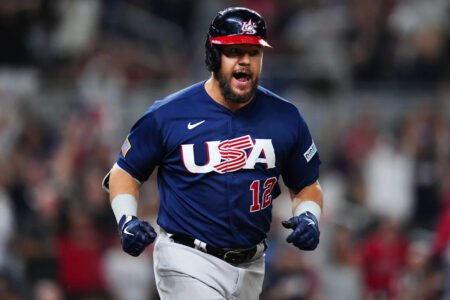
To that end, the Kyle Schwarber pipe dream ended on Tuesday as well, as the Philadelphia Phillies locked up their slugging DH for five years and $150 million.
Meanwhile, there is no indication the Mets are pushing to get a deal done with Alonso. And, hey, the strategy worked for them a year ago, as Stearns wound up waiting out his first baseman to get him at the short-term price he wanted.
Patience isn’t necessarily a bad thing in negotiations, but it just seems the Mets are in a position where they can’t take the same gamble as last year, when Alonso was coming off a down season of sorts and the fan base was ecstatic over the Soto signing.
How can the Mets possibly be better offensively in 2026 without Alonso? Even if they sign Bellinger, he doesn’t come close to supplying the same power production.
Meanwhile, Stearns apparently is committed to avoiding long-term contracts for free-agent starting pitchers this winter, and if that is partly with an eye on going all-out for Tarik Skubal a year from now, it’s hard to argue.
But the Mets aren’t winning a title in 2026 without upgrading their starting pitching. So will he take a chance on Michael King’s high ceiling, which won’t take such a long-term deal because of his history of injuries?
Will he pull off a trade for Freddy Peralta? Hey, if Stearns comes away with Peralta and Trevor Megill, as has been rumored, and does so without giving away his best prospects, Mets fans will love him.
We’ll see about all of that. More than ever, it’s about trusting that Stearns has a plan he can execute to make the Mets a team that can beat the Dodgers in 2026.
Diaz and all.
Read the full article here