



The human brain is hard-wired to greet changes and unexpected circumstances with a stress response: the amygdalae, biochemical arbiters of the fight-or-flight instinct, flag the change as a threat.
This is just one deep seated explanation for the orgy of negativity that has surrounded the 2026 Formula 1 regulations and their introduction, from drivers hating their first experiences of the ’26 cars in sim runs to the brouhaha over the first test being held behind closed doors.
The latter development has naturally irked some in the fan community, an understandable response given that in the social media age every facet of activity within F1 is open to broadcast. It’s also prompted much entitled muttering within the media, and a great many solipsistic ‘think pieces’ attributing this decision to an overriding fear of embarrassment should anything go wrong on track while the great crusaders for truth and justice are in attendance.
But what this outlook fails to take into account is that F1 is as much a business as it is a strand of motorsport. As it manages the transition to a new set of regulations, the focus is upon making sure the operational fundamentals are working. Indubitably it will want to avoid negative publicity, but the abiding belief that the test is being held behind closed doors purely to avoid a PR disaster is a product of spending too long in the media goldfish bowl.
The official messaging features an element of spin in that the first five-day session in Barcelona is being framed as a shakedown rather than a test, which could easily be interpreted as a piece of transparent and unconvincing linguistic legerdemain. Certainly there is an argument to say that a shakedown is something one could accomplish in a day, as it has in the past (though to comply with modern testing regulations it would have to be treated as a ‘filming day’). And several teams have already completed on-track running, which otherwise would qualify as shakedowns.
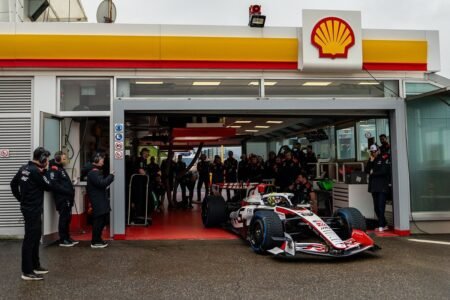
But if there is a common denominator within the feedback from teams that have already run their 2026 machinery, it’s that they would have liked to have accomplished more running. Most failed to get near the 200km cap and unfavourable weather has been the chief culprit keeping cars in the garage, not unexpected technical failures.
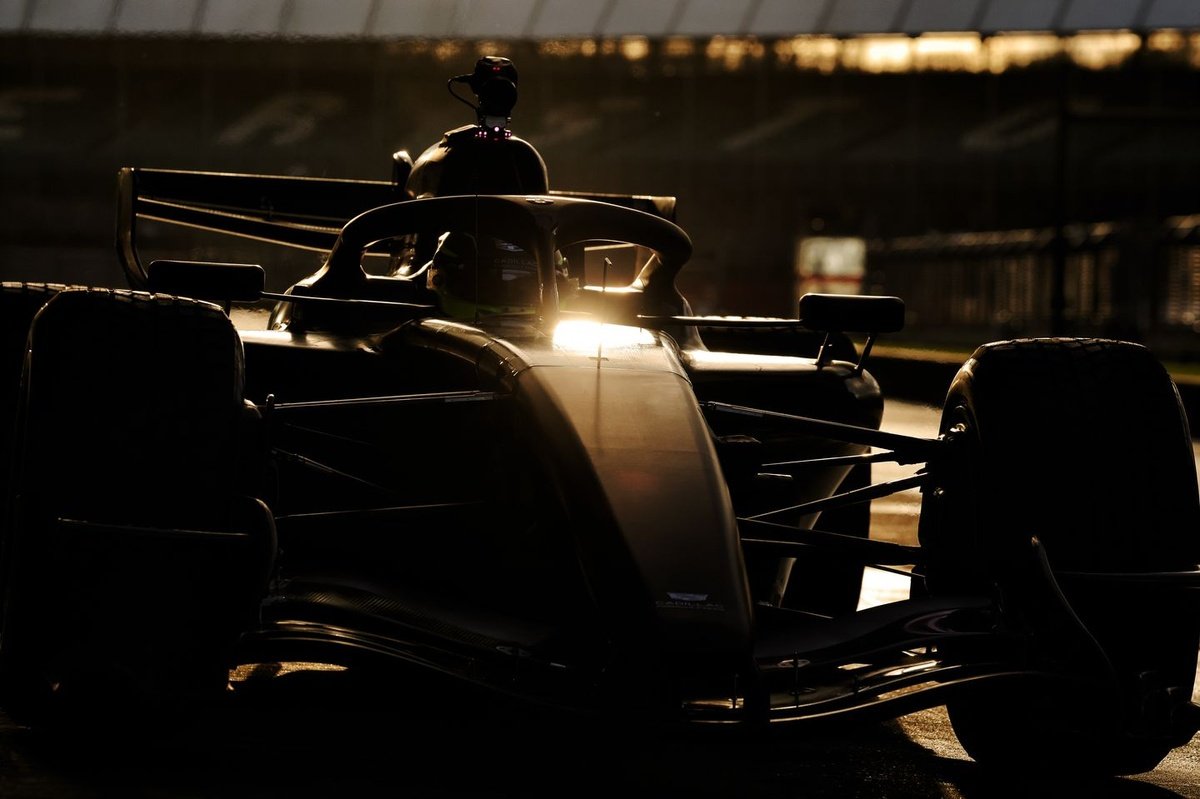
Lewis Hamilton, Ferrari SF-26
Photo by: Federico Basile | AG Photo
It’s true that pre-season testing in 2014, when the hybrid formula was introduced, generated much intrigue – and, indeed, embarrassment for some competitors. But those circumstances were different: the hybrid technology was mostly new, and one engine supplier (Renault) was conspicuously poorly prepared.
Now, while the balance of deployment has changed and the engines are new, much of the technology has already been proved out – and the MGU-H, the most troublesome of the hybrid elements introduced in 2014, has gone.
And yet there remains much which is new across the whole car package, presenting a Rumsfeldian tangle of known unknowns – and no doubt some unknown unknowns, too. There are various car and engine modes requiring new electronic and mechanical systems, such as the active aerodynamics. All of these have to be proved out, from an operational and reliability point of view, through on-track running.
It’s possible the new power units may encounter reliability issues that didn’t manifest themselves during dyno testing. Equally, the new fuel flow sensors need to be proved in the harsh environment of on-track running, since their internals and wiring has had to be sealed more thoroughly from the fuel – sustainable the new petrol may be, but you wouldn’t want your electrics taking a bath in it.
Another area that teams and the FIA will be examining closely is how the electrical recovery and deployment characteristics correlate with simulations. As FIA single-seater director Nikolas Tombazis said this week at the Autosport Business Exchange in London, there is “quite a lot of flexibility” to adjust energy deployment, and real data is required to provide a steer on what sort of adjustments to make.
Drivers will also be getting accustomed to a new way of approaching corners, and not just because the cars and tyres are physically narrower: the elimination of the MGU-H from the power unit package means more work for the (now more powerful) MGU-K, so more lift-and-coast and lower gears through corners. They will have evaluated this in simulation but must develop a muscle memory for it on track.
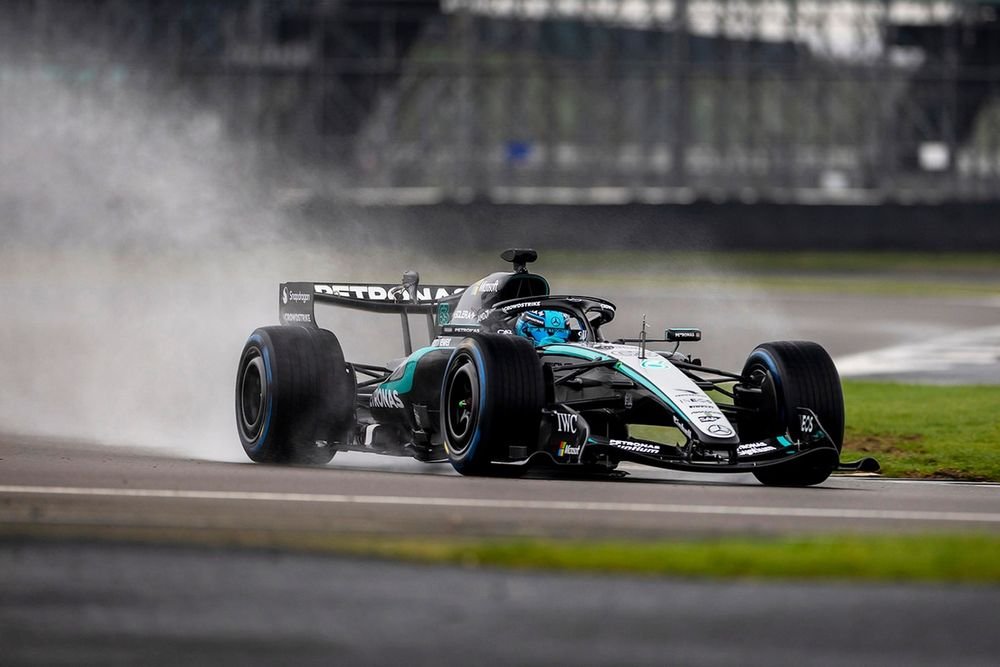
George Russell, Mercedes W17
Photo by: Mercedes AMG
Beyond proving out the trigger and operational mechanisms, teams will want to learn more about the second-order effects the active aerodynamics will have on car behaviour and balance during the transition between ‘on’ and ‘off’. Although it’s unlikely these consequences will be as dramatic and problematic as the porpoising that manifested itself unexpectedly during the first test of the ground-effect cars in 2022 – that season was a lesson in the limits of simulation technology.
The first test of the year is naturally a focus of excitement, perhaps even more so given the widespread nature of the changes to the technical package. It follows, therefore, that fans and media want to see what the cars look and sound like.
But while in a conventional season the first on-track sessions can start to give some indication of performance and what the pecking order might be, the Barcelona shakedown this week is different. Much of the running is going to be of the check-nothing-falls-off variety. And since teams can only run on three of the five days, it’s entirely possible that on at least one of those days no cars may run at all.
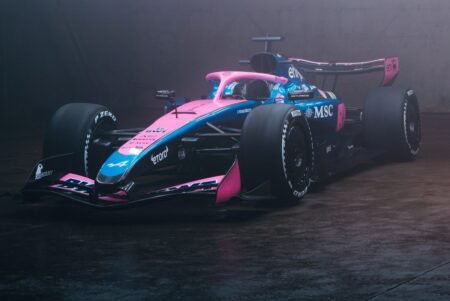
Beyond the weather, development priorities will dictate when teams arrive and when they run. McLaren, for instance, wants to bring as mature a design as possible, then devote testing and the first races to understanding its car before committing to major developments. For that reason it has pushed the final build to the last minute and will not run until Tuesday at the earliest. Alpine, meanwhile, has an upgrade plan for the early season in place already and is planning to hit the track on Monday.
The likelihood is that for spectators it would be even more boring than testing usually is (not that this has prevented the owners of the Barcelona circuit from selling tickets in the past, or setting a very low bar for media accreditation and then charging the eager applicants an arm and a leg for wifi). Most teams won’t be focusing on performance until the two three-day Bahrain tests; here they will be merely plodding around for the most part, having scrutinised the weather forecast to determine which three of the five days are going to be least suboptimal. Rain, and temperatures barely into the teens, means that no team is going to be running from dawn until dusk.
It would therefore be a waste of time to lay on such niceties as round-the-clock TV coverage, live timing, and scheduled post-session driver Q&As. A small F1 TV unit will be present to provide the usual soft interviews with drivers and other team personnel, and the teams have agreed a framework of what kind of imagery to share. It’s basic in comparison with what has gone before, but is this really conspiracy of silence by a group of stakeholders desperate to control the message?
No, because word will always get out. But it certainly serves the function of managing expectations. The cars will be spending a long time in the garages, and nature abhors a vacuum – if the Barcelona shakedown were fully televised, there would be vast swathes of dead air for broadcasters and live text commenters to fill, with all the blather and uninformed speculation that would entail. Best for everyone if they stay at home and commentate on watching paint dry instead.
We want to hear from you!
Let us know what you would like to see from us in the future.
Take our survey
– The Autosport.com Team
Read the full article here