



Formula 1’s 2026 season-opening Australian Grand Prix currently looks like a race nobody wants to win.
Of course, that’s not the case, but it jokingly underlines that, at this stage of the pre-season, everyone is keen to avoid the role of clear favourite.
Although that has always been the game during F1 testing, this year it is going to extreme lengths. On the very first day in Bahrain, Toto Wolff stated that in his view Red Bull is “the benchmark” and that Mercedes “could not match it”.
Red Bull’s technical director Pierre Wache countered by saying they are only the fourth team at the moment, behind Ferrari, Mercedes and McLaren. The Frenchman deliberately mentioned the Scuderia first, as Charles Leclerc’s longer runs had made an impression – including how consistent they seemed in terms of energy deployment.
But for his part, Leclerc replied by saying he does not see himself as a favourite at all, and in turn pointed to Mercedes and Red Bull as teams that would be faster. And so everyone passed the ball to one another for a week.
In itself, this is nothing new, as it remains pointless to draw far-reaching conclusions from lap times at this stage. Especially under a new set of regulations, this is about completely different things.
Getting to grips with energy management is still worth enormous amounts of lap time at this time of year. According to drivers and team bosses, we are not talking about thousandths or hundredths, but tenths – or even more.
One might describe it as low-hanging fruit, though this is easy to say. Energy management probably yields gains more than any aerodynamic update. Optimising the harvesting and deployment is crucial for every team on the grid and makes it relatively meaningless to look at any pecking order this early on.
“There are so many things now that all the teams need to still sort out, need to get right,” Oscar Piastri said on Friday. “The difference between getting these things right and wrong is not a few hundredths of a second or even a few tenths of a second, it’s a lot. It’s upwards of half a second sometimes, if it goes really wrong.”
“Extreme sandbagging” amid F1 engine discussion?
George Russell, Mercedes
Photo by: Joe Portlock / LAT Images via Getty Images
On top of that, in 2026 there are also other, more political themes playing out in the background. The praise that Wolff directed at Red Bull was therefore labelled “diversion tactics” by Verstappen. During the Dutch media session in the paddock, he said he suspects extreme sandbagging from Mercedes.
“Well, I can tell you one thing: just wait until Melbourne and see how much power they suddenly find. I already know that right now,” the four-time world champion claimed. “They are obviously trying to shift the focus to us because we did so many laps on Wednesday, but you have to look at it from both sides. Just wait until Melbourne and see how fast they suddenly go on all the straights.”
When asked by Motorsport.com about Wolff’s claim that the compression ratio loophole would only be worth two to three horsepower, Verstappen laughed: “You definitely have to add a zero to that! And maybe even more. But you know, I fully understand what they are trying to do these days.”
Leclerc also added that in his view Mercedes is good at “hiding things”. According to the competition, it serves a political purpose: Mercedes does not want to stand out too much at this stage, as that would increase the likelihood of FIA engine intervention.
It must be noted, however, that such an intervention has become less likely the longer it takes – and would probably turn into a compromise for the longer term anyway. For Melbourne there is virtually no time left for any change, especially given the long lead times for engine modifications.
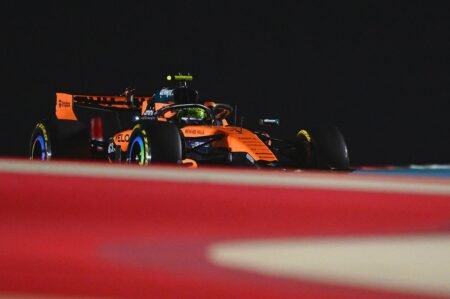
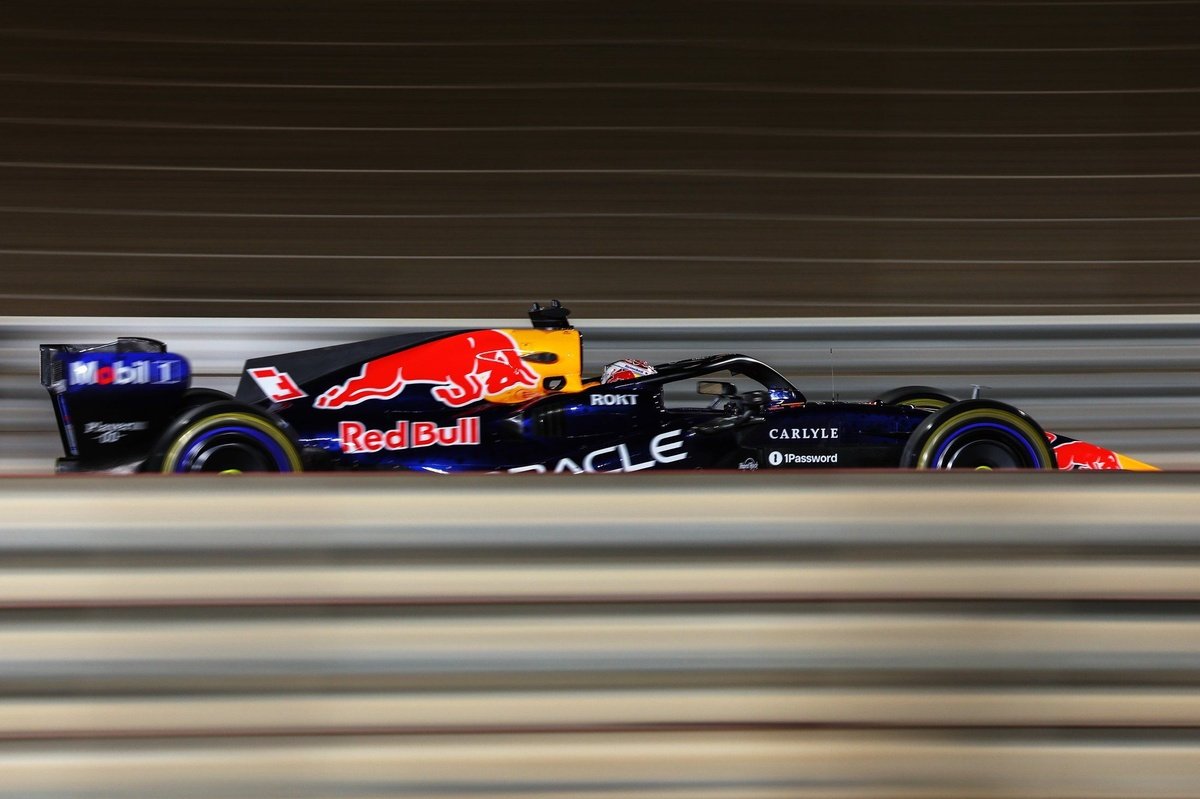
The remarks about Red Bull were particularly prominent after Wednesday. A look at the data shows that Verstappen consistently reached higher top speeds at the end of the start-finish straight than many of his rivals, and that he kept the curve flatter for longer towards Turn 1 – an important element in 2026. It was also visible when comparing Verstappen’s personal fastest lap that day with Lando Norris’ overall best time.
However, in isolation that says very little – especially under the 2026 regulations. Much of it relates to how the 350kW from the MGU-K is deployed, and that is precisely the big question mark right now. While Verstappen gained a lot of time on the start-finish straight, the same applied to Norris later on in the lap – on the straight towards the final corner.
It largely depends on who deploys what and where exactly, and even more importantly, who keeps something in hand. These days there is much talk about harvesting in the paddock – which forces drivers to go slower through certain corners than is possible and to select lower gears than normal – but it is not a given that teams use all the energy they recover. It is something they can easily play with during winter testing.
This is an additional – and important – variable in sandbagging, just as fuel levels and engine modes have been for ages.
Has Red Bull found some energy management solutions earlier?
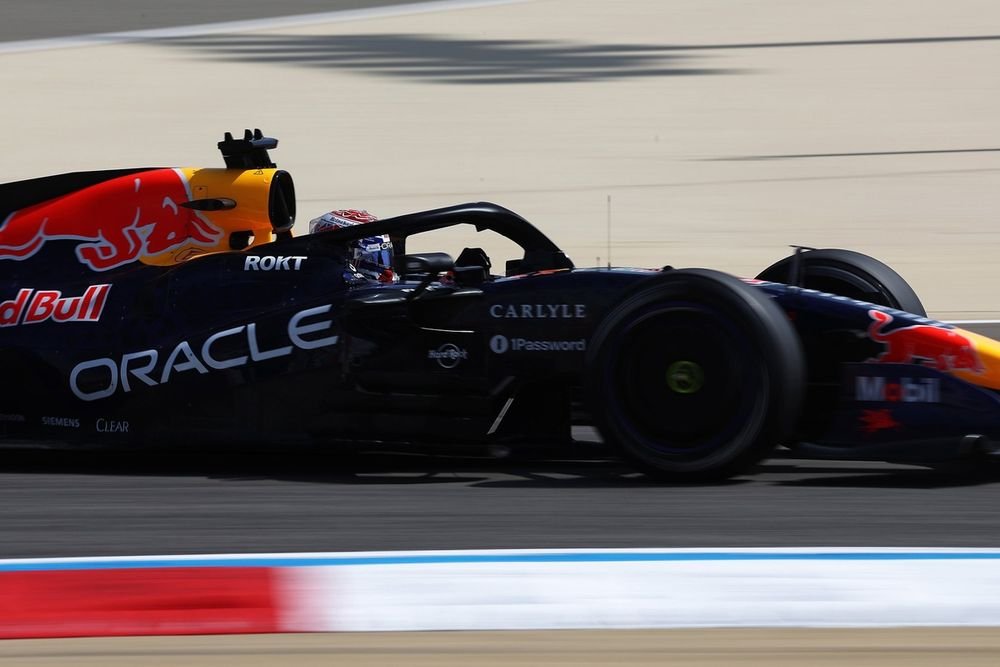
Max Verstappen, Red Bull Racing
Photo by: Glenn Dunbar / LAT Images via Getty Images
Teams mainly look at the energy deployment of rivals over multiple consecutive laps and how stable that picture is. Ferrari impressed some rivals in that respect later on, but on Wednesday, Wolff firmly pointed to Verstappen’s runs.
Wache nuanced that during his media session in the paddock: yes, Red Bull started well in terms of energy management over a longer run, but according to him that advantage has now disappeared. Wache’s assessment is that Red Bull simply figured out certain solutions slightly earlier than other teams.
“It’s true that especially during the first day, we were a little bit closer to what we should have,” the Frenchman said. “Then you start to see the tendency of the others going into the same direction, and now even, I would say, a little bit better than us.
“I think maybe our factory people and our simulation people found it quicker – not the optimal, but the un-optimal [way of doing it]. The others were taking a little bit more time to achieve that, but at the moment I would not say that anymore.”
Verstappen shared that view, telling the Dutch press that Red Bull had its simulator in good shape early on, which is why three years ago he was the first to warn about downshifting on the straights. But as all teams log more mileage on the real track, those differences in approach will level out to some extent.
Main goal was “to not look stupid” on track
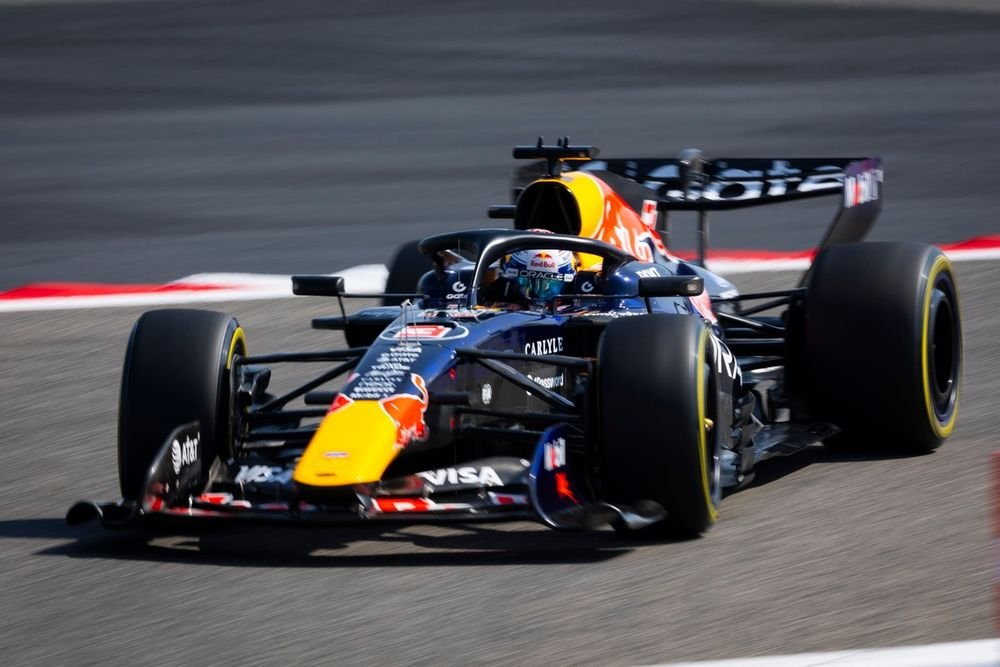
Max Verstappen, Red Bull Racing
Photo by: Sam Bloxham / LAT Images via Getty Images
The overall picture means that the praise for Red Bull is partly politically charged and part of the game that everyone in the paddock is currently playing: naming someone else as the favourite.
It remains a matter of waiting until Melbourne, although one thing can already be said: in terms of reliability, Red Bull has come out of the blocks better than many had expected.
That applies to the competition, as Wolff joked in Zandvoort last year that this newcomer would be “shit”, but the tone in the paddock has since changed. A similar shift in perception can be seen internally, with Isack Hadjar saying he has been positively surprised.
“It’s way beyond what I anticipated,” the French sophomore said. “I think the impression last year, towards the end of the season, was not very positive. Let’s say the rumours – and even within the team, they were not completely satisfied. But in Barcelona, day one, I think I did 110 laps straight away. So I was very, in a positive way, surprised. For a team that started this project three years ago, it’s very impressive.”
Hadjar added that he had “many, many doubts” ahead of the Barcelona test, but they are all gone now. He is not the only one within the team who has shared his surprise: compatriot Wache came to similar conclusions after the first six days on track with the Red Bull Ford powertrain.
“I’m surprised that the engine people did a fantastic job in being able to put a car together and run so many miles,” Wache said. “We have to recognise the fantastic job that the engine people have done. And to be able, as a start-up, to make an engine and not be stupid on the track is a massive achievement.”
Although the praise and the game of hide-and-seek in the paddock has a strong political undertone, one thing can already be said after the first week in Bahrain. At the very least, Wache’s ambition “to not look stupid” has already been achieved with the all-new DM01 engine.
We want to hear from you!
Let us know what you would like to see from us in the future.
Take our survey
– The Autosport.com Team
Read the full article here