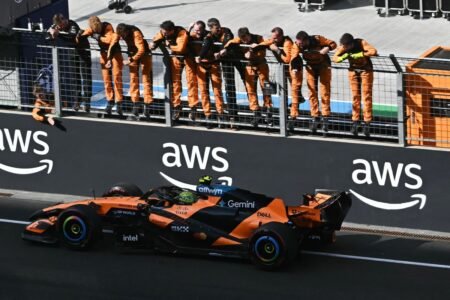




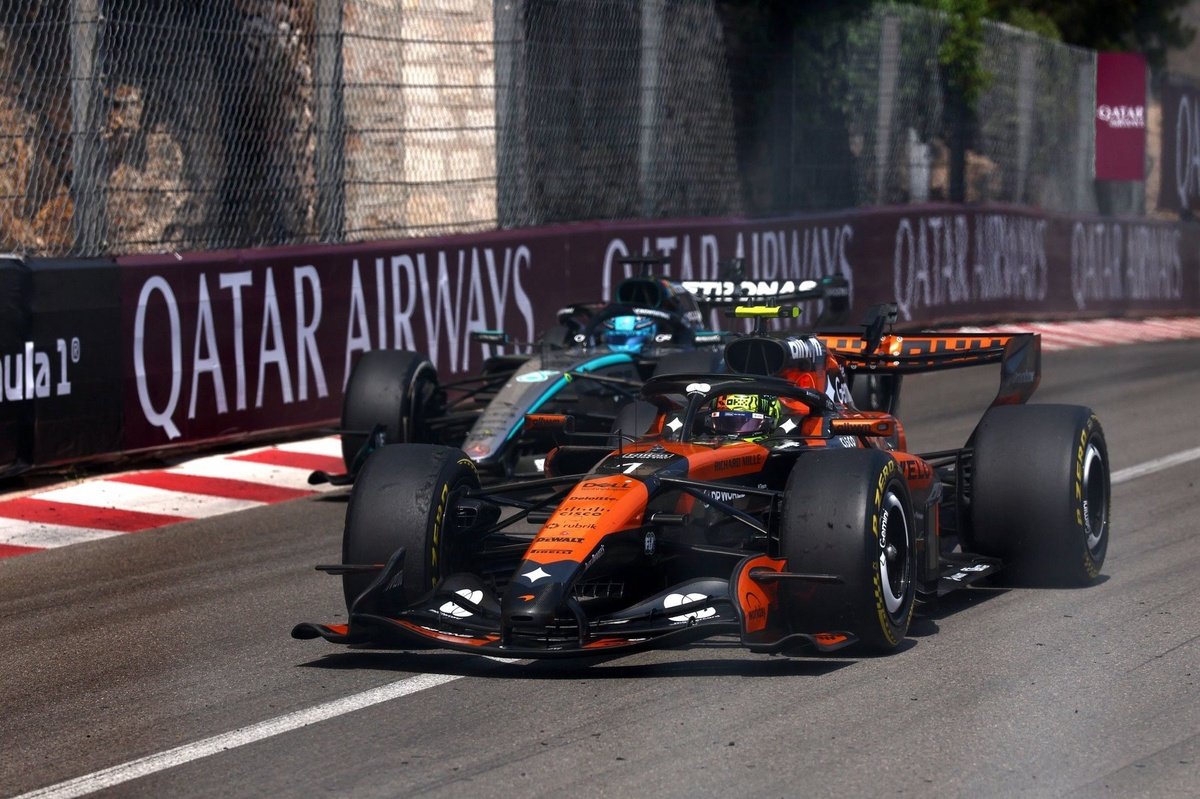
After McLaren secured a double podium in Miami and appeared to have turned a corner following its first major upgrade of the year, the race weekends in Montreal and Monaco have not gone according to plan.
In Canada, things partly unravelled due to the decision to start on intermediate tyres, while Lando Norris later retired with a gearbox issue. Monaco brought another DNF for the reigning world champion, this time due to a problem with the power unit itself.
Although Stella emphasises that each retirement so far has had a different root cause, he believes they expose one thing: reliability is not yet where it needs to be. While McLaren primarily looks at itself in that regard, he also sees a disadvantage to being a customer team.
“Never before we felt that being a customer team has put us on the back foot. And when I say this, and I want to be clear here, to avoid any misunderstanding: it’s not because you are a lower priority for [Mercedes] HPP”, Stella said when asked by Autosport in Monaco.
“[It is] because you have less opportunities to integrate, to stay on the same timeline when it comes to addressing reliability problems or exploitation of the power unit from a performance point of view, combining the efforts when you use the facilities, and some experiments on the chassis side that you can add to a long run of the power unit when you are a works team.
“There are many reasons why reliability associated to the power unit [plays a role], or taking advantage of being a works team from a power unit point of view. I think these reliability issues have come into focus in 2026, when we had such a major technical regulation change.”
There are “less opportunities to integrate” car and power unit when working as a customer, says McLaren’s Andrea Stella
Photo by: Ryan Pierse / Getty Images
McLaren CEO Zak Brown has indicated that the Woking-based team would, in theory, be open to developing its own power unit in the long term – just as Red Bull has done – provided it can be done in a cost-efficient way.
McLaren wants to be “completely fair” to Mercedes HPP
The question is, however, what can be done in the shorter term to eliminate the reliability concerns, and Stella says that is exactly what is currently being examined in detail.
“That great relationship [with Mercedes HPP] allows us to review item by item, learn from each item and solve it technically. But when you don’t know what’s coming, it’s not sufficient to simply address item by item,” he said.
“You ultimately need to review the depth, the intensity and the effectiveness of the various meetings, engagement, sharing of information, processes – from factory to factory, track to track, track to factory, and so on. The review is ongoing and is, in a way, punctual in terms of looking at each item individually.
“But it’s also a wider review in terms of what do we have to enhance? Because in 2026, there’s so much novelty, there’s so many new things, and we kind of have to operate at a new level of collaboration compared to what we were doing before.
“These conversations have already started for some months now, but like everything in F1, there’s always a lead time. It’s not like you see the results the day after. So this is already happening and is relatively wide-ranging as a discussion.”
Stella is keen to stress that he is not pointing fingers in any way and that the relationship with Mercedes HPP is still a highly successful one. Furthermore, he adds that McLaren has also experienced reliability issues that were entirely unrelated to its power unit supplier.
“There’s some, like the gearbox problem on Lando’s car in Canada, which are purely on the McLaren side,” he added. “So I just want to be totally fair to our power unit supplier, with whom we’ve had a fantastic relationship, very successful. And still, the relationship is great.”
We want to hear from you!
Let us know what you would like to see from us in the future.
Take our survey
– The Autosport.com Team
Read the full article here