



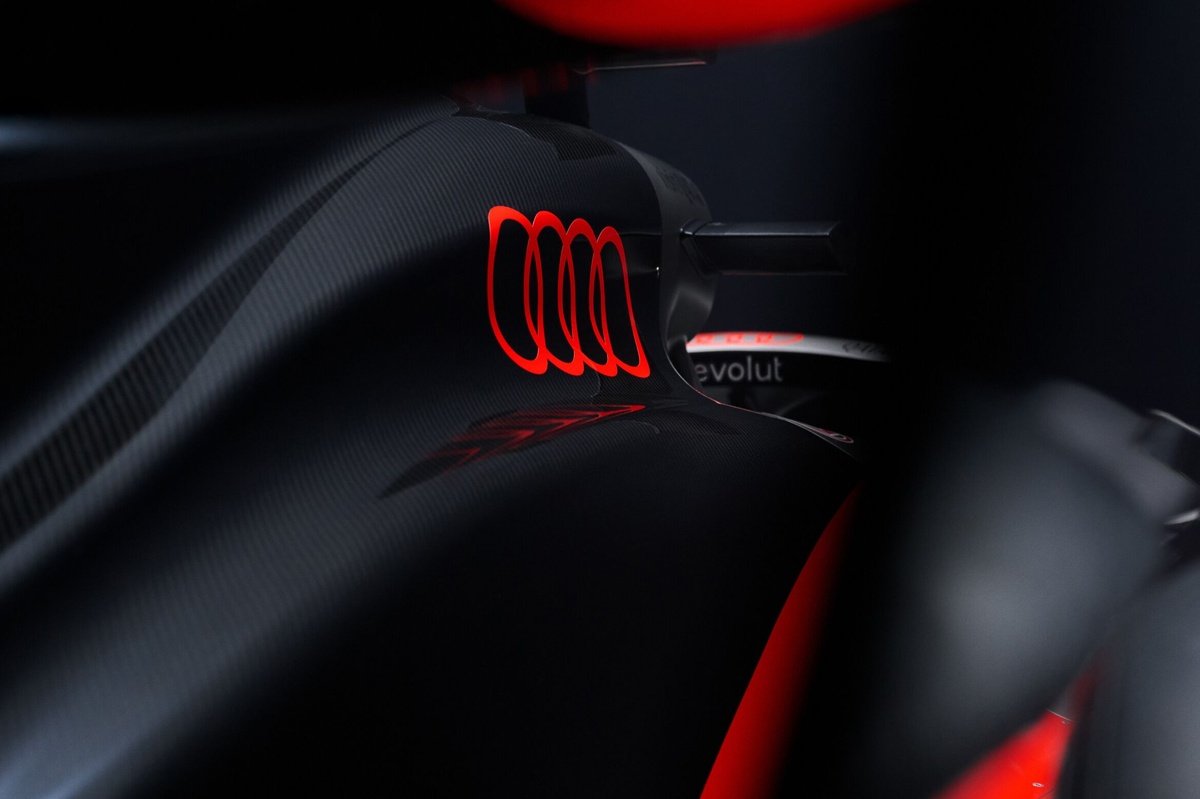
Think about Audi in motorsport and you think about winning. Few marques are as accustomed to the taste of success as the German brand with the four rings. Audi’s crowning achievement of 13 overall Le Mans 24 Hours victories in 18 attempts are a not-so-subtle reminder of its pedigree. Sooner or later it also found success in other high-profile disciplines it has taken on, whether that be the Dakar, WRC, Formula E or DTM.
It should therefore not come as a surprise that when Audi announced its entry into Formula 1 as a fully fledged manufacturer, it was never going to commission such a huge investment – at the unfortunate expense of its other factory programmes – to make up the numbers.
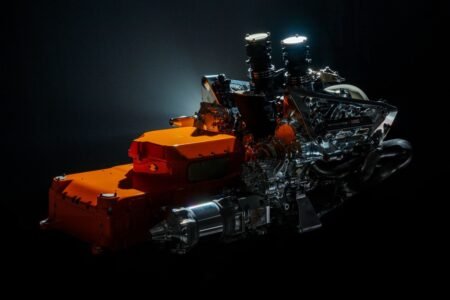
When Audi unveiled its 2026 livery in Berlin, that ambition was verbalised more concretely. Built on the foundations of Sauber and powered by factory power units crafted in Neuburg, Audi wants to leverage its long-running factory racing nous to compete for the F1 world championship by 2030.
It hasn’t just plucked a number from thin air, per team principal Jonathan Wheatley, but has mapped out a plan including all the elements that are required to get it there. This includes further hiring rounds and infrastructure projects, which have both been necessary to flesh out a Swiss-based underdog that had long been starved of financial oxygen and did well to survive as an independent outfit to begin with.
“We’re in the middle of that process now,” Wheatley told select media, including Autosport, in Berlin. “The reason why we talk about it as being a five-year project at 2030 is because it takes time.
“I’ve talked before about the fact that this was a team that was largely underfunded, certainly undercapitalised for a long time. People had to be creative, but there wasn’t the wherewithal and the money to be able to do the job that they needed to do and in some places, the culture was not the most open and forthcoming.
Audi is one of Le Mans’ most successful manufacturers
Photo by: Eric Gilbert
“Part of this journey that we’re on is to change that, to create the Audi F1 team, create our own culture and to drive the business forward based on that. Because the business is all about people and it’s people that’s the most interesting thing to me. A successful Formula 1 team is about getting the most out of every individual.”
Former Ferrari team boss Mattia Binotto, who oversees the collaboration between the race team in Hinwil and the power unit programme in Neuburg, is the general in charge of that grand strategy while Wheatley looks after the race team.
“At the very first opportunity we immediately clarified the objectives and our vision, but since then we have gone into the details of Sauber and Neuburg to understand what the needs are to become a champion,” said Binotto.
“What are the gaps, what’s required to get there? And then we started developing plans to become successful by 2030. That means that you have developed the team in terms of infrastructure, tools, methodologies, process, organisation, so that you are strong enough to compete for it. I think that’s exactly what we are aiming for.”
One of those big-ticket items with a long lead time is Sauber’s new simulator, which according to technical director James Key is still 18 months away from operational status.
“The unique journey that we’ve had is not just designing a new car, it’s building a team,” he explained. “We’re getting a lot of fresh faces into the team, investing a lot into R&D technologies we haven’t got – not all of that is complete yet. We’ve got a massive project with a new simulator which will be coming in about 18 months’ time. There’s all sorts of things going on.
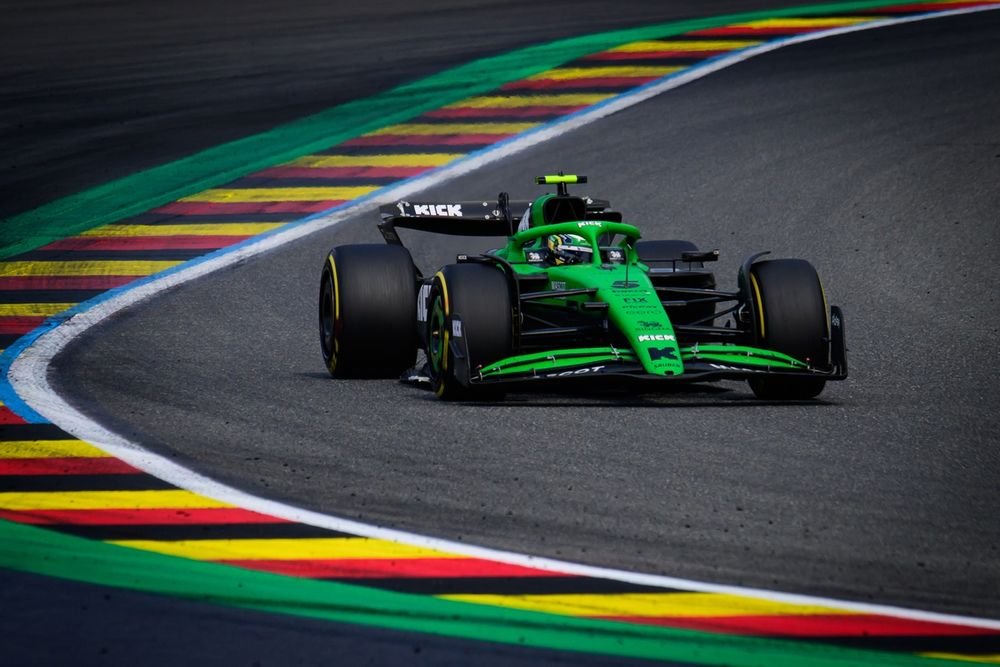
Audi has taken over the old Sauber team factory, but it needs work
Photo by: Erik Junius
“It’s a huge project to build the team. We’re definitely already a step up from where we were, but we’re not the finished article yet. And this is really why we’ve given ourselves that time to recognise that we can’t just switch it on. We’ve got to get certain things in place to give ourselves the best opportunity.”
Wheatley similarly espoused a certain humility – borne out of realism and respect for the established competition, rather than a lack of belief – that is underpinning the start of Audi’s adventure.
“I think you have to be realistic about where you’re starting from,” he cautioned. “And you also have to be humble about the challenge that’s ahead of you. You don’t just turn up and beat teams like Ferrari and Red Bull, Mercedes, McLaren because you’re Audi. That’s not how it works and you need a plan. Our plan is to be a challenger, then a competitor and then a champion – it’s important that people understand that journey.
“This year we have our targets, we have our internal culture targets as well. The team’s on board with that. And I think this year for me is all about people taking responsibility for their own role in this team and how they can add performance to it. And that’s what we’ve seen, tremendous enthusiasm to do something special.”
For dyed-in-the-wool F1 veterans like Wheatley or Binotto, none of this is particularly new information. But it is for Audi, which for all its success in motorsport is a rookie in F1 terms. Its own version of Renault’s five-year plan for Alpine certainly rings a few bells, and Audi wouldn’t be the first manufacturer to treat F1 like another other form of business and be doomed to fail as a result.
That’s where Binotto comes in, acting as the link between the F1 effort and the Audi board. According to the former Ferrari man, Audi is completely “in love” with its new pinnacle project and it has fully understood that there will be bumps in the road along the way.
“Gernot Dollner, our CEO, set the objective of 2030,” Binotto said. “We declared that objective not only to manage expectations for fans, but internally as well. And they know it’s difficult. I think it has been, as well, part of my task to explain to Audi what’s about, what’s F1, how long it takes.

Binotto returned to F1 with Audi following his time at Ferrari
Photo by: Audi
“So far it has been smooth, and I think it’s because of the commitment of Audi. Audi has been really very supportive since day one, really being fully committed to our project, in love with the project, I would say. And once you know that you’ve got the full support, it gives you the means required to deploy the plan. And on that plan you may have good days or bad days, this is part of the job.”
Yet there is no hiding from the fact that becoming a power unit manufacturer for the first time is a huge, daunting task, and that its realism is well placed. But there are also factors for optimism, such as its 2025 mid-season upgrade programme that gave the team a spring in its step as well as a points scoring car, and two capable and fast drivers in Nico Hulkenberg and Gabriel Bortoleto, who pair youth and experience in a cohesive package.
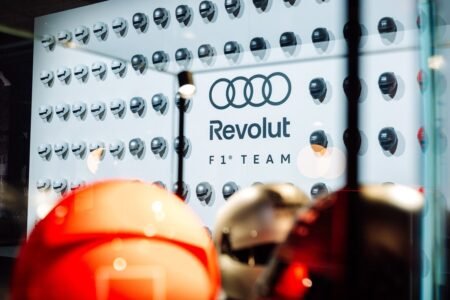
On a commercial level Audi has also enjoyed a successful launch, signing Revolut as its title sponsor as well as completing major deals with Adidas and an array of other partners.
One key milestone Audi has already achieved is making it to Barcelona for a filming day on 9 January, the first 2026 car to escape the virtual world – F1’s own version of the ‘upside down’ from Stranger Things, in which things may look uncannily like the real world but are fraught with misleading pitfalls. That says nothing about its 2026 performance, but it shows that operationally Audi has the making of a robust F1 outfit.
Given the mountain it has to climb, Audi’s short-term ambition is perhaps a bit unconventional, and not so much bound by points tallies or championship standings. “We discussed internally what the objective for 2026 should be,” Binotto explained. “Should we measure it in terms of ranking in the championship? Should we measure it in terms of number of points scored at the end of the season? Should we say we should score more points than in ‘25, knowing that now it’s a brand new team, a brand new powertrain, brand new regulations?
“We decided that for us the most important thing in 2026 is to become a serious competitor, and that’s about behaviours, and perception. We would be very happy if by the end of the season the other teams will see and perceive Audi as a strong competitor for the future, a team that’s here to to become serious in terms of competing for wins later on. That’s about attitude, it’s about staying humble, learning through mistakes, learning through failures.”
Audi is finding itself at the base camp of its audacious F1 expedition with a certain amount of humility, then. But don’t mistake humility for a lack of ambition.
We want to hear from you!
Let us know what you would like to see from us in the future.
Take our survey
– The Autosport.com Team
Read the full article here