

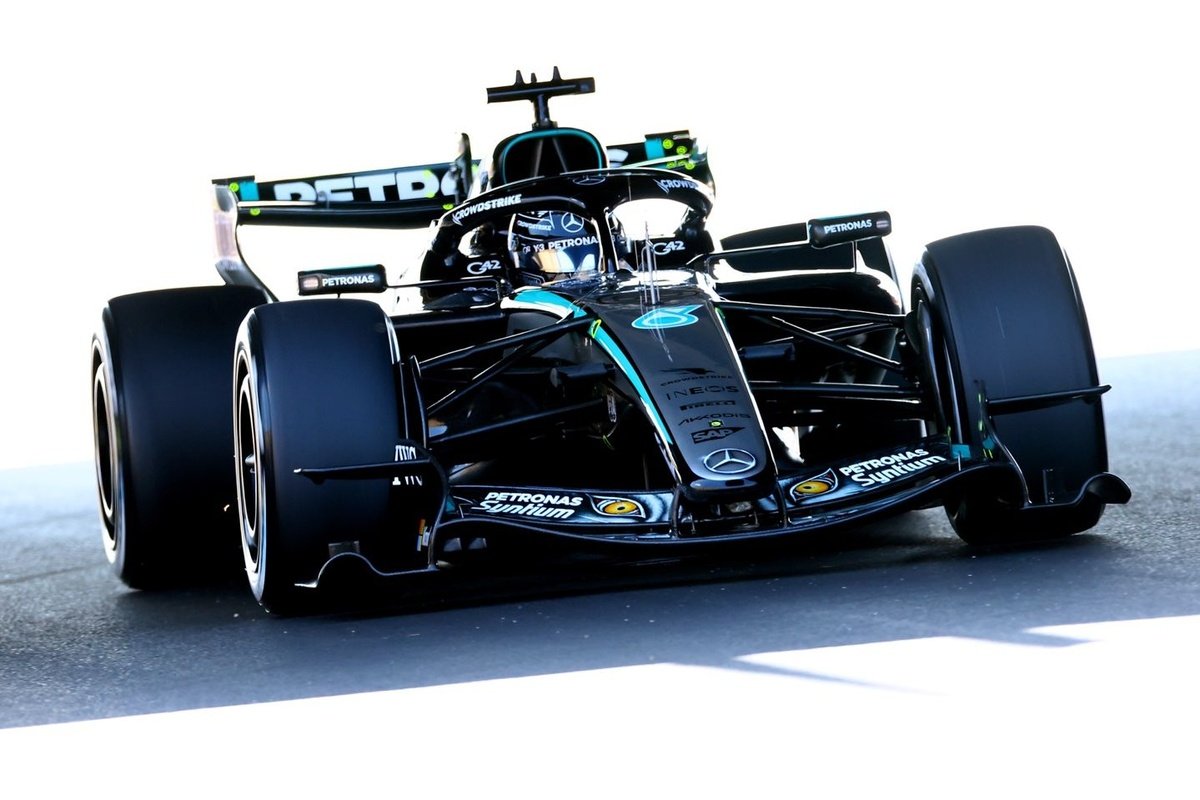
Today a high-level collection of Formula 1’s stakeholders met to ratify changes to the 2026 rules based on ideas and recommendations from a series of technical and sporting meetings over recent weeks.
But while a significant and vocal section of the fanbase remains disenchanted with various aspects of the current format – chiefly drivers having to lift-and-coast during qualifying, and races where overtaking is dictated by differing states of battery charge rather than driver input – the changes will be subtle rather than extensive. This much has been signalled in advance by F1 and the FIA.
In terms of the electrical deployment, where most of the leeway for adjustment lies, it’s understood discussions have centred on reducing the recharge limit per lap – perhaps even as low as 6MJ – increasing the super clipping rate from 250kW to 350kW, and/or reducing available battery power. Changes to straightline mode, such as when and where the active aerodynamics can be deployed, have also been debated.
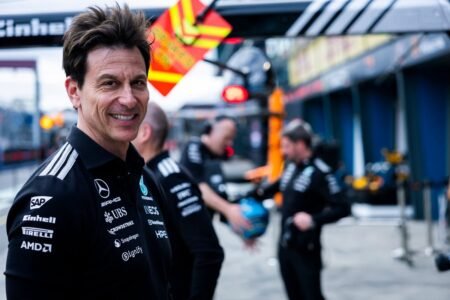
All these are areas that can change the picture of competitive advantage, based on different car characteristics, which explains Mercedes boss Toto Wolff’s interesting turn of phrase in a round-table interview today where he called on the rule makers to work with “a scalpel, not a baseball bat” in working with the tools available to adjust the format.
The principle of changes has been a subject of widespread debate, given the commercial rights holder’s insistence that it is satisfied with the spectacle. While there was broad agreement between F1, the FIA and the competitors before the start of the season that they would gather data from the opening races before taking a view on any tweaks to the formula, opinions diverged as to what needed to change.
“We need to learn from the past, where sometimes decisions were made in an erratic way and then we overshot and realised it wasn’t good.”
Toto Wolff
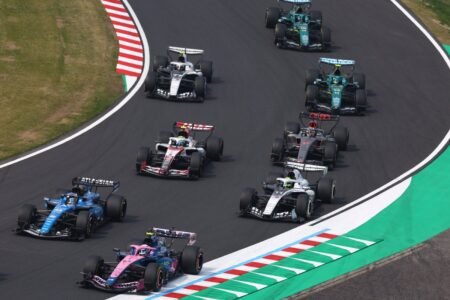
Initially the consensus view within the paddock was that the racing itself was fine, but qualifying required attention so drivers could push rather than having to lift and coast. This was to have been the agenda of the post-Japan meetings but this shifted in the wake of Oliver Bearman’s high-speed accident at Suzuka, where the high closing speed relative to Franco Colapinto’s Alpine acted as both a trigger and a magnifier.
Given the relative scarcity of data – many engineers and team principals in the paddock would have preferred to defer changes until more races were in the bank – it was highly possible that substantial changes might create new problems in solving old ones.
“I must really say that the discussions that have been taking place between the group of drivers, FIA, Formula 1, and the teams have been constructive,” Wolff said.
“We all share the same objectives: how can we improve the product, make it out-and-out racing, and look at what can we improve in terms of safety. But act with a scalpel and not with a baseball bat.
“I think we’re coming to good solutions that we’re going to ratify hopefully today, in order to evolve, because it’s only three races. In a way, we need to learn from the past, where sometimes decisions were made in an erratic way and then we overshot and realised it wasn’t good.
“Because we are custodians of this sport, and in that respect, I am carefully optimistic that we’re going to align the aforementioned objectives, while keeping the racing really good.”
Toto Wolff, Mercedes
Photo by: Sam Bloxham / LAT Images via Getty Images
Naturally, Wolff was keen to frame the discussion process as one in which all participants are very much on the same page. But it is exceedingly rare for any meeting involving the competitors to pass without one or more of them making it clear that any advantage they have eked out will be pried from their cold, dead hands.
Only this year, attempts to resolve the issue of the effects of turbo lag on race starts foundered in the face of Ferrari’s refusal to give up its advantage – having seen the problem coming, it had baked smaller turbo compressors into its car concept. And, much as Wolff put on a commandingly statesmanlike performance in talking about agreeing changes for the collective health of the sporting spectacle, one can imagine him being resistant to any changes that hack away at Mercedes’ dominant position.
Competitors putting self before sport is not a new phenomenon. In the dog days of the Bernie Ecclestone era, the Concorde Agreement not only beggared half the grid by sharing the prize fund unequally, it also gave a handful of leading teams a seat at the rule-making table in the form of the much-disliked Strategy Group.
This arrangement was described as a “questionable cartel”, which “put the independent teams at a perpetual sporting and economic disadvantage”, according to a letter of complaint filed by three midfield teams to the European Union’s competitions commission in 2015.
The Strategy Group was axed as part of sweeping changes to F1’s governance brought in under the post-2020 Concorde Agreement, which also introduced the budget cap. Nevertheless, even though more of the teams now have a voice, this has not reduced the tendency for discussions to be subtly reshaped by concerns of competitive advantage. As F1 becomes wealthier, and the rewards for success grow greater, so too the likelihood that all these fierce competitors spend high-level meetings passing around the peace pipe diminishes.
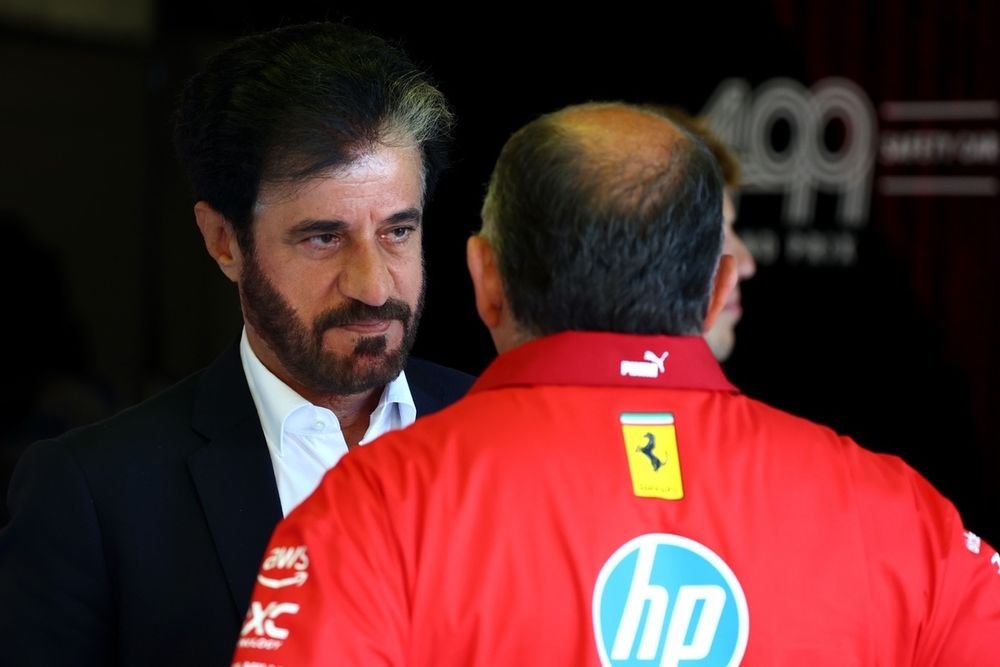
FIA President Mohammed ben Sulayem, seen here with Ferrari team principal Frederic Vasseur, has the challenge of maintaining constructive engagement with the competitors without allowing them to disrupt the rulemaking process
Photo by: Simon Galloway / LAT Images via Getty Images
“We all – the drivers, the FIA, Formula 1 and the teams – we need to understand our responsibility as the guardians of this sport,” said Wolff when pressed on the matter of whether the various parties really were acting in the collective best interest.
“And we need to respect what the sport has done for us and work constructively among ourselves to improve where things need to be improved and safeguard when it’s needed. We all have our opinions and that’s absolutely legit.
“But these opinions and discussions should happen among the stakeholders more than in the public eye, because the sport is in a great place. We have many hundreds of thousands of fans that love the sport.
“There are others that don’t love certain aspects of the sport. But in order to protect all of this huge opportunity that the sport gives us, we shouldn’t badmouth in public our own sport. And we’ve been all falling foul of this in the past because of gamesmanship or because of trying to protect a situation.
“Everybody’s entitled to have an opinion. But I think we owe it to ourselves to express that opinion in the stakeholder groups. Now, this has happened in the last few weeks in a constructive way.
“We have set our objectives in the way that we want to improve where we believe it improves. We want to look after the safety of the drivers. We want to protect what we see in racing.
“We act upon data. What do fans love and what do they not love? And respect also the hardcore motorsport fans that have loved what we had before.
“But there’s also a certain degree of nostalgia that makes the past much better than the present. People talk greatly about the 2000s and maybe forget that there were years where there wasn’t a single overtake in a race. It was maybe great for the drivers because it was flat out through the corners.
“But if this product is boring for spectators, then we don’t gain. And we had many years where the product was criticised and we acted erratically in changes and they weren’t any better either.
“So I think we are in a very privileged situation today that we have a sport and we all have a responsibility to carry that.”
Some might interpret this as a plea to not change very much. Coming from the leader of what’s currently the dominant team, it would have been very surprising to see otherwise.
Then again, there will be readers whose memories of the 2000s extend beyond the rose-tinted optics of flat-out racing and the ear-splitting cry of V10s, to those seasons where (for instance) the qualifying rules seemed to change on a daily basis depending on the trajectory Ecclestone disembarked his bed that morning. Therein lies a powerful argument for alighting on a desired outcome and a prudent roadmap to it before embarking on the journey of change.
We want to hear from you!
Let us know what you would like to see from us in the future.
Take our survey
– The Autosport.com Team
Read the full article here