



It’s a good year for prospect fans, as several of the top names in minor league systems not only are close to contributing to their respective clubs, but have a good chance to make a fantasy impact before the end of the year.
A quick note that this list is not a list of the top 25 overall prospects, this only considers the potential for fantasy success in 2026.
Without further ado, here’s a look at the top 25 prospects who have a chance to have fantasy success in the 2026 MLB season.
⚾️ Coming soon: MLB returns to NBC and Peacock in 2026! In addition to becoming the exclusive home of Sunday Night Baseball, NBC Sports will broadcast MLB Sunday Leadoff, “Opening Day” and Labor Day primetime games, the first round of the MLB Draft, the entire Wild Card round of the postseason, and much more.
Atlanta Braves Photo Day
2026 Fantasy Baseball Draft Kit: Rankings, strategy, sleepers, mock draft results
Everything you need for 2026 fantasy baseball draft season.
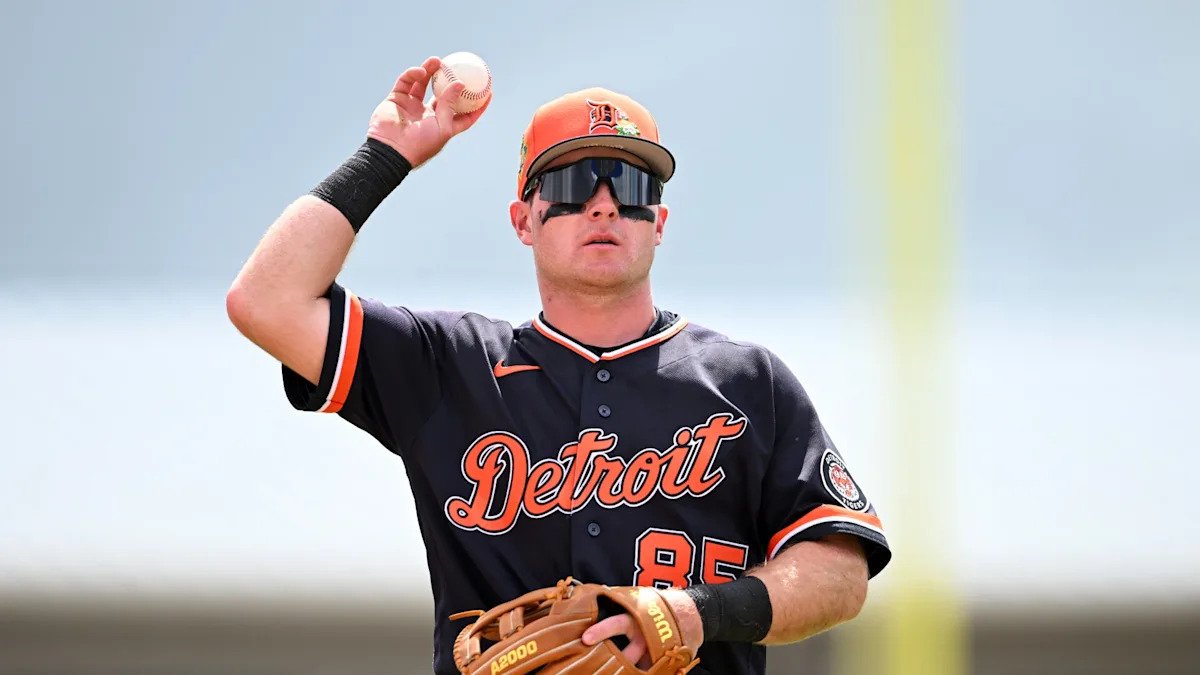
1) Kevin McGonigle — INF, Detroit Tigers
Why he can help: Think spring training doesn’t matter? Don’t tell that to McGonigle. He forged an .888 OPS over 56 plate appearances with two homers and two stolen bases, and he’s earned a spot on the Opening Day roster. Those are solid Grapefruit League numbers, but it’s the .305/.408/.583 slash he posted in the minors last season that really showed off his 70-grade (on the 20-80 scouting scale) hit and power-tools. Add in an above-average approach and solid speed, and McGonigle has a chance to help in every category not just in the future, but also in 2026.
Why he might not: Baseball is an incredibly hard sport, and for every prospect that immediately becomes fantasy-relevant, there are many, many more that struggle when first facing MLB pitching. With Detroit likely competing for a third-straight playoff spot, there’s a chance that the Tigers may have a slightly shorter leash with McGonigle than your typical top prospect. He also may not be in the lineup against tougher left-handers, so keep that in mind when you consider the counting stats.
2) JJ Wetherholt — 2B, St. Louis Cardinals
Why he can help: There’s a few prospects who garnered consideration for the second spot, but ultimately, Wetherholt’s situation makes him deserving of the nod. He was excellent in 2025 with a .931 OPS, 17 homers and 23 stolen bases while splitting time in Double-A Springfield and Triple-A Memphis. The 23-year-old has one of the best hit-tools in the minors with a smooth, line-drive swing from the left side, and there’s enough strength with loft in the swing to project above-average power to go with it. He has above-average speed as well, so a 20-plus steal season is well within reach. It appears that Wetherholt is not only going to be the starting second baseman to open the season, but potentially hit at the top of the order, as well. Long story short, Wetherholt just might have the best combination of ceiling and floor of any prospect in 2026.
Why he might not: Baseball is really hard, as good as Wetherholt looks and as quality as his situation is, there’s a chance that he’ll struggle in his first chance against MLB pitching. We’ll have to see how he does against left-handed pitching, and hitting at the top of the lineup for the rebuilding Cards isn’t quite the “compliment” that it is for some other players. Also, baseball is really hard.
3) Nolan McLean — RHP, New York Mets
Why he can help: McLean got a larger sample than Yesavage did in the majors — although Yesavage was on the mound later because his team was able to make the postseason — and to say he impressed was an understatement. He followed up a 2.45 ERA in the minors with a 2.06 mark once he joined the Metropolitans, and it came with a 57/16 K/BB 48 innings in 8 starts. The best pitch in the right-hander’s arsenal is a sweeper that generates elite break and spin, but he also has a bowling ball of a sinker, a curveball that gets 60 grades on the 20-80 scale and a cutter that can bear into the hands of lefties. Add in a solid change, and McLean has one of the most complete arsenals of a starting pitching prospect we’ve seen in a long time.
Why he might not: McLean is a former two-way player, and the command is still a work in progress. It should be fine in the coming years, but again, this is just a list for 2026, and there’s more risk of self-inflicted damage for the 24-year-old than Yesavage, in this writer’s humble estimation. And also like Yesavage, there’s a decent chance the Mets monitor McLean’s innings, although it’s worth noting that he was able to go over 160 innings in 2025.
4) Trey Yesavage — RHP, Toronto Blue Jays
Why he can help: There was a bit of a debate as to whether Yesavage belonged at the top spot, and anyone who saw him pitch in 2025 can understand why. After whiffing a remarkable 160 batters in 98 minor-league innings, Yesavage impressed in his three starts in the regular season, and more than held his own while helping the Blue Jays reach the World Series. His 94-96 mph fastball — at times a tick higher — has elite movement, and he complements that heater with one of the best splitters in the sport along with a solid slider to give him the arsenal to miss bats at an elite level. He also is going to be playing on one of — if not the — best teams in the American League, so he should have excellent rates on top of having a chance to pick up a quality number of wins.
Why he might not: Yesavage has the stuff of a top-of-the-rotation starter. He does not have the command of one just yet, and there will likely be some self-inflicted damage in his first full season of MLB action. The Blue Jays also have a lot of arms who are capable of starting, so fantasy managers need to be prepared for Yesavage to have some turns skipped to manage his innings.
5) Konnor Griffin — SS, Pittsburgh Pirates
Why he can help: Griffin is the top prospect in baseball, and with all due respect to a few other infielders, it’s not all that close. He forged a .942 OPS, stole 65 bases, and bashed 21 homers in his first professional season while reaching Double-A, and he’s impressed early in the Grapefruit League. Every tool in Griffin’s bag has a chance to be plus, and the fact he can do it as a shortstop just adds to the intrigue. Simply put, Griffin looks like a future superstar, and there’s a very good chance he’s going to be spending most of 2026 in a Pittsburgh uniform.
Why he might not: The obvious reason that Griffin isn’t the top prospect for 2026 is that he won’t begin the season with the Pirates. Keep in mind that he’s still just 19 until the end of April, so on top of the service-time nonsense, the Bucs just may want to make sure that when he does get the call, it’s for good. It’s still worth the risk from a fantasy perspective, but fantasy players need to be prepared to have Griffin sitting on their bench for a month or so.
6) Samuel Basallo — C/DH, Baltimore Orioles
Why he can help: Basallo is not only one of the top hitting prospects in baseball, he’s also one of the few prospects who appears to have a clear path to immediate playing time. That matters, obviously, as does the fact that he’s someone you can play behind the plate. There’s enormous power in his left-handed bat, and while he is far from immune to strikeouts, he’s made enough hard contact in the minors to suggest that hitting for average isn’t a lost cause, either. He should be the starting designated hitter for the Orioles while occasionally spelling Adley Rutschman behind the plate, and a 30-homer season with a solid number of RBI seem likely for a player who has catcher eligibility. You can do a heck of a lot worse.
Why he might not: Basallo did struggle in his fifth of a season with Baltimore in 2025 with a .559 OPS over his 31 games while striking out 30 times in 109 at-bats. He’d be far from the first — and far from the last — player to struggle in his first taste of MLB action to succeed, but it’s worth noting. It’s also worth pointing out that Basallo likely won’t provide any steals, so keep that in mind with your potential roster builds if you do add the 21-year-old.
7) Justin Crawford — OF, Philadelphia Phillies
Why he can help: Crawford gets a boost because it appears very likely that he’s going to be starting in center for the Phillies to open the season. That’s not to say that he wouldn’t be worth waiting on even if he didn’t get the nod. Crawford is one of the fastest prospects in the sport, and he was able to swipe 46 bases in 111 games last season for Triple-A Lehigh Valley while slashing .334/.411/.452 in the process. He’s an assertive hitter who has shown improved patience at the plate, and his contact-geared swing allows him to avoid strikeouts while making enough hard contact to all parts of the field to give him a quality hit tool.
Why he might not: The bad part about a swing geared for contact is that it doesn’t allow you to hit for much power, and Crawford is unlikely to reach more than a couple of handfuls of homers in 2026. There’s also a chance he could be a platoon player which hurts the counting stats, and with Philadelphia likely to once again contend in the National League, he may not have as long of a leash as some of the prospects above him.
8) Carter Jensen — C, Kansas City Royals
Why he can help: Jensen has seen his stock rise every year, and he punctuated a strong 2025 campaign in the minors by slashing .300/.391/.550 in a 20-game sample with the Royals to end the year. A left-handed hitter, Jensen shows a swing that suggests he can hit for both average and power at the highest level, and he’s a patient hitter who won’t beat himself by swinging at pitches outside of the strike zone. While he won’t catch a ton in 2026 with Salvador Perez locked into that role, he appears likely to be the designated hitter against righties to begin the year with a chance to produce some solid run-production stats.
Why he might not: As is the case for most backstops, Jensen isn’t likely to provide any help in the steals category even with decent speed for someone who plays behind the plate. He also isn’t likely to be in the lineup against southpaws, so the counting stats could take a hit.
9) Carson Benge — OF, New York Mets
Why he can help: The Mets made Benge their first-round pick in 2024, and after a solid 2025 campaign in the minors and hitting .366 with an OPS of .874 in the Grapefruit League, he’s earned a spot on New York’s roster. A former two-way player, Benge is one of the few prospects who shows a willingness to draw walks while also limiting his swing-and-miss, and there’s above-average tools across the board. It won’t be a shock if he’s a contributor in several categories in 2026.
Why he might not: Benge has several above-average tools, but there’s no standout ability; making him much more of a high-floor player than one with a tremendous ceiling. He’ll likely be on the strong side of a platoon, but like several players on this list — and just throughout baseball — there’s no guarantee that he’ll be in the lineup against southpaws in his rookie campaign.
10) Sal Stewart — 1B, Cincinnati Reds
Why he can help: Stewart has developed into the top hitting prospect in the Cincinnati system, and he was solid in his time with the Reds with an .893 OPS and five homers in 55 at-bats after being promoted. His hit tool is more advanced than the power — a bit of a rarity for a first baseman — as he stings the baseball to all parts of the field with his right-handed stroke. That’s not to say there isn’t pop in his profile, however, and his 55-grade power should play well in Great American Ballpark. He’s also the rare corner-infielder who could provide double-digit stolen bases, and he has a solid chance of reaching that number as he appears locked into a starting role to open 2026.
Why he might not: Stewart is more of a high-floor player than one who has a tremendous amount of upside, and because he’s locked into first base, he may not put up the kind of numbers that justify being in an everyday lineup. It could be argued that he’s a better long-term play than one who helps in 2026.
11) Chase DeLauter — OF, Cleveland Guardians
Why he can help: DeLauter is one of the few players who made his MLB debut in the postseason, and now will be given the opportunity to be a regular in 2026 for Cleveland. The 24-year-old former first-round pick has significant power potential in his left-handed bat; the type of pop you see from players who hit 25-plus homers regularly. He also has a quality feel for hitting and gets rave reviews on his ability to recognize pitches, so he should complement that power with a solid average and on-base percentage.
Why he might not: DeLauter has struggled to stay healthy since joining the Guardians in 2022 with just 138 career games in the minors, and until he shows he can stay on the field it’s going to be a concern. He’s also likely going to platoon in 2026, and while he’s on the strong side of it, it’s obviously going to be something that affects his counting stats at least to begin the campaign.
12) Colt Emerson — INF, Seattle Mariners
Why he can help: Emerson is the top prospect in the Mariners’ system, and one of the best infield prospects in the sport. He’s a left-handed hitter who stings the baseball to all parts of the field, and he routinely is given a plus-plus hit tool by those in the know. He’s also starting to tap into his power as a 20-year-old — 21 in July — and a 15-plus homer season with a similar number of steals is well within reason. He battled Cole Young for a starting gig this spring, and while he lost that battle, there’s very little reason to think he won’t be in Seattle this summer.
Why he might not: Young appears to have the leg up on Emerson right now, so there’s a chance that he won’t make his MLB debut until those summer months. Seattle is not exactly the friendliest of confines, either, so there could be some growing pains in his first chance against MLB pitching.
13) Bubba Chandler — RHP, Pittsburgh Pirates
Why he can help: Chandler frustratingly didn’t make his debut until the very end of the 2025 season, but the right-hander looked the part once he did with a usable 4.02 ERA and an even more usable 31/4 K/BB over 31 1/3 innings with the Buccos. The 23-year-old features an elite fastball that routinely reaches 99 mph, and he complements that heater with a slider and change that both can miss bats while keeping the self-inflicted damage to a low roar.
Why he might not: The Pirates are improving, but still don’t likely provide Chandler a ton of win opportunities in 2026. The inning opportunities also likely will be limited, as Chandler hasn’t reached 135 innings yet in his time as a professional and likely will see a limit again in 2026.
14) Moises Ballesteros — C/DH, Chicago Cubs
Why he can help: Opportunity matters, and the fact that Ballesteros has not only earned a spot on the Opening Day roster but a spot in the lineup against right-handed pitching leads to said opportunity for the young hitter. That’s not to say that Ballesteros is bereft in talent, either. He’s legitimately one of the best prospects in baseball with a plus-plus hit tool and solid power in his left-handed bat. He may not do a ton of catching in 2026, but the fact he has catcher-eligibility certainly doesn’t hurt, either.
Why he might not: Ballesteros’ power is solid, but expecting more than 15-to-20 homers is expecting too much, so he may not fill your needs in that regard. He also likely won’t be in the lineup against southpaws, so again, the counting stats. And speaking of counting stats, hitting in the bottom-third of the lineup may not lead to a ton of run-producing opportunities.
15) Bryce Eldridge — 1B, San Francisco Giants
Why he can help: Eldridge is massive — listed at 6-foot-7, 250 pounds — and as you might expect from that size, he has enormous power in his left-handed swing; the type of pop you see from hitters who are among the league leaders in homers. The 21-year-old may not help in any other categories, but the ability to hit the ball over the fence and drive the ball into the gaps is obviously a skill that can be fantasy-relevant.
Why he might not: Eldridge looked overmatched in his short time in the majors, although it’s worth noting that came as a 20-year-old. His large size/long swing makes him a lock to pick up strikeouts, and even with the ability to make hard contact, average will never likely be a strong suit. Don’t expect much help in the stolen base category, either, obviously.
16) Walker Jenkins — OF, Minnesota Twins
Why he can help: Jenkins is the “furthest away” of any prospect on this list, but he’s as talented as any of them sans Griffin. The fifth-overall pick of the 2023 draft, Jenkins has plus hit, power and speed tools that could see him be among the league leaders in on-base percentage — maybe even average — while consistently hitting 30 homers with a similar number of swipes. Minnesota appears to be closer to rebuilding mode than they are contenders, and considering Jenkins finished 2025 in Triple-A, there’s a good chance the 21-year-old will reach the Twin Cities in 2026.
Why he might not: Jenkins didn’t exactly tear the cover off the ball in that limited sample of Triple-A action, as seen in a .720 OPS in his 91 at-bats with St. Paul. Jenkins is unquestionably one of the best hitting prospects in the sport, but Minnesota may wait to be “sure” he’s ready before giving him that promotion, and that may not occur until the 2027 campaign.
17) Dylan Beavers — OF, Baltimore Orioles
Why he can help: Beavers doesn’t get the hype of some of the other young Baltimore players — including a name you already read about on this list — but that’s more compliment to those bats than insult to him. He’s a 24-year-old outfielder who will be in the lineup to begin the year against right-handed pitching, and his above-average power and plus hit tool give him a chance for immediate success.
Why he might not: This is yet another outfielder who isn’t likely to see a lot of run against left-handed pitching, and the counting stats. Oh the counting stats. He also struck out 36 times in 110 plate appearances in his time with Baltimore last year, and it’s feasible he’s not quite ready for fantasy success in 2026.
18) Owen Caissie — OF, Miami Marlins
Why he can help: Caissie would have been a candidate for this list if he had remained a member of the Cubs, but there’s no denying his stock rose with the trade to Miami in the Edward Cabrera blockbuster. The product of Canada has plus-plus power in his left-handed bat, and while he’s going to strike out a ton, he makes enough hard contact to believe he won’t be a completely lost cause in the average category.
Why he might not: Strike out a ton might be an understatement. Caissie struck out 632 times in 515 minor-league games, and there’s zero reason to believe that number is going to improve in the majors. He’s also not a stolen-base threat, so there’s a good chance Caissie is just a one-category player in 2026/beyond.
19) Connelly Early — LHP, Boston Red Sox
Why he can help: Early earned — pun sort of intended — a spot in the rotation after a strong spring training, and it’s of course worth noting that he posted a 2.33 ERA and 29/4 K/BB over his four starts with Boston last year. The southpaw touches 97 mph with his fastball, and he throws that pitch for strikes as well as an above-average slider and plus change. The arsenal is ready to roll, and the Red Sox should give him chances to provide wins in 2026.
Why he might not: Early had to win a spot over some talented hurlers like Peyton Tolle, and Tolle is considered a better prospect in many eyes, so there’ll be pressure for him to succeed early. He’ll also have that big green thing behind him when he’s pitching at home, and that can be pretty difficult for southpaws against right-handed sluggers.
20) Andrew Painter — RHP, Philadelphia Phillies
Why he can help: Painter’s regular season numbers in 2025 aren’t going to make anyone salivate, unless a 5.26 ERA and 1.49 WHIP is what you’re into. No judgment here, we just aim a little higher. But keep in mind that the right-hander is not long removed from being easily the best pitching prospect in baseball, and he pitched well enough in the Grapefruit League to earn a spot in the Philadelphia rotation to open the year. Simply put, no pitcher on this list has a higher ceiling than Painter.
Why he might not: No pitcher has a lower floor, either. Painter missed essentially two years because of injury, and the results last year were mixed at absolute best. The Phillies are absolutely title contenders, and to say that Painter will have a quick hook — even before you consider that his innings will likely be managed — is quite the understatement. Lots of reward. Lots of risk.
-
Peyton Tolle, LHP, Boston Red Sox
-
Emmanuel Rodriguez, OF, Minnesota Twins
-
Aidan Miller, SS, Philadelphia Phillies
-
Joshua Baez, OF, St. Louis Cardinals
-
Travis Bazzana, 2B, Cleveland Guardians
-
Jett Williams, INF/OF, Milwaukee Brewers
:
Read the full article here