



This time last week, endurance athlete Caroline Livesey was approaching Inverness, racing towards the end of an absolutely extraordinary bike ride, well ahead of schedule in her attempt to set a new women’s speed record while cycling around Scotland’s North Coast 500 route.
Livesey didn’t just break the existing female fastest known time (FKT) for the NC500, she smashed it to pieces. The Scottish gravel rider and ultra triathlete completed the 516-mile challenge in 32 hours and 22 minutes, knocking four hours and 17 minutes off the previous FKT, and setting a new official world record, now checked and ratified by the World Ultra Cycling Association (WUCA) and recognised by Guinness World Records.
Cycling Weekly followed the record attempt live and, when seen from a comfortable distance, we could almost be forgiven for saying Livesey made it look easy. When I catch up with the newly minted record breaker five days later, she breezily tells me she’s already been back out on her bike since that behemoth ride around the top of Scotland.

“It was only 30 odd hours,” she laughs. “I mean, it was a big ride, but it was only one big ride. I’ve done eight-day stage races before that have been worse in terms of recovery.”
As we talk, however, a different story emerges. One which reveals just how much planning time, expense and dedicated (often painful) training went into achieving this record, before she went into battle against the fatigue-induced sleep monsters and eye-wobbles that attacked her during the ride.
It also becomes clear how enormously important it was to both Livesey and her husband, Mark, a photographer and videographer who documented the ride (when he wasn’t busy refuelling Caroline with rice pudding and flapjack).
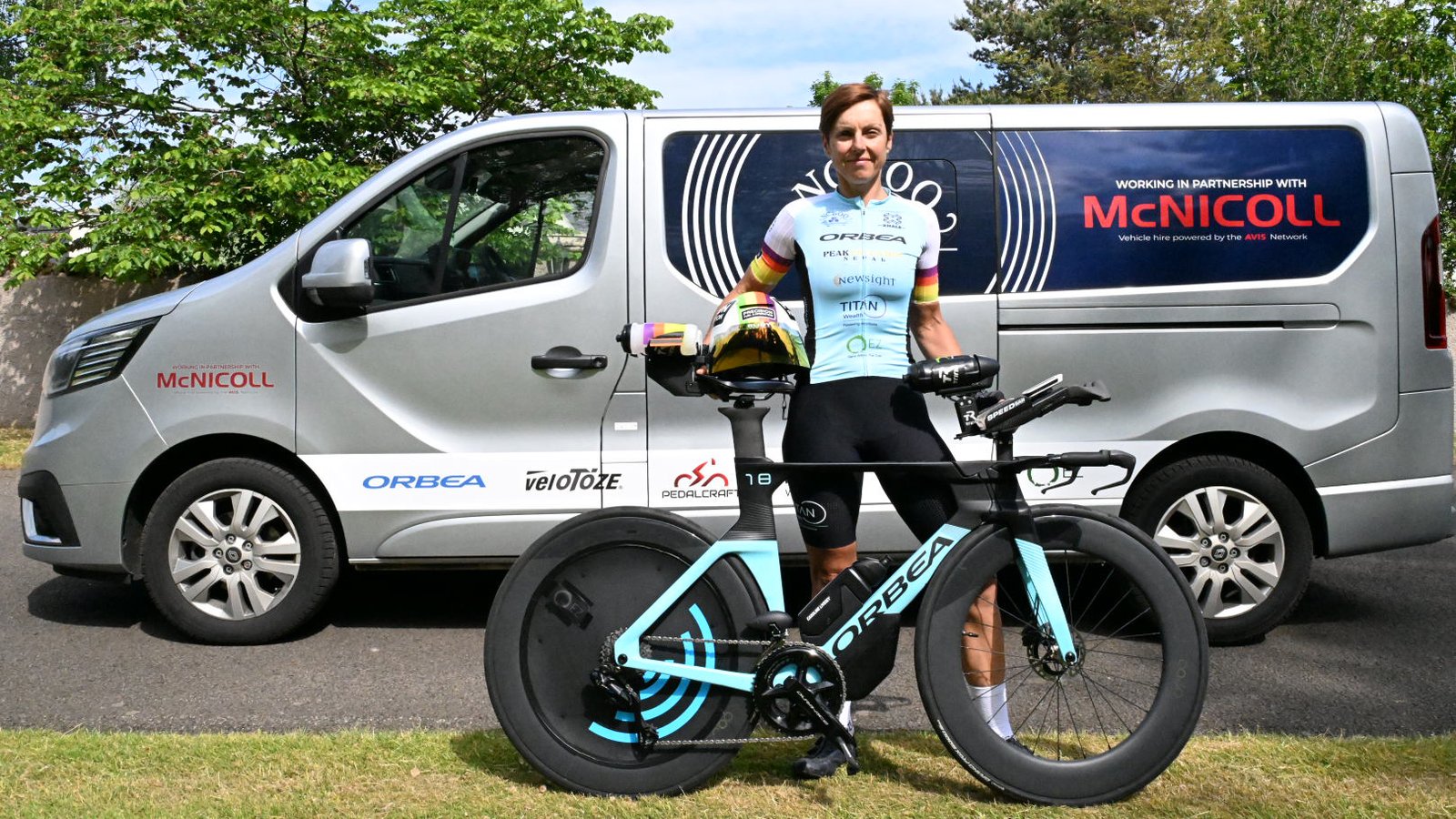
Caroline Livesey before her record-setting ride
(Image credit: Mark Livesey)
Putting her neck on the line
The idea of doing a speed-ride around the NC500 came to Livesey in December, when she was in Nepal. Several years ago, after doing an endurance event in the country, during which Caroline got sick and ended up in hospital – an experience that had a profound impact on her, not least because of the kindness of her host community – the Liveseys launched a charity called Peak Education Nepal raising funds to provide access to schooling for impoverished Nepalese children.
“I wanted to do a fund-raising challenge for the charity in Scotland,” Caroline recounts. “Initially I didn’t even know there was a world record on the route, I just wanted to do an FKT. Then I came across Mark Beaumont’s ride. I spoke to Mark, and he was fantastic – he made so many recommendations.”
And then the training began. “When I started preparing for the record I hadn’t been on my time trial bike for months,” Livesey tells me. “I’d been concentrating fully on gravel racing. I went out for one-and-a-half hours on the TT bike, and it was tough. Really tough. I thought ‘Wow! I’ve got myself into something serious here.’
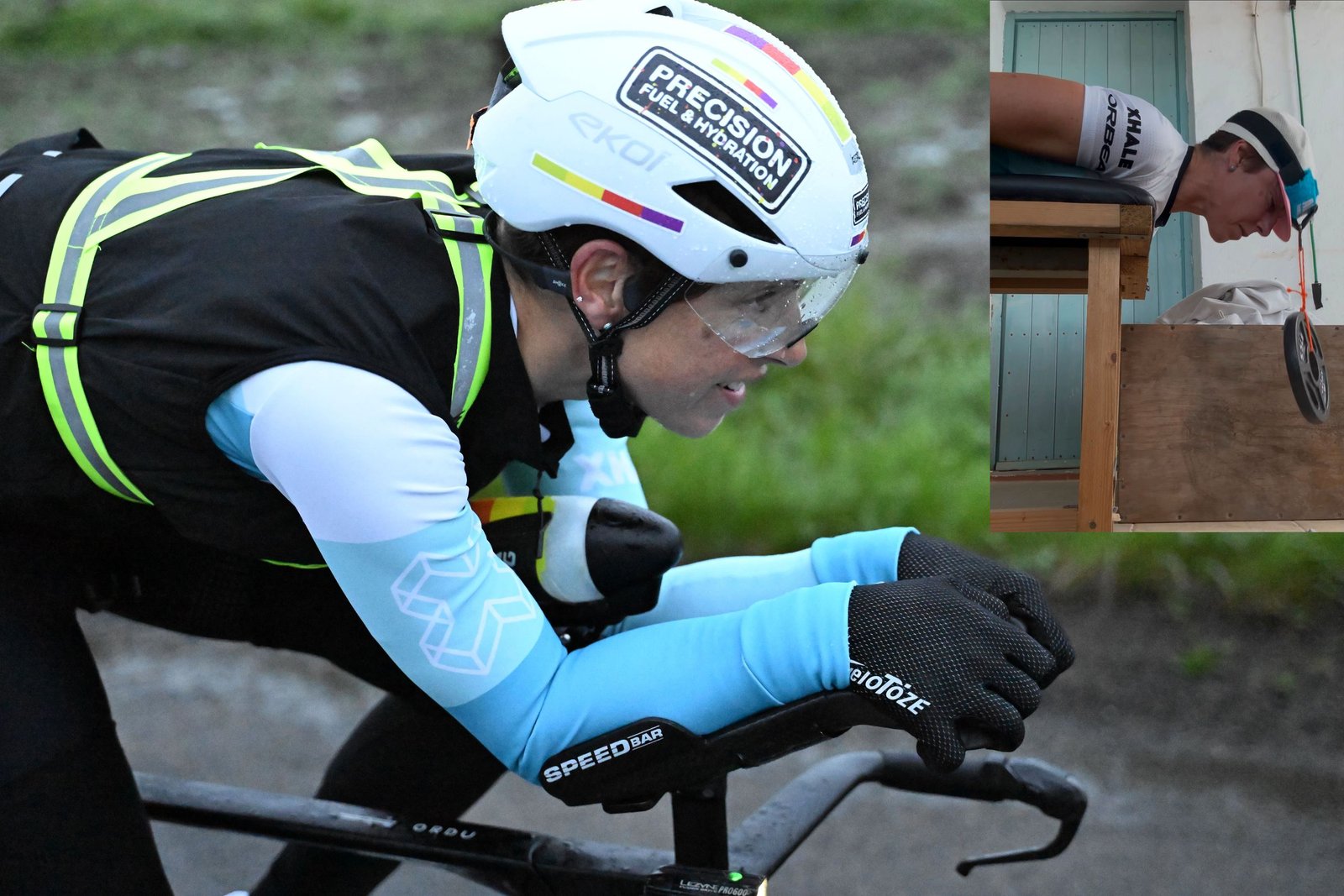
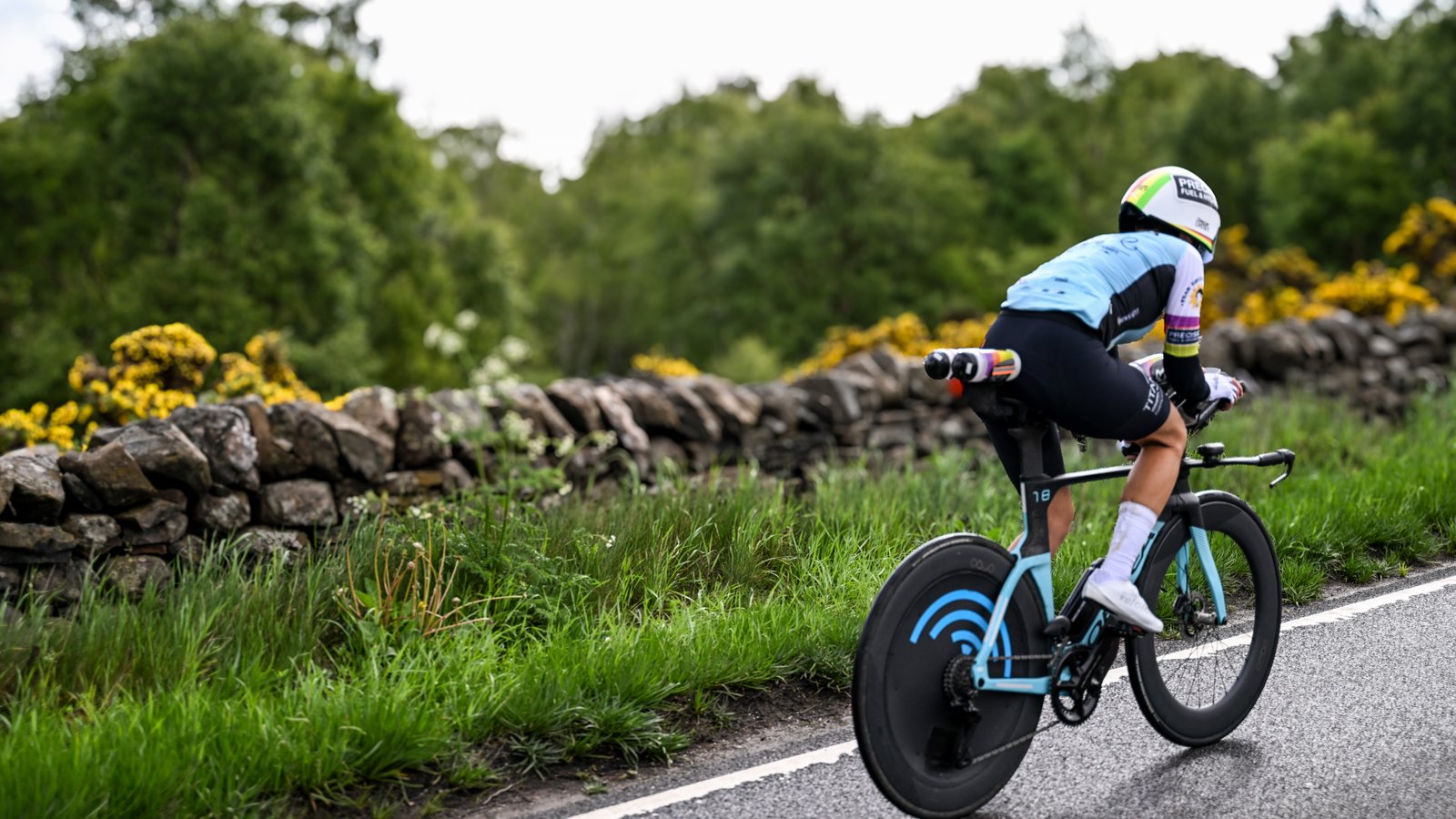
“My neck was so painful and my durability levels on the TT bike had really dropped. I knew I was going to have to sort that out to get the record. The last part of the route is pretty flat, and I needed to be able to get down on the speed bars and be comfortable while putting in the power.”
(Image credit: Mark Livesey)
Livesey knew that during his record-setting ride for the fastest men’s NC500 in 2022, Beaumont had sufferedd a neck injury precisely because of the hours he’d spent in one, frankly unnatural position on the bike. She wasn’t about to risk such an affliction ruining her ride (or her life for months afterwards), so Livesey set about designing a bespoke training method to strengthen her neck.
“I rigged up a system in the gym and – three times a week, for six months – I hung weights off my head to strengthen my neck muscles. I had a baseball cap, with a hook on the front, and I’d be down on all fours with a weight hanging off it, nodding up and down – although at first I could only hold it still. I started with a 2.5 kilo weight and built up to a 5kg weight.”
Beyond her unorthodox neck workouts, Livesey spent endless hours in the gym preparing for this one ride. “Strength and durability is so important for a challenge like this,” she explains. “You can be as strong and fast as you like for the first 20 hours, but if you start losing efficiency in your pedal stroke after that, it’s all for nothing.”
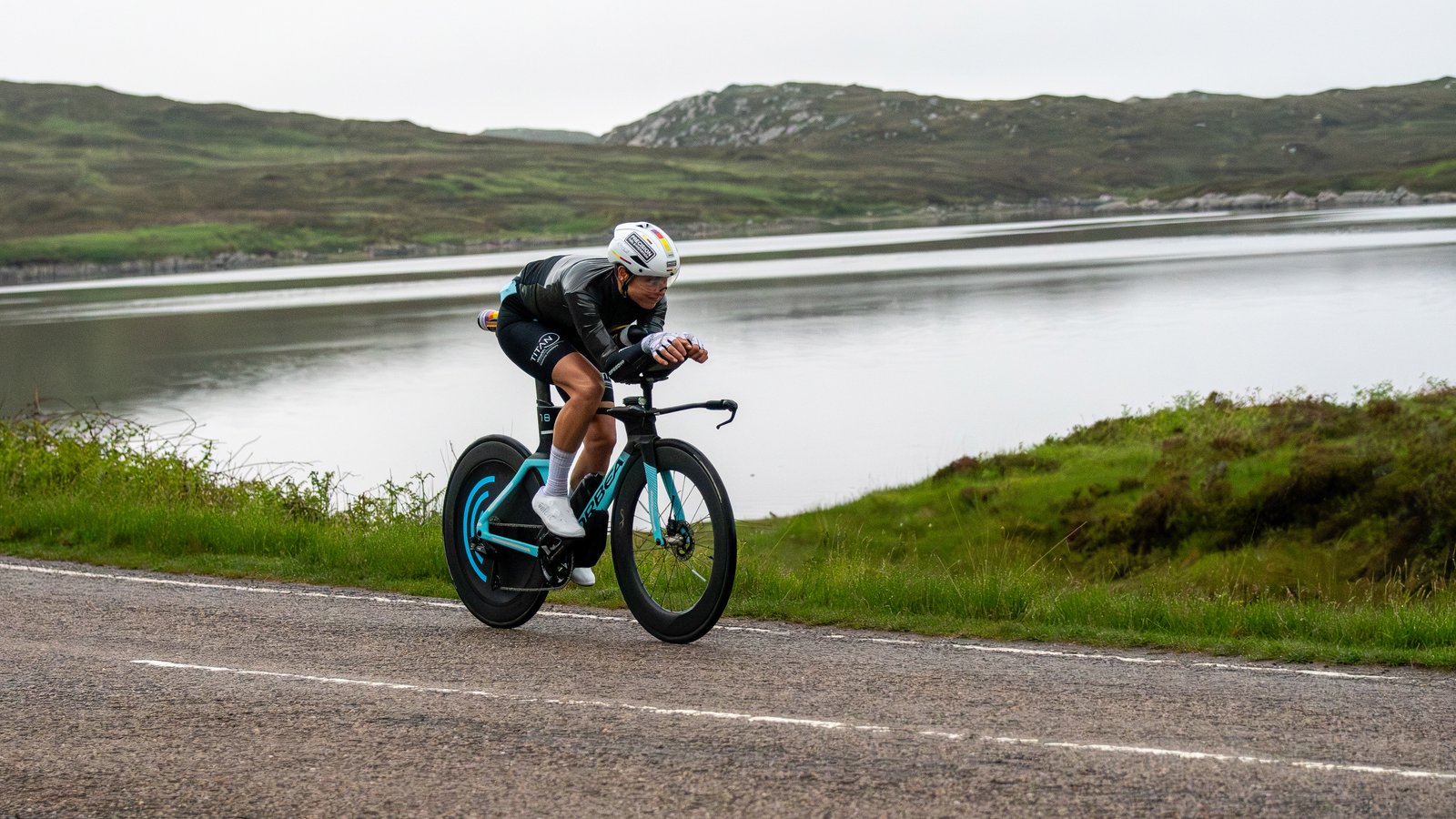
And her dedication paid off: “Tony, my mechanic and manager, who was in the vehicle behind me, remarked how my riding position did not change at all during the whole ride. I put that down to the strength training. I experienced no neck or shoulder pain at all.”
(Image credit: Mark Livesey)
The crew
Livesey had seven people in her main crew: three in the main support vehicle, two in a camper van and two medics in a four-wheel drive. In the van were two officiators, collecting everything required for WUCA (who verify for Guinness) to ratify the record.
There’s no fixed route for the NC500, but there are 24 must-visit waypoints, which more-or-less dictates the course. “Britta and Debbie had to have me in line-of-sight at all times,” Livesey explains. “They documented my position every 45 to 60 minutes, describing the conditions, and took time- and date-stamped photos.” For the record to be confirmed, everything had to match up with the tracker and the stats on Livesey’s bike computer.
“Tony was my tech support and team manager, and his righthand man, Graham, had ridden the route about a month before, so he had brilliant road knowledge,” says Livesey.
“The two medics had a Land Rover-style ambulance, and they were great. They went ahead to check for obstacles. At one point they came across roadworks – the kind where you have to wait at lights and then be escorted around by a safety vehicle. The medics explained what I was doing and the workers let me through. One of the JCB drivers even put a tenner in the charity collection.”
(Image credit: Mark Livesey)
The timing
The success of any long-distance bike ride in Scotland, let alone one that takes you through the night, is heavily dependent on the elements, which are unpredictable even during the long days of midsummer in the far north, when the sun (if it deigns to make an appearance at all) only dips beneath the Highlands horizon for a few hours. Livesey timed the record attempt around the summer solstice, for obvious reasons, but she still needed a good weather window.
“Paul Easto from Wilderness Scotland was my weather guru,” she reveals. “I asked the crew to make themselves available for a designated week. In the build-up I couldn’t bear to look at the forecast, but when we did check it, a front was clearly coming in, and we had to get ahead of it.
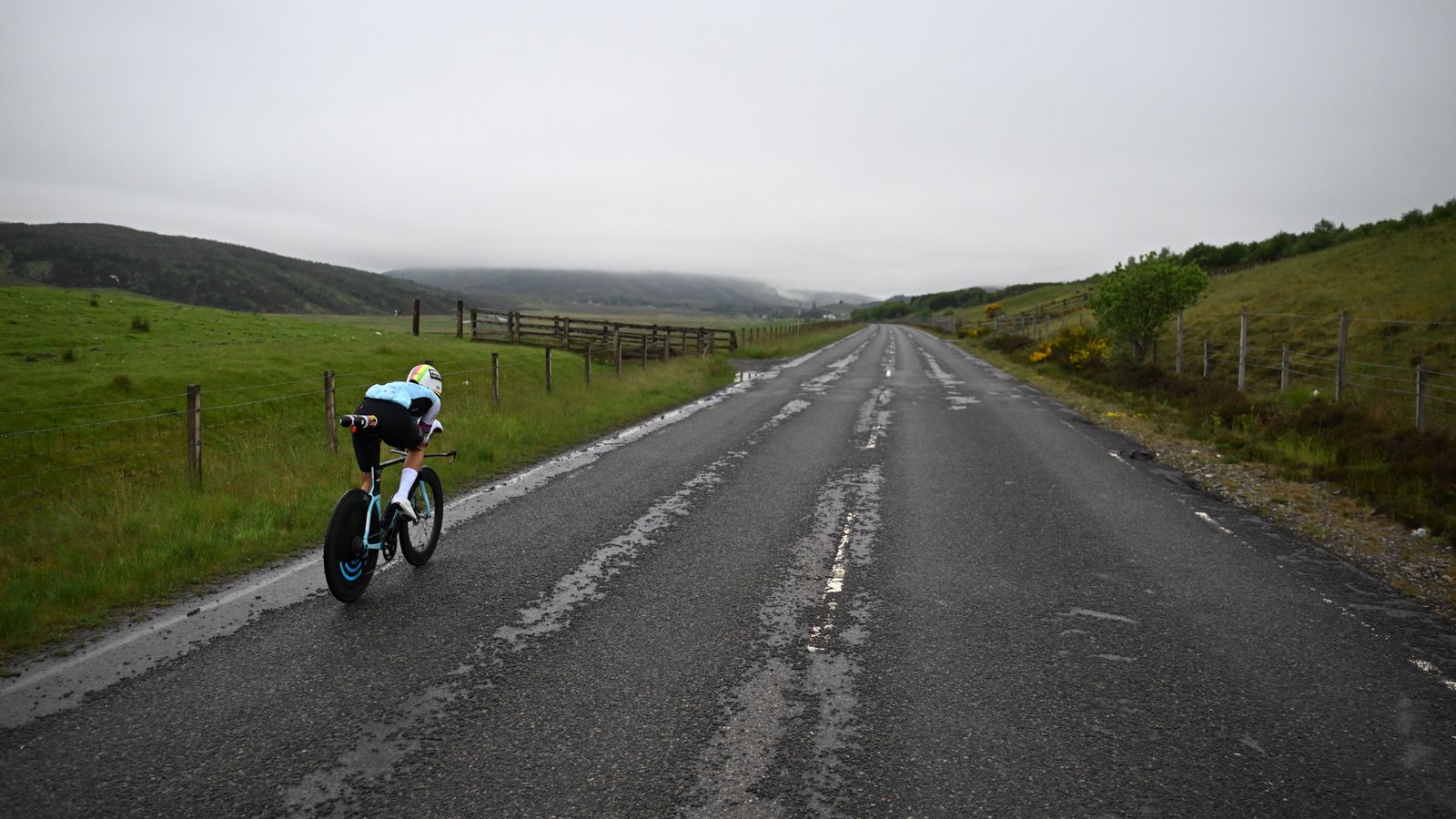
“Wind is the most important factor. I can still ride fast in rain, but wind is a different matter. In the end, rain was what I got – for about half of the time. Light, heavy and misty rain. There was almost zero sun, but there was also very little wind, so it was fine. The roads in Scotland are pretty good, and I didn’t feel like I was going to slide, even in the wet.
(Image credit: Mark Livesey)
The gear
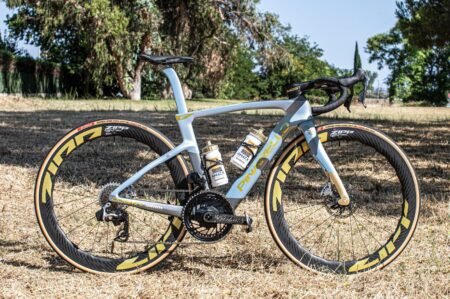
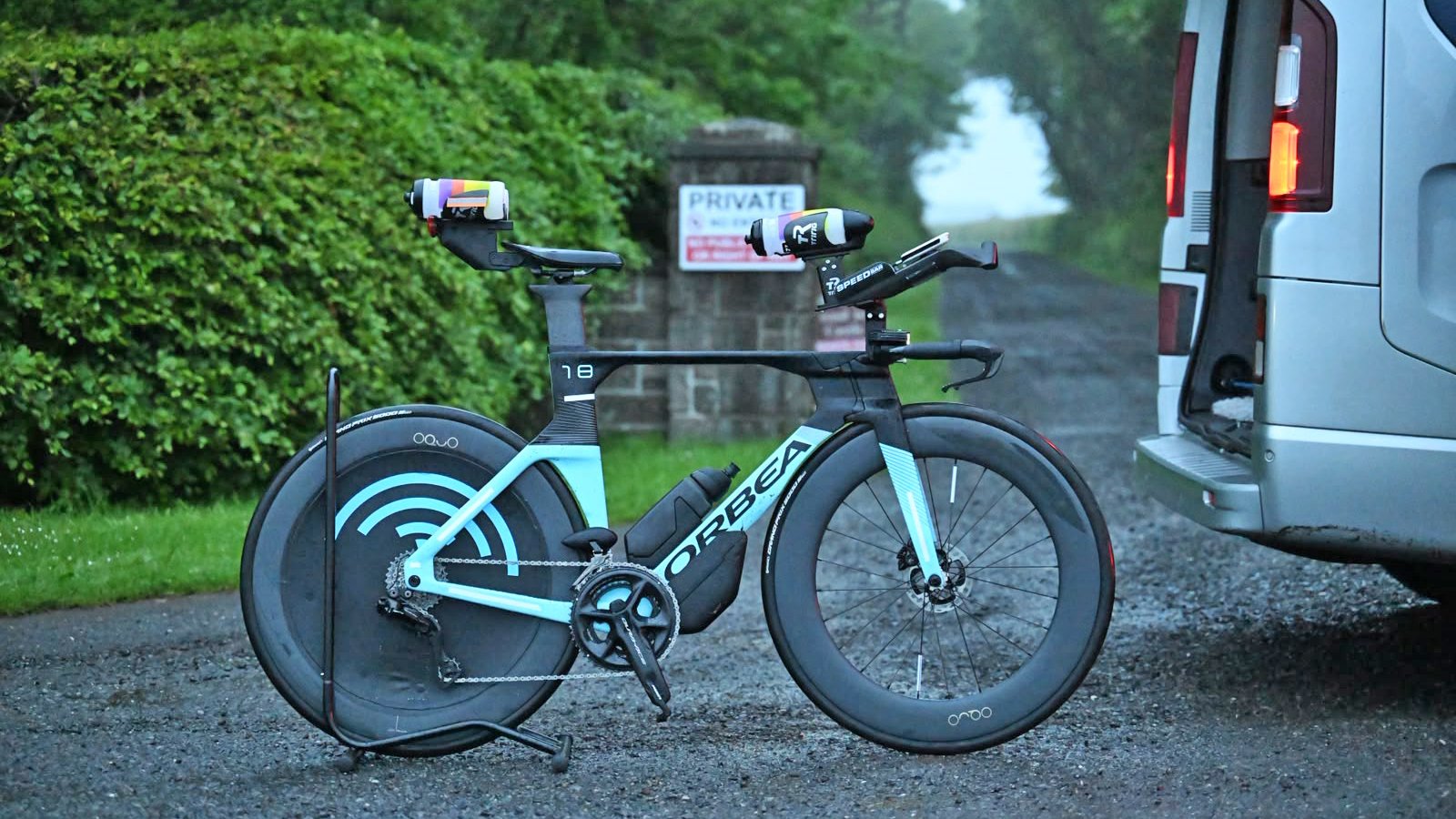
Livesey used two bike set-ups during her ride. For the faster, flatter sections she rode an Orbea Ordu TT bike, with a Shimano Dura-Ace groupset (dual power meter, 36/52 chainring and 11/30 cassette), a Speedbar cockpit, Oquo RA80LTD CS wheels, with 28mm tyres on the front and 30mm on the rear, and EZ Gains BTA bottle mount and BTS double bottle mount and disc cover.
And on the lumpier sections she swapped to her Orbea Orca Aero road bike, also with a Shimano Dura-Ace groupset (dual sided power meter, 52/36 chainring and a 11/34 cassette) and Oquo Road Aero RA57Ltd wheels, running 28mm tyres front and back.
Using Graham’s up-to-date route knowledge, plus weather assessments and by assessing Livesey’s physical condition, Tony determined when the bike changes would occur. “Swapping bikes felt good,” Livesey tells me. “On a ride like this, a change is as good as a rest.”
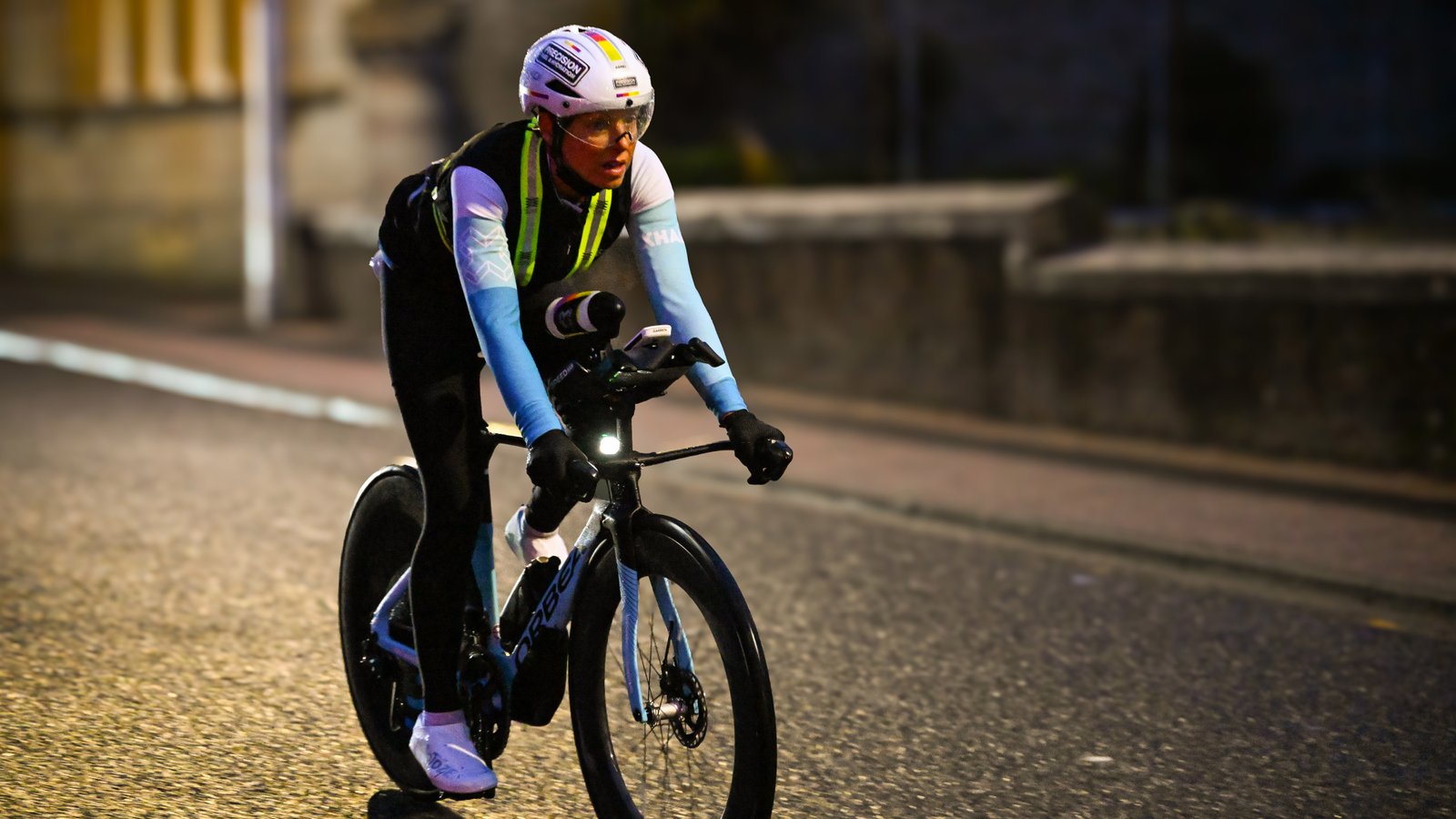
Caroline Livesey rides into the night
(Image credit: Mark Livesey)
The fuel
Nutrition and hydration was obviously going to be critical, and as soon as she decided to attempt the NC500 record, Livesey visited the Precision Hydration lab in Dorset, where she did a sweat test and had her lactate threshold analysed.
“I met with Dr Sam Shepherd, the head of sports science, and we came up with a nutrition plan really early, back in January, which allowed me to mix supplements with real food,” she recounts. However, Livesey rode half the length of the NC500 course five weeks before her record attempt and suffered severe digestive problems – serious enough to derail the record if they happened on the day.
“Sam worked out that it came down to what I was eating the day before,” says Livesey. Also, once you go through the night, it gets more complicated – your body changes. You need back-up caffeine and carbs.
“Once I nailed it, I ate the exact same things all the time, primarily PH chews, flapjack, rice pudding and water with 500mg or 1000mg electrolyte tablets. The flapjack was crucial – I made it myself to a secret recipe. One batch had cocoa power in it, and I found myself craving the flavour.
“During the record ride, Sam was like my nutritionist phone-a-friend during the record attempt – Britta and Debbie were talking to him regularly.”
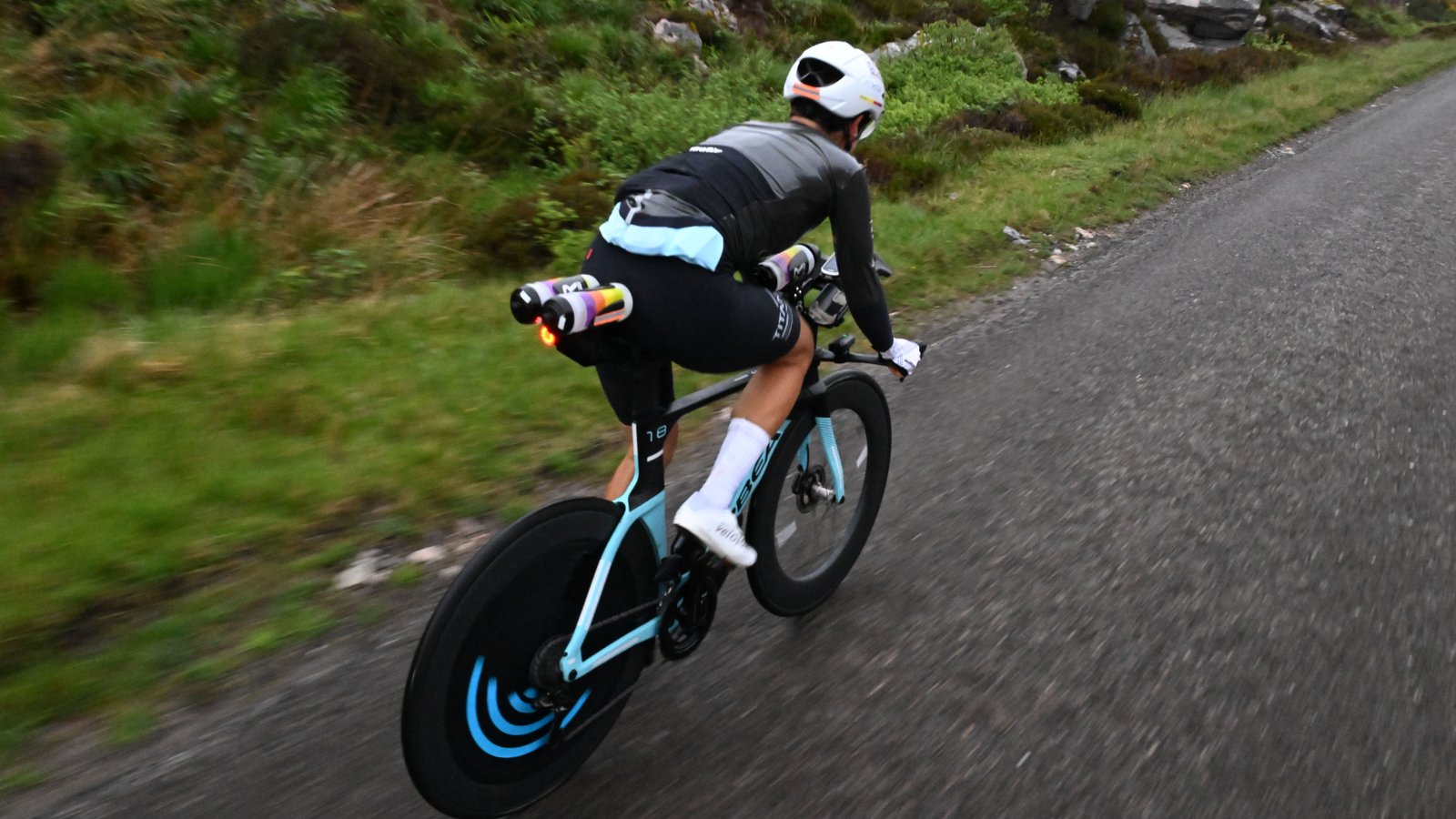
(Image credit: Mark Livesey)
When a plan comes together
Livesey’s military attention to detail, disciplined training regime and high-precision planning all paid off, and as Earth turned and Tuesday night segued into Wednesday morning, she was well ahead of schedule to demolish the existing FKT. Not that she was about to ease back.
“For me it wasn’t just about beating the record,” Livesey tells me. “I wanted to do it as fast as I possibly could. Based on my long practise run, I thought the fastest time I could possibly do was 32 hours. I was very power focussed. Even when the crew were telling me I had bags of time, I didn’t want to let up.”
It wasn’t all plain sailing, however. “I was very lucid for most of the time, and I genuinely did enjoy it,” Livesey recounts. “But there was a stage around 6am on Wednesday, when I was experiencing nausea and micro sleeps. And I had something going on with my eyeball – it happens when you’re in the TT position for hours, looking up, and the muscles in your eyes get tired. My vision got very blurry.
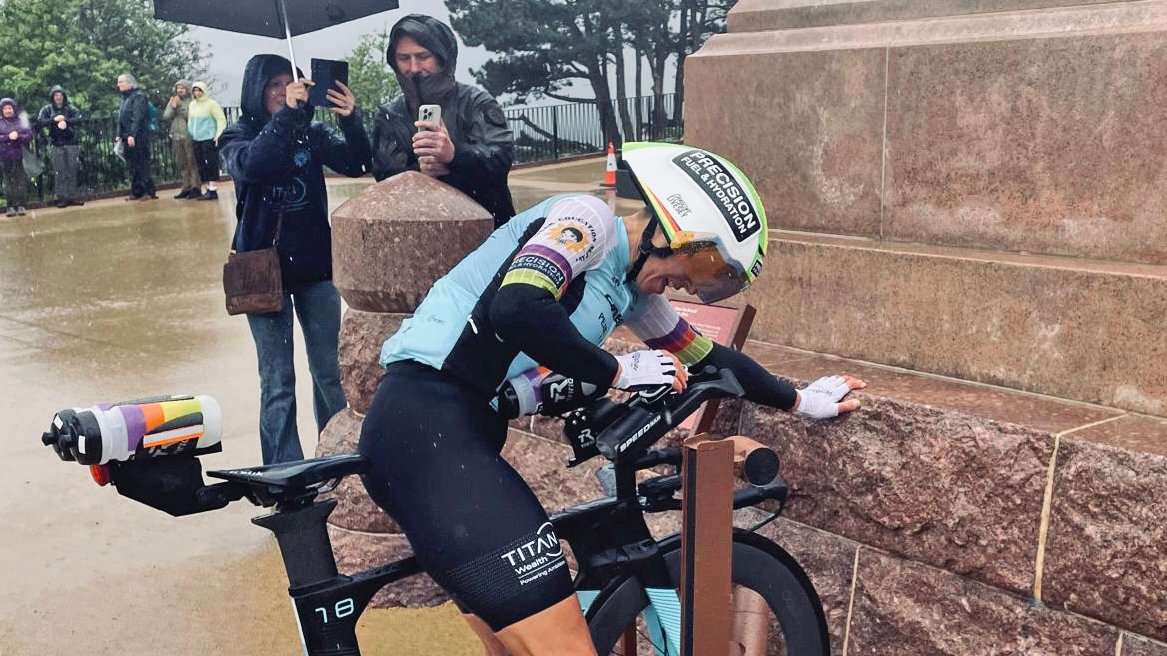
(Image credit: Mark Livesey)
“I ate some rice pudding, had a protein shake and swapped over to the road bike for a couple of hours, because when you’re on the TT bike, there’s a voice in your head telling you ‘it’s alright, just lay on these bars and have a wee sleep’. And that’s very dangerous.
“It happened again on the A9, and there was nowhere to safely pull over. When I eventually stopped, I considered getting into the van for a small sleep, but I was wet through and shivering, and I knew my body would quickly shut down. So I spoke to Sam, drank some coke – always a last resort – and kept going.
“Then the sun came out and I was flying. The heavens really opened towards the end, but I could smell the finish then, and I wasn’t stopping for anything – except traffic lights… It felt like I hit every red on the way into Inverness.”
Ultimately, neither sleep monsters nor traffic lights could stop Livesey setting a stunning time. And she raised over £18,000 for Peak Education Nepal, which will double the charity’s capacity to help children with an education – something Caroline sounds even happier about than securing the record.
Read the full article here