



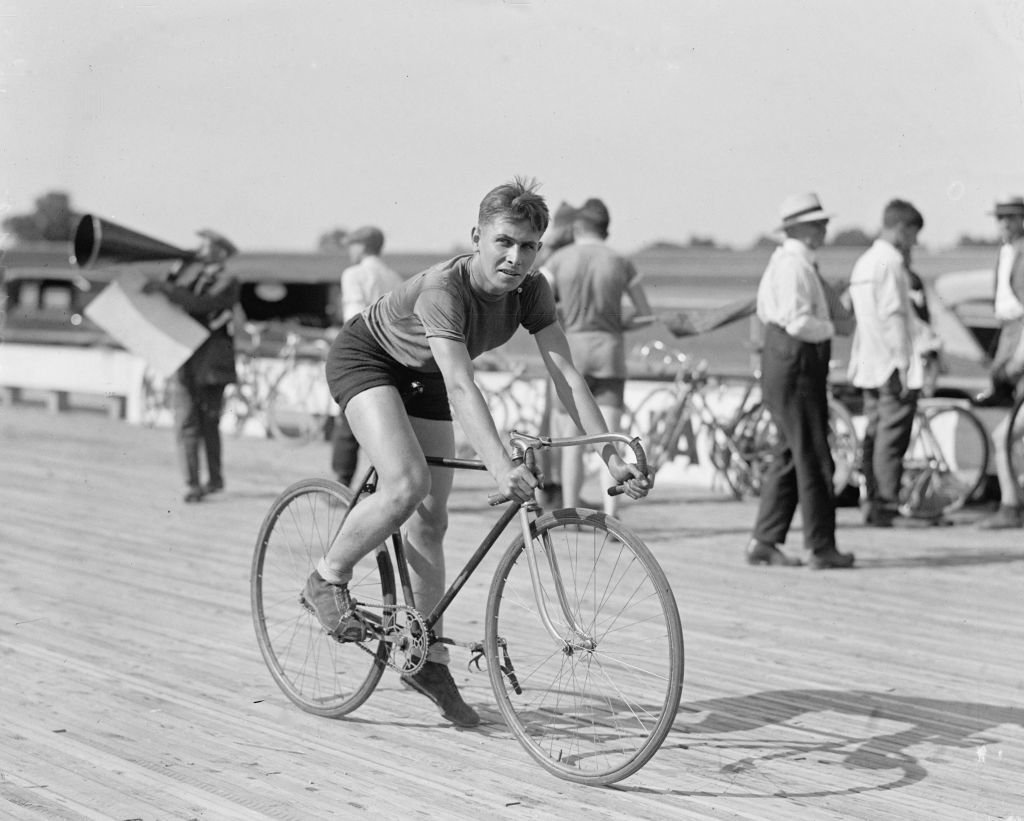
‘Bicycle eye’, ‘bicycle arm’, ‘bicycle elbow’, ‘bicycle heart.’ If you took up cycling towards the end of the nineteenth century, you’d be well used to these terms. They were plastered in newspapers and hurled at passing cyclists; as the use of the bicycle boomed, so did the hysteria surrounding the invention.
While the pedal-less precursor to the bike we know today was invented in 1817, the modern bicycle wasn’t widely used until the 1890s. Penny farthings had been replaced by safety bicycles in the late 1880s and for many everyday people without access to horses, their worlds expanded.
“One of my favourite facts is about what the bicycle did for genetics,” Will Manners, author of Revolution: How the Bicycle Reinvented Modern Britain told Cycling Weekly. “For people living in rural areas, being able to get around on bicycles expanded the range of marriage partners available to them.”
According to geneticist, Steve Jones, this phenomenon makes the bicycle one of the most important inventions in recent human evolution.
While the bicycle was improving the lives of some randy rural riders, the bicycle was attracting a slew of critics, too.
In 1897, an article in Punch titled ‘Wheel Wictims’ advised its readers that ‘bathing in the whirlpools of Niagra’ would be a safer sport than cycling. In his blog, The Victorian Cyclist, Manners described gangs of ‘roughs’ who would assault cyclists by leaving timber in the roads, or laying traps of string in cyclists’ paths. The police, too, were known to be ‘overzealous’ in their treatment of cyclists, arresting swathes for ‘furious riding’ using scare-tactics that extended to jumping out of a hedge and onto passing cyclists.
“Cycling was a bit of a social craze,” Manners said. “When anyone starts doing things en masse, it can generate quite a lot of social anxiety as well as excitement.”
The vast array of bicycle-related ailments is testament to this social anxiety. ‘Bicycle eye’ was said to arise when a cyclist assumed a hunched over riding position, and put pressure on the ‘optic nerves’. In Italy, a physician concluded that the hearing of 24 men who had cycled 32 miles was ‘defective,’ only returning after a couple of hours of rest (‘bicycle ear’). The image of a cyclist with elbows outstretched, hunched over the handlebars was an unfamiliar sight to a society still growing accustomed to the bicycle boom, and heralded warnings of ‘bicycle neck’ and ‘bicycle back’.
The crowning glory in an era of ridiculous cycling ailments, ‘bicycle face’ was said to cause serious disfigurement. According to one account in Pearson’s Weekly, C.A. Pearson wrote that ‘bicycle face’ resulted from ‘the constant anxiety, the everlasting looking ahead, the strain on a nervous disposition which imparts a hard, set look to the face, and gives a haggard, anxious expression to the eyes which is quite painful to observe.’
Cycling, however, took a gentler view, writing: ‘we know riders of both sexes who have ridden for lengthy periods… and the only alteration we have ever noted in the countenances of any one of them is that the complexion has invariably been improved.’
Cyclist was going against the grain. Nothing scared its fearmongering contemporaries than – you guessed it! – female cyclists.
Bicycle face was said to impact women most of all. If they cycled outdoors their “good looks” could be at stake. ‘Beware of the bicycle hand!’ Warned one newspaper clipping, of the damage done to ‘lily white, tapering fingers’ when gripping the handlebars. ‘Bicycle foot’ could be sustained from a poor dismount: ‘as a rule, women do not know how to jump.’
Hysteria generated around the bicycle was a direct result of its newness. It was not only a tool for transport, but one of social change, too. One female cyclist in 1899 said that the bicycle ‘is in truth the women’s emancipator’. The bicycle gave women more autonomy over their movements, and meant some would wear knickerbockers or bloomers without a skirt. Within a few decades, the scandal of a trousered woman would be largely forgotten.
From made-up medical emergencies to a bicycle baby boom, the biggest lesson Manners found in his excavation into Victorian cycling, was the thing that first sparked his interest in the subject.
“The thing that transcends time is the escapism of the bike, just the absolute pleasure of being outside, exercising in the fresh air, with views of the countryside. These remain the same,” he said.
“I’ve seen accounts of older men who have reached that kind of very respectable stage of life and just going out on their bikes and just behaving like they were 30 years younger. That’s what matters in life, that kind of excitement in leisure time, of escape.”
Read the full article here