


Fourteen years ago, on the outskirts of Seoul, South Korea, a group of 20 eager, Canadian teenage baseball players were handed a humbling bit of news.
The club, made up of talented high schoolers from across the commonwealth, was holding a pregame meeting before its opening matchup of the 2012 18-and-under Baseball World Championship against Team Japan. Head coach Greg Hamilton, a no-nonsense Canadian baseball lifer, strolled into the room. He gazed at the kids he’d helped assemble, the majority of whom had never been so far from home. A handful, such as Josh Naylor, Cal Quantrill and Jacob Robson, would go onto play in the majors. Others would carve out minor-league careers. Some chose other paths.
But all of them remember the rest of that day. It started with a scouting report from Hamilton that was half-warning, half-pep-talk.
“The guy on the mound for Japan is the best 18-year-old pitcher in the world.” the typically sensible, un-hyperbolic skipper told his players, according to Robson. “And he’s also the best 18-year-old hitter in the world.”
He was, of course, referring to Shohei Ohtani.
Although, technically speaking, Ohtani’s name did not yet have an anglicized H. During the 2012 18U BWC, both his Samurai Japan uniform and the official box scores spelled that now unmistakable surname “Otani.”
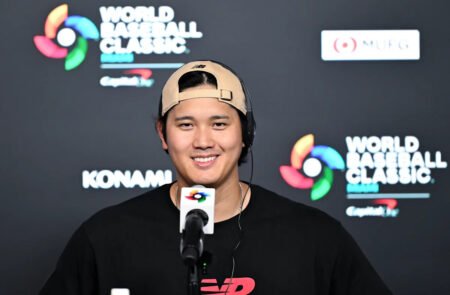
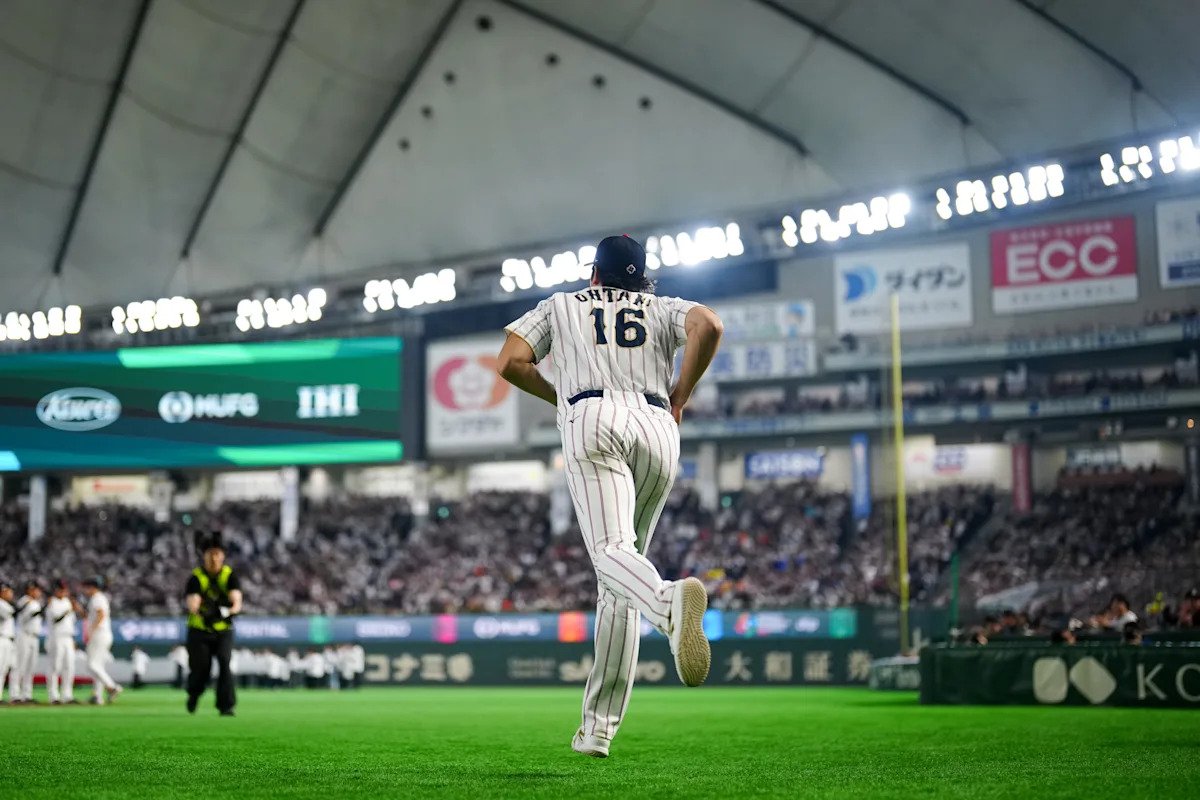
Things are a little different now. These days, the 31-year-old is a global superstar, a national hero and the captain of Japan’s quest to capture back-to-back World Baseball Classic titles. Three years ago, in his first WBC appearance, Ohtani propelled his club to glory with an unprecedented two-way performance. He won the tournament’s MVP Award by going 10-for-23 at the plate with 10 walks and five extra-base hits. He also made two brilliant starts, as well as an unforgettably dramatic relief appearance to close out the championship game against then-teammate Mike Trout.
With the 2026 tournament in full swing, and Samurai Japan set to play Venezuela in the quarterfinals on Saturday night, the focus is once again on Ohtani.
But while his international career has blossomed into the stuff of legend, it started with a disappointing afternoon in front of a reported attendance of just 125 people. In the first Team Japan appearance of his life, Ohtani, already a decently known character in his homeland, was bested by a pesky squad of Canadians who didn’t know who he was until Greg Hamilton told them.
“[Hamilton] went on to say that he didn’t say it to get us scared,” Robson explained. “He was just trying to prepare us, like, ‘Hey, he throws super hard. He knows what he’s doing.’ Everybody’s been on him since he was a young kid. He’s a prodigy.”
[Draft your Yahoo Fantasy Baseball team for the 2026 MLB Season]
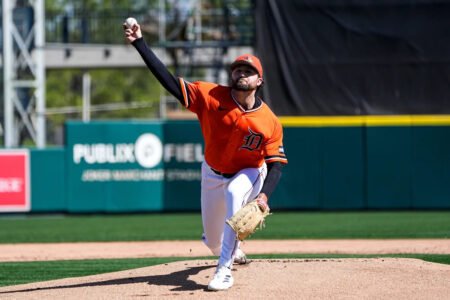
Prodigy he might have been, but Ohtani’s final pitching line that day was underwhelming: 3 1/3 innings, 3 hits, 3 earned runs, 4 walks, 4 strikeouts. At the plate, he went 1-for-3 with an intentional walk and a laser-beam, double-play lineout that nearly decapitated Canadian hurler Ryan Kellogg.
Coincidentally, though a handful of MLB evaluators were in attendance, it was a significantly smaller group than might’ve been expected. That’s because a highly touted Korean lefty named Hyun-Jin Ryu, who was set to move to MLB that winter, was throwing the same day for the Hanwha Eagles. And so a number of scouts who would’ve otherwise seen Ohtani were out watching Ryu.
But even though Ohtani got knocked around and knocked out early, the opposing hitters were blown away by his stuff.
“I step in the box, and he’s just pumping heat, 94, 95,” remembered shortstop Daniel Pinero, who went on to win a College World Series with the University of Virginia. “At that time, nobody threw that hard, especially high schoolers. And we were coming from Canada, too, where it was 85, 86. This long, lanky kid goes on the mound, and he’s just pumping heat, with nasty movement, too, and we’re like, ‘OK, this kid is disgusting.’”
That overpowering arsenal left Canada flummoxed in the early going, with Ohtani inducing some ugly, ugly swings along the way. He struck out three in the second inning, including Naylor, the future All-Star and current team captain for Canada in the WBC. In the third, Ohtani’s command abandoned him, as a walk, a few passed balls and a single led to Canada’s first run. Things went south one inning later, when a walk, a hit-by-pitch and two singles gave Canada the lead. That brought Japan’s manager out of the dugout for a pitching change, but Ohtani’s day was far from done.
“I think they took him out of the game, and he just jogged to the outfield,” Robson said. “I think he played outfield every inning he didn’t pitch.”
Ohtani also continued to take at-bats, flaring an RBI single to left in the seventh and drawing an intentional walk in the ninth. Japan took the lead in the seventh, but Canada sent the game to extra innings in dramatic fashion in the bottom of the ninth, with a game-tying, two-run homer off the bat of third baseman Jesse Hodges. The Canadians ultimately walked it off on a wild pitch in the 10th, completing the upset.
“These are the types of games that you dream for as a kid,” Hodges was quoted as saying afterward. “Hitting a home run to tie the game in the ninth for your country is the best feeling in the world.”
That victory would push Canada to one of its best results on the international stage, a silver medal, following a loss to Team USA in the title game. Ohtani would pitch one more time in the tournament, in the fifth-place game against hosts Korea. In that one, he was dominant, striking out 12 across seven innings of two-run ball, a more appropriate harbinger of the stellar international career he’d go on to have.
But that first outing? Against Canada? For Ohtani and his teammates, it was one to forget. But for the Canadian players, it was a core memory, one they think about to this day.
Said Robson: “I always say that to random people when they’re talking about Ohtani — like, ‘Oh, I played against him in high school.’
“They’re like, ‘What?’”
Read the full article here