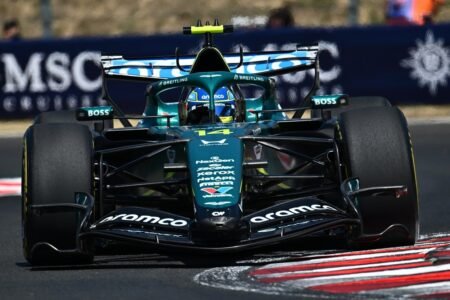

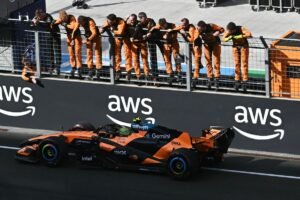


Tucked into the Bristolian fields is one of Britain’s fastest-growing companies responsible for powering up to half of the Formula 1 grid. Dynisma Motion Generators is a 180-person simulator firm partnered with the likes of Ferrari, Alpine and Cadillac, plus others, that has been an industry leader ever since it was founded in 2017.
Its architect is Ash Warne, an aerospace engineering graduate turned banker, who joined McLaren in 2007 after spotting an aero modelling job advert in an old Autosport magazine copy – let’s hear a ‘you’re welcome’! Warne subsequently spent the next six years in Woking before heading to Ferrari, with whom he was an engineer for four years before creating the multi-award-winning company he is known for today.
Those awards take pride of place on a trophy cabinet in Dynisma HQ – honours such as the 2025 Technology Company of the Year at the British Business Awards, the same year it featured on The Sunday Times 100 Tech list – located on a rapidly-expanding campus just off the A370.
Talk about capitalising on a gap in the market!
“When I moved back to the UK, I had an opportunity to take a little bit of time and really think about what I wanted to do,” Warne told Autosport. “I realised, having spoken to people, that nobody had really nailed it. So I just took time, spent the first 18 months working out what the game plan was, and came up with the technology that we’re still using today.”
That technology has seen it become the go to simulator provider for not just F1 teams, but squads across a range of championships from Formula 2, Formula E, the World Endurance Championship and even stateside for IndyCar. It simply comes down to whether teams are prepared to spend up to £10million building their own in-house model, or put that money towards a readymade platform that “will always be the most responsive, have the highest bandwidth and lowest latency” – the time delay between action and response – according to Warne.
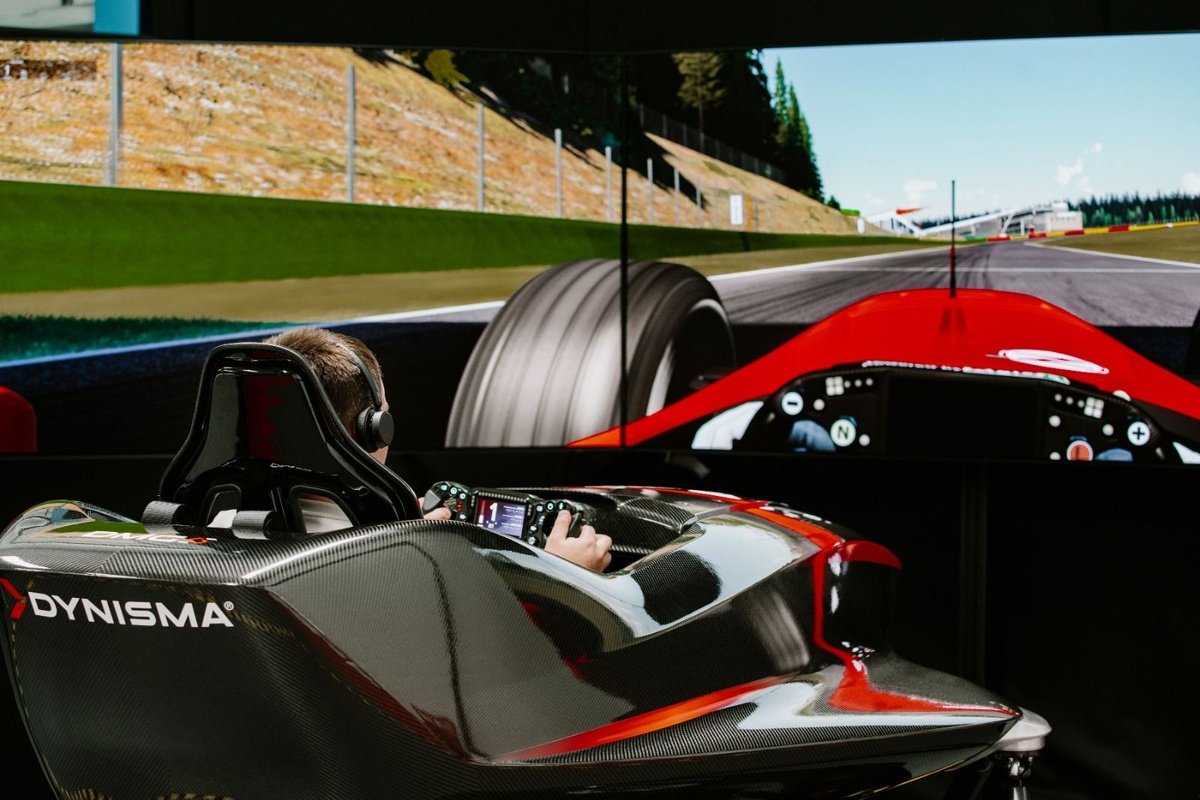
DMG-360XY, the top of the Dynisma simulator range
Photo by: Dynisma
“A team principal, as somebody who has to work out how to build a race-winning team, they want their guys focused on developing the car,” he added. “They don’t want to necessarily have to build a team who knows how to build a simulator, the first time they’ve done it, then that team moves on, goes somewhere else, and you’ve got this product that you can’t develop anymore.
“What Dynisma offers is a reliable, trusted, proven solution to give the best technology that is there available. We’re definitely not the cheapest, we are far from the cheapest, but when this is a technology that a team is going to rely on for the next decade, they need to be able to invest in something that they trust.”
But Dynisma is now aiming to reduce those costs with today’s (10 June) launch of its latest product, the DMG-S, placed within the upper echelons of the six-figure ballpark. This is its third model in the space following the DMG-1 and the “pinnacle of Dynisma’s motion platform range”, the DMG-360XY, which is the one trusted by F1 teams. With a latency of less than five milliseconds, over 100Hertz of bandwidth and five metres of XY travel, the 360 has been a real game changer at the top of motor racing, but now Dynisma is looking at grass roots level.
“We expect to be able to sell to people who are in karting,” said Warne. “Our vision is that everyone who comes into motorsport, if they get where they want to go in F1, they’re probably going to be using a simulator. So we would like to be able to offer that journey to start even earlier.”
It is hoping to do just that with the DMG-S, also aimed at customer racing teams, which is a much more compact package to help develop drivers in a more accessible environment. The DMG-S uses the same technology as its predecessors, packed with a latency of fewer than 5ms and motion bandwidth above 50Hz, fitting within a 2.5m x 2.5m footprint.
So the package is designed for easy-build and comes in two configurations: GT and touring car applications, plus single-seaters. When Autosport visited Dynisma HQ for a test run, it was remarkable how lifelike it was, particularly with the virtual reality headset on, as this writer was plonked into the screaming Ferrari F2004 at Spa.
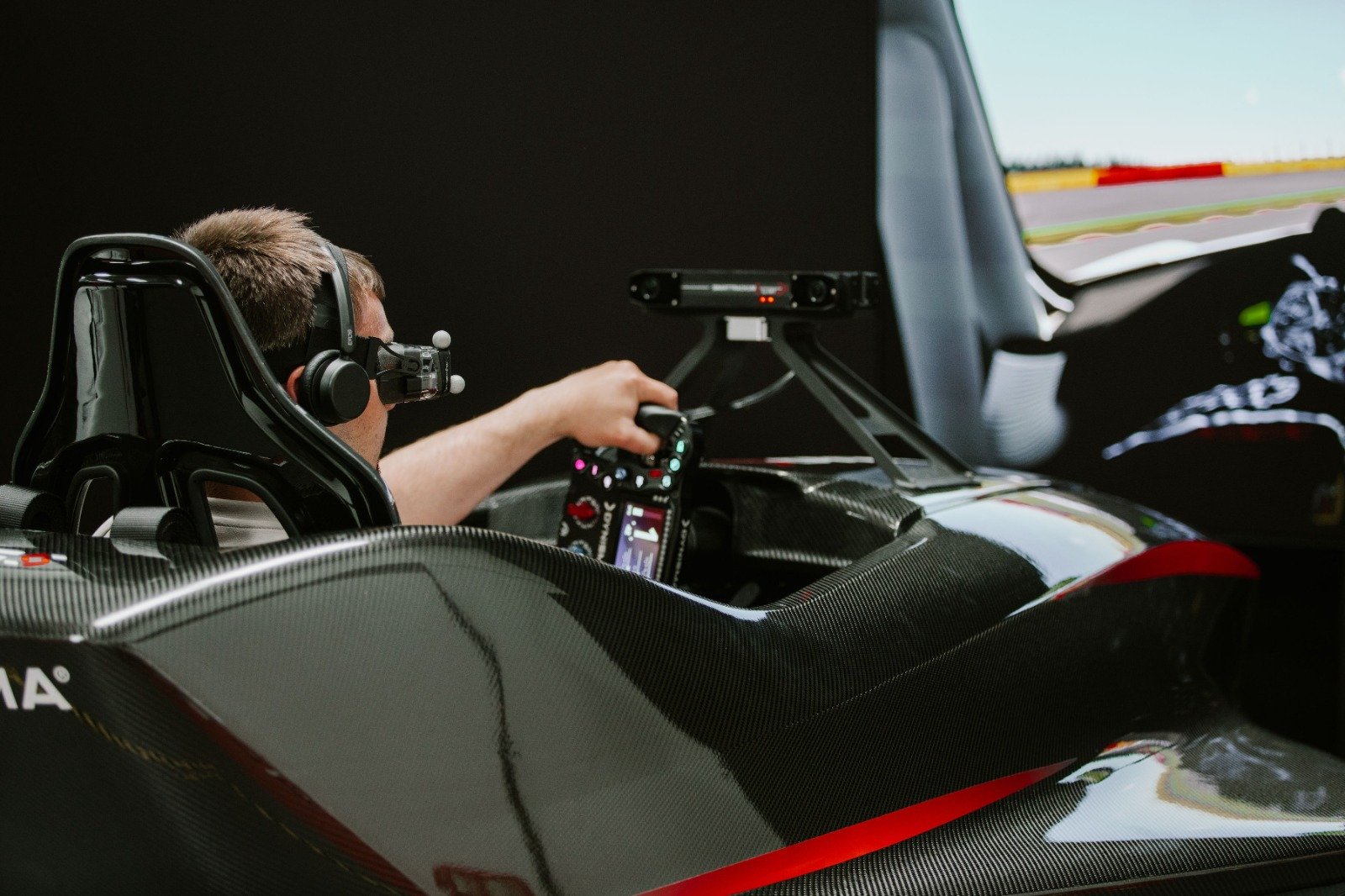
DMG-S
Photo by: Dynisma
It was like the Ferrari, with which Michael Schumacher won his seventh world title, was stuck to the track as it was incredibly smooth through the corners, taking third gear at Pouhon and even going flat-out at Eau Rouge!
The Porsche GT3 was a bit more difficult, however, being truly on edge and hard to fight causing many a trip into the gravel. No doubt a more skilled driver would have tamed it better but come the end, unlike on a console, the effects of the constant movements of the simulator as one went over the kerb or through the grass was certainly felt.
For what is an industry that has “taken over”, world champions like Max Verstappen always speak highly of the benefits of racing simulators, Dynisma is at the forefront and is showing no signs of slowing down. “DMG-S is the first time we’ve really focused, not only on how to bring the cost down, but how to make the manufacturing that much faster,” concluded Warne.
“So we expect and hope to be exporting them all over the world quite quickly. We already know we’ve got a very busy couple years ahead of us!”
We want to hear from you!
Let us know what you would like to see from us in the future.
Take our survey
– The Autosport.com Team
Read the full article here