


Welcome to silly season. That’s what fantasy basketball heads call this absurd stretch of the NBA calendar, where it appears nine-ish teams have decided — with TWO months left in the regular season — that it’s in their best interests to bench and load-manage their best players and to lose as many games as possible.
That’s right: real NBA organizations colluding not to compete.
Much of the “strategy” stems from the chance to land a superstar in a highly-anticipated 2026 draft class. It’s definitely stacked — Darryn Peterson, Cameron Boozer, A.J. Dybantsa, Caleb Wilson, Mikal Brown Jr., Kingston Flemings and more have franchises waving the white flag in February instead of waiting until late March, as they used to.
But here’s the thing: silly season isn’t nearly as bad as everyone thinks. Yeah, some veterans will get shut down and some minutes will be unpredictable. But early tanking also creates a massive opportunity for waiver wire hunting — if you know where to look.
How silly season actually works
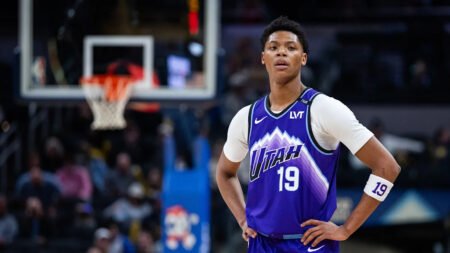
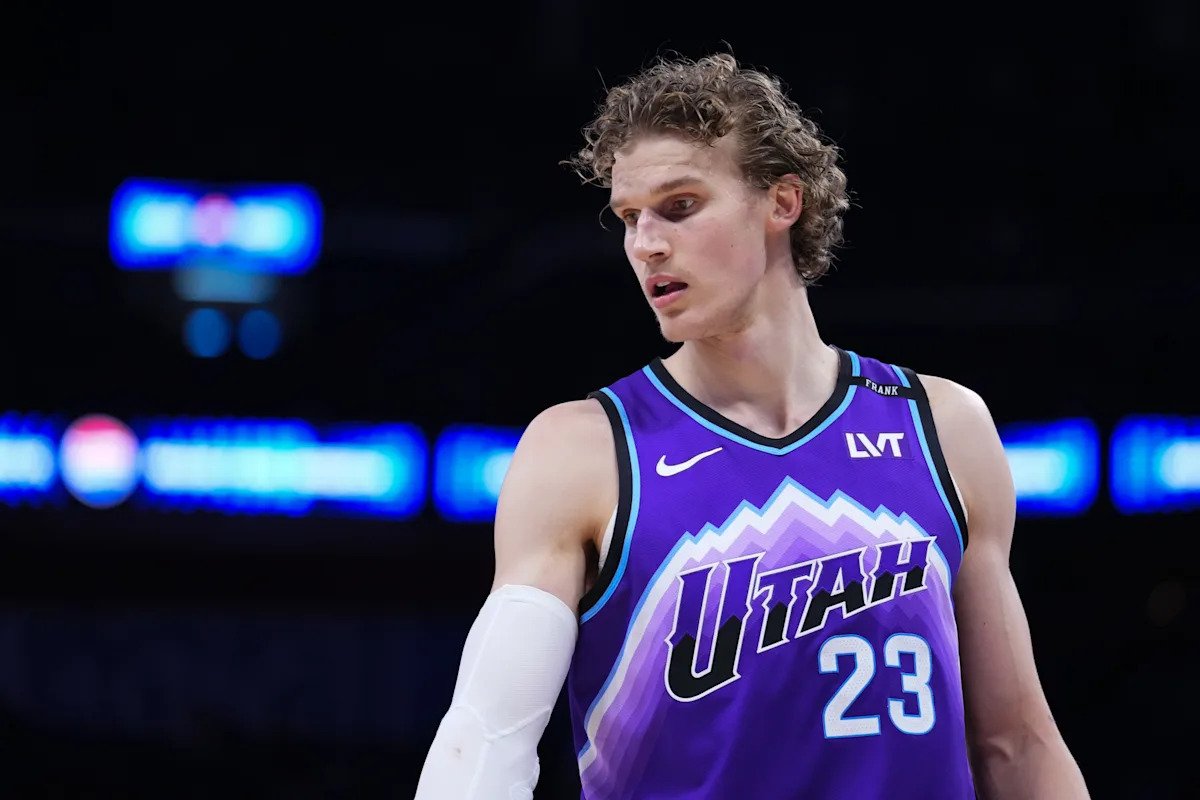
When teams enter silly season mode, you start seeing the random DNPs, late scratches for “illness,” managed workloads and late-season role reductions for vets in favor of giving younger players more playing time. Lauri Markkanen, for example, is a known silly-season commodity. He was on the wrong side of a Jazz tank job last season. A solid early-to-mid round pick who most thought would be unscathed by the All-Star break is already experiencing ridiculous, silly season theatrics. Not only has he been load-managed since January, but now he’s catching DNPs, plus getting benched in the fourth quarter of games. Mind-blowing stuff.
There’s no penalty for teams at the league level to stop this non-competitive nonsense, and unfortunately for fantasy managers and fans, we’re left to deal with it. Plenty of others will face a similar fate as Markkanen’s after the All-Star break, so let me tell you how I’d handle it.
Getting ahead of the curve
The obvious move is to sell high on assets in tanking situations that you think are at risk for being load-managed from Week 18 through the fantasy playoffs. But here’s the problem: most managers already know the deal. Trade markets for the Siakams, the Lauris and the MPJs will dry up fast once the rest of the tanking teams join the silly season party. It’s wack, but you might be stuck with ’em. The flip side is, it’s never too late to pivot by getting ahead of the curve on waivers — identifying which young players are about to go off as a result of the vets going missing in action.
Watch the minutes and rotation trends
You’re not finding a consistent 20-7-4 guy on waivers in competitive 12-team leagues during silly season. But what you can find are players whose minutes increase because their team stopped trying to win. Whether it be by injury or whatever excuse a bottom-feeding team reports, a player going from 20 to 28 minutes is a 40% increase in opportunity. Even if the per-minute production stays flat, you’re looking at more counting stats just from volume. You’re hunting for guys who are going to be on the floor long enough to stumble into 14 points, 6 boards and 3 assists just by being there. Someone like Nets G Nolan Traore (available in 94% of leagues) is one of those types of players.
Silly season targets: The worst teams with some fantasy appeal
Brooklyn Nets (15-38)
Shallow leagues: Day’Ron Sharpe
Deep leagues: Nolan Traore, Egor Dëmin and Danny Wolf are all getting extended looks in evaluation mode.
Indiana Pacers (15-40)
Shallow leagues: Jay Huff has been productive when given minutes and could be the fail-safe if Ivica Zubac’s injury persists.
Deep leagues: Jarace Walker, Micah Potter and Ethan Thompson are all candidates for increased run as Indy evaluates its young core.
Sacramento Kings (12-43)
Shallow leagues: Maxime Raynaud is a player I’d add now with Domantas Sabonis still not ready to play.
Deep leagues: Devin Carter should see his minutes stabilize as Sacramento opts to bench Zach LaVine and Russell Westbrook down the stretch. Dylan Cardwell and Nique Clifford are also in play.
Utah Jazz (18-37)
Shallow leagues: Isaiah Collier is a must-roster as Keyonte George is dealing with an ankle injury. He has real staying power.
Deep leagues: Brice Sensabaugh and Ace Bailey for points leagues.
Memphis Grizzlies (20-33)
Shallow leagues: Ty Jerome and maybe Santi Aldama if he can get healthy after the All-Star break.
Deep leagues: GG Jackson and Scotty Pippen Jr. once his minutes restriction is lifted.
New Orleans Pelicans (15-41)
Shallow/Deep leagues: Jeremiah Fears is the name to watch. The Pelicans can’t afford to tank but are doing it anyway. I can’t speak for the usual suspects of Zion Williamson, Herbert Jones and Trey Murphy III, but Jordan Poole is out of the rotation and who knows when Dejounte Murray will return.
Washington Wizards (14-39)
Shallow leagues: None
Deep leagues: Tre Johnson, Bub Carrington, Will Riley, Bilal Coulibaly and Justin Champagnie are all in the mix for increased opportunities as the Wizards evaluate their post-deadline roster.
Dallas Mavericks (19-34)
Shallow leagues: Naji Marshall
Deep leagues: Max Christie, Daniel Gafford and Marvin Bagley III
Chicago Bulls (24-31)
Shallow leagues: Jalen Smith
Deep leagues: Nick Richards and Collin Sexton, with Rob Dillingham as the flier here — if Chicago fully embraces silly season, Dillingham could get a chance to earn a meaningful role in their end-of-season rotation.
The Bottom Line
Silly season is here earlier than ever. While everyone panics, stay up to date on the minutes, rotation, coach speak and game logs. Who just played 31 minutes in three straight games? Who’s suddenly getting 25% usage? That’s where fantasy value lives when teams stop caring about wins.
Be on the lookout for my playoff primer after the break!
Read the full article here