



According to a press release from The City of London Police this morning, the force have fined twice as many cyclists for running red lights in the City between April 2025 and March 2026 than they did in the previous financial year, with figures rising from 643 to 1,315. On average, the statement continued, officers are issuing 25 fixed penalty notices a week to cyclists, with Sergeant Stuart Ford, Cycle Team lead at the City of London Police, saying: “We are going the extra mile by listening to concerns of the public and cracking down on anti-social behaviour and road offences.”
All well and good. Cyclists obviously should never ride through red lights. But another set of figures were also made public today, compiled by the Metropolitan Police themselves, but obtained and released by LBC, which revealed that 96% of hit-and-run offences involving a car and a cyclist resulted in no punishment whatsoever for the drivers who fled the scene.
Article continues below
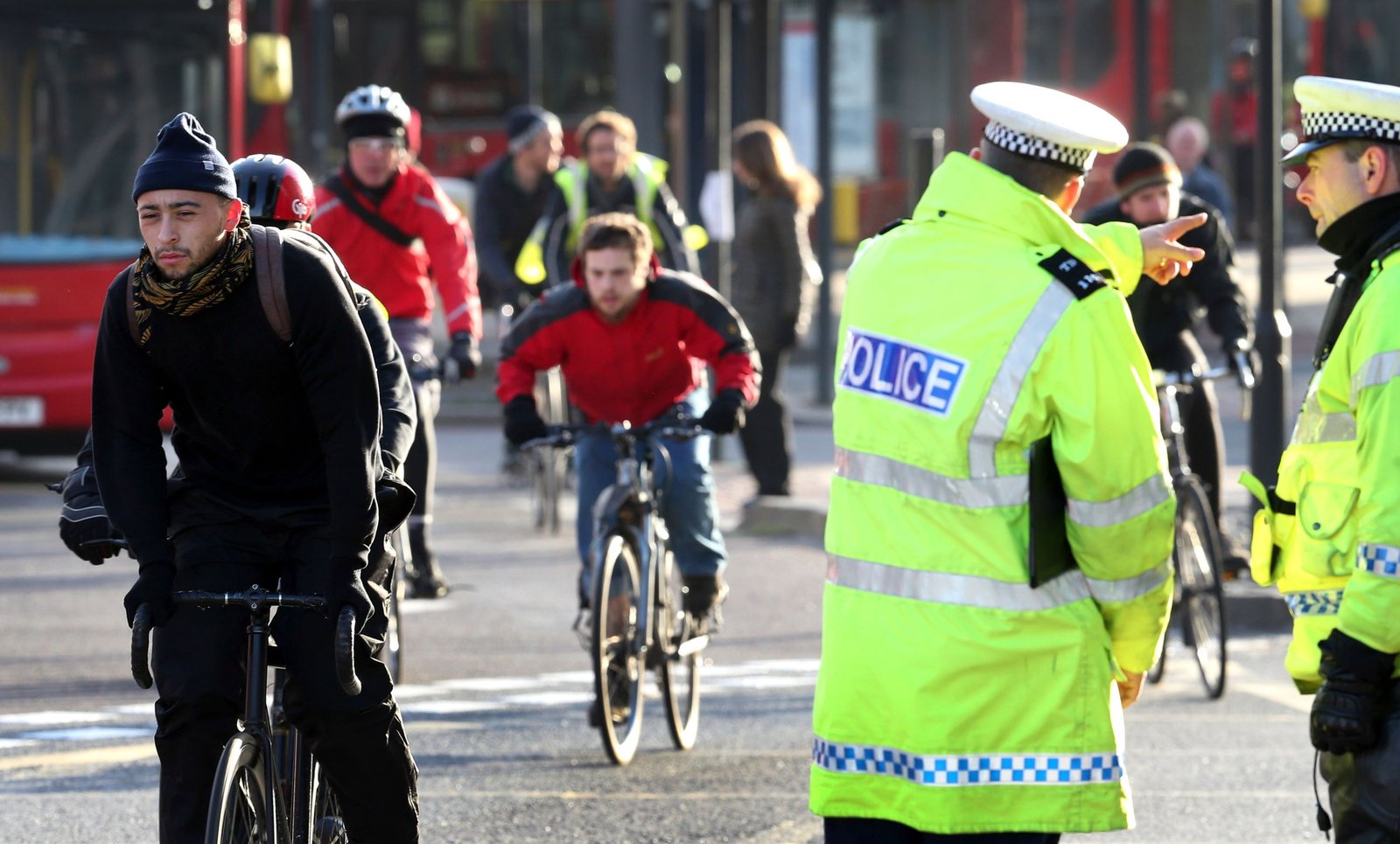
(Image credit: Getty Images)
“Running a red light is idiotic,” Simon Munk from The London Cycling Campaign. “But there needs to be a sense of proportionality. Is it more important to prosecute behaviour that might have resulted in serious injury or death, over an action that typically leads, if anything, to a minor incident or unpleasant interaction?”
Perhaps there is some political pressure, in this age of culture war conflict between car users and cyclists. Munk says he has observed a clear and increasing trend for London Councillors to blame cyclists for problems on the road. “Many drivers are also guilty of red-light jumping and ‘amber-gambling’, but the police haven’t released their figures on that,” he told CW. “We say the biggest threat still comes from cars and the City has to keep its focus on driver behaviour. Hit and run incidents are so prevalent”
Munk is also keen to point to police inaction when it comes to bike theft, and he gives examples about stolen bikes fitted with functioning trackers that the police have still failed to locate. According to The London Cycling Campaign, which has an open petition calling for more action on bike crime, some 40,000 bicycles are stolen in London every year, with only 2% ever being recovered.
“The Met are letting down cyclists left, right and centre,” says Munk. “It’s bad enough on theft, but even worse when it comes to hit-and-run incidents.”

Cyclist, Nicolas Georgiou, was the victim of a hit-and-run incident in 2025
(Image credit: Nicolas Georgiou)
I spoke to Nicolas Georgiou, a regular cyclist and Strava Artist who lives in London and last year was the victim of a serious hit-and-run incident that left him hospitalised, about his experience when he reported the crime.
“I was 200 metres from home when a van, which was parked fully on the pavement, pulled out with no indication,” he recounts. “I saw it and swerved, but it clipped my elbow and sent me flying across the road. I narrowly avoided going through the back window of a parked car, but my wheel went into a pothole and I was thrown over the bars.”
The van sped off, and Georgiou was left with a dislocated elbow, compound fractures on both knees, haematomas on his shins and facial injuries. “My new helmet, saved my head,” he says. “But I slid along on my face.” His Specialized S-Works SL Tarmac bike was also completely written off.
“I contacted the police straight away and told them what had happened,” he tells me. “They asked if I’d got an insurance number from the driver, or a registration number. And I said ‘no’, and pointed out that I’d been lying on the ground, injured, when they drove off.
“I live in Lewisham, right on the edge of a ULEZ zone, and asked if they could check the cameras on the South Circular, because the van was old and definitely not ULEZ compliant. But they said those camera belonged to the council and they couldn’t look at the footage.
“I called back when I got out of hospital, and they said they had closed the case. I appealed, and a policeman did come out. He was nice, and took down all the information, and said they would do something about it. But nothing happened.”
The pothole got filled in though, after he reported the incident to the council. But it took two months. “And they said I couldn’t make a claim for the accident,” Georgiou sighs. “Because I’d been hit by a car and knocked into the pothole, I hadn’t ridden into it by mistake…”
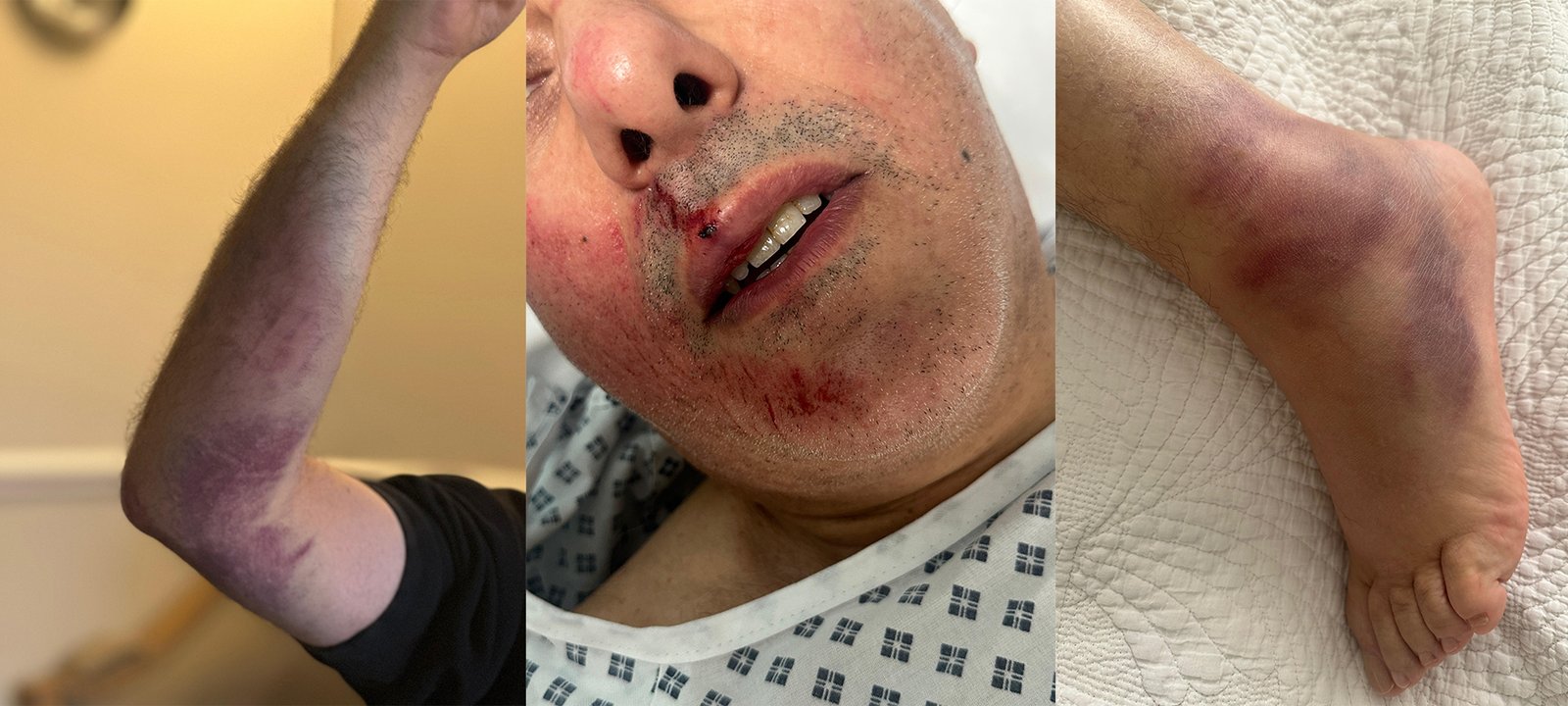
Georgiou sustained significant injuries and his Specialized S-Works SL7 Tarmac bike was written off
(Image credit: Nicolas Georgiou)
We contacted the Metropolitan Police to ask about the apparent discrepancy between the way the law is being enforced for cyclists and motorists, and to discuss the concerns we had about the way offences were being prioritised.
“The Met works hard to reduce collisions and ensure the safety of all road users, with support from partners including Transport for London and local councils,” said a spokesperson in response. “We have a dedicated team of officers, focused on offences that cause the greatest harm: speeding, drink and drug driving, mobile phone use, careless and dangerous driving, and uninsured or unlicensed vehicles and drivers.
“It is tragic whenever somebody is killed or seriously injured on London’s roads, and we remain firmly committed to reducing that risk.”
They also stated: “Whether arrests are made following a road traffic collision is dependent on a number of factors, including the severity of any injuries. Often, suspects are invited in for interview at a later date. They may still be subject to prosecution, even in the absence of an arrest, as charges can follow a voluntary interview under caution.
“In 2025, there were 52 collisions involving cars and bicycles resulting in personal injury. While there weren’t any arrests, there were four prosecutions. A number of investigations also remain open.”
Read the full article here