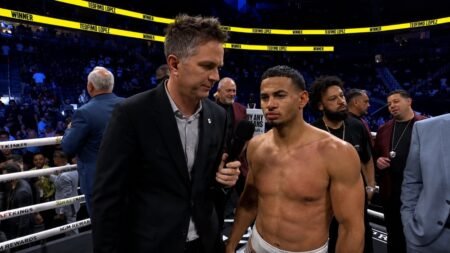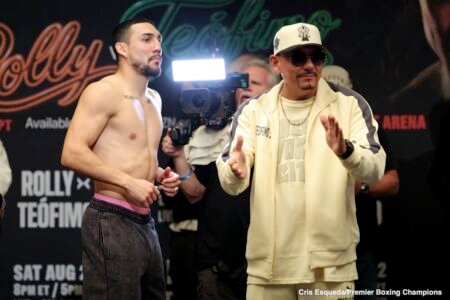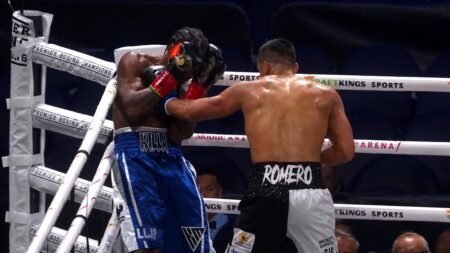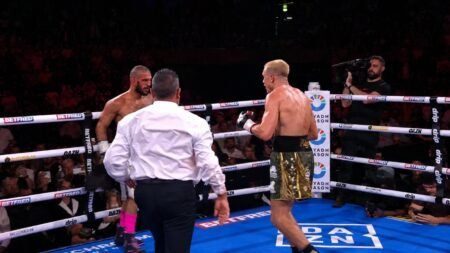

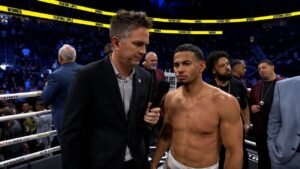


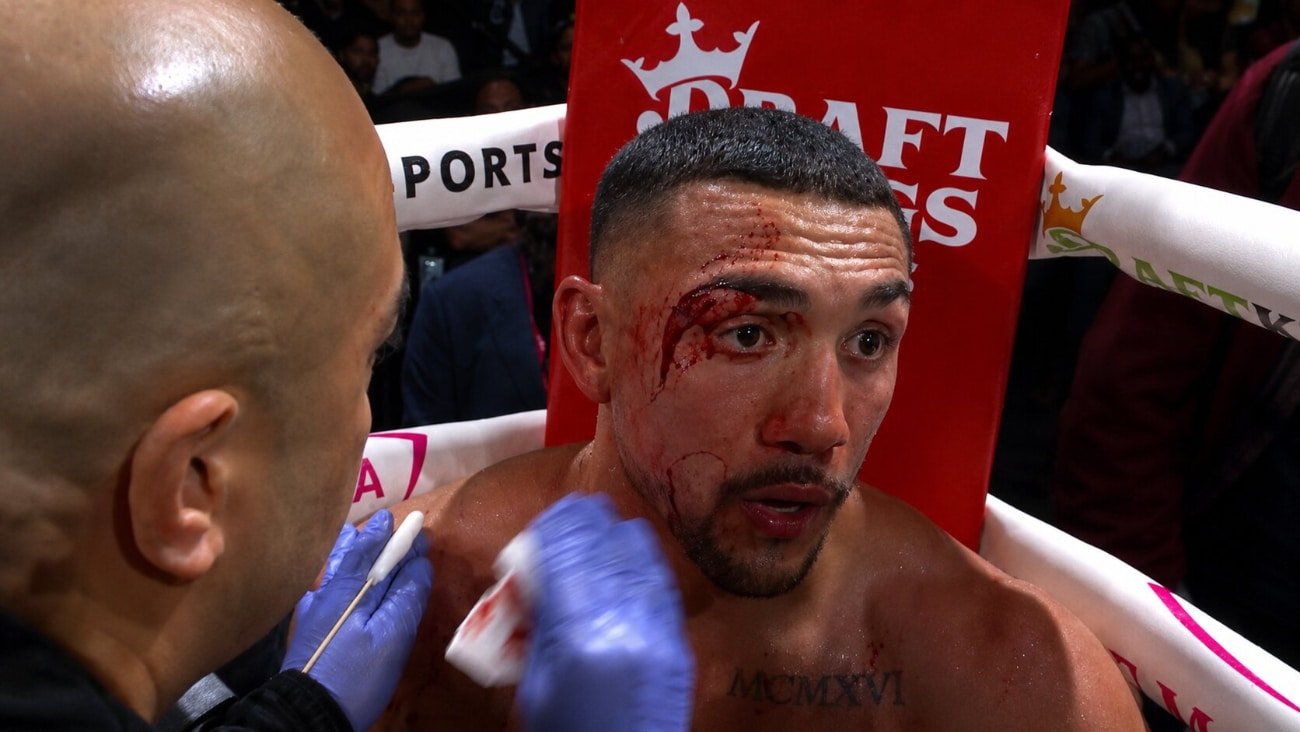

Romero’s strategy depended almost entirely on catching Lopez as he moved inside. That opportunity arrived in the fifth round when a left hand opened a cut over Lopez’s right eyebrow and hurt him. Romero followed with a flurry and had the challenger under pressure as “Rolly” chants spread through the arena.
It should have changed the fight. Instead, Romero returned to waiting.
Lopez recovered in the sixth, reestablished his jab and resumed attacking the body. Blood continued leaking from the cut during the later rounds, but it never prevented him from moving forward or maintaining his output. Romero landed isolated counters without putting enough punches behind them to take control.
The champion’s corner urged him to hold the center of the ring before the final round. He continued moving away and never produced the desperate attack required from a fighter in danger of losing his belt. By then, the crowd had grown restless after repeatedly waiting for Romero to open up.
Lopez deserves credit for remaining disciplined after being hurt. He avoided turning the fight into the reckless exchange Romero needed, kept scoring with straightforward work and closed the championship rounds on the front foot. The performance was controlled rather than destructive, with Lopez winning through activity, positioning and better decision-making.
His welterweight debut also raised a question about his punching power at 147 pounds. Lopez landed plenty of clean shots but never seriously hurt Romero. That may become important against the stronger and more active fighters in the division.
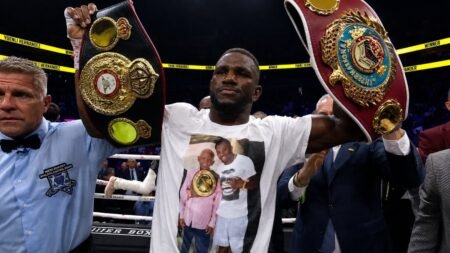
Still, Lopez accomplished what he came to Las Vegas to do. He won a title in a third weight class, while Romero surrendered his belt through passivity after finding the punch that briefly gave him a chance to take over the fight.
Read the full article here