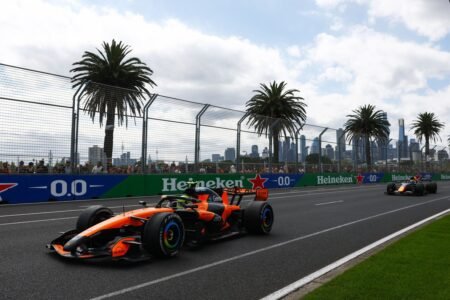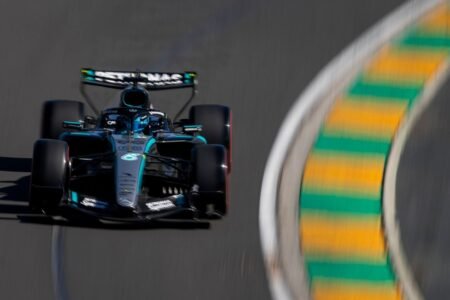


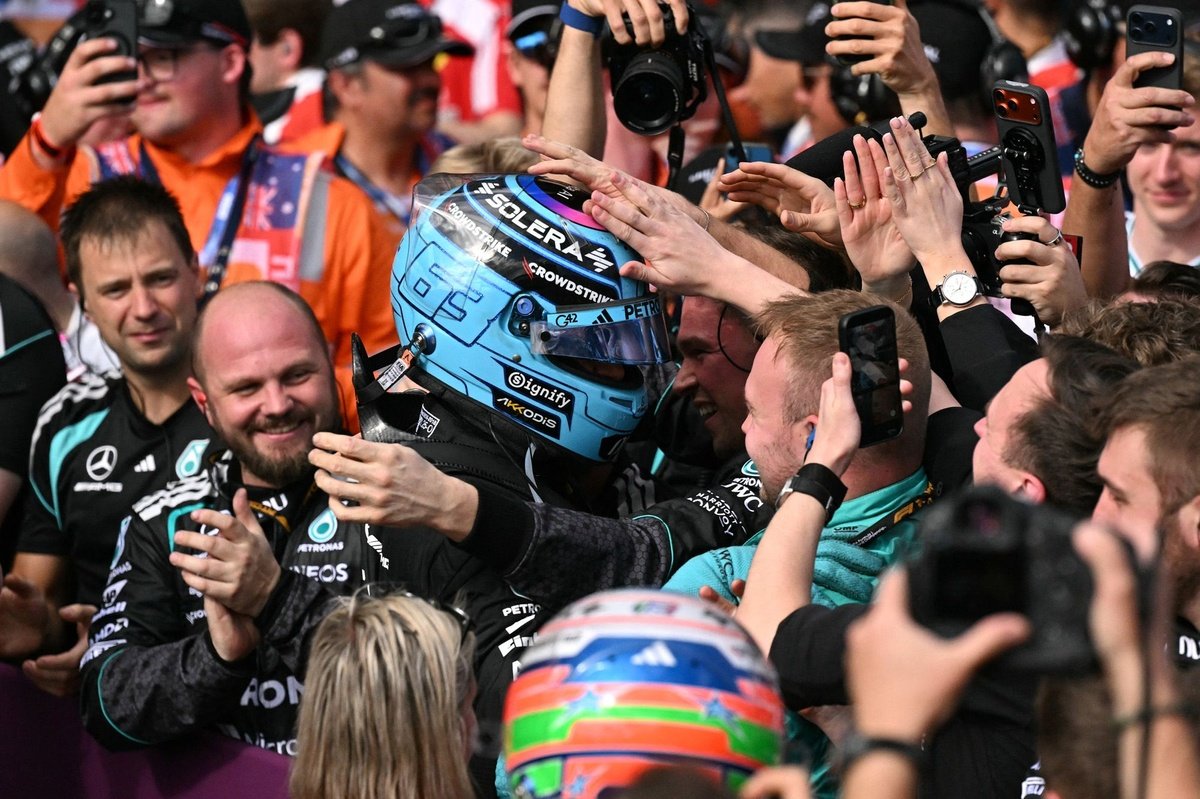
Mercedes took a 1-2 in the Australian Grand Prix kickstarting Formula 1’s new era, with polesitter George Russell winning from team-mate Kimi Antonelli as a poor strategy call meant Ferrari’s challenge unravelled.
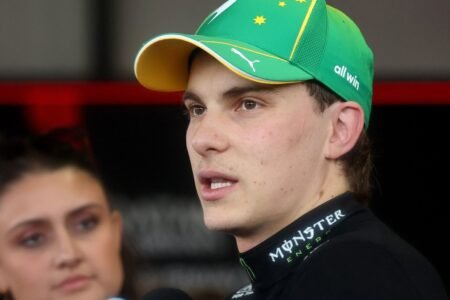
The race started with heartbreak for the home fans as local hero Oscar Piastri crashed on his reconnaissance lap. The Melburnian lost control of his McLaren MCL40 at the exit of Turn 4, and therefore failed to start the race – like Nico Hulkenberg, whose Audi R26 encountered a problem on his way to the grid.
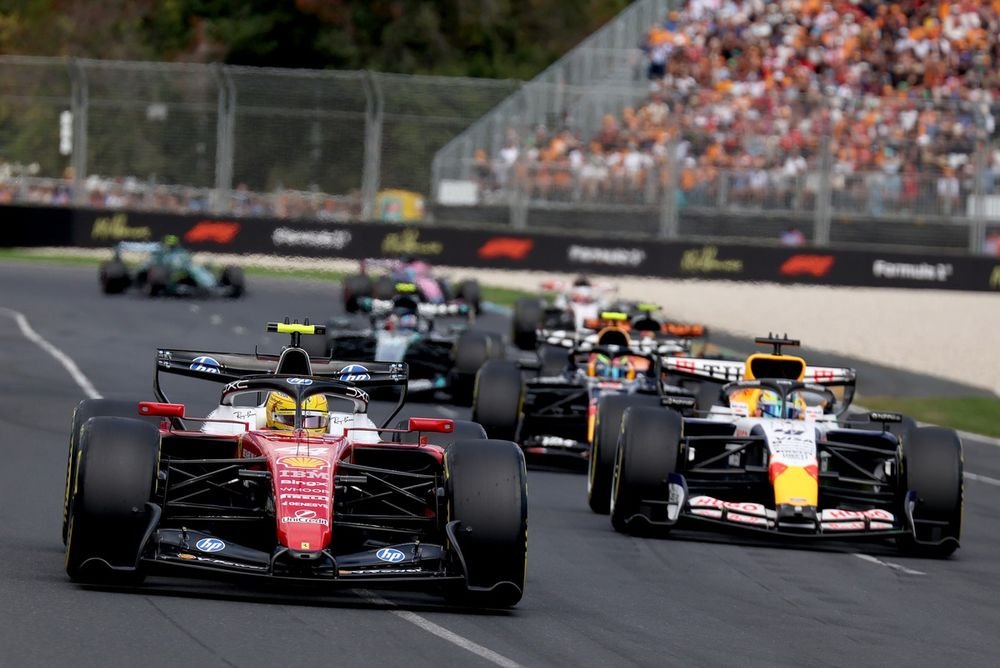
As indicated by pre-season testing, the Ferraris had the quickest getaway; Charles Leclerc, from fourth, snatched the lead away from polesitter Russell, ahead of Isack Hadjar as Antonelli dropped from second to seventh. Arvid Lindblad jumped from ninth to fourth ahead of Lewis Hamilton, who swiftly overtook the Racing Bulls and the Red Bull on his way to third.
Russell wasted no time and made his way past Leclerc on lap 2, on the run towards Turn 11. This doesn’t mean it was easy, as Leclerc enjoyed much better deployment on Lakeside Drive on the next tour and swept around the outside of the Mercedes in Turn 9.
On lap 8, as Max Verstappen made his way into the top 10 from the back of the grid while Antonelli recovered to fourth, Russell kept pressuring Leclerc and outbraked him on the inside of Turn 3 – but Leclerc reiterated his outside move in Turn 9 as their energy management duel continued.
Russell hit back on the next tour in Turn 1 but had a substantial lock-up and couldn’t stay ahead. By then, Hamilton and Antonelli had caught up with the leading duo.
Charles Leclerc, Ferrari, Lewis Hamilton, Ferrari, George Russell, Mercedes
Photo by: Martin Keep / AFP via Getty Images
Fifth-placed Hadjar retired with a technical issue on lap 12, causing the race to be neutralised by the virtual safety car. The incident promoted Lando Norris to sixth, with the reigning world champion the leading frontrunner to pit straight away. Having started the race on hard tyres unlike most of the field on mediums, Verstappen stayed out and inherited sixth.
The Mercedes cars did pit on the following tour, switching to hard tyres, and rejoined in third and fifth, separated by Lindblad. Russell and Antonelli were respectively 12s and 17s down on race leader Leclerc. Now in second, Hamilton was unconvinced by Ferrari’s strategy: “At least one of us should have come in,” he suggested on the radio.
Another retirement gave them the chance to do just that with another virtual safety car intervention, as Valtteri Bottas’ Cadillac broke down on the inside of the last corner. Still, the Ferraris stayed out at the first time of asking, and the pitlane entry was subsequently closed. They were the only cars to stay out during both VSC sequences.
On lap 20, Russell’s deficit to race leader Leclerc was down to eight seconds, the Briton was lapping over seven-tenths of a second faster than second-placed Hamilton on average.
Leclerc ended up pitting at the end of lap 25 and rejoined a whopping 16 seconds down on Russell, who started pressuring his former team-mate on lap 27 and found a way back to the lead on the next tour. Hamilton pitted immediately after and rejoined in fourth, with a 21-second deficit on Russell, who now enjoyed a seven-second gap to team-mate Antonelli as his closest challenger.
The Italian sophomore was faster at that time and brought his deficit down to five seconds in four laps – after which yet another virtual safety car intervention occurred due to debris from Sergio Perez’ Cadillac on Lakeside Drive. The timing of the VSC was favourable to Russell, with Antonelli now six seconds down.
Lewis Hamilton, Ferrari
Photo by: Dom Gibbons / Formula 1 via Getty Images
With 10 laps remaining, the gaps were largely unchanged at the front: Russell led Antonelli by six seconds, Leclerc by 15s and Hamilton by 19s.
Mercedes therefore romped to a comfortable 1-2 ahead of the Ferraris, with Russell triumphing three seconds ahead of Antonelli; the race winner led the Ferraris by 16s.
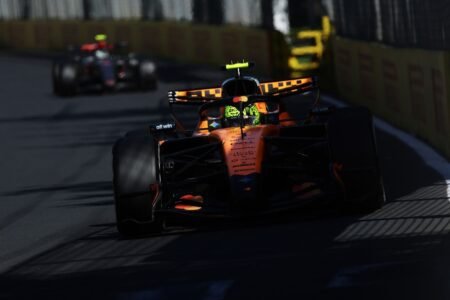
The battle for fifth was fiercely contested between a resurgent Verstappen and Norris, with the McLaren driver coming out on top, but he was 52s down on Russell.
Haas’ Oliver Bearman prevailed in the midfield battle, leading Lindblad, Gabriel Bortoleto and Pierre Gasly as the remaining points scorers.
Sergio Perez finished 16th and virtually last on Cadillac’s grand prix debut, two laps down.
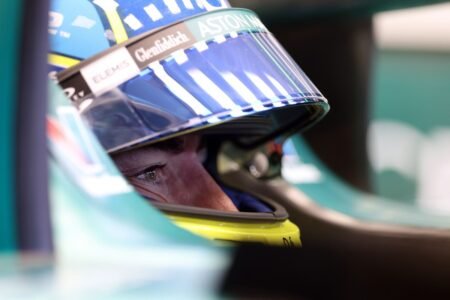
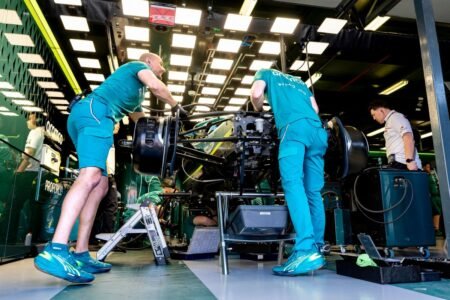
Aston Martin’s well-documented Honda powertrain issues meant completing the whole race was impossible due to engine vibrations, so Fernando Alonso pitted at the end of lap 13, rejoined 10 laps down and retired definitively later.
Lance Stroll drove over half the race consecutively – which exceeded expectations – and pitted at the same time as his team-mate retired, rejoining the race 15 laps down but still taking the chequered flag.
F1 Australian Grand Prix results
We want to hear from you!
Let us know what you would like to see from us in the future.
Take our survey
– The Autosport.com Team
Read the full article here