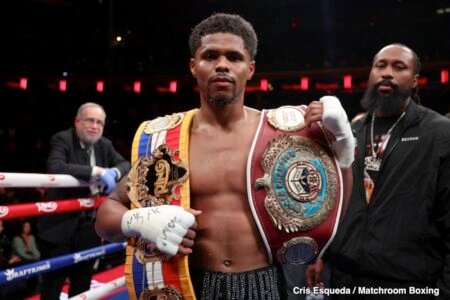



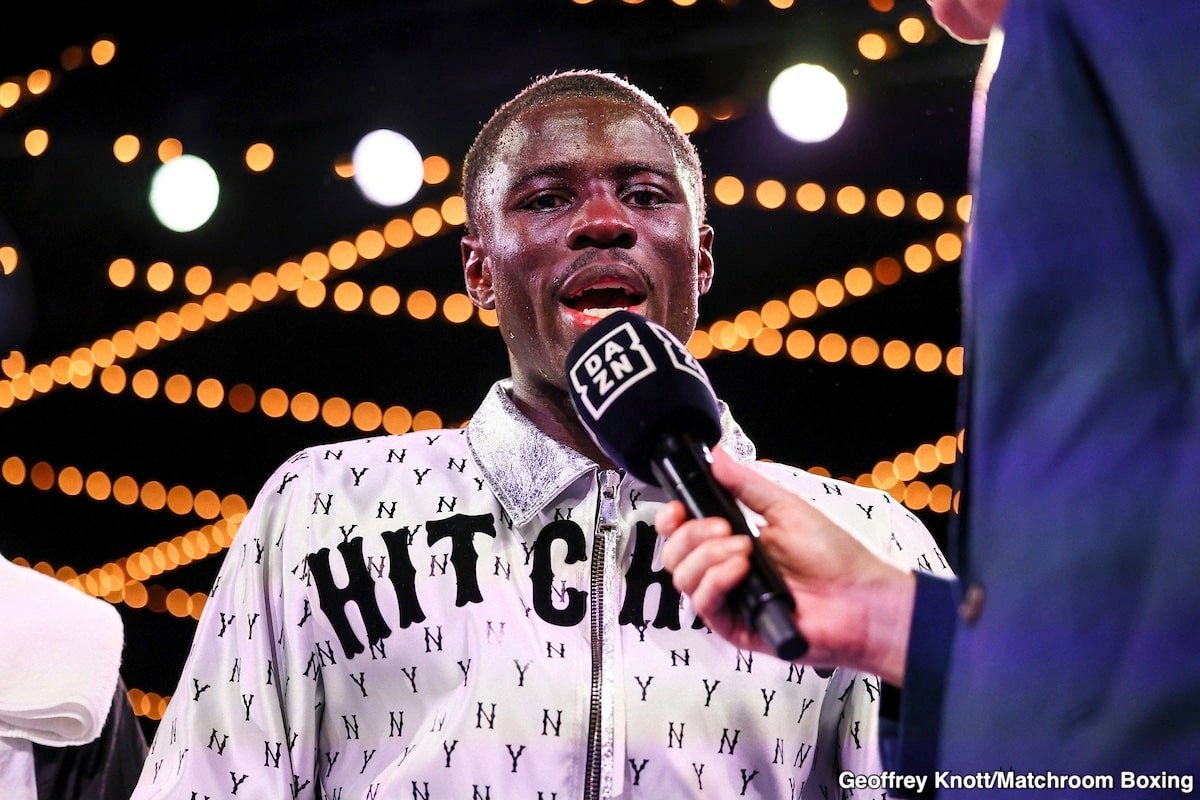

According to Dan Rafael, if no agreement is reached the sanctioning body will move to purse bid. That directive followed Hitchins pulling out on fight day after reportedly vomiting multiple times that morning.
The immediate casualty is Duarte. He completed camp, made weight, and lost the opportunity hours before the walkout. He is no longer positioned as the next man in line, and even if Hitchins defeats Delgado there is no assurance Duarte circles back into contention.
This is what mandatory enforcement does. It restores order on paper, even if it disrupts plans in the ring.
For Hitchins, the mandate sharpens a pattern that has followed him. Ahead of his 2024 bout with Gustavo Lemos, he struggled on the scales and looked drawn out. Questions about how long he can safely make 140 have lingered since. Illness or not, last weekend adds to that file.
At junior welterweight he enjoys real physical advantages. He is long, strong in the clinch, comfortable controlling range behind the jab, and disciplined with ring positioning over twelve rounds. His style relies on managing pace and forcing opponents to reach. At welterweight those margins tighten. The bodies are bigger. The clinch work evens out. The small edges shrink.
That calculation has kept him at 140.
Delgado is steady, patient, and disciplined with his punch selection. A mandatory requires a clean camp and a clean cut. There is no room for drama after a canceled fight.
Hitchins has the tools to remain champion. He boxes with control and rarely gives rounds away cheaply. The question now is physical sustainability. If the scale becomes a gamble, every defense carries risk before the opening exchange.
Negotiations run for 30 days. If they fail, the belt heads to purse bid.
Until then, the division waits on contracts instead of combinations.
Read the full article here