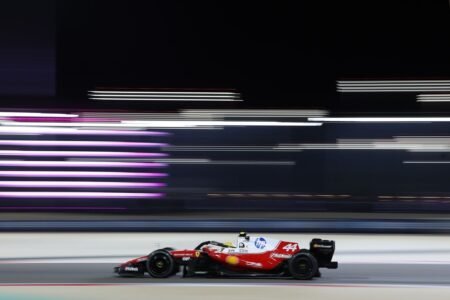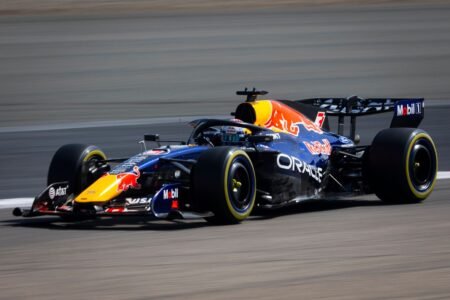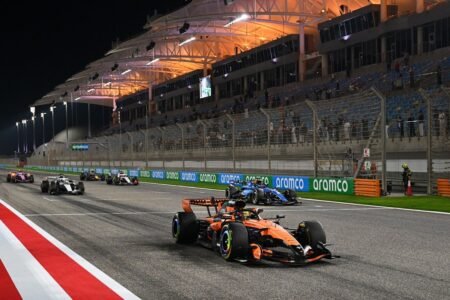



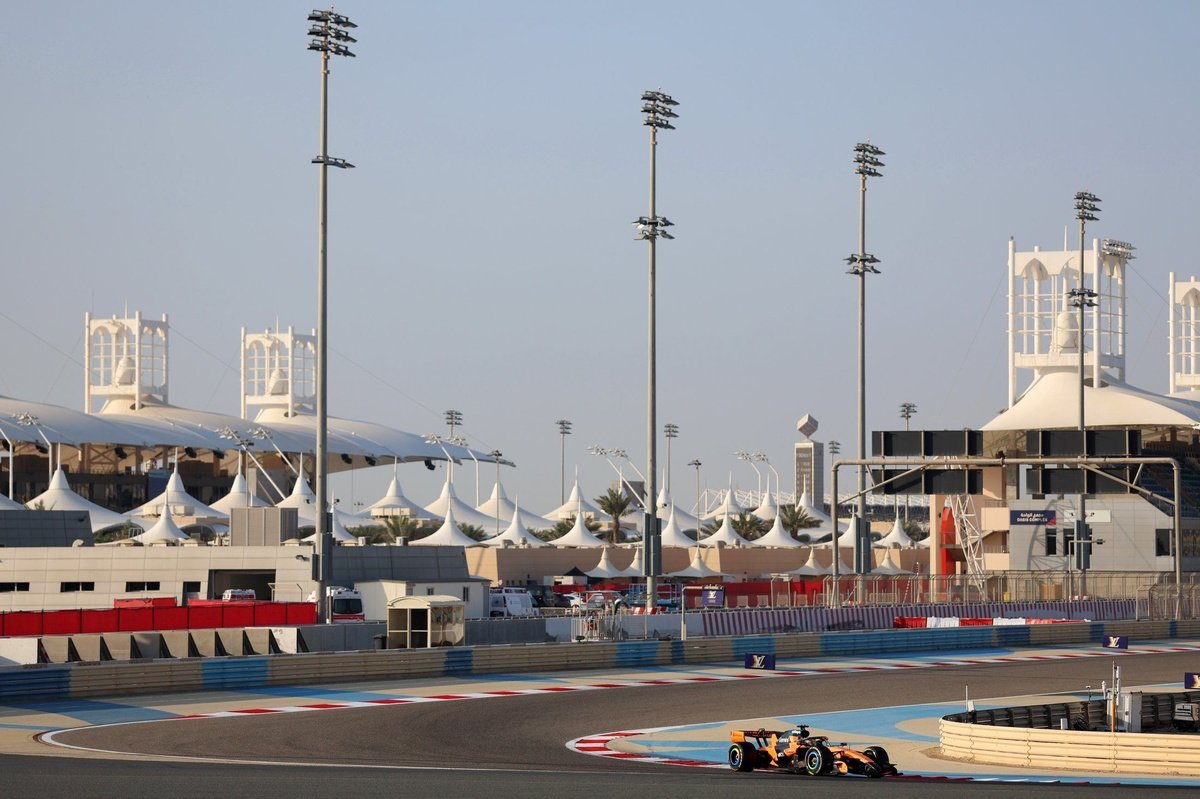
Formula 1 tyre supplier Pirelli will organise its first-ever wet weather test in Bahrain at the end of February, with McLaren and Mercedes providing two mule cars.
The Italian manufacturer has often been urged to improve its intermediates and full wet tyres, but consistent opportunities to test its rubber in the wet are not that easy to come by.
That’s because the usual venues are sprinkler equipped European circuits like Paul Ricard, Magny-Cours and Fiorano, but by adding Bahrain Pirelli can trial its wet compounds at a track that is notoriously abrasive and demanding on the tyres.
“We are trying to organise a wet [test] here in Bahrain,” Pirelli motorsport chief Mario Isola said during F1 pre-season testing in Bahrain.
“I am very confident because the track has an idea on how to wet the full circuit, not with the tanks but with another [sprinkler] system. And if they do that properly, we have an opportunity to test on a high-severity circuit in wet conditions.
“This is something that doesn’t happen very often. So we have this opportunity, we want to use it in the best possible way. I have to say that the people of Bahrain are always very cooperative when we ask for strange requests. I called them and said: ‘What if we plan a wet test in Bahrain? ‘Yes, of course you can. Let us think about it.’
“[It’s not easy, because] we need consistency in the water level, because clearly the risk is that the inconsistency in water level is more important than the difference in prototypes.”
Mario Isola, Pirelli F1 Director with Pirelli 2026 F1 tyres
Photo by: Pirelli
McLaren and Mercedes will both be present for the test running what is effectively a 2026-like mule car.
Given the wholesale regulation changes, Pirelli has little actual data from this year’s cars, so that also means it hasn’t got a clear direction yet on whether to persist with the usual intermediate/full wet split or move towards a single “super intermediate” compound.
That’s why it wouldn’t be a bad thing for Pirelli if teams were to encounter some wet weather in the opening stages of this season, partly to figure out if the spray level kicked up by the 2026 generation has reduced or not.
“If we need to consider a single thread pattern for wet conditions, we can do that,” Isola said. “But we need to decide, because developing three different products in three [test] sessions – an intermediate, full wet, and super-intermediate – is not a lot of running. So, we need to understand what the direction is.
“At the moment, nobody can say anything, because we don’t know the level of spray. I’m not saying that I hope it’s raining in one of the first races, but it could be interesting for us to get information from a wet race to understand a bit more on that, and then to direct our development in the right direction.
“We should consider that without the diffuser that was putting a lot of spray in the air, the visibility is probably slightly better. Also, the tyres are a little bit narrower. They are putting less water in the air.
“If it is enough for the race director to let them run or not, this is something I don’t know. What we tried to achieve and to do is to reduce the crossover time between the wet and intermediate in order to make the wet tyres more usable.”
Additional reporting by Ronald Vording
We want to hear from you!
Let us know what you would like to see from us in the future.
Take our survey
– The Autosport.com Team
Read the full article here