



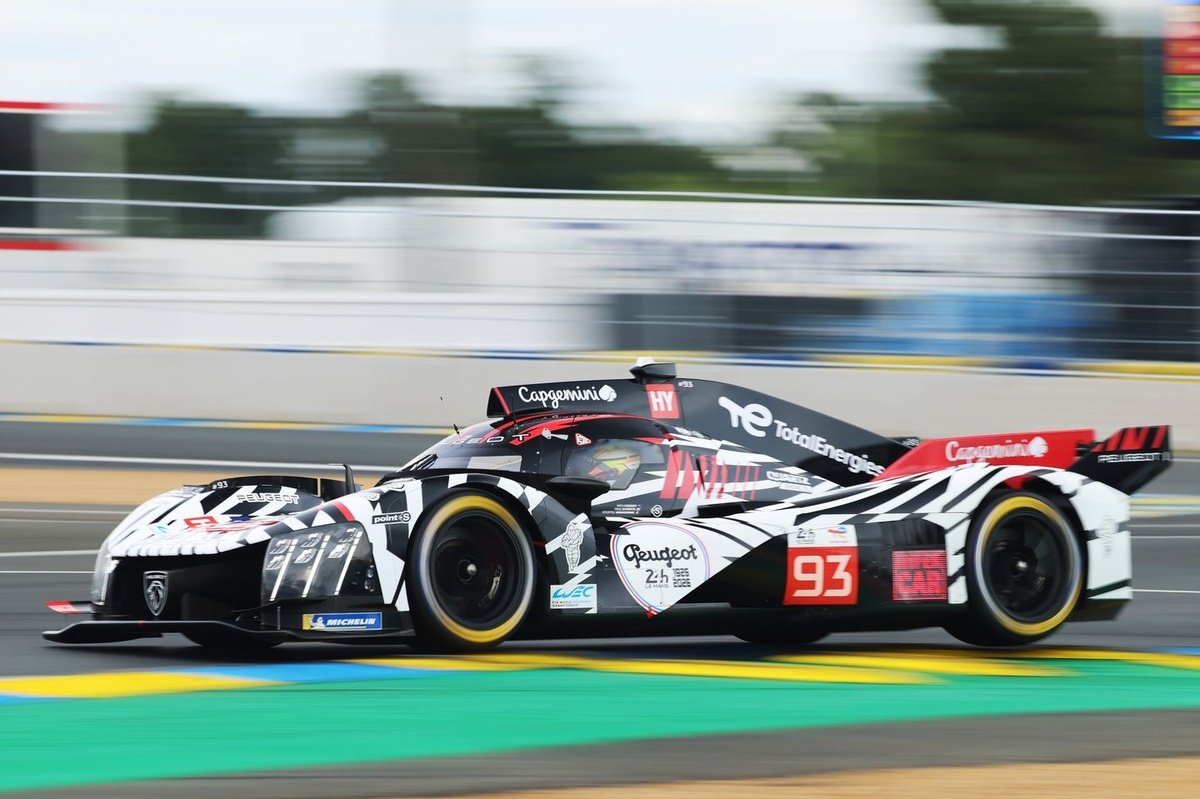
Peugeot is planning a major upgrade of its 9X8 Le Mans Hypercar for next year’s World Endurance Championship.
The French manufacturer is aiming to take advantage of a new Hypercar class regulation introduced for this year that allows additional evo joker updates in cases where there is a “demonstrated significant lack of performance”.
Peugeot did not make any performance upgrades for 2026 because it is understood to have used up the five evo jokers allowed to each manufacturer over the initial lifespan of each LMH and LMDh design.
Olivier Jansonnie, motorsport boss of Peugeot parent company Stellantis and formerly technical director of the Peugeot Sport in-house competitions department, said: “We must deliver performance on track, we must evolve and we must be allowed to do an evolution of the car.
“The rules have changed for this year to allow this kind of thing; they [series organisers the FIA and the Automobile Club de l’Ouest] are adapting the rules to re-homologate cars that are showing they are missing performance.
“We have been preparing this for some time now and hopefully should get it on track next year.”
#93 Peugeot Totalenergies Peugeot 9X8: Paul Di Resta, Stoffel Vandoorne, Nick Cassidy
Photo by: Rainier Ehrhardt
Peugeot joined the WEC after Le Mans in 2022, but has yet to win a race. The best result for the 9X8 so far is a second at Fuji last year, while it also took a solitary third-place finish in each of the 2023, ’24 and ’25 seasons.
A major overhaul of the car was undertaken in time for the Imola round of the WEC in April 2024 when the 9X8 swapped from equal-size wheels and tyres all round to the narrower fronts and wider rears option raced by fellow LMH competitors Toyota and Ferrari.
That was followed by further updates for 2025, which are believed to have used up its final jokers.
Jansonnie stressed that Peugeot is not planning a new car, which is also allowed under the regulations, but he explained how the car is homologated is “completely in the hands of the ACO and the FIA”.
When Toyota undertook a series of updates to its GR010 HYBRID LMH (now known as the TR010) for 2023, the car was re-homologated as a new car.
Jansonnie would not be drawn on which areas of Peugeot’s WEC contender, which was dubbed the 9X8 2024 after the switch to wider rear tyres, will focus on.
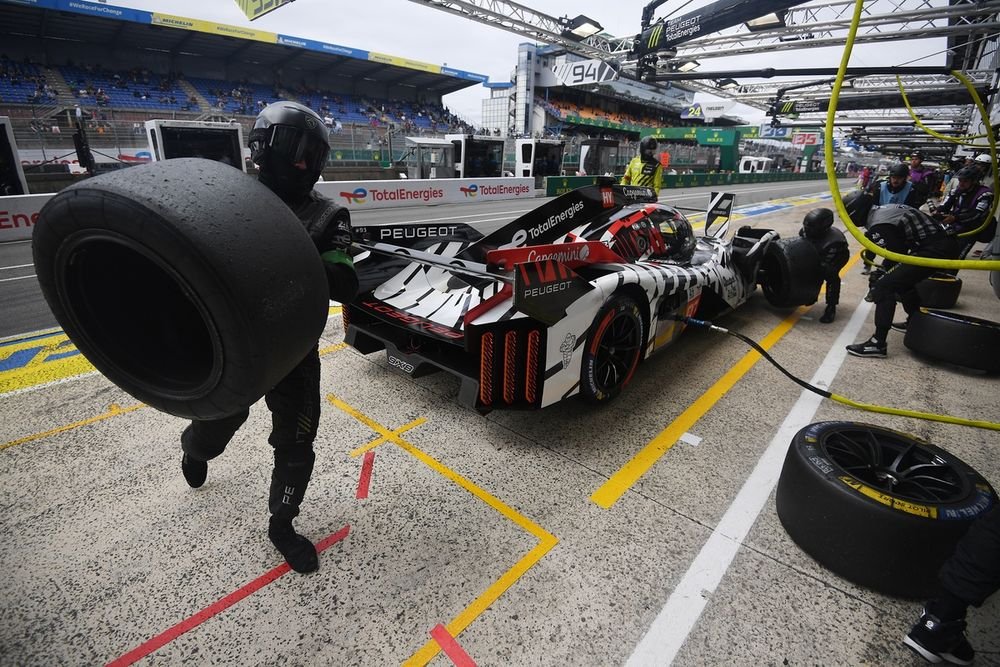
#94 Peugeot Totalenergies Peugeot 9X8: Loic Duval, Malthe Jakobsen, Theo Pourchaire
Photo by: Rainier Ehrhardt
Peugeot remains committed to the WEC through to the end of the homologation period of existing LMH and LMDh machinery at the climax of the 2029 season.
Company CEO Alain Favey said: “Peugeot is 216 years old and is extremely resilient, and that is what we want to demonstrate in our involvement in the WEC and at Le Mans 24 Hours.
“Therefore we confirmed that we will be part of the championship until 2029 in the knowledge that something would happen to the rules for 2030.”
Jansonnie added that the announcement of the broad principles of the 2030 rules during Le Mans week was good news for the championship because it offered stability.
He explained that the ability of manufacturers to continue to build their own chassis and develop their own hybrid systems under the new regulations was also important to Peugeot.
But he stated that there are two areas in which Peugeot is “challenging” the ACO and the FIA, one concerning the technological road map for the series and the other regarding the Balance of Performance.
The FIA and the ACO announced that a 20kW (26bhp) increase in maximum power, up from the current 520kW (697bhp), would be introduced for 2030 but that it could come only from the internal combustion component of the hybrid powertrain.
We want to hear from you!
Let us know what you would like to see from us in the future.
Take our survey
– The Autosport.com Team
Read the full article here