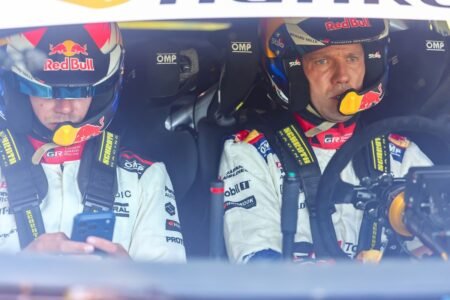




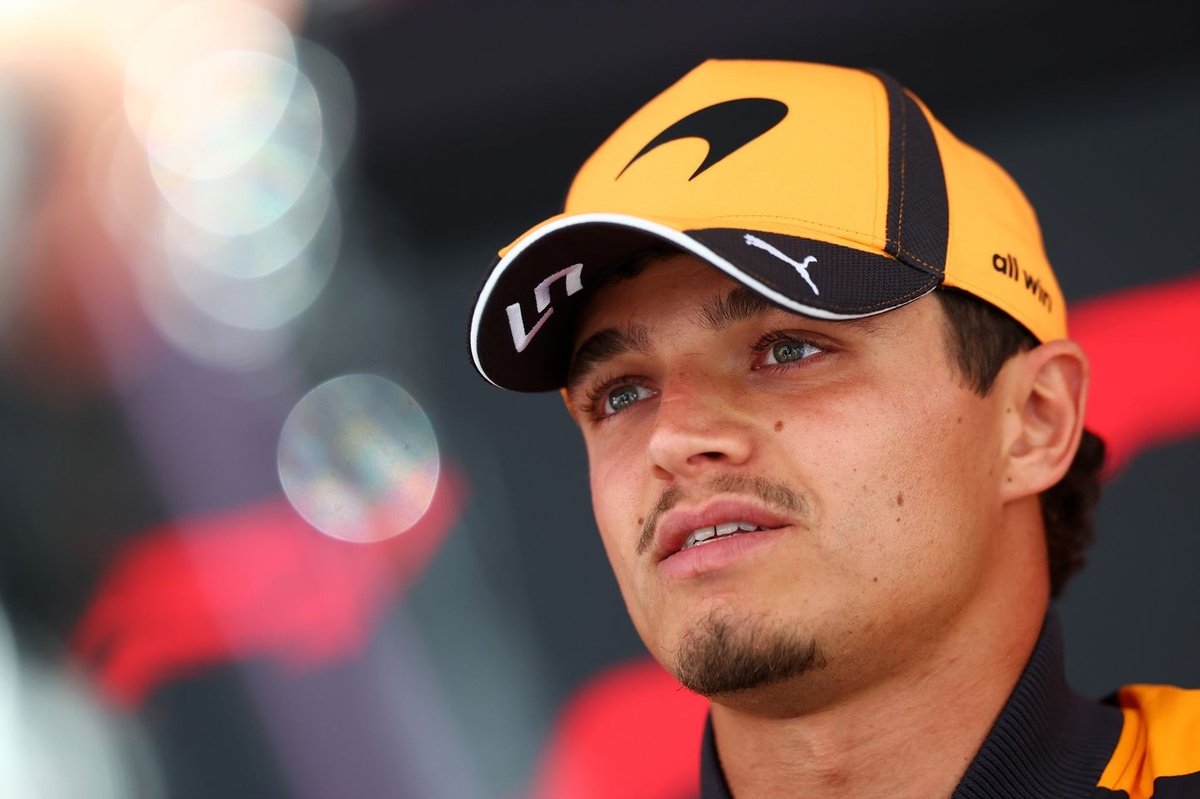
Practice pace on Friday at Spa-Francorchamps presented a more muddled picture than you would normally expect at what has traditionally been a ‘power’ circuit. Nearly a full second separated the top six cars during their soft-tyre qualifying simulations during the second practice session, and only Lando Norris came within two tenths of the benchmark set by championship leader Kimi Antonelli.
Norris found nearly 1.8s between FP1 and FP2, but neither he nor McLaren technical director Neil Houldey were optimistic that second place genuinely reflected the car’s position in the pecking order. In any case, Norris faces a grid penalty for taking new power unit components this weekend.
“FP1 not great, to be honest – FP2 a little bit happier,” said Norris. “I’m still not very happy with the car – it’s still very, very difficult to drive, but we seemed a bit closer. But we’re always pretty close on Friday in free practice, I think we just show more pace than some of our competitors.
“From as far as we can see, we made some improvements with the car from FP1 to FP2. We seem relatively competitive.
“But, yeah, we’re certainly not getting ahead of ourselves. I think we shouldn’t expect anything different from normal.”
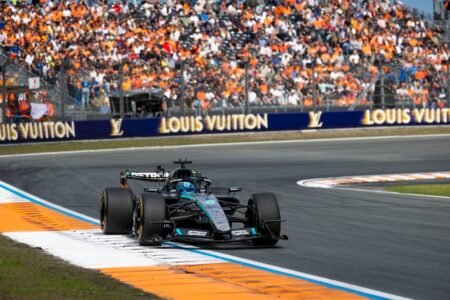
McLaren appeared to be deploying more electrical power than Mercedes on the Kemmel Straight, and clipping less at the end of it
Photo by: Sam Bagnall / Sutton Images via Getty Images
Spa has always presented teams with a setup challenge because the first and third sectors reward low drag, underpinned by engine punch, while the middle sector’s profusion of higher-radius corners require more downforce. Finding the sweet spot has been complicated by the energy requirements of the 2026 power units since there are very few opportunities to recharge under braking or via lift-and-coast.
“There’s just lack of deployment everywhere,” added Norris. “Every single straight, we lack deployment, to be honest. I think the worst one is through Blanchimont. We go from almost 320[km/h] to 270, because we just have no battery left.
“So, every single straight, we’re clipping.”
McLaren buys in its power units from Mercedes but the works team continues to be a step ahead, not just in terms of efficient downforce from its chassis, but also in its understanding of how to maximise electrical deployment and harvesting in search of the so-called ‘optimal lap’. Comparing the telemetry traces of Norris’s and Antonelli’s qualifying simulations reveals clear differences in deployment strategy.
Norris lost speed relative to the Mercedes on the downhill run to Eau Rouge, suggesting his car was ‘spending’ less electrical energy. The speed differential peaked at Raidillon before Norris clawed back some speed, to the extent that his terminal velocity on the Kemmel Straight was in the region of 5km/h faster.
But Antonelli began ‘super clipping’ earlier on the approach to the chicane at Les Combes – so, although Norris enjoyed fractionally more speed for longer, shrinking the laptime delta up to that point to around a tenth of a second, the Mercedes was playing a longer game.
Norris reached a higher top speed on the run to Bruxelles, again suggesting more deployment. The picture then shifted on the run downhill towards Pouhon, where Antonelli reached a peak of around 15km/h faster than Norris. That opened the gap to around three tenths.
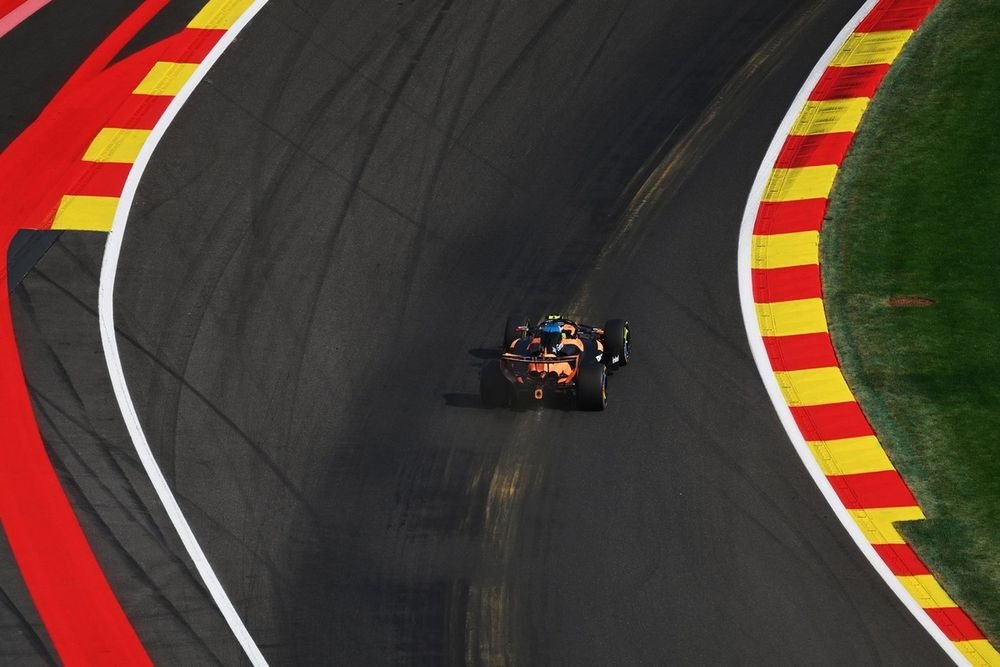
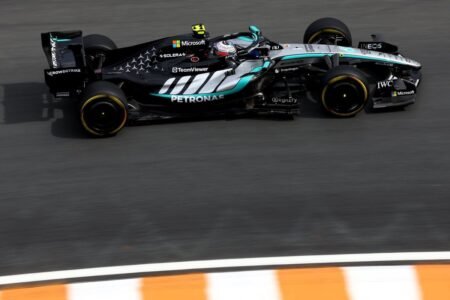
Norris was losing ground to Antonelli through Eau Rouge and Raidillon
Photo by: Sam Bagnall / Sutton Images via Getty Images
Norris then recouped some of that by hitting a brief peak in the region of 13km/h on the run towards Fagnes, again clearly a factor of electrical deployment. At this point their laps were close to even.
But Antonelli simply enjoyed more deployment on the run towards Blanchimont, and the gap opened out again.
So it’s clear that there is still some room for manoeuvre in terms of shifting around the energy ‘budget’ to reach the optimal lap pace, even given the difference in aerodynamic performance between McLaren (which brought a new low-drag rear wing to Spa) and Mercedes.
“I think Lando got the most out of the car as it was in that session, so I don’t think we can say that second is the position we’re truly in,” said Houldey.
“I think we’ve got opportunities in deployment – everyone’s got opportunities in working out what optimal deployment is for the rest of the weekend. But no, pleased that we’re there or thereabouts in FP1, FP2 and therefore hopefully take that through to qualifying.
“We just need to spend a lot of time overnight looking at where the opportunities are, simulating a few different things and coming up with what we think is best for FP3. We’ve tried quite a lot of different options in FP1 and FP2.
“We’ve seen a lot of other teams try a few different options and the optimum’s out there somewhere, we just haven’t found it yet.”
We want to hear from you!
Let us know what you would like to see from us in the future.
Take our survey
– The Autosport.com Team
Read the full article here