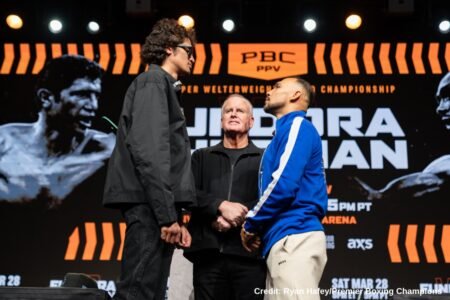




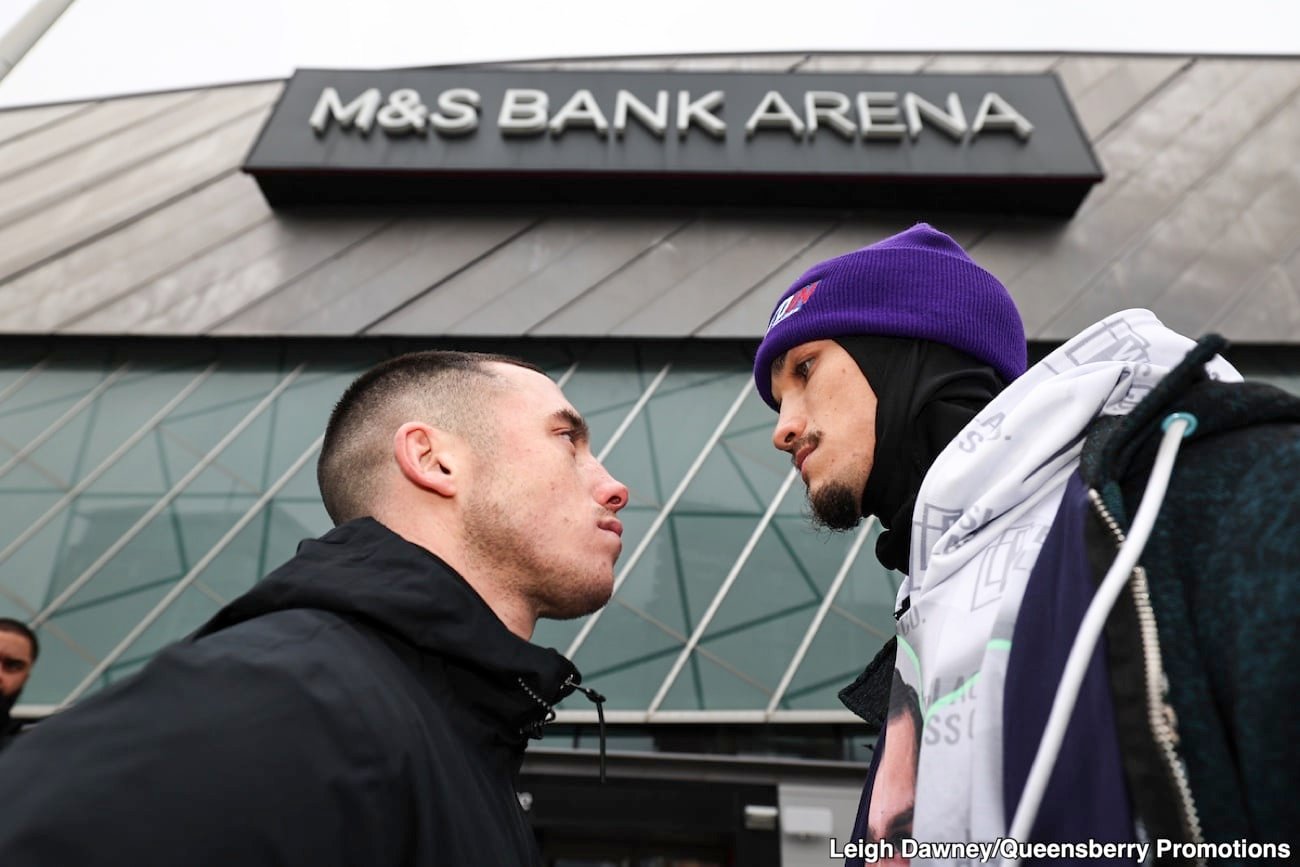

The WBA featherweight champion brushed off repeated references to Figueroa exceeding a thousand punches in that bout, saying the number only exists if it is permitted. Ball’s view is simple. Output is shaped by what the opponent allows, and he does not plan to give Figueroa the same room Gonzalez did.
Ball has treated the statistic as specific to that fight. In his view, it says more about the kind of night Joet Gonzalez had than anything that automatically carries into the next one. He has made it clear he is not looking to borrow lessons from another opponent’s experience.
The concern, as Ball sees it, is not how many punches are thrown, but how often they are answered. He has built his title run on engaging fighters who commit and making them work every time they step forward. His comments suggest he expects to interrupt rhythm rather than accommodate it. From Ball’s side, the count only matters if nothing is coming back.
That outlook says plenty about how Ball views the fight itself. He is not talking about riding out spells or pacing himself to survive stretches of pressure. He is talking about control. By downplaying raw totals, Ball is making clear he expects to influence where exchanges happen and how long they last, rather than settling into a pattern set by someone else.
Brandon Figueroa approaches things from a different place. He has leaned on preparation and trust in his approach, pointing to past nights where he was able to work steadily without being forced off his line. Those performances relied on opponents who absorbed pressure without consistently making him pay for it. Ball has been explicit that he does not intend to play that part.
The exchange goes beyond routine confidence. Ball is not dismissing Figueroa as a threat. He is dismissing the idea that recent punch counts carry authority on their own. In doing so, he has pushed the discussion away from accumulation and toward resistance, timing, and response.
Saturday will settle whether Figueroa can impose the kind of fight his recent numbers suggest, or whether Ball’s belief in cutting that rhythm short holds up. Until then, Ball’s position is plain. What happened against someone else stays there, and he has no interest in becoming a continuation of it.
Read the full article here