




Camacho had stopped a 40-year-old Sugar Ray Leonard six months earlier, but that result created a misleading picture. Leonard had not fought in six years and was finished as a serious fighter. Beating that version did not make Camacho ready for a younger champion operating near his physical peak.
De La Hoya called the fight a “tune-up.” He was guaranteed $9 million, while Camacho received $3 million. The event produced 560,000 pay-per-view purchases and $22.4 million in television revenue.
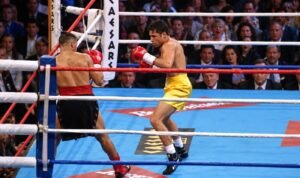
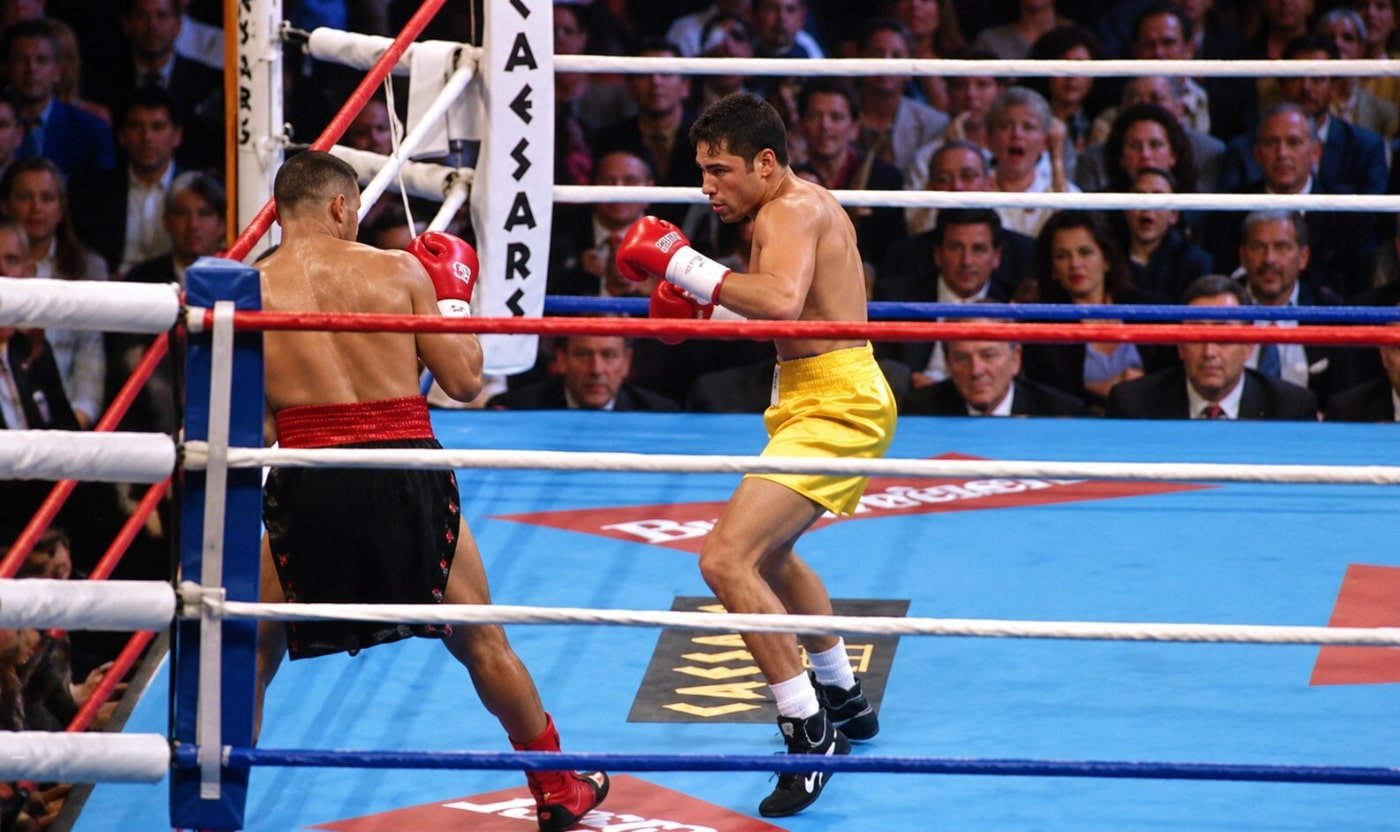
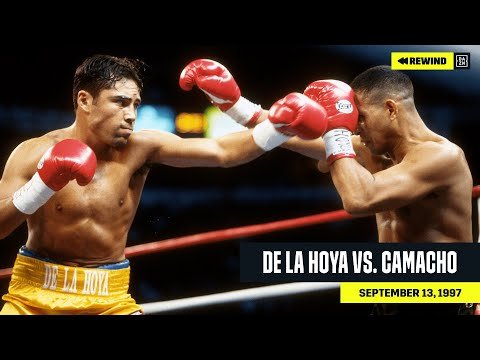
From the opening bell, it became clear that Camacho had come to survive. He moved backward, tied Oscar up, and relied on every defensive trick he had learned across 67 previous fights. The problem was that De La Hoya was faster than the faded speedster and far more powerful. He drove Camacho toward the ropes, fired combinations upstairs and gradually increased his attack to the body. Left hooks crashed into Camacho’s ribs whenever he remained within range.
CompuBox credited De La Hoya with landing 373 of 750 punches. An astonishing 340 were power shots. Camacho connected with only 124 of 687, including 54 power punches. Those numbers describe a beating disguised as a distance fight.
Oscar finally dropped Camacho late in the ninth. A left uppercut followed by two right hands sent him down with roughly 35 seconds remaining. It was only the second knockdown of Camacho’s career. Camacho rose and immediately returned to the skill that had carried him through the worst portions of the night: grabbing. He smothered De La Hoya’s follow-up attack and reached the bell.
By the 11th, frustration had turned the fight ugly. Camacho tackled Oscar to the canvas, causing him to land awkwardly on a previously injured left shoulder. De La Hoya also developed swelling around his left eye following a headbutt.
Referee Richard Steele waited until the final round to deduct a point for Camacho’s excessive holding. The punishment came far too late to change anything.
Judges Chuck Giampa and John Keane gave Camacho no rounds, scoring it 120-105 and 120-106. Anek Hongtongkam somehow found two rounds for him at 118-108. Contemporary reports agreed on the only conclusion available: De La Hoya had dominated him.
The knockout escaped Oscar, but Camacho’s ability to remain upright was never meaningless. He completed an 88-fight career without being stopped, surviving De La Hoya, Julio César Chávez, Félix Trinidad and several generations of dangerous opponents.
A pre-fight wager provided the comedy afterward. De La Hoya had earned the right to cut off Camacho’s signature forehead curl by winning. Camacho would have collected another $200,000 had he pulled off the upset. The haircut was more competitive than the fight.
De La Hoya left 26-0 with his WBC title and his place as boxing’s biggest young star intact. Camacho left with $3 million, his pride bruised and his durability confirmed once again.
“Opposites Attack” was never a classic. It was a showcase for prime De La Hoya and a 12-round survival exercise for a brilliant old showman who knew every way to avoid giving his younger opponent the ending he wanted.

Read the full article here