

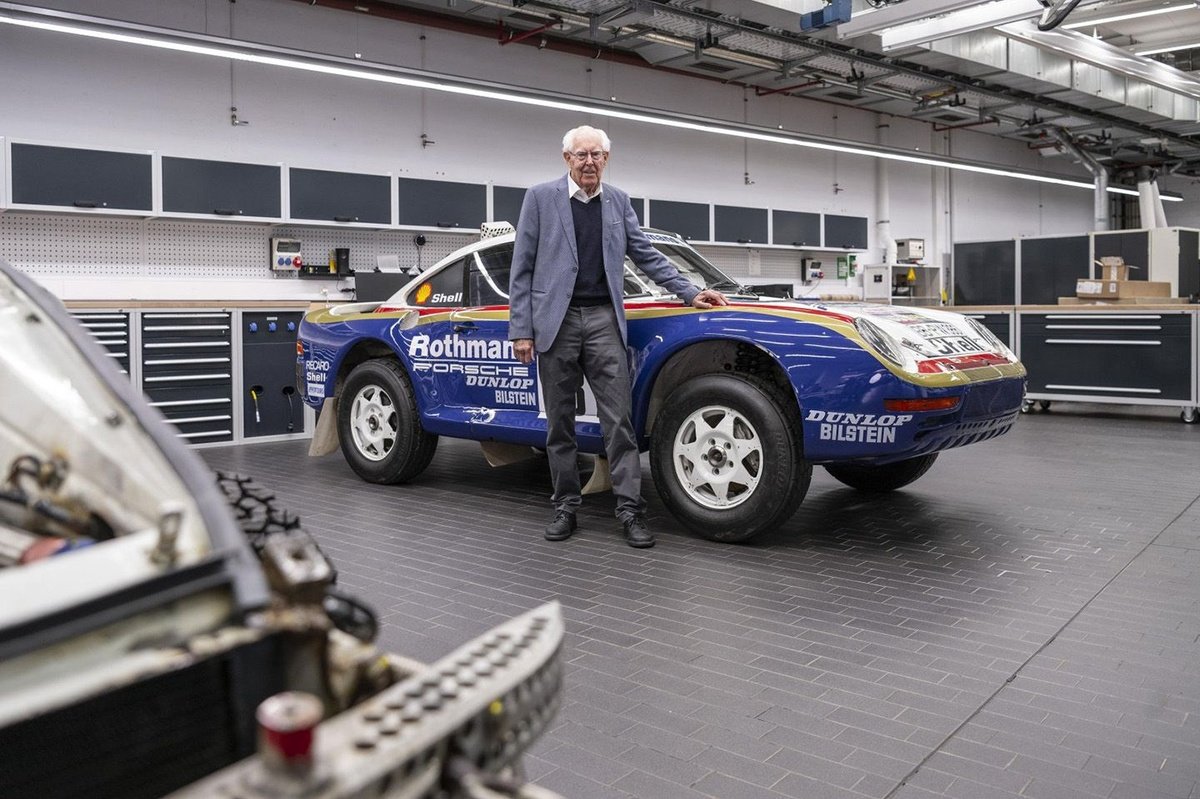
Peter Falk should rightfully be remembered as a true Porsche legend. The engineer, who recently died aged 93, played key roles in the success of the Stuttgart marque’s two most famous racing sportscars, the 917 and 956/962.
Falk was present as the lead engineer from Porsche at the Osterriechring test in October 1969 when, working together with the JW Automotive squad, the instability problems of the original 917 were solved. The late John Horsman, JWA’s engineering boss, always claimed credit for the eureka moment in the understanding of the car’s aerodynamics – the pattern of the dead gnats splattered on the bodywork gave a clue. The understated Falk, however, wasn’t the type to do the same for Porsche. He always insisted it was an Anglo-German collaboration.
“All the British newspapers wrote, ‘JWA tests at Zeltweg and improves the handling of the 917’ and all the German papers wrote ‘Porsche tests at Zeltweg and improves the handling of the 917’,” Falk told this author in 2019. “Both were absolutely right.”
PLUS: Is this the greatest racing car of all time?
The 917K – K for kurzheck or short-tail – that followed on from Heath Robinson modifications made in the field in Austria gave Porsche the first outright victory at the Le Mans 24 Hours it so coveted the following year. The car was beaten just once in eight World Sportscar Championship starts in the hands of factory teams as Porsche claimed the manufacturers’ crown. The domination continued into 1971, Porsche winning Le Mans for a second time and reprising its WSC title with a further seven victories.
Twelve years on from the pivotal moment in the 917 story, and Falk, back in motorsport after a sojourn running road car testing at Porsche, put together the proposal that resulted in the 956 Group C contender. Under his leadership of the racing department, the car and its long-wheelbase successor, the 962, would go on to win the Le Mans 24 Hours six times.
So enduring was the design that it was still winning after he relinquished the top motorsport job at Porsche to return to production cars in 1989. The last Le Mans victory for the 962 came with the Dauer ‘racer turned road car turned racer’ GT1 version in 1994, the year after he had retired from the company.
Yannick Dalmas / Hurley Haywood / Mauro Baldi, Le Mans Porsche Team, Dauer Porsche 962 GT LM.
Photo by: Motorsport Images
Falk believed in drawing the right people around him and letting them do their jobs. “The perfect boss” is how Norbert Singer, who headed up the design of the 956/962, describes him. “He gave us a lot of freedom and was easy to work with,” recalled Singer. “We would tell him we could do this and that, and he’d say, ‘Why not, give it a try.’
“Sometimes we’d spend more money than was in the budget, but he would always stand by us. He’d say it was necessary, and that was it. He wouldn’t blame someone else to save his position.”
Falk was the first engineer to be put in charge of motorsport at Porsche. The previous incumbents of the role – Huscke von Hanstein, Rico Steinemann and Manfred Jantke – dovetailed the job with running the public relations department. “Peter was an engineer and understood what we were talking about,” said Singer. “He was our link with the board and Mr [Helmuth] Bott [whose responsibilities as development boss encompassed motorsport] and could always explain what we were doing and why we were doing it. It was the perfect situation.”
Born in Athens, Greece, the son of an archaeologist, Falk was apprenticed as a car mechanic and then studied mechanical engineering. He joined Porsche in 1959 as an engineer in the testing department and subsequently moved into pre-production, which included supporting Porsche’s motorsport activities.
Falk was instrumental in giving the 911 its competition debut on the 1965 Monte Carlo Rally, co-driving the official entry to fifth place overall with Herbert Linge in the driving seat. He also developed a timing system for Porsche so it wouldn’t have to rely on the hourly bulletins from the organisers at Le Mans.
On this move to road cars full time, he oversaw the testing of the 924 and 928, as well as the latest variants of the 911. At the end of his career, he was head of chassis development and a key player in the introduction of the 993-shape 911 and the first-generation Boxster prior to his retirement.
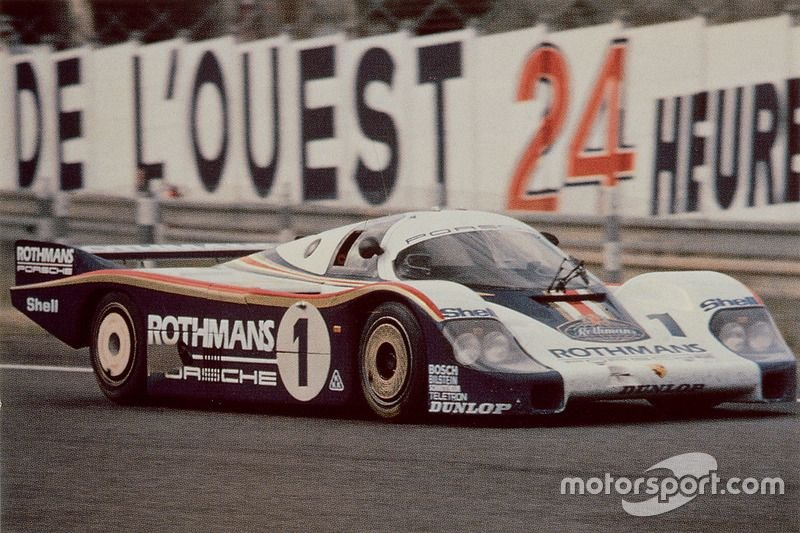
#1 Porsche Team Porsche 956: Jacky Ickx, Derek Bell
Photo by: Porsche AG
The 956’s debut victory at Le Mans in 1982, less than a year after his proposal got the sign-off from the board, and Porsche’s maiden victory on the Paris-Dakar Rally in 1984 with the four-wheel-drive 953, were regarded by Falk as his greatest achievements. But his contribution to motorsport at Porsche stretched far beyond those wins, the successes of the 917 and the long spell of dominance by the 956/962.
PLUS: The Porsche icon that forged sportscar racing’s greatest era
He was responsible for bringing its competition activities under one roof at Flacht on the Weissach development campus to the east of company headquarters at Zuffenhausen on his appointment as motorsport boss in 1981.
It is the location from which the marque’s successes at all levels of sportscar racing, on the Dakar and now in Formula E, have been masterminded over the past 45 years.
We want to hear from you!
Let us know what you would like to see from us in the future.
Take our survey
– The Autosport.com Team
Read the full article here