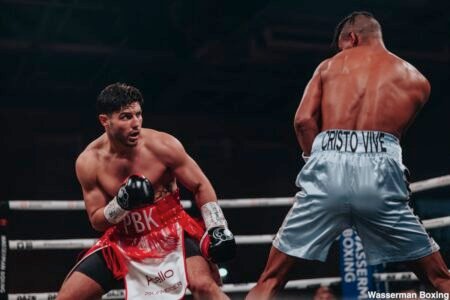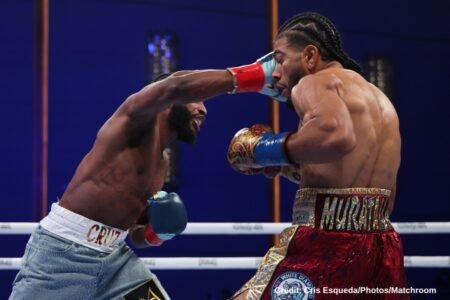





At 135, Keyshawn’s strength dictated the terms by forcing opponents to think twice about coming forward. He used that respect to manage the pace, but up at junior welterweight, he has to earn that fear all over again.
The way a fighter manages space depends on the threat they pose. At lightweight, Davis built his professional rise on controlling his opponents with his power. He discouraged pressure with sharp counters and put enough weight on his punches to make opponents feel every mistake.
That respect shaped rounds before they even fully developed. Now, Jamaine Ortiz enters the picture to challenge that asset. Ortiz is a natural at this weight, and he is durable and doesn’t mind taking a shot to give one back. If Keyshawn’s punches don’t make Ortiz hesitate, the whole dynamic of the fight changes. We know Keyshawn has the skills. The real curiosity is his effectiveness against bigger bodies.
Power is a tricky thing. Sometimes, shots that stop guys in their tracks at lightweight just land cleanly at 140 without changing a thing. When that happens, the distance closes, the exchanges get longer, and the rounds get a lot harder to win.
If Ortiz can eat Keyshawn’s best work and keep walking him down, Davis is going into deep water. This move up matters because once your body starts outgrowing lightweight, there’s usually no going back. Making the 135 pound limit is clearly getting tougher for him, so he needs this power to translate immediately.
Saturday is a test of power and suitability. We get to see if Keyshawn can make a real 140 pounder second guess himself. He needs to prove he can impose himself over twelve rounds without draining his gas tank. We’ll find out in the ring.
Keyshawn Davis faces Jamaine Ortiz on January 31 as part of the Ring 6 card at Madison Square Garden in New York, streaming on DAZN pay-per-view.
Read the full article here