


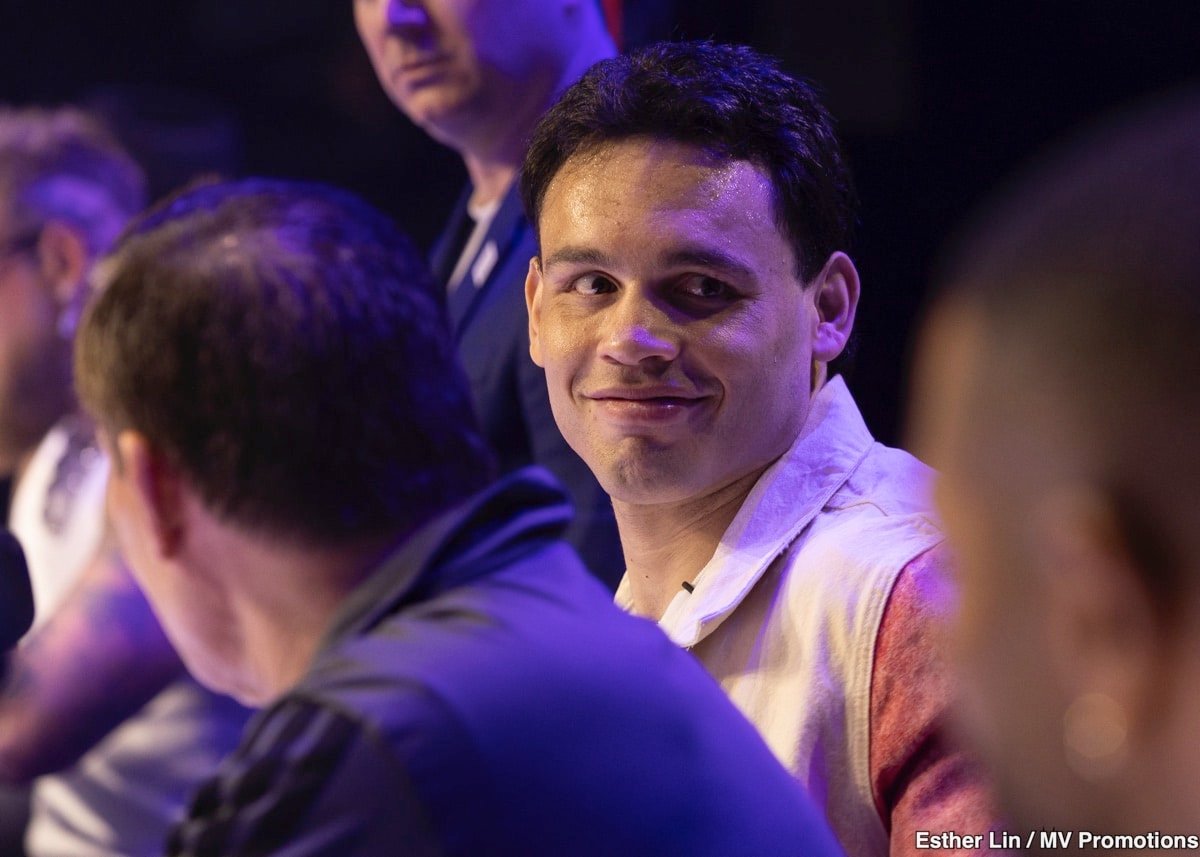

This isn’t a serious attempt to work Chavez Jr. back toward championship contention at cruiserweight. It is simply a way to keep him active against competition that presents none of the dangers found at the top of the division.
There was a time when Chavez Jr. was considerably more formidable.
At 154 and 160 pounds, he possessed some of the qualities that made his famous father a legend. Junior was an effective body puncher who thrived at close range, applying pressure to wear foes down physically. He was never the technician Julio Cesar Chavez Sr. was, but there was genuine ability there.
His size played a massive role. Chavez Jr. was a huge middleweight who frequently enjoyed a distinct physical advantage over the division. During his best stretch, he defeated Sebastian Zbik to capture the WBC title and went on to beat Peter Manfredo Jr., Marco Antonio Rubio, and Andy Lee.
The September 2012 loss to Sergio Martinez became a dividing point. Chavez Jr. was comprehensively outboxed before nearly pulling off a dramatic comeback in the 12th round, dropping Martinez and hurting him badly.
Chavez Jr. was never quite the same afterward.
Inactivity, weight gain, and moves to super middleweight and light heavyweight stripped away much of what had worked for him at 160. His next fight did not come until a year after Martinez, when he faced Brian Vera at 172½ pounds.
Money may have played its part as well. Chavez Jr. grew up differently from many Mexican fighters because his father was already wealthy. Junior then made substantial purses of his own. Boxing did not carry the same financial necessity it does for fighters who have no alternative means of support.
Financial security did not prevent Chavez Jr. from achieving success early on, but it made prolonged layoffs easier to afford. Once the breaks between bouts and weight issues became recurring features, his development stalled.
Moving into the higher divisions compounded the problem. Opponents were larger, leaving Chavez Jr. without the size edge that had once compensated for his limitations. Andrzej Fonfara dropped and stopped him, Canelo Alvarez won every round against him, Daniel Jacobs forced him to retire in his corner, and Anderson Silva later defeated him by split decision.
At cruiserweight, there is even less working in Chavez Jr.’s favor. He is no longer the oversized fighter bullying smaller middleweights. Father Time has also claimed years that cannot be recovered by fighting lesser opposition. That helps explain Troncoso.
Chavez Jr. is not being prepared for the cruiserweight elite. Sacco, Caicedo, and now Troncoso simply allow him to collect paydays and continue trading on a surname that still has value in Mexico.
The unfortunate part is that Chavez Jr. once had enough talent to build a better career than the one he ultimately produced. His current run is not rebuilding what disappeared after 2012. It is merely keeping his boxing days alive.
Read the full article here