




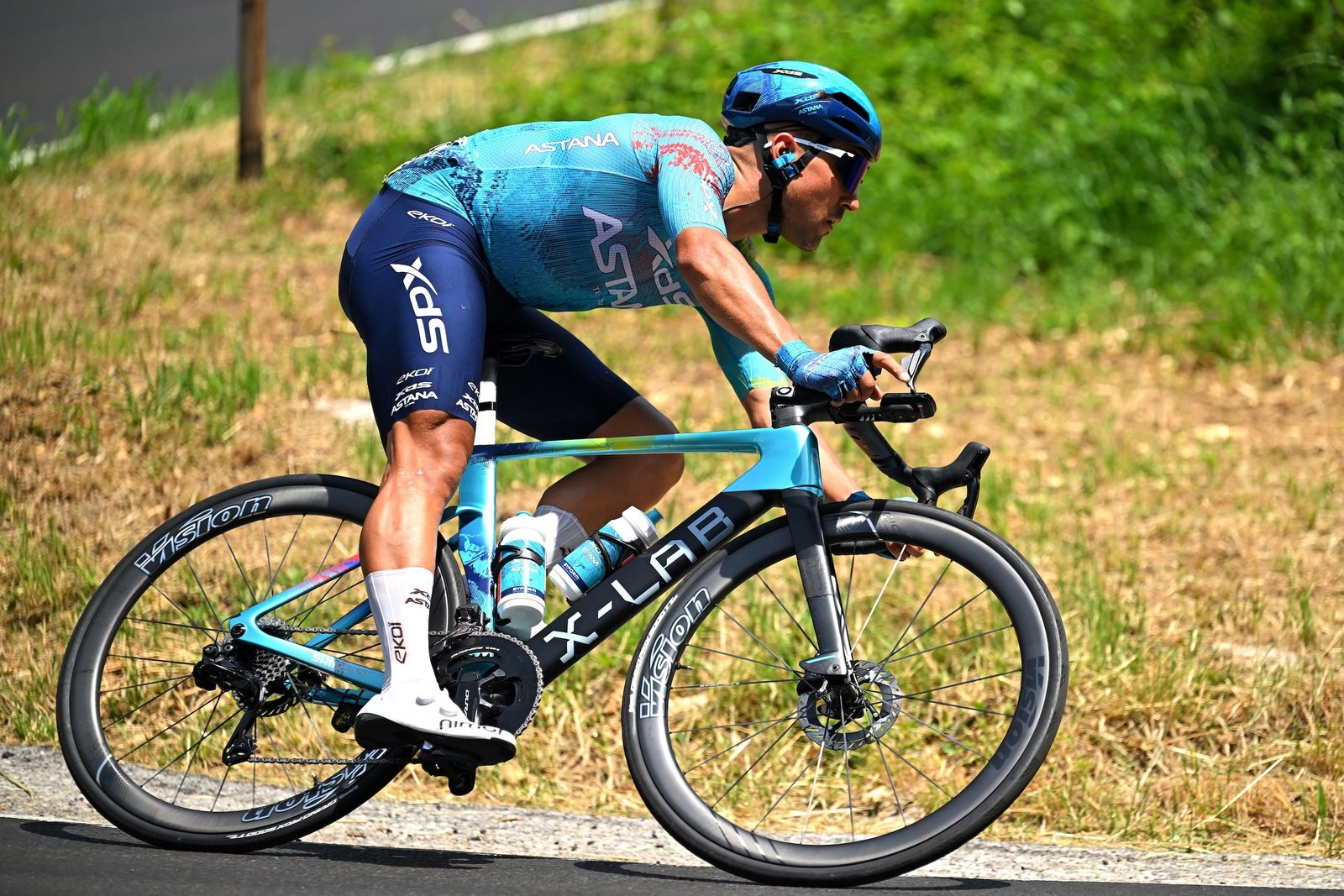
Joe Whittingham met me from the future over a virtual call. It was 9am for him in Xiamen, China, 9pm for me in Philadelphia, USA. He had a head start on the day, and in many ways, so do the brands he works with. Whittingham is the founder of Panda Podium, an English-language retail platform for Chinese cycling brands. A former teacher who moved to China 17 years ago, he stayed, learned Mandarin, and found himself living within driving distance of most of the factories he now sells for.
From those factories come bikes with lighter frames, better-value specifications and greater customisation options than comparable offerings from familiar Western brands. Chinese bike and component brands have crept from the corners of weight-weenie forums and AliExpress rabbit holes into World Tour races and the shopping lists of riders who, not long ago, would have sniffed at them. The question for real-world road riders is no longer whether Chinese bikes are any good, but whether the trust, service and warranty infrastructure has caught up with the product. That is before you even consider the industry’s open secret: many of the Western bikes riders already own were quietly built in those exact same factories.
Whittingham offers a sharp insight into why weight, not aerodynamics, has shifted perceptions. “Every brand claims to have the fastest bike in the wind tunnel,” he says. “They can’t all be right.” Weight, by contrast, is easily measured. Chinese manufacturers chased grams with a single-mindedness that appealed directly to the riders who cared most: the weight obsessives, the people drilling holes in their carbon handlebars at midnight. By satisfying those extreme early adopters, the brands built real credibility. Now the mainstream is catching up.


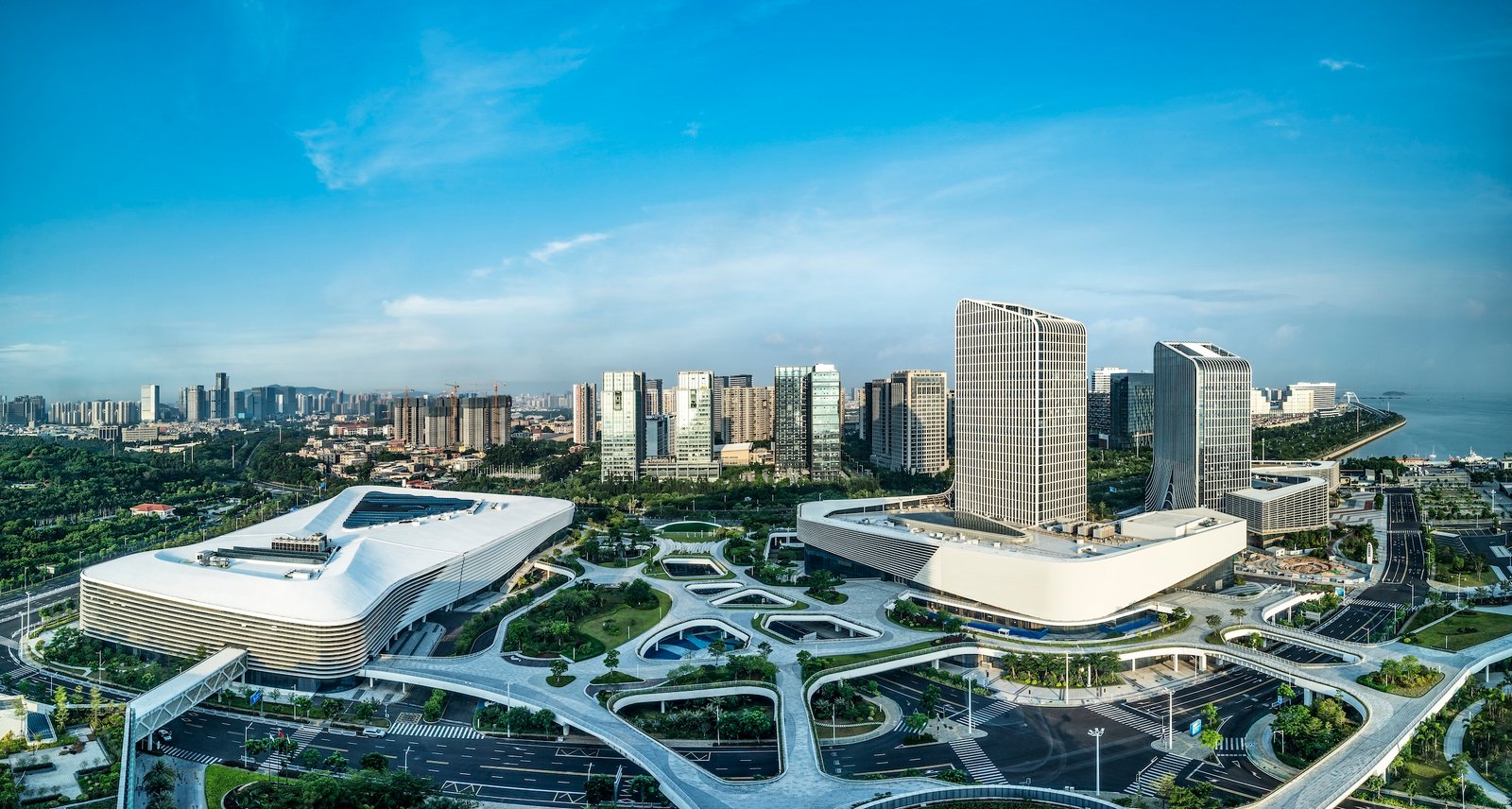

It’s an “open secret” that many top-tier models from western brands are made in the same factories as their Chinese counterparts
(Image credit: Getty Images)
Economical elitism
That cultural shift has produced its own status economy. For decades, cyclists bought expensive brands the way drivers bought German cars – for social status. These days, that logic is being turned on its head: boasting rights come from finding a product of comparable quality at a much lower price. “If your friend buys Enve wheels, you buy Farsports,” Whittingham picks up the thread. “It’s not to show you have more money. It’s to show you’ve spent half what they spent and your wheels are lighter.” The bike, in other words, has begun to signal something other than wealth. It signals attention, research, critical thinking and the willingness to look past the down-tube logo. Quick Pro, Magene, Tavelo: names that mean nothing to a casual rider and everything to the trend-setter at the top of the pyramid, whose opinion the level below is quietly watching.
At last month’s Sea Otter Classic, the largest consumer cycling expo in North America, the asymmetry was hard to miss. In a field of over 900 exhibitors, one mainland Chinese brand was making its road debut: X-Lab, the consumer-facing arm of manufacturer XDS, whose premier aero road bike, the AD9, developed with input from former pro Alex Dowsett, retails at about £6,000, or £9,900 for the Astana spec, undercutting comparable halo models – many of which are made in the XDS factory – from established names by around 40%. Panda Podium was also at Sea Otter for the first time, its booth a few places down from Specialized and across from Shimano, drawing a near-constant queue of interested riders. Among the bikes on display was the Quick Pro AR:One that Harry Hudson rode to a junior world title. Trek did not exhibit. Specialized, Giant, Pinarello and Canyon were all there – but, for once, they didn’t own the spotlight.
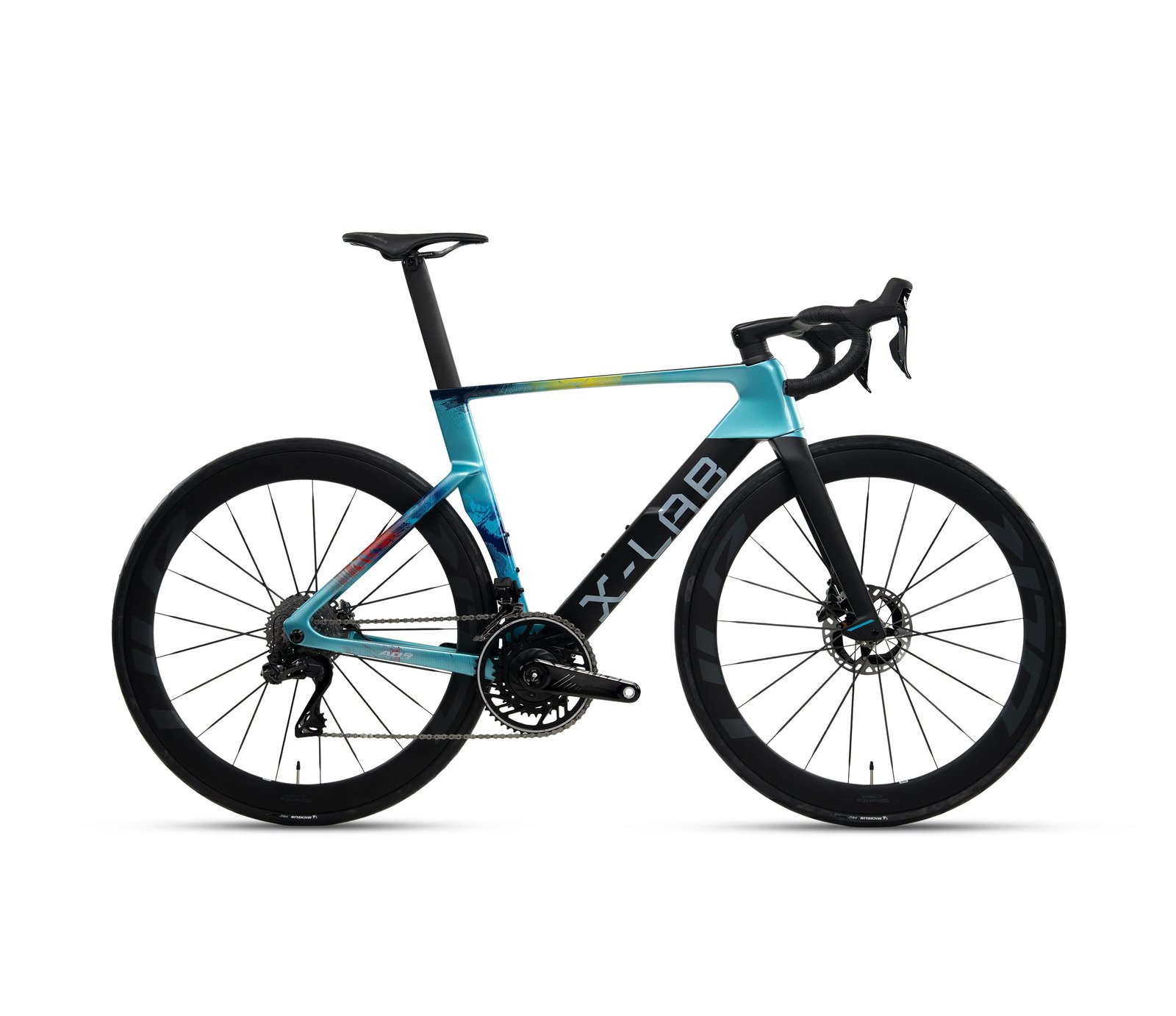

The X-Lab AD9, as used by XDS-Astana, is about half the price of top-line offerings from western brands
(Image credit: X-Lab)
Unbeatable value
To understand why brands like X-Lab, Winspace, Yoeleo, and Farsports are unsettling the established order, it helps to remember how that established order works. Most Western bike brands do not own their factories. Typically, carbon frames are contracted to one manufacturing partner, alloy frames to another, wheels to a third. Each link in the chain adds margin. A frame with an actual cost of a few hundred dollars can end up retailing for thousands by the time it reaches a shop floor.
XDS, by contrast, owns its entire process, as CW discovered when we became the first western media brand to visit its factory in Shenzen this year. XDS produces its pre-preg carbon fabrics from dry fibre, cuts its own multi-piece steel clamshell moulds, and hydroforms its aluminium tubing in-house using proprietary alloy blends. Robot-welding, painting, testing and assembly all happen under the same roof. The company claims to produce around eight million bikes a year as a contract manufacturer: more than 20,000 frames a day, including weekends. When XDS launched X-Lab as its own consumer-facing brand, it did so with three decades of refined infrastructure already behind it.
“They’re kind of holding all the cards in a lot of ways,” tech journalist James Huang told me. “Their OEM clients aren’t going to find it easy to leave.” The result is pricing that puts a smile on the face of the budget-conscious modern consumer. Compared to Specialized S-Works Tarmac SL8, which costs from around £12,000, X-Lab’s AD9 is literally half the price; a Trek Madone SLR lists at £10,000. At the entry point, X-Lab’s RS5 – an alloy road bike with a dual-sided power meter and a one-piece cockpit – retails at £1,050. Patrick Pan, X-Lab’s head of international growth, frames this keen pricing not as undercutting but as correction. “Prices have been inflated artificially,” he told me.
We put questions to the biggest brands. Specialized, Trek, and Giant all formally declined to comment. Ribble and Canyon did not respond, nor did several of the Chinese brands we approached, including Quick Pro, Farsports, and Light Bicycle. Strict non-disclosure agreements and guarded trade secrets mean neither the mega-factories nor the legacy brands will officially confirm whose frames are made in whose plants.
Manufacturing expertise
“Ninety per cent of the leap forward in carbon frames is manufacturing,” says Shawn Small of Ruckus Composites, a US carbon-fibre repair specialist. “The material itself hasn’t changed that much in 30 years. It’s how we’re using it that’s smarter.” The Asian workforce that has spent two decades making frames for Western brands has, in the process, become extremely good at it. In the book Apple in China, journalist Patrick McGee argues that Western companies did not simply exploit Chinese factories: they educated them. Apple deployed its own engineers on factory floors, transferred precision techniques at scale, and in doing so built the very capabilities that now power its domestic competitors.
The cycling industry has been running a quieter version of the same experiment for 30 years. Every spec sheet sent to a contract manufacturer, every quality rejection, every technical back-and-forth is a transfer of expertise. XDS did not arrive at World Tour-quality carbon manufacturing by accident. The brands currently declining to comment helped get it there.
Phil Gaimon, a former World Tour professional now sponsored by Panda Podium, takes a pragmatic approach to Chinese tech. His own set-up is a mix: Chinese wheels and accessories sourced through Panda Podium, a Shimano drivetrain, and a State Bicycle frame – an Arizona brand whose carbon is made in Taiwan. Partial trust, in his telling, is not a contradiction. It is a rational position built over years of sampling – he trusts what he has found to be dependable. What marketing researchers call country-of-origin bias, or the instinct to judge a product by where it was made rather than how it performs, is fading in cycling, and may soon disappear entirely.
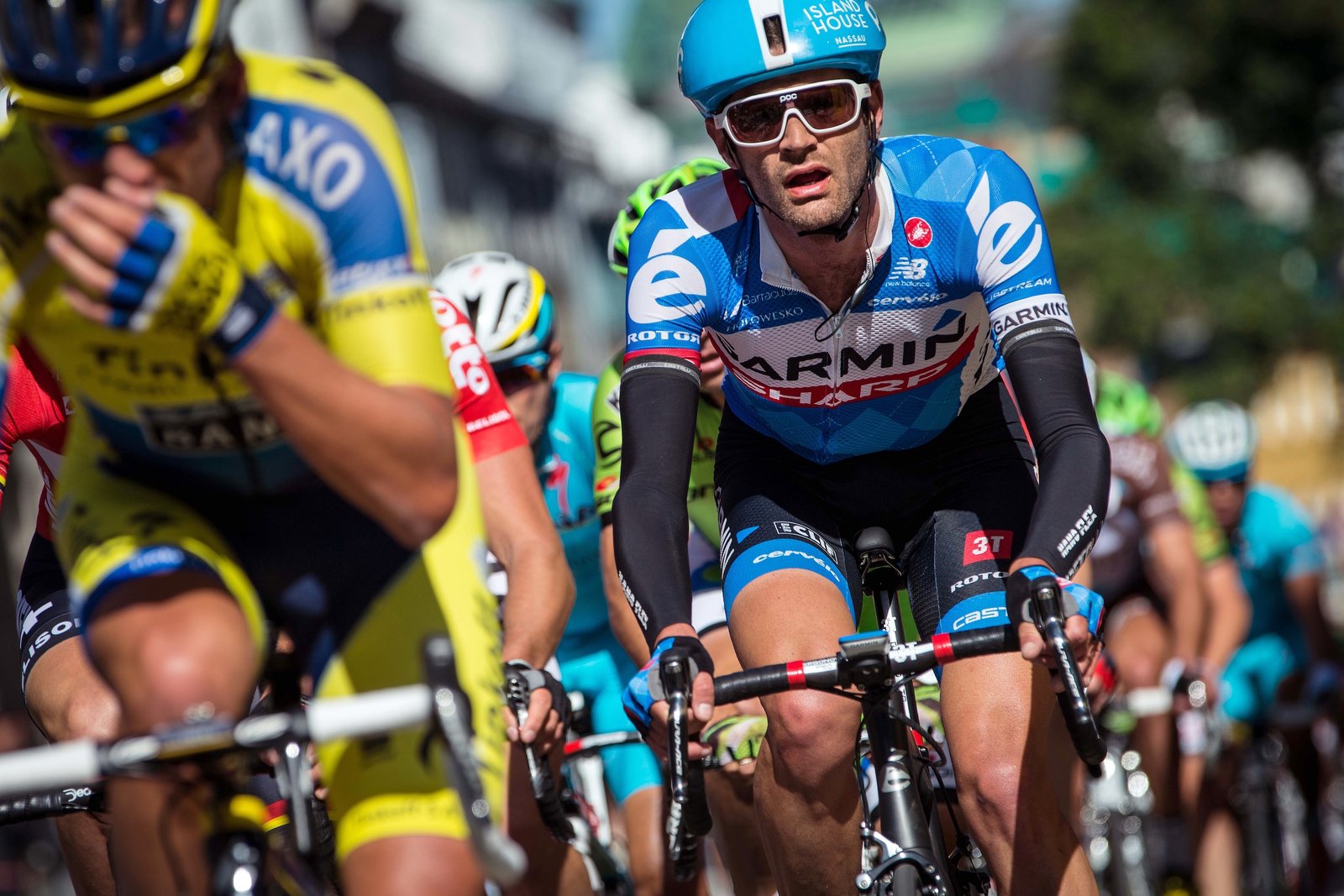

Former pro Phil Gaimon has no qualms about using Chinese components
(Image credit: Getty Images)
Aftermarket qualms
None of this means the question of trust is settled. Distribution hubs, warranty turnaround, replacement parts, crash replacement, after-sales service: this is the unglamorous infrastructure that established brands have built over decades and that newer Chinese brands are still constructing. “Local support is going to be really important,” says Huang, drawing a comparison that will sting for some: even SRAM, one of the largest component manufacturers in the world, once left Canyon owners unable to source UDH derailleur hangers for a period. Some, like Light Bicycle, now hold stock in American and European warehouses. Others do not.
A Western rider buying direct is buying performance and pricing, but accepting a different relationship with what happens after the sale. A Farsports client who recently destroyed a rear wheel on a pothole received a 35% crash discount within days. That is not the same as walking a cracked rim into your local shop, but it is arguably no less convenient.
Safety testing sits in the same grey area. ISO 4210, the global benchmark, was largely designed around steel and aluminium in the late 1990s and has notable gaps – carbon steerer tubes carry no required test at all. Dan Chabanov, a tech editor at Bicycling who tests wheels professionally, has spoken to engineers at multiple major Western brands who describe the standard as inadequate: a product can pass it and still fall short of what the industry would consider genuinely safe. The question worth asking any brand, Western or otherwise, is whether they test beyond the minimum. Zipp and Roval, for instance, say they do, but many brands do not advertise this information. For UK riders buying direct, there is a further consideration: pursuing a claim against an overseas company with no domestic presence is a different legal proposition from a dispute with a brand that has a British importer behind it.
Among enthusiasts, the wheels argument is largely settled. When Chabanov recently received a set of 55mm Light Bicycle wheels for review, Zipp had just released a new lightweight 35mm wheelset. The Zipp came in at around 1,090g and retailed at £3,150. The Light Bicycle set was 20mm deeper, weighed 20g more, and cost around £1,180. “If you’re shopping on price, weight, and depth,” Chabanov says, “you have to ask, what am I missing with the Light Bicycle that I would get with the Zipp?” One rider on Trainer Road’s forum bought a Light Bicycle set three years ago, put 12,000 miles on them, and immediately ordered an identical second set.
Frames are a different conversation. UK-based experts offer a more nuanced view. Alex Thomas at Peak Torque, an engineer who has tested Yoeleo and Winspace, remains measured; his reservations focus less on build quality and more on geometry. “The Chinese brands care more about the aesthetic than actual biomechanics,” he says, pointing to short head tubes as an area of concern. Reviewer Dan Chabanov found the Silverstone-validated Seka a “genuinely strong alternative” to the Tarmac, at half the price, with a finish that gave no cause for concern. Cyclingnews has tested an X-Lab AD9, saying it sets the stall out for Chinese bikes being more than a match for western brands.
Whittingham is careful to qualify his position. “Not all Chinese stuff is good,” he says. “Everyone’s gone from ‘it’s all dangerous’ to ‘it’s all fine.’ Neither is true.” Brands like Farsports and Light Bicycle have review histories, race provenance and established customer bases. The unreviewed product on a marketplace platform, with no accountable brand behind it, is a different proposition entirely.
The challenge is on
Imagine walking into your local bike shop and seeing the usual line-up of Specialized, Giant and Trek carbon alongside a carbon road bike from X-Lab and a hand-built steel or titanium frame from a boutique maker, British or otherwise. Three price points, three philosophies, three different types of road bike buyers served. Today this looks unlikely, but it may be the reality within a few years. Most of us are not looking for a revolution. We’re looking for a bike we can afford and that looks good, from a brand we know we can trust. A fresh-looking carbon frame at an affordable price tag may not reflect a “Chinese takeover”. It may simply be the correction the industry has been postponing for years.
The irony worth sitting with is this: the very brands democratising the market today could be the ones that monopolise it tomorrow. “If no one else is going to compete with them,” Huang asks, “why wouldn’t they want to make more money?” If manufacturing giants like XDS drive enough mid-tier Western brands to extinction, the resulting market won’t be a paradise of consumer choice. Instead, we could be left with a hollowed-out industry – a handful of global mega-brands, a thin layer of ultra-premium niche makers, and not much in between.
Aaron Stinner, whose Stinner Frameworks operation has grown from 30 titanium and steel frames a year to around 3,000, with a team of 12, is not panicking. But he is paying attention. “The big brands are going to have to be on their toes,” he told me. “They’re going to change the game.” He means it as a compliment to the disruptor and a warning to the incumbents, more or less simultaneously.
For now, the riders are the ones already adjusting. They scroll the forums, watch the YouTube reviews, click through to Light Bicycle, and compare the savings against the weight. The established brands will catch up, or they will not. Many riders have already decided not to wait and find out.
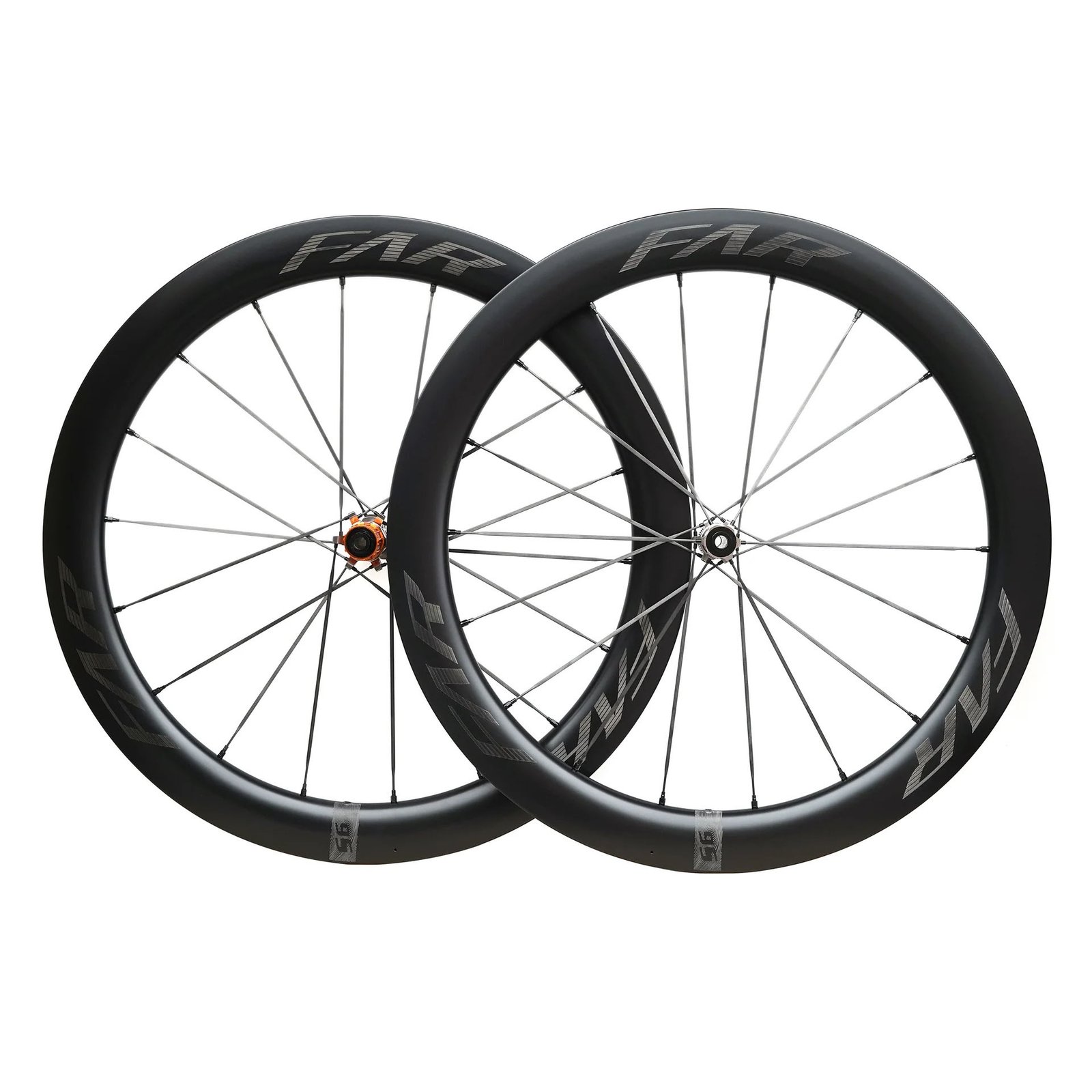

Farsports carbon wheels are praised for their performance and value
(Image credit: Farsports)
FIVE CHINESE PRODUCTS WORTH A LOOK
Quick Pro ER:One frameset (from £1,200): A race-focused carbon road frameset developed alongside a UCI Continental team. The ER:One has drawn comparisons to frames costing three times as much.
CRW CS5060 wheelset (from £1,250): The wheelset Harry Hudson rode to a UCI Junior World Championship title in 2025. Not cheap, but about half the price of a comparable set from a Western brand.
Tavelo Avro handlebar (from £220): An integrated carbon handlebar in a wide range of sizes and fits. The Avro is compatible with most current road bikes and has drawn widespread acclaim.
Overfast carbon thru-axles (from £170): Overfast’s carbon thru-axles faced scepticism when they launched. Three years and several Tour pelotons later, the argument is largely settled.
Farsports carbon wheelsets (from £700): The brand that started the credibility conversation for direct-from-China wheels over a decade ago. Now a standard recommendation among reviewers.
This feature was originally published in the 21 May 2026 print edition of Cycling Weekly magazine – available to buy on the newsstand every Thursday (UK only) while digital versions are available on Apple News and Readly. Subscriptions through Magazine’s Direct.
Read the full article here