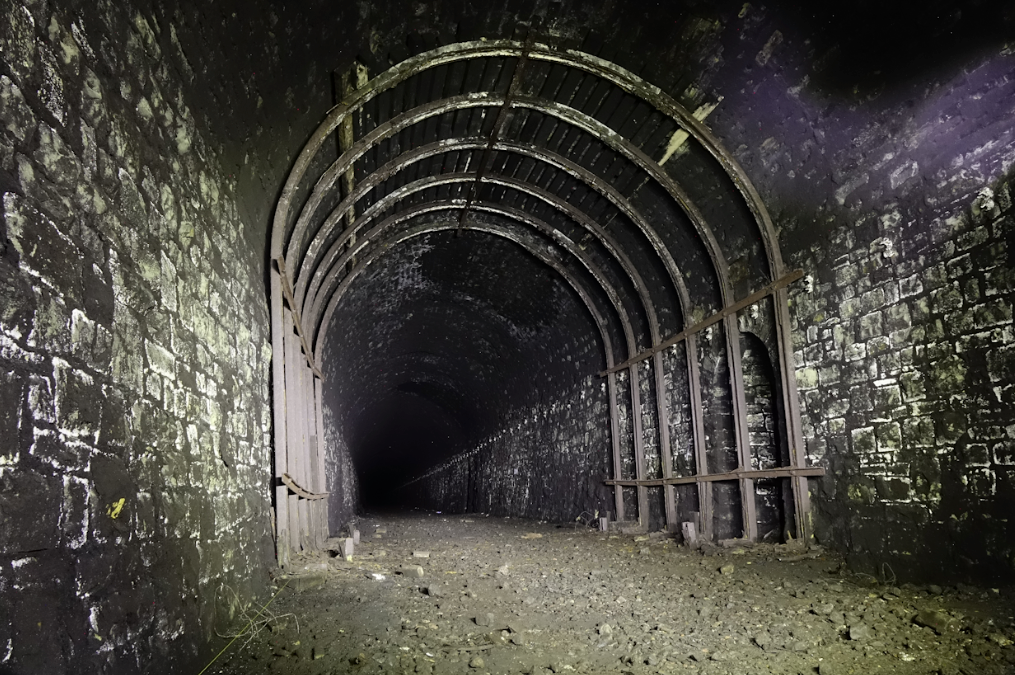
A cycling and walking tunnel between two valleys in south Wales will be the longest in Europe when completed, and will have a host of features to make the journey more fun.
At 3.1km (1.9 miles), the Rhondda tunnel, built for rail, will also be the longest in the world for six months of the year, during which a tunnel in Washington State, USA, closes for the winter.
The tunnel, which connects the Rhondda and Afan valleys, fell out of use in 1970 after 80 years of service on the Rhondda and Swansea Bay railway line, and the cuttings at each end were filled in. But a project, which has been more than 10 years in the making, aims to reopen it for cyclists and walkers.
It took a significant step forward last week when the local Rhondda Taf Council approved plans to excavate the Blaencwm end of the tunnel in the Rhondda Valley, exposing it for the first time in nearly half a century.
The Rhondda Tunnel Society, who are spearheading the project, hope to complete the reopening in stages, with the next one being to excavate the Blaengwnfi end in the neighbouring Afan Valley, before beginning work on making it cyclist-ready.
Tony Moon, RTS project manager, gave Cycling Weekly an idea of what the experience will be like.
“There will be lighting all the way through, and unlike other tunnels, like the Bath tunnels, we feel we need mobile phone access now, so there will be at least emergency phone access through the tunnel,” he said.
The current route between valleys is on good roads, but involves a lengthy climb, according to Moon, a bike rider himself. The reopened tunnel is likely to appeal far more to anyone feeling less energetic. Moon also raises the possibility of holding a cycling event that climbs over the hill and comes back through the tunnel.
“It would make a lovely run – or the other way around. I’m quite sure that big cycling events will happen as a result,” he said.
The long underground trip is likely to take up to 10 minutes for bike riders and 40 minutes for walkers, and to help it pass more quickly users will be kept entertained along the way.
“[There will be] audio-visual displays at different parts of the tunnel,” Moon says. “One long section has some very good alcoves in it, so what we’d like to do there is use the alcoves as exhibition space, put all sorts of different features in there.”
Local schoolchildren have already been recruited, he says, to help design an exhibit.
Martin Roberts, TV presenter and RTS patron, said: “The re-opening of the tunnel as a walking and cycling route will have massive impact on the area, from an economic, social and tourism perspective… and will be pivotal to enhanced cycling, walking and active travel in the region.”