



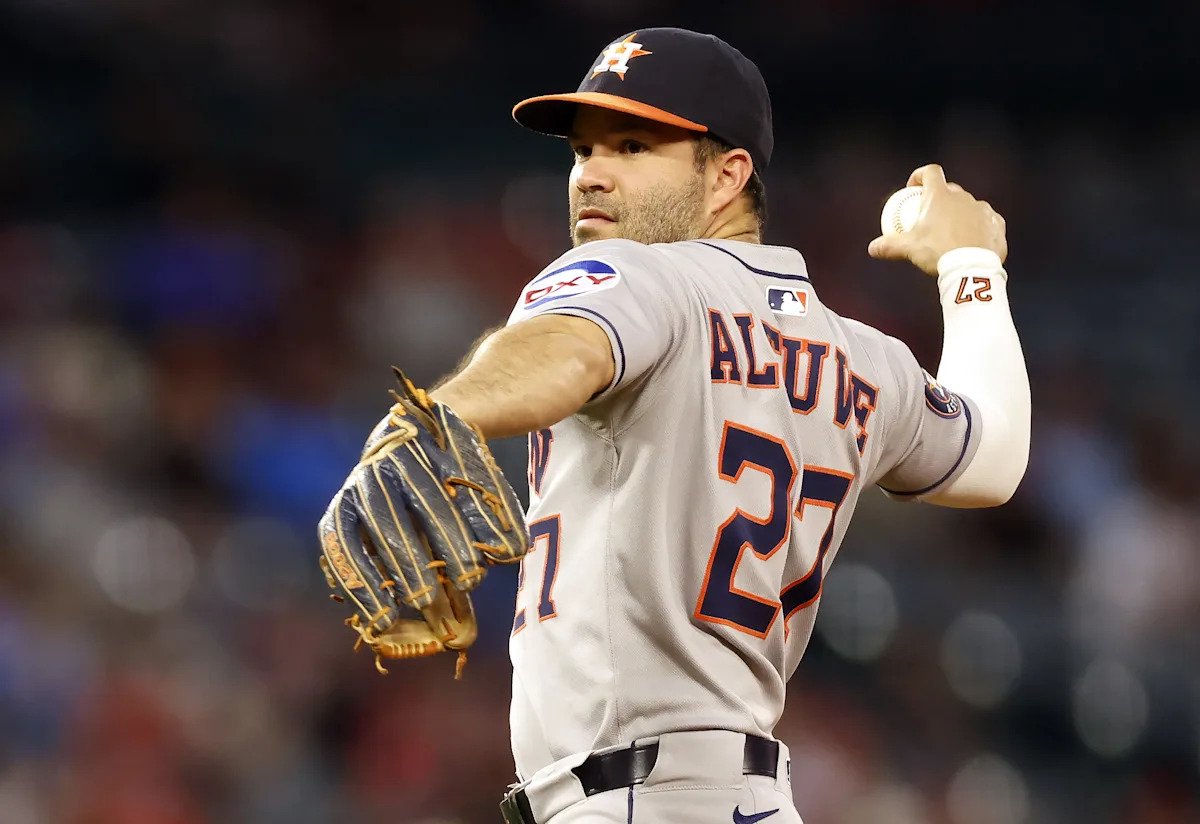
It often is hard to separate analysis and fandom. If you ask most Astros fan to name the best player in franchise history, most of them will name Jose Altuve. It makes perfect sense. He has an MVP award like Jeff Bagwell. Unlike Bagwell, he has two rings and perhaps one of the best postseason resumes in baseball history. He certainly has a better postseason resume than anyone in Astros history.
He isn’t there yet, but he seems to be on pace to eclipse many of Craig Biggio’s records for career numbers. Assuming an uninterrupted schedule (we will get to more on that later), he has a decent chance of getting to 3000 hits. Naturally, he will see a bump in all of the other relevant numbers as well. Nostalgia and positive vibes don’t go well with cold, hard analysis. We have to find a way to separate our own personal feelings about a player with the numbers.
The Hall of Fame Index aims to do that. It was never meant to rank order players. It is not necessarily a precise instrument. The idea is to put players into groups of players they are similar to. When a player is similar to Hall of Famers then he is likely a Hall of Famer. If he similar to guys that aren’t quite there then he is also likely not quite there. The index includes career value and peak value. Peak value is the total of the top ten WAR seasons for the player.
The Hall of Fame Index
|
BWAR |
FWAR |
BWAR10 |
FWAR10 |
Index |
|
|
Joe Gordon |
55.6 |
60.4 |
54.1 |
58.4 |
228.5 |
|
Willie Randolph |
65.9 |
62.1 |
48.5 |
46.7 |
223.2 |
|
Jose Altuve |
52.3 |
56.8 |
47.8 |
51.7 |
208.6 |
|
Bobby Doerr |
58.4 |
53.0 |
45.9 |
46.7 |
204.0 |
|
Billy Herman |
57.2 |
55.1 |
44.2 |
46.1 |
202.6 |
The good news for Altuve is that three of these four players are Hall of Famers. The other irony is that all of those Hall of Famers missed seasons serving their country in World War II. Obviously, it had a greater impact on some of them than others. Altuve likely will have more to do with them then simple numbers. 2020 was a wash due to Covid. He also had the worst numbers of his career. It was hardly a coincidence. If you gave him a full complement of at bats then it is much more likely that he would be on his way to 3000 hits.
It hasn’t happened yet, but all indications are that there will be a major work stoppage in 2027. Obviously, it is just guess work as to how much time he will miss. The index does a lot of things, but it does not allow for situations like this or the color barrier for African American players. This is just one of many reasons why we move onto our other tests. Based on career norms and recent trends, Altuve is not likely to change his place in the second base pecking order this season, but the other numbers will change.
Offensive Numbers
|
OPS+ |
ROV |
OW% |
BPO |
|
|
Joe Gordon |
120 |
.302 |
.593 |
.796 |
|
Willie Randolph |
104 |
.265 |
.537 |
.695 |
|
Jose Altuve |
129 |
.289 |
.635 |
.804 |
|
Bobby Doerr |
115 |
.287 |
.606 |
.765 |
|
Billy Herman |
112 |
.251 |
.589 |
.684 |
We’ve talked about these numbers in previous articles, but there is some added context that needs to be added. OPS+ and offensive winning percentage are tied to the league norms. The other two metrics are not. In case anyone is coming in for the first time, real offensive value (ROV) is the midpoint between batting average and secondary average. Secondary average is calculated by adding total bases, walks, stolen bases, and hit by pitches and subtracting hits. That sum is divided by at bats.
Offensive winning percentage assumes that a team has nine hitters like that hitter and an average pitching staff. From there, the numbers speak for themselves. If a 100 win baseball team is a championship level team then a .600 offensive winning percentage is pretty darn good. Finally, we get bases per out. The league average tends to range between .650 and .700 depending on the era.
What we should note is that three of these players played during the Live Ball Era of the 1930s and 1940s. That obviously was a more robust offensive era than Randolph or Altuve played in. That can explain the differences between offensive winning percentage, OPS+, and the other two metrics. Unfortunately, Altuve is at the part of his career where he is likely to detract from these numbers and not add to them. That is part of the push and pull factors all players get to late in their careers.
Fielding Numbers
|
Rfield |
DWAR |
FG |
2B |
|
|
Joe Gordon |
150 |
22.4 |
14.1 |
150 |
|
Willie Randolph |
114 |
16.8 |
20.2 |
115 |
|
Jose Altuve |
-69 |
0.0 |
-1.6 |
-86 |
|
Bobby Doerr |
48 |
13.5 |
17.1 |
43 |
|
Billy Herman |
55 |
12.4 |
15.4 |
58 |
This is the biggest reason why I use a second source for WAR and why the index is superior to JAWS. Different sources look at fielding value differently. FWAR does not use defensive runs saved. DRS is the current basis behind Rfield. FWAR uses other metrics (notably Statcast’s Outs Above Average) as a part of its formula. OAA is much more kind to Altuve than DRS.
If we are to believe Rfield then Altuve will likely go down as the least valuable fielding second baseman in the Hall of Fame. He will surpass fellow former Astro Craig Biggio with those numbers. This is yet another push and pull factor that happens when players continue to play. Pound for pound, Gordon might be the best fielding second baseman in history. He did not reach the numbers that Bill Mazeroski did, but he only had 11 seasons. If you give him those two seasons he lost serving his country and another here or there it could have turned out differently.
Total Runs
|
RC |
Rfield |
Rbaser |
Rpos |
TR |
|
|
Joe Gordon |
936 |
150 |
4 |
66 |
1156 |
|
Willie Randolph |
1138 |
114 |
41 |
73 |
1366 |
|
Jose Altuve |
1208 |
-69 |
15 |
45 |
1199 |
|
Bobby Doerr |
1169 |
48 |
-2 |
82 |
1297 |
|
Billy Herman |
1137 |
55 |
8 |
68 |
1268 |
Thus. we get to major push factor on continuing to play. With each passing season, Altuve will continue to build on these numbers. Runs created, Rfield, and Rbaser are simple enough. Rpos is a positional adjustment based on the fielding and hitting difficulty relative to the rest of the positions. Altuve’s numbers are obviously lower because they include some time in left field. That might or might not continue to be the case moving forward.
If a typical regular has between 70 and 90 total runs a season, then we can foresee Altuve surpassing all of these players with three more seasons. Obviously, those numbers will be included with the requisite counting numbers everyone is familiar with. That would include perhaps getting to 300 home runs, 1200 runs and RBI, and well over 2500 hits. As it stands, he already has created more runs than all of these players.
Our last test looks at factors related to peak value. How the players accumulated their value matters. Fans are more captivated by greatness even if it is short-lived. In the books I looked at the MVP test. This is a variation of it. We are looking at 5 WAR, 4 WAR, and 3 WAR seasons. Players with five or more WAR tend to be among the best three or four at their position in baseball. Four WAR players are likely borderline all-star performers. Three WAR seasons are solid above average performers. Additionally, we will note if a player led the league in WAR.
Dominance
|
5 WAR |
4 WAR |
3 WAR |
Top |
|
|
Joe Gordon |
7 |
0 |
2 |
0 |
|
Willie Randolph |
4 |
6 |
1 |
0 |
|
Jose Altuve |
5 |
2 |
2 |
1 |
|
Bobby Doerr |
6 |
0 |
2 |
0 |
|
Billy Herman |
3 |
4 |
7 |
0 |
Based on these numbers, Herman and Randolph end up looking pretty similar. Altuve’s 2017 season will end up being a feather in his cap. He won the MVP that season and based on the BWAR score, that honor was deserved. This isn’t to say that a player has to be an MVP winner to get into the Hall of Fame, but it certainly does help when everything else was equal.
The numbers also explain why Gordon deserved the love he got from the Veterans Committee. I hate to assume facts not in evidence, but if he had not taken off two seasons serving his country he likely would have been considerably higher up the index food chain. He had come off of two six win seasons and another ten BWAR and FWAR would have boosted both his career and peak value.
Obviously, Altuve can still add to his overall career value, but he is unlikely to get to three WAR again if recent seasons are any indication. Sure, he could have a rebound season or two, but most players in his situation start to see the numbers taper off. Still, if we consider Joe Gordon, Billy Herman, and Bobby Doerr to be credible Hall of Famers then Altuve likely qualifies as one already. That doesn’t even include his ample postseason production.
Read the full article here