



Channel your inner Lennon and imagine, if you can, a shared-used road on which bikes have been given the right of way over motorised vehicles, and drivers are not permitted to overtake cyclists. And then imagine, sadly it isn’t hard to do, all the people and publications getting purple-faced furious about this concept, especially when it’s revealed that the project in question cost £2.4 million to implement.
You don’t have to expend too much mental energy, because this is exactly what has unfolded with the recent opening to the public of what has been heralded by those in favour as England’s first ‘cycle street’ (and derided by others – including some cyclists in Cambridge – as a massive waste of money).
Fietstraat road sign from the Netherlands
(Image credit: Dutch road sign)
A cycle street is not one closed off to cars, and neither is a simply a road with dedicated cycling lanes – it lies somewhere between these two things. Motorised vehicles are still permitted to drive along Adams Road, but signage will (when it’s fully complete) make it very clear that drivers must remain behind people riding bikes along the street, which is about a third of a mile (around 550 metres) long.

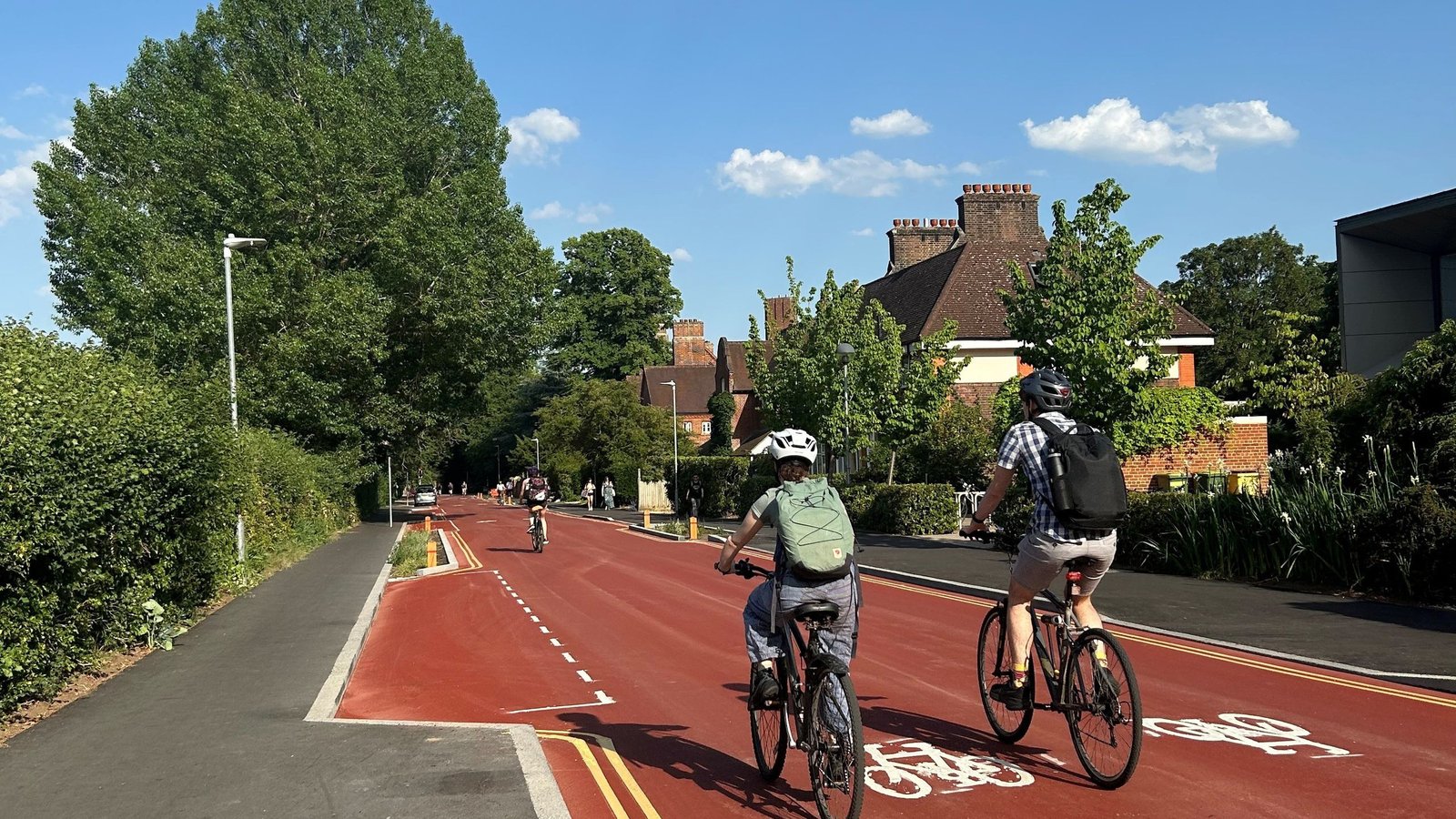
After a project based on a Dutch model, and delivered by the Greater Cambridge Partnership, as part of its wider ‘greenway’ scheme, Adams Road, in the west of the famously cycle-friendly city of Cambridge, has been transformed. Footpaths have been widened to make access better for pedestrians, on-road parking has been drastically reduced and the street has been resurfaced, re-coloured (red) and made narrower, to further deter drivers from overtaking cyclists.
In the Netherlands and Belgium such roads are known as Fietstraat, and they’re relatively common in cities across the country, on streets where cars are considered guests not gods. The concept is a pretty new one for Britain, however, with just one other example in Cardiff, Wales.
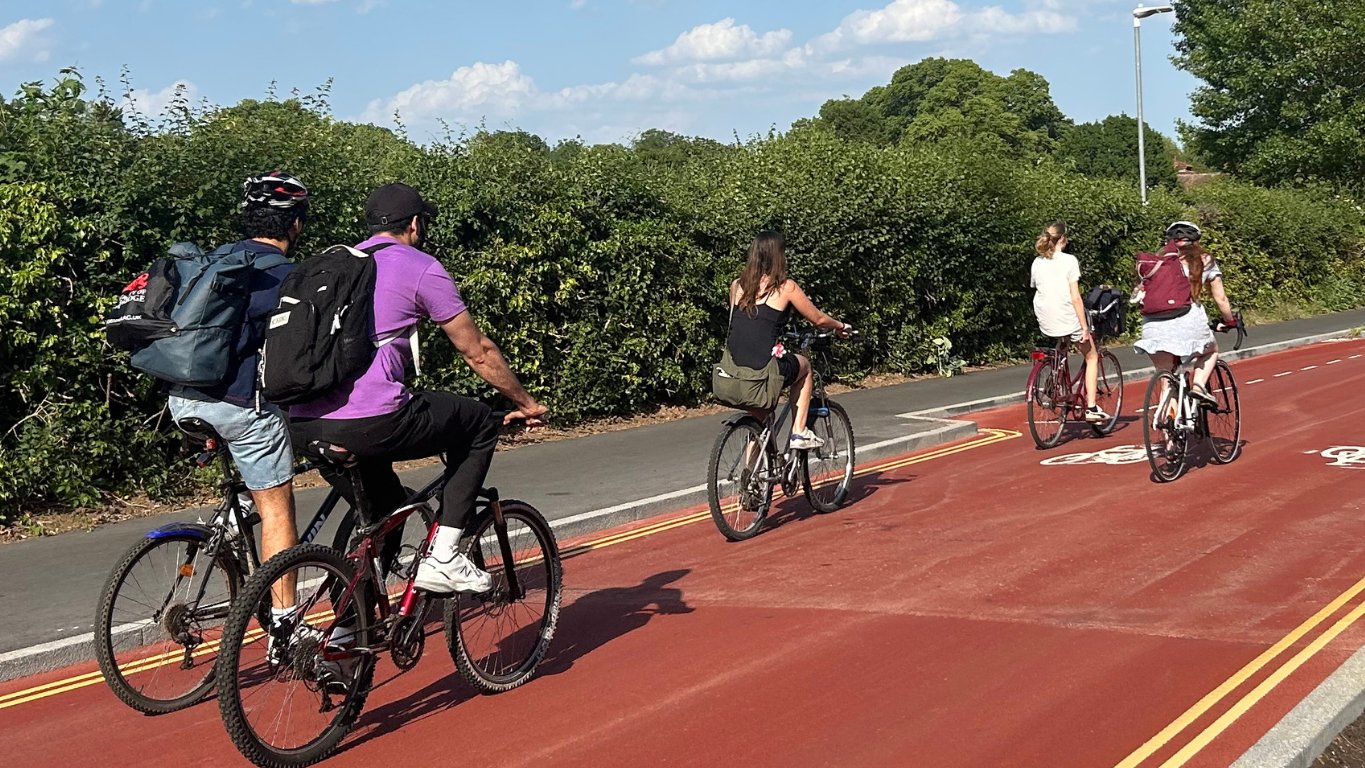
Cyclists riding along newly opened Adam’s Road in Cambridge, the cycling capital of Britain
(Image credit: Image courtesy of Greater Cambridge Partnership)
Cambridge, which also has the country’s first Dutch-style roundabout (which also gives right-of-way priority to cyclists and pedestrians over motorised vehicles), is sometimes described as Britain’s ‘cycling capital’, and it’s not surprising to see the concept landing here. However, with the project having cost £2.4 million, and the stretch of road being pretty short, not everyone is especially happy about it.
Even some cyclists using the road, who were interviewed by ITV, expressed mixed feelings. Most applauded the overarching concept and enjoyed the new surface, but felt the money could have been better spent on improving cycling safety and infrastructure across the whole city – not least the perennial problem of potholes – rather than all being splashed on one relatively short stretch of a single suburban street.
However, Thomas Fitzpatrick, head of programmes at the Greater Cambridge Partnership points out that the residential road, positioned between university campuses and the city, has a active travel paths on either side of it and is very heavily used by pedestrians and people on bikes, making it a unique case.
“The road is used by up to 3,000 cyclists a day,” Fitzpatrick told Cycling Weekly. “And that number is expected to significantly increase as a result of the initiative. We did all the analysis, and this was by far the safest solution for pedestrian and cyclists, and it was heavily supported by residents.”
While £2.4 million sounds like a lot of money, it’s a small part of a far bigger £800 million budget provided by a combination of government funding and local contributions (by, for example, private developers) that is used to improve transport and implement the Greater Cambridge Greenways.
Fitzpatrick told CW that the project has “a very high benefit to cost ratio”, and that the completed projects will deliver savings overall, in terms of improved health, safety benefits and a reduction in the pressure put on other streets by more people driving instead of walking or cycling.
Will we see ‘cycle streets’ cropping up in the cities elsewhere in Cambridge or across the country? Well you might say I’m a dreamer, but perhaps, with the price of fuel still soaring and more people commuting to work by bike than ever, it’s not so hard to imagine.
“We will be monitoring this closely, and will consider future options like this if it proves successful,” says Fitzpatrick. “And I’m very confident it will be succesful.”
Read the full article here