



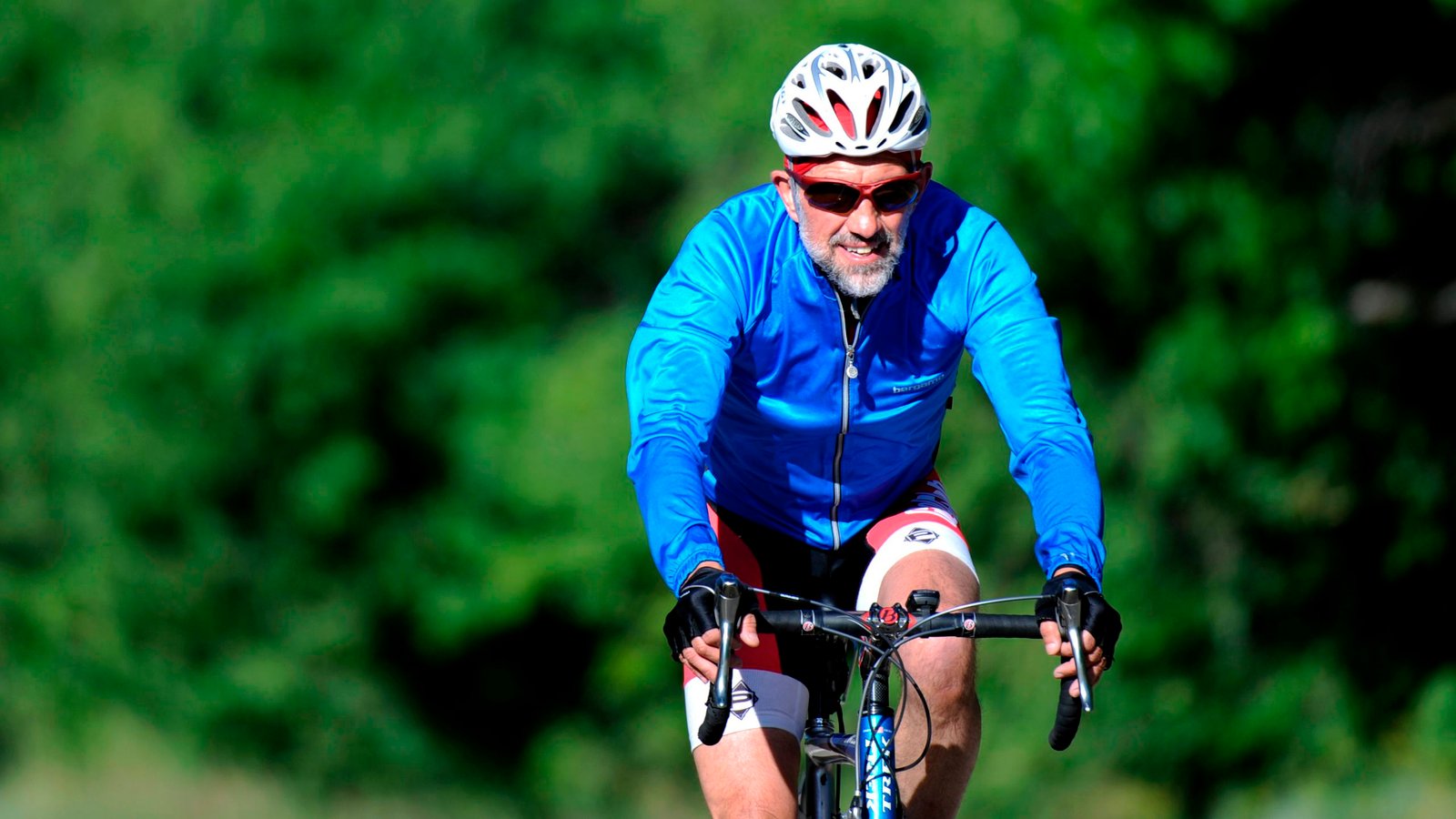
When I look around, it feels like more people of all ages are cycle commuting than ever, and that greater numbers of bike riders are continuing to pedal well into their autumn years. But this is likely a slightly skewed view, as seen through the tinted glasses of someone now immersed in cycling.
In fact, a new study by Age UK has just revealed a far less positive picture, finding that millions of people in their 50s and 60s are nervous about taking up sports like cycling, and feel particularly anxious about joining a club, very often because of negative or traumatic experiences they had decades earlier, during PE lessons. This might seem a bit far-fetched, but to someone of my vintage it sadly sounds all too plausible.
I went to school in the 1980s, which means a couple of things: I’ve done more laps of sun than Paul Seixas has had hot dinners, and my experience of physical education in the state system was very different to the one encountered by my kids. I hope, anyway.
Article continues below
To be honest, I can’t whinge too much from a personal point of view. My dad’s stories of physical abuse at the hands of psychopathic-sounding Christian Brothers at school in Ireland are horrific, and while some teachers still wielded canes and dished out smacks when I was in junior and middle school, I was 14 when Parliament outlawed corporate punishment in England.
However, that particular memo took several years get through the granite-thick skull of my Welsh PE teacher, who was fond of reminding us how he’d just come from a proper rough school in London and dishing out slaps if you failed to show enough enthusiasm for rugby. Forcing us to do press-ups in the snow was a favourite hobby of his, as I recall.
The only sport I truly excelled at, though, was javelin – district champion two years in a row I don’t mind telling you. But frankly, the benefits of being a decent spear thrower were pretty limited, even back in that dizzyingly distant era, when we had four TV channels and no digital devices to distract and destroy our developing brains.
It was humiliating to watch, let alone suffer, and for many the lasting effect was to put lots of young people off sport entirely, sometimes, it seems, for life. Which isn’t just a great shame, it’s also a big health and fitness issue, especially as people age.
Waiting – often a long time – to get picked for team sport was a regular ordeal for many kids, but that was far from the worst of it
(Image credit: Getty Images)
Amid this atmosphere, my initial enthusiasm for traditional sport waned pretty quickly as I progressed through secondary school, and by the time I was 15, I was regularly skipping PE lessons to learn far less healthy things, like how to blow smoke rings.
I stopped doing all sport during my teens and didn’t return to it until my late 20s, when I discovered the redemptive joys of bike riding after signing up and training to do the Around the Bay in a Day road cycling event in Melbourne, where I was living. I was seriously unfit at the time, and it was the wake-up call I needed to sort my life out.
With the trajectory I was on back then – smoking and boozing and expanding in all the wrong directions – I hate to think what state I’d be in now if I hadn’t started road riding, and that led me to take up other pursuits, from mountain biking to kayaking and trail running (the latter so very different to school cross-country, which I genuinely thought had put me off running for life).
It’s no exaggeration to say that rediscovering sport – especially non-traditional pursuits, enjoyed outside of a pressurised team setting – was genuinely life changing for me. Probably even life extending. But this new research reveals that for many people my age, the ones who had been more badly bruised by the school PE experience than I had, the psychological baggage is too heavy to shake off, and they’re missing out.
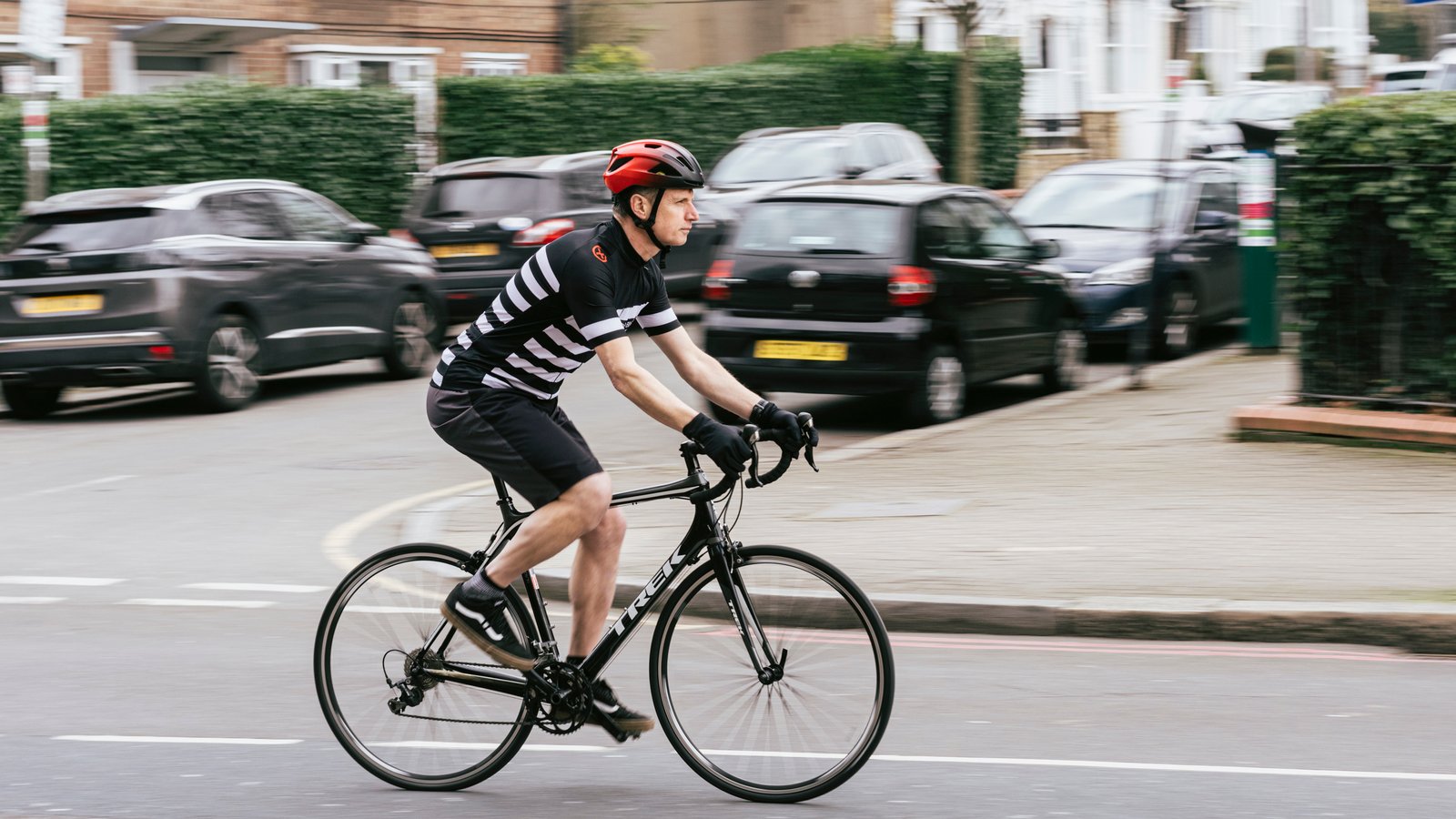
Pat cycling through London
(Image credit: Louis Amore)
Some people even discover they have a real talent for sports like cycling quite late in life, but for most of us, being active and is simply good for both our bodies and our brains, with mental wellbeing being significantly enhanced if you end up forming new social bonds and meeting others in your area who enjoy the same sort of pursuits.
Even if you’ve led a largely healthy life, the benefits of doing activities such as cycling when you’re middle aged are well documented, with exercise helping people in ways ranging from avoiding muscle loss to coping better with the menopause, so it’s vitally important to stay active as you get older.
This is the focus of the ‘Act Now, Age Better’ campaign launched last week by Age UK, and supported by various sporting bodies including British Cycling, that’s seeking to encourage adults in their 50s and 60s to take up pursuits such as bike riding, and to join a club to help them reap the full benefits.
The research behind the study was provided by Yonder, who conducted an online survey on behalf of Age UK using a sample of 2385 adults in Britain aged between 50 and 65, and extrapolated the findings across the middle-aged population of Britain.
They found that negative early PE experiences at school was a major barrier stopping millions of middle-aged people from being physically active in adulthood, with the data revealing that nearly half (the equivalent of 6.7 million people) used to dread school PE lessons. Many harboured memories of feeling self‑conscious about their body (40%) or being picked last for teams (40%), but Age UK believes that, provided with the right opportunities and support, mid‑lifers can get active again.
The Charity is now working with over 40 sporting partners, including British Cycling, the Ramblers, Sport England and many others, to help to bring sport back into people’s lives, but minus the trauma.
“The British Cycling Foundation are delighted to partner with Age UK for their Age Better campaign,” Tracy Power, managing director of the British Cycling Foundation told Cycling Weekly. “We consistently see that the power of riding a bike improves physical and mental health, brings a renewed sense of confidence, strengthens communities, and tackles inequalities. We are committed to bringing the joy of cycling to those who need it most, and this partnership provides the opportunity for people, whatever your age, to age better through cycling.”
Explore More
Read the full article here