




Three years ago, I wrote an article for Cycling Weekly about how cycling needed to open itself to newcomers and become more welcoming. I’d only been riding for a year or two at the time, and I’d soon realised, with a certain discomforting shock, that – as a young, female rider – I was in a minority, and that cycling was very male-dominated. To an experienced rider, that might sound obvious. Cycling has long been a predominantly white, male sport, but as a new rider with a fresh pair of eyes, I was grappling with a sense that the sport I was falling in love with wasn’t meant for me. Herein lies the problem.
That feeling isn’t unique to me. Barriers to cycling have the power not only to deter newcomers, but to make whole groups of people feel unwelcome. Women, ethnic minorities, those on low incomes, beginners – all must overcome hurdles, if not to participate, then to feel they belong. My views have evolved since writing that piece in 2023. Speaking to riders, campaigners and community leaders who are paving the way for real change, I feel brighter about where cycling is headed. But change is still needed, with exclusionary factors including cost, infrastructure, representation and perception continuing to deter certain people from cycling.
The question isn’t simply how to get more people riding. It’s what needs to change to make cycling genuinely accessible and welcoming – for women, for under-represented communities, and for anyone who’s ever felt that the sport isn’t for them. Here is my manifesto for how to make that change, or at least how to make a start.



(Image credit: Press material)
Closing the gap
The gender gap in cycling is one of the clearest indicators that access isn’t equal. Department for Transport (DfT) stats show that, on average, men are nearly three times more likely than women to make a journey by bike. Despite growing female participation overall, women remain sorely under-represented in certain areas, from elite racing through to everyday riding and clubs. It’s a gap that Cycling UK says is still overlooked in the government’s active travel plan.
Safety is a major factor. A recent YouGov poll found that the barriers to cycling have actually widened between men and women over the last seven years, with 58% of women saying they cycle less because of safety concerns, poor infrastructure and intimidating driver behaviour. “The barriers many women need to overcome simply don’t affect men in the same way,” explains Sophie Gordon, campaigns manager at Cycling UK. “We’ve heard from so many women who are put off cycling because of intimidating driver behaviour.” Women are more likely to feel vulnerable in traffic, less catered for by existing infrastructure, and intimidated by other road users, instilling a fear of cycling long before they get in the saddle. “Our roads don’t just belong to cars – it’s important we call out bad behaviour and educate all road users on sharing space,” adds Gordon. The problem is self-perpetuating: the fewer female riders on the road and in clubs, the fewer women feel like cycling is for them. But breaking that cycle requires investment. “What’s really key is that we build safe cycle routes designed with the experiences of women in mind, while also calling out bad behaviour,” Gordon says. “When women see other women out on bikes, they start to feel it’s a realistic option for everyday trips – but investment needs to come before we can see that virtuous cycle.”
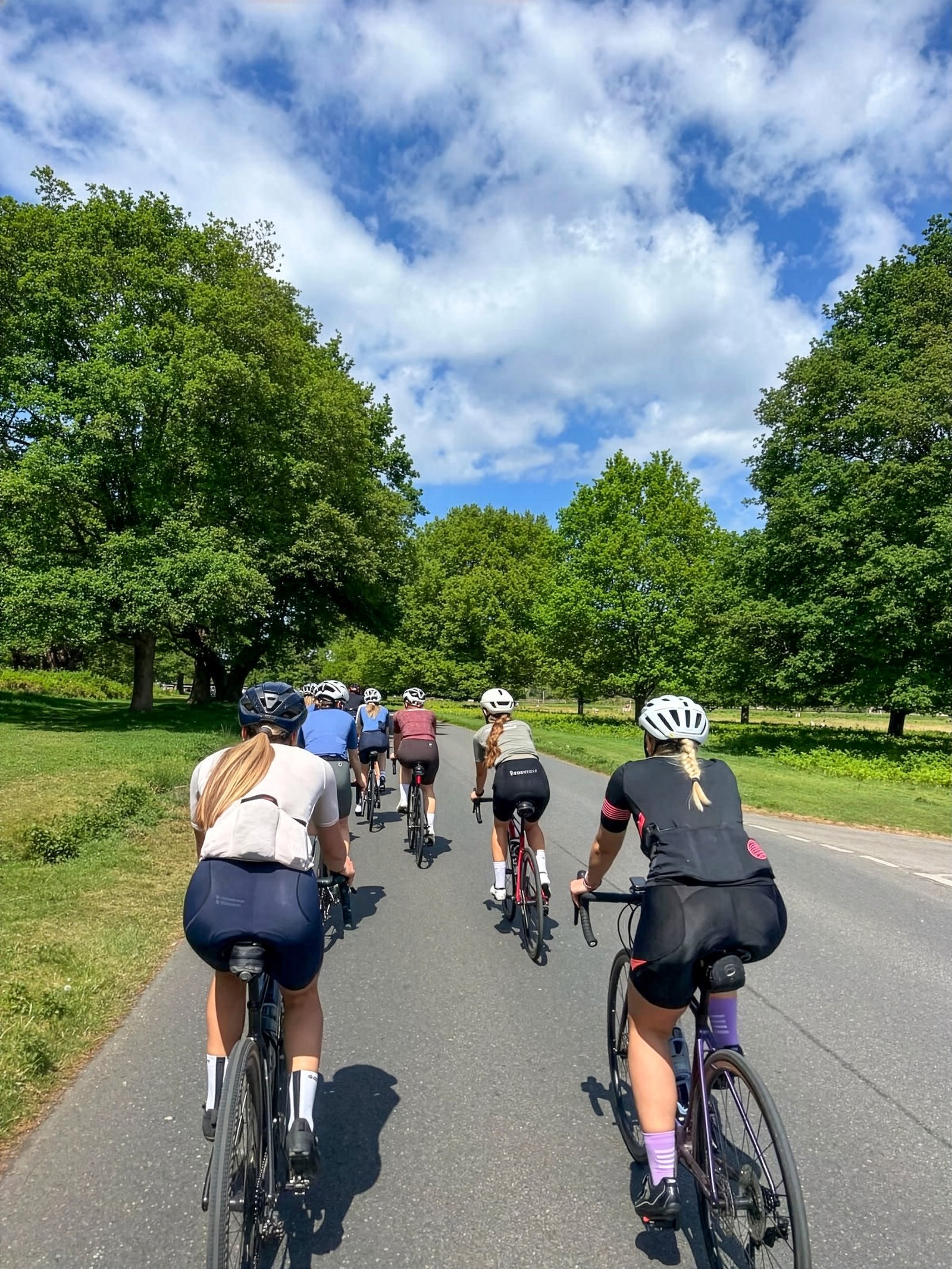
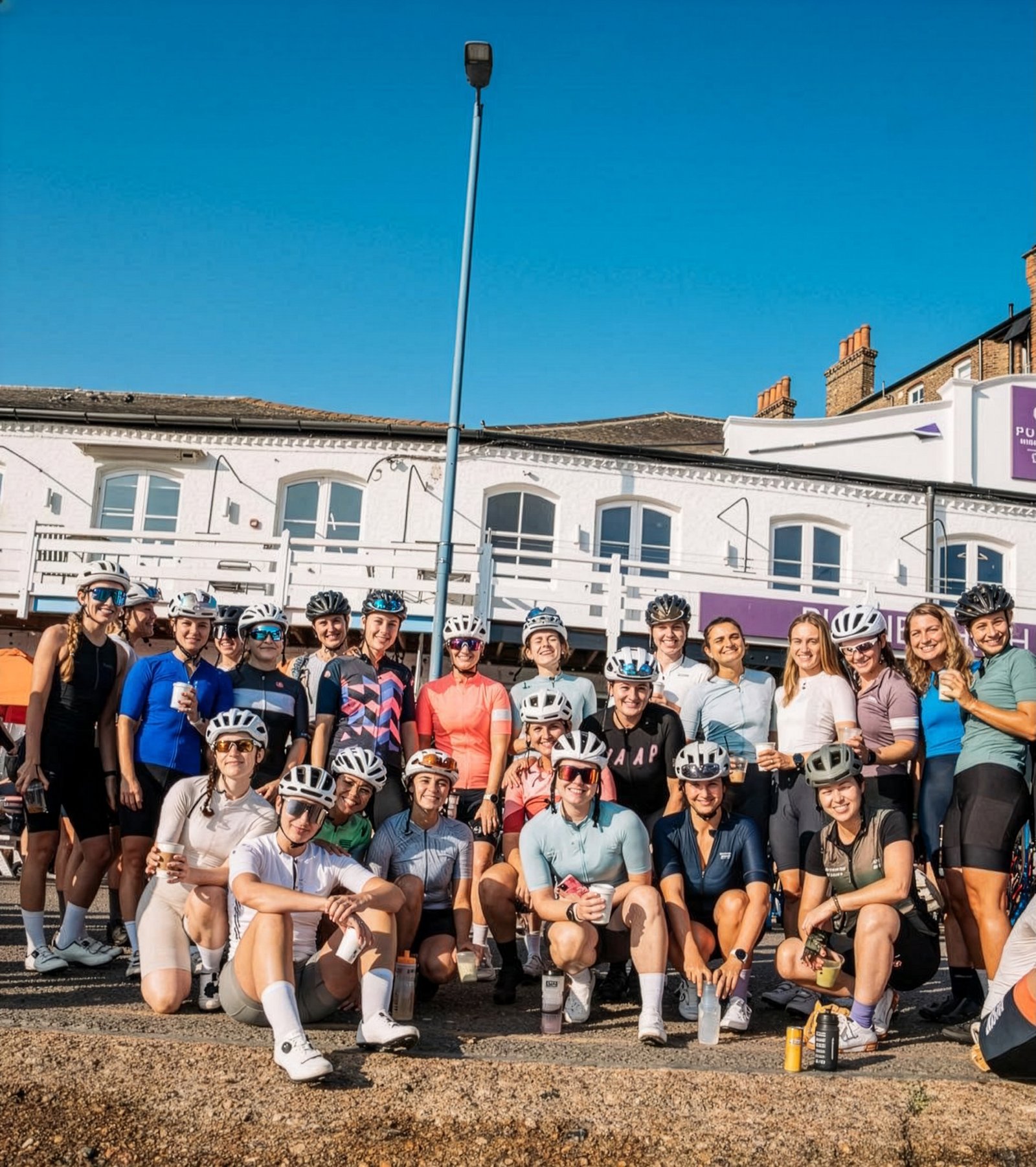
Safety isn’t the only barrier. Many women turn to group riding to build confidence in the saddle, yet traditional cycling clubs can feel intimidating. That gap is what led Lucy Eastoe, Emma Keyes, Phoebe Rylatt and Megan Redding to found Lila, a female-focused cycling club designed to make cycling accessible to women. “All four of us faced challenges at the start of our cycling journeys,” says Eastoe. “Joining clubs that felt intimidating or didn’t quite suit our level, and not having friends who wanted to give it a go made it hard to stay motivated. We wanted to create a space where women could feel supported, and draw motivation and confidence from riding alongside like-minded others.” In practice, that looks like no-drop rides, beginner-specific sessions and bike maintenance workshops. These all help remove the pressure to be fast or confident from day one. Interventions like these have the power to completely change the experience for new female riders. But the end goal for women isn’t just about riding with other women; it’s about feeling confident to ride freely with everyone.

(Image credit: Getty Images)
A broader church
It’s not only women who experience exclusion from the sport. Cycling has long been associated with middle-aged white men, and its diversity problem is visible at every level. Of the 148 British-registered riders racing for UCI teams in 2025, just one was from an ethnic minority. It’s a sorry precedent that filters down to grassroots participation. In the UK, just 14% of ethnic minorities, 12% of disabled people and 19% of LGBTQ+ individuals cycle regularly.
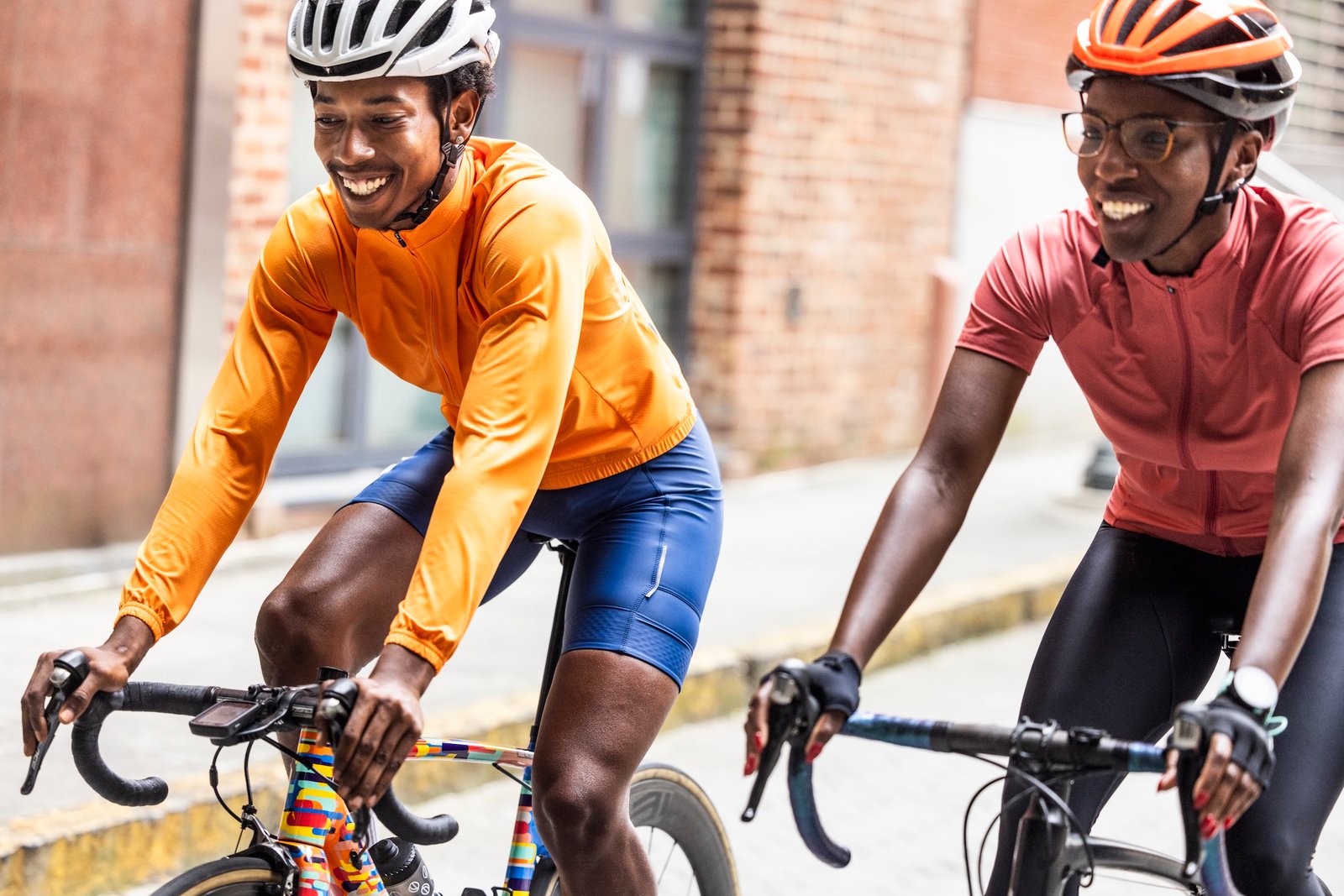
The issue isn’t simply about participation figures. Perception shapes participation just as powerfully as safety and affordability factors. “One of the biggest things that needs to change is the perception of who cycling is and isn’t for,” says Yannick White, co-founder of inclusive cycling team Chain Gang Cyclists. “When people only see a certain type of rider represented, whether that’s in cycling clubs, the media or online, it can create the feeling that the sport isn’t meant for them.” That perception is shaped everywhere: advertising, social media, club culture and professional racing. And when representation is narrow, it sends a quiet but powerful signal about who belongs in that space. More visibility of diverse riders and communities is one of the most important levers to address. “Coming out of the pandemic, there was a huge influx of new cyclists from various backgrounds,” says White. “Now is the perfect time and opportunity for brands to stand up and be the change that we all want to see.”
Andy Edwards published the ‘Diversity in Cycling’ report in 2022 to encourage cycling to be more inclusive and help demystify it for newcomers. In the report, he offers practical, real-life solutions on how to promote diversity within the sport: increase representation across media and marketing, actively invite riders from different backgrounds into cycling spaces, and encourage existing cyclists to reflect on their own role in shaping those communities. “I sometimes come across white guys in my age group who question the need for diversity,” he says. “My response is: listen to more people from different backgrounds, and you’ll hear a range of perspectives you might never have considered.” Edwards also points to simple but effective interventions, prompting anyone who rides in a club to consider ways to welcome new riders. “I like to mix things up and run guest rides, purposefully inviting riders from different groups and backgrounds for a coffee ride.” It’s small acts like these that can have an exponential impact. “More newcomers mean more potential coaches, ride leaders, and race organisers. At a global level, new audiences increase the commercial impact.” Groups like Chain Gang Cyclists are proof that progress is being made, but Edwards is clear-eyed about the pace of change. “Progress isn’t linear; it ebbs and flows. We must stay positive and keep going.”
The cost of entry
Cycling is often framed as an affordable mode of transport, but the reality is more complicated. At the very least, you need a bike and a helmet to participate. For those on low incomes, that can be out of reach, given the added cost of maintenance, kit and basic repair tools.
The upfront costs of a bike and helmet are just the starting point. “Cycling has the potential to be one of the most affordable and empowering forms of transport,” says Ozgur Korkmaz, founder of London Cycling Club, based in Edmonton, in Enfield, north London, one of the most deprived areas in the UK. “Yet for many people, the barriers are cumulative rather than singular.” Maintenance, repairs, storage and security all add to the financial load. “If someone cannot afford repairs, or lives in a flat without secure storage, cycling becomes unreliable,” Korkmaz explains. “If they lack road knowledge or confidence in traffic, it can feel unsafe.” In lower-income communities, these challenges can be difficult to overcome.
Structural changes are needed to make cycling a real option for those who can’t afford a bike. Since 2022, London Cycling Club has run a Bike Library programme allowing residents to borrow a refurbished bike for £10 a month, with fees waived entirely for those in financial hardship. But the solutions need to be as layered as the problem. “We need long-term bike borrowing schemes, free bike maintenance education and access to tools in bike hubs,” says Korkmaz. “Safe cycling facilities in parks, particularly in lower-income areas, and secure bike storage in estates and flats are also crucial.”
These interventions tackle multiple barriers in tandem. “When cost, skills, infrastructure and confidence barriers are addressed together,” says Korkmaz, “cycling becomes not only viable, but transformative for low-income communities. If we want cycling to be truly inclusive, we must design systems around those currently excluded, not just those who already ride.”

(Image credit: Getty Images)
Paths to participation
Statistics show that safety concerns are the leading deterrent putting people off cycling. A recent study by the DfT revealed that nearly half of all potential cyclists are deterred by perceived risks. To put the risk of riding on the road in perspective, there is one cyclist fatality for roughly every nine to 10 million cycle trips in Britain. Of course, even one death on a bike is too many, but fears around safety are often out of proportion with the actual risk.
Still, busy roads, fast traffic and poorly designed junctions are an intimidating prospect for less experienced cyclists. To encourage more newcomers onto bikes, the importance of proper infrastructure cannot be overstated. “The number-one thing that helps more people feel like cycling is a real option for them is well-designed, high-quality cycling infrastructure,” says Gordon.
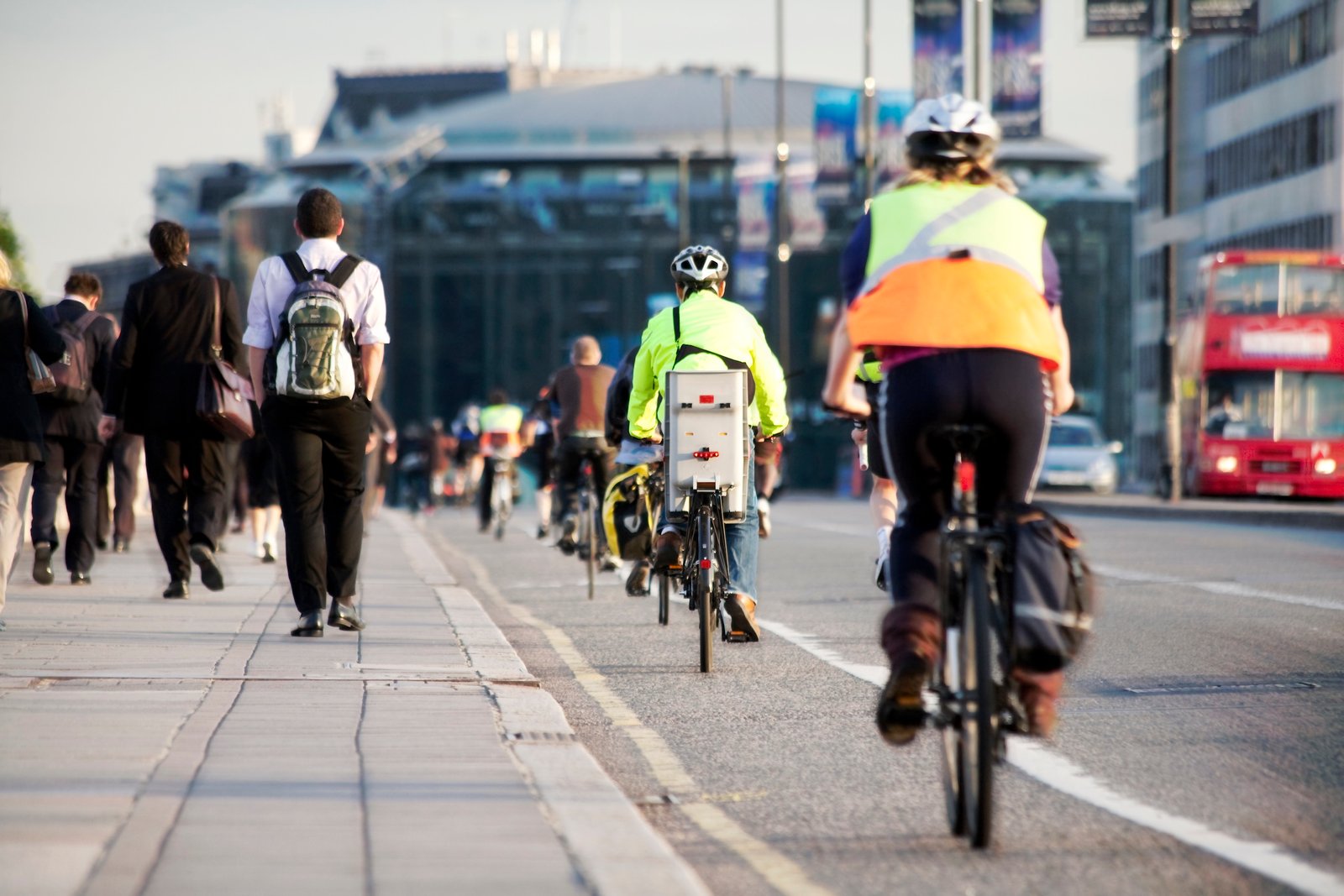
The impact of investment is already visible in cities like London, where the cycle network has expanded from 90km in 2016 to over 431km in 2025. Since 2019, daily cycling journeys have risen by 43%, with the majority of Cycleway users reporting that they feel safe most or all of the time. High-quality infrastructure makes a huge difference to both real and perceived safety – and in cycling, perception is half the battle. Segregated cycle lanes protected by bollards, not just painted lines, and bike-friendly traffic light systems are crucial to ensuring cyclists feel safer, especially at major junctions. The next step is to build these systems into commonly used routes across the country. “To make cycling truly accessible, it’s not enough to just build cycle lanes along commuter corridors,” Gordon explains. “We need well-connected networks that also service neighbourhoods and high streets, to allow for school runs, shopping and daily errands.” This makes cycling accessible for everyone, not just commuters.
Snuffing out sniffiness
Beyond practical barriers, elitist attitudes and intimidating club culture can make newcomers feel nervous about entering the cycling space. Fast rides, baffling jargon and photos of perfectly dressed riders on social media make new riders feel like they’re on the outside looking in – something White has experienced first-hand. “One club told me that they only admit new participants once a year, and another that I’d need to be able to hold a set average speed. It made me realise that joining a cycling club isn’t always like joining a local gym or turning up for a casual football game. There can be unspoken barriers that make people feel like they need to prove themselves before they’re welcome.”
This aura of elitism isn’t always intentional, but it’s reinforced by deep-rooted behaviours and traditions. Something as simple as an off-hand remark about clothing style or brag about FTP has the potential to make someone feel like an outsider. The solution? “Clubs need to think about how they create entry points for beginners and recreational riders,” says White. “They can co-exist with performance and race-focused athletes. We’ve done exactly that in CGC, so it’s more than possible.”
Beyond clubs, social media is increasingly where cycling makes its first impression. A growing wave of female content creators are sharing their cycling experience in honest and relatable ways, such as buying their first bike or making their first attempt at clipping in, showing what starting out actually looks like. CGC is proof that a welcoming approach works. “A big part of our growth has come from sharing our rides on social media. Every week we hear from new riders who saw our content and simply wanted to find like-minded people to ride with,” says White. “When someone joins our rides and says it feels like home, that’s when we know we’re doing something right.”

(Image credit: Press material)
How to drive the change?
Cycling’s accessibility problem isn’t driven by a single issue. Safety concerns reduce confidence, and low confidence limits participation. Limited participation reduces visibility and, in turn, a lack of visibility reinforces the perception that cycling isn’t for everyone. Add cost and cultural barriers into the mix, and the effect becomes self-perpetuating.
So what actually needs to change? Structural, physical and cultural barriers all need an overhaul. Safer roads, inclusive clubs, affordable bike schemes and improved visibility of marginalised groups in cycling are key to opening up the sport. Crucially, cycling becomes more accessible when it stops asking newcomers to adapt – and starts adapting to them. Because ultimately, making cycling inclusive isn’t about getting more people onto bikes for the sake of it. It’s about ensuring that everyone feels they have the right.
The disconnect in data
3x: Men in the UK are nearly three times more likely than women to make a journey by bike
58%: The percentage of women who report cycling less due to concerns over road safety and intimidating driver behaviour
1: The number of British-registered riders racing for UCI teams in 2025, out of a total 148, who were from an ethnic minority
43%: The surge in daily cycling journeys in London since 2019, following a 340km expansion of the Cycleway network
14%: The proportion of people from ethnic minority backgrounds in the UK who cycle regularly
This feature was originally published in the 16 April 2026 print edition of Cycling Weekly magazine – available to buy on the newsstand every Thursday (UK only) while digital versions are available on Apple News and Readly. Subscriptions through Magazine’s Direct.
Read the full article here