




It’s been 13 years since I bought my first 29er; it was by no means perfect, but it got me hooked on bigger wheels.
My own early 29er fandom led me, seven years later and in my previous life as a product designer, to create an e-gravel bike (the Cairn BRAVe) around the wheel size, years ahead of the game.
Now, 32-inch has come to gravel. Big wheels have already performed on the sport’s highest stage, with Swiss endurance rider Robin Gemperle winning Unbound’s 350-mile race aboard a 32-inch Scott, which the brand claims “will never be released.”


The reaction to these larger wheels has been polarising. Cycling Weekly’s Tech Editor Andy Carr was quick last week to point out the flaws, mostly that the wheel size just wouldn’t work for smaller riders without a complete frame overhaul (if at all). But we’re allowed to disagree. My stance is that the bicycle industry innovates incrementally. However, the industry also has a short memory, and I can already see some of the same mistakes creeping in.
A quick history of how we got here


(Image credit: Life Time)
In case you’re such an adamant road cyclist that all mountain biking terminology has passed you by, 29er wheels exploded into the off-road scene with their breakout moment coming in the 2012 London Olympics Games, where Jaroslav Kulhavý took gold on his Specialized S-Works Epic. These wheels, made popular by Gary Fisher, mirrored the diameter of road hoops (622mm diameter rims, fitted with 50-60mm tyres) and represented an increase for our muddier brethren. Gravel has adopted similar sizes in recent years after a number of riders took on the legendary Leadville 100 mountain bike race in 2024 using adapted MTBs and large clearance gravel bikes. Both MTB and Gravel are looking to increase the wheel size further, with 32” (686mm diameter rim, fitted with around 50mm tyres) builds and tyres popping up seemingly sporadically, but with alarming consistency, culminating in a win at Unbound gravel last month.
The first wave of 29ers were the Gary Fishers of the 00s, later purchased by Trek. Fisher’s original G2 geometry was largely a numbers game. The theory that larger wheels rolled faster and more smoothly over bumps, with their larger diameter making them less likely to fall into holes, was sound. What Fisher aimed to achieve was the same trail numbers and handling characteristics as a 26-inch wheel. In practice, this didn’t translate to well-mannered bikes.
The second wave, in the 2010s, saw a fresh mindset: 29ers needed to be different. Longer reach, lower bottom brackets, slacker head angles, steeper seat tubes, shorter stems, and wider bars helped make these bikes possible and, frankly, brilliant.
This is imperative to how well 32-inch lands. So far, many of the bikes we spotted at US trade show Sea Otter still feel like they are trying to be squeezed into the arbitrary box we believe all bicycles should fit into. Bold change is needed—not just in our understanding of geometry, but in how we manufacture bikes and wheels. That could be incredibly exciting, or entirely stifling.
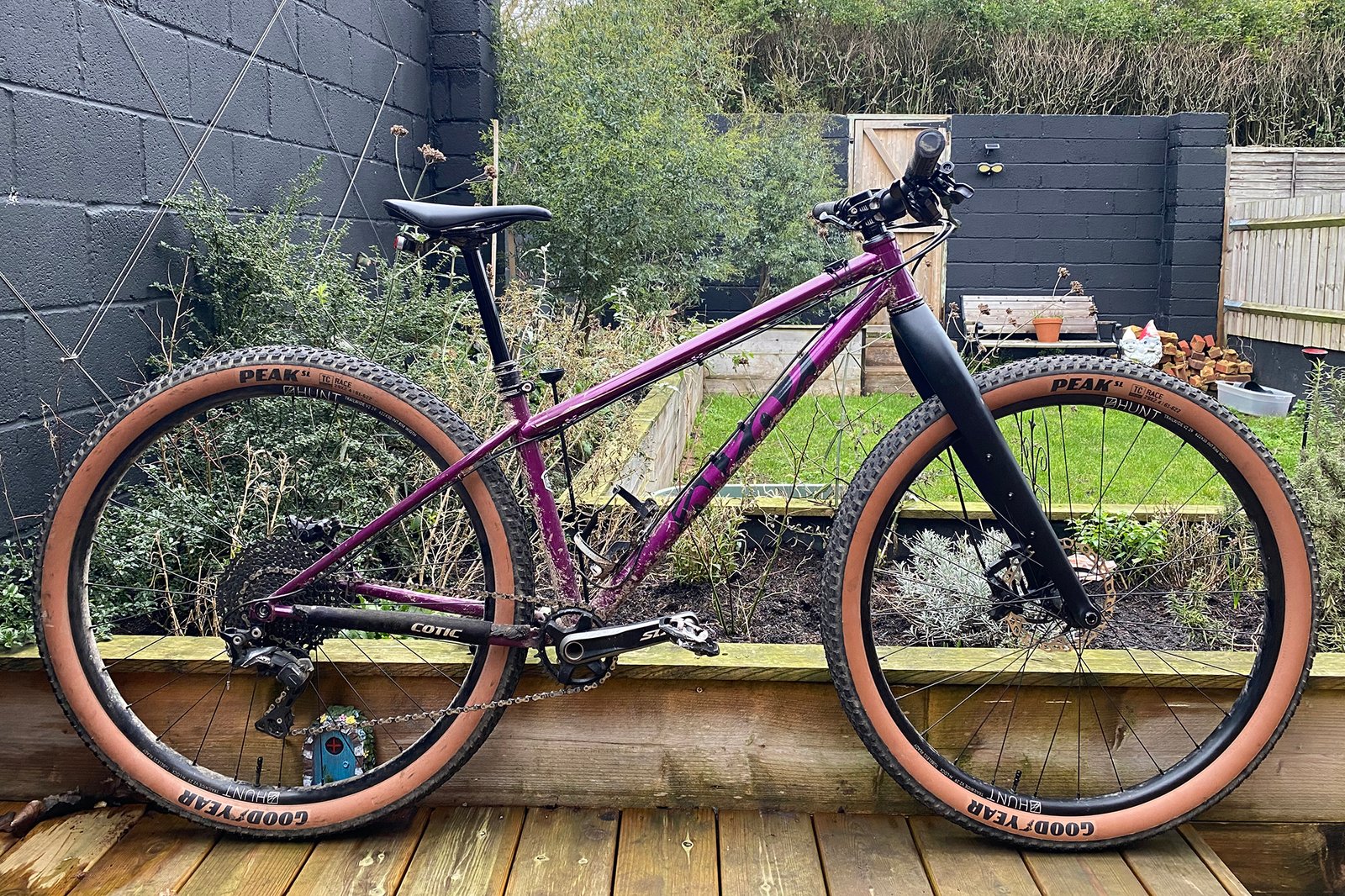

My current Cotic 29er hardtail fitted with a rigid fork for gravel duties
(Image credit: Matt Ischt-Barnard)
Even with the geometry nailed and these bikes now riding beautifully, the sell on the improved 29ers of the 2010s still didn’t go smoothly. The industry eventually made the transition incrementally, with many unconvinced riders needing to first adopt a middle ground 27.5/650b wheel size before making a slow, painful move to mixed wheels or ‘mullet’ bikes.
Eventually, most finally admitted that the 29er was just better. The same happened on gravel, where we were already on 622mm-diameter (29/700c) rims but dropped to 27.5/650b to increase tyre size (around 50-55mm) without having to change the gravel bike geometry formula (which hadn’t changed all that dramatically, since we started to force wider tyres into cyclocross bikes some 10 plus years ago).
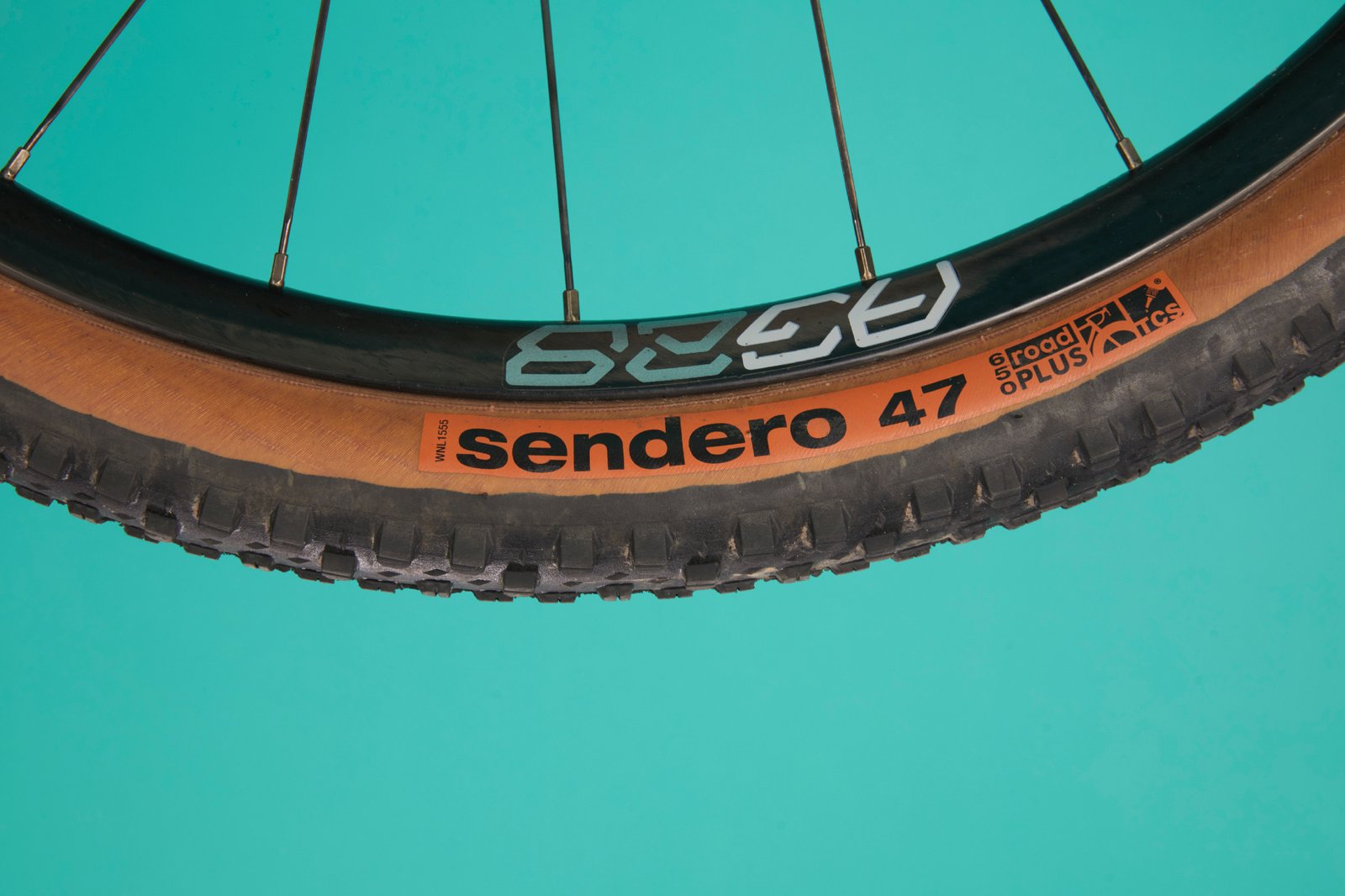
WTB’s 650b specific off-road tyre the Sendero was a very popular choice
(Image credit: Future)
I’ve been a product designer and brand manager, so I’ve been there- I know it’s not easy. You want to drive change and innovation, but not oversell the new product, leaving warehouse stock labelled as ‘dated’ and destined for a discount. It is particularly tricky when brands want to make big leaps, such as transitioning to a new wheel size. The science or testing to back up the decision may just not be there yet. Field tests are required; brands need to put these things under their fast riders to justify the development cost.
So, where are we going wrong? And, how do I think we can fix it, and fast, before the 32-inch effortlessly glides down the same pothole-ridden path?
First, we need clear insight into the logic behind larger wheels. Unlike the early days of 29ers – when we were bombarded with rolling-resistance diagrams – the science behind 32-inch is currently shrouded in silence. Even if the change to 32-inch is small or incremental, it needs to be clear where and for whom this benefit can be best utilised.
Then, if we’re convinced of the science, we need to be bold. Tech Editor Andy makes a compelling argument that, in fact, 32-inch wheels only work for taller riders. Sticking with current geometry ‘rules’, this is true – any rider below 5ft10” need not apply; such are the difficulties created around toe overlap and more.
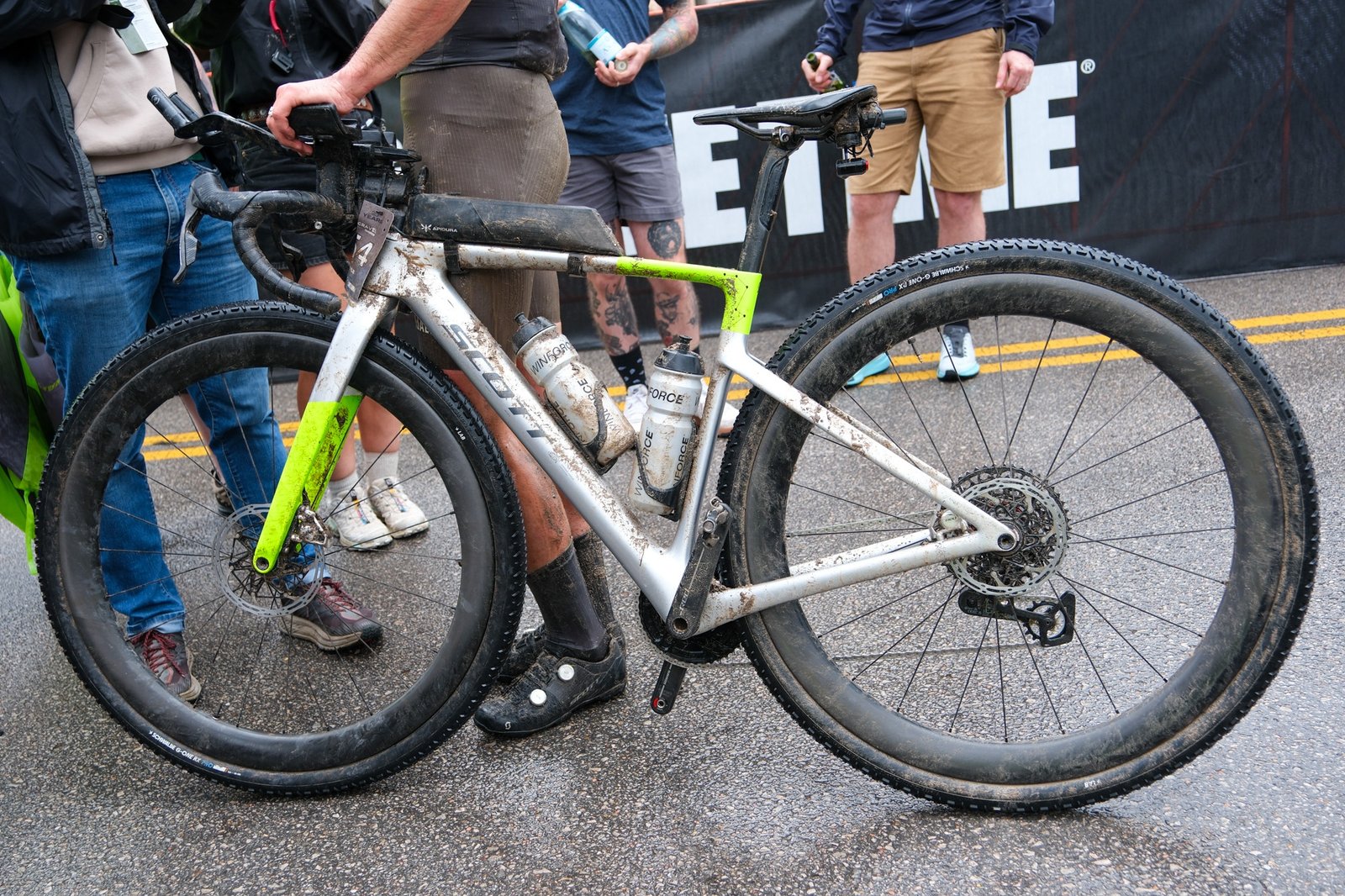
Robin Gemperle is 5’10”/178cm and piloted his “never to be released” 32″ Scott the 2026 Unbound 350 win
(Image credit: Anne-Marije Rook)
But this debate has been put forward before. I’m 5ft7”/170cm. I was told in 2013 that 29ers weren’t really for me either. Some brands persist with this narrative: Canyon’s Grizl and Genesis Vangabond, for example, are still only available in small wheel sizes on smaller frames. Why? When bikes like our best gravel bike, the Specialized Diverge 4, a personal favourite of mine, the suspension corrected Santa Cruz Stigmata, manage to maintain short chainstays, manageable reach and stack, whilst accommodating upwards of 50mm tyres. If we’re to make these wheels work, we may need to overhaul everything we know about geometry.
I am excited to try 32-inch, and I hope that I can. If this is an innovation and there are benefits, I want them, too. Apple doesn’t downgrade the processor just because you buy the smaller iPhone; they scale the chassis, not the capability. If we are doing it, let’s do it properly.
Read the full article here