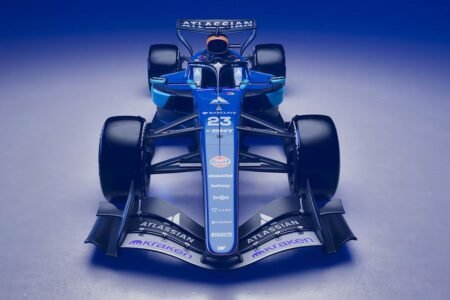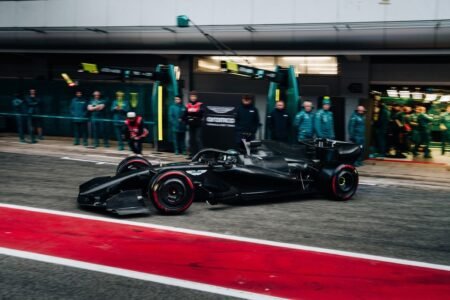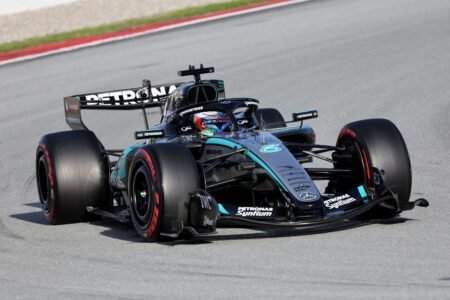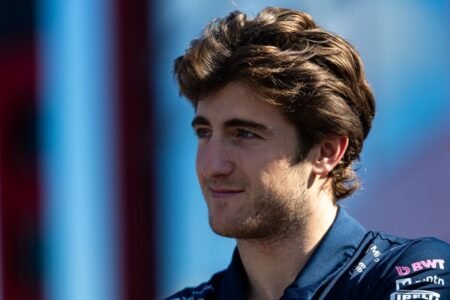




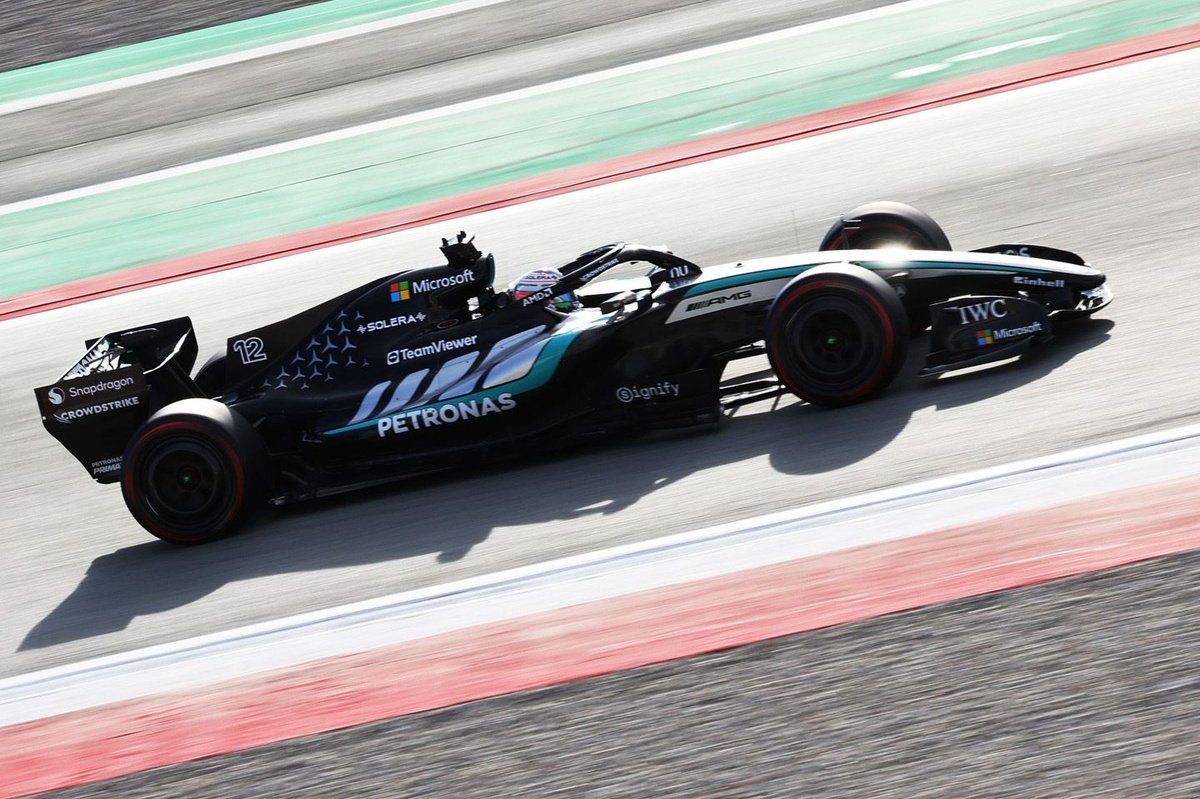
After early complaints based on simulator runs, drivers have been cautiously optimistic about the new regulations after the first on-track running of 2026. Mercedes team boss Toto Wolff goes a step further, stating that he has seen “no negatives” with the all-new machinery.
“I don’t see any worst points, and I’m not overselling here, or trying to make a product better than it is,” Wolff told media, including Autosport, ahead of the Mercedes launch. “I think the cars are awesome, they look spectacular. They look like Formula 1 cars again. They’re not too small, they’re not too big, they’re not like the whales of the past. The aesthetics are very good.
“I also like the engine concept in terms of the boost. George has passed Colapinto whilst Colapinto was doing his long runs. I think it was like 60km/h straightline speed difference, or 50km/h. And that is super exciting where, when and how a driver’s going to deploy it and optimise that.
“We are going to see much more overtaking, and we’re going to see it in areas that we wouldn’t expect. Apart from the fact of the quickest cars with the best drivers, it’s also going to have this additional dimension of intelligent driving, and tactics that are going to be easy to understand in my opinion. So far, I haven’t really seen any negatives. And again, I wouldn’t push it or oversell anything that I don’t believe. For me, so far, it ticks all the boxes.”
Drivers are also cautiously positive. The real picture appears less worrying than some had expected based on their simulator duties.
“It’s nice to finally have no porpoising, to be honest, so my back is having an easier time!” Russell laughed. The 2026 cars are less ride-height sensitive, meaning teams don’t have to operate as much on the limit as last year and drivers experience fewer physical discomforts.
Naturally, the 2026 cars are slower and have considerably less downforce than the ground-effect machines, but according to Russell’s team-mate Andrea Kimi Antonelli that is not insurmountable from a driver’s point of view.
George Russell, Mercedes
Photo by: Mercedes AMG
“I think the car is good fun to drive. Despite being a bit slower than last year, you don’t really feel it as much. Of course, you feel a bit down in high speed [corners] with a lack of downforce compared to last year’s car, which I think is going to be really hard to match. But we’re just at the start of the regulation and I think the evolution is going to be massive throughout the years.
“I think the car as a baseline, to start with, is pretty good. It’s much better than expected and it’s fun to drive. Obviously, you feel the 30kg less and the car being a bit smaller. You just feel it is more agile, especially in change of direction and in slow speed corners, which is a nice feeling.”
Downshifting on the straights in 2026?
On the other hand, F1 will be about much more than drivers pushing flat out this season – the intelligence of the driver behind the wheel that Wolff already referred to. Although it might be positive that drivers can make an even bigger difference than before, most agree that it shouldn’t lead to artificial gimmicks.
Besides active aerodynamics, energy management plays a much bigger role than ever before, and Max Verstappen warned years ago that this could lead to downshifting on the straights. After the Barcelona shakedown, Russell admits this is still very much the case, although he personally does not see it as big an issue as initially feared.
“There was obviously lots of chat around potentially having a downshift on the straights in some circumstances. That will probably continue to be the case, but it doesn’t feel that abnormal to be honest. The way I would describe it is like if you’re driving your car up a hill, you’re still going flat out, but you’re losing a bit of speed and you may just downshift to give you a bit of extra revs to get up that hill. That’s how it sometimes feels when the engine is harvesting and you’re regenerating the battery.
“So there are occasions that you can downshift at the end of the straight even while you’re flat out, but it felt more bizarre in the simulator than it did in reality. I spoke with a few other drivers and they actually commented the same, so that was quite intuitive.”
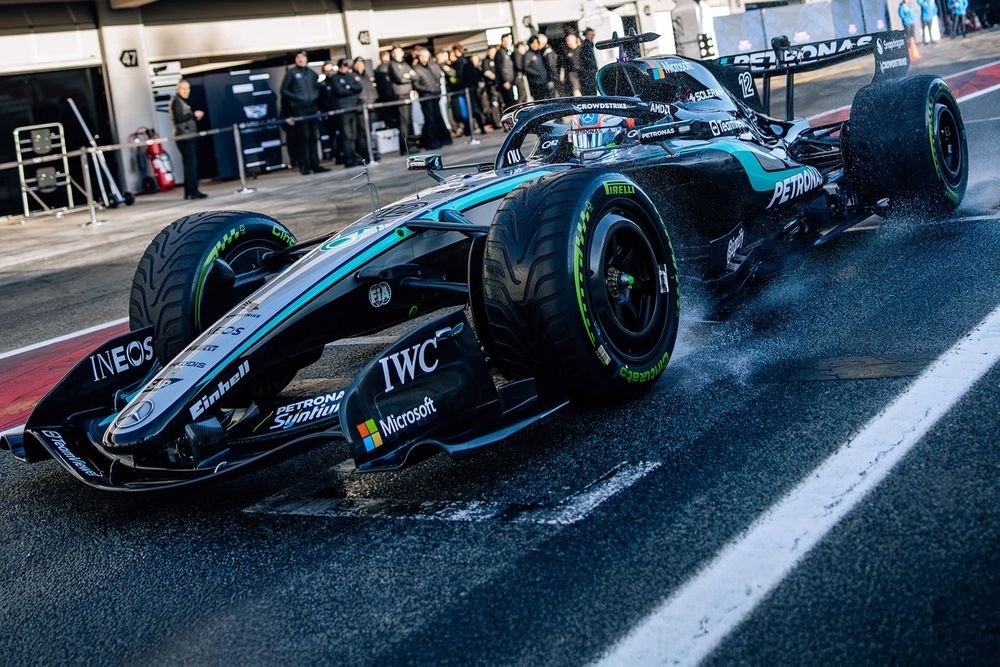
Andrea Kimi Antonelli, Mercedes W17
Photo by: Formula 1
Lift and coast in qualifying: is F1 becoming more like chess?
Downshifting on the straights is not the only aspect that may sound unnatural to F1 fans. Several drivers have indicated that they had to lift during a qualifying lap to ultimately achieve the fastest possible lap time.
“On qualifying-style runs, we are doing lift and coast and stuff,” Esteban Ocon admitted. “That’s a very new thing to do, but from the simulator it just took me one run to do it. It’s actually quite odd now to not do it. It’s that much that we drove with lift and coast, so we get used to that style of driving now.
“It also makes sense with the car because if you stay full throttle, you are basically pulling the handbrake at the end of the straight, and if you lift and coast, it’s not that much. So you feel quicker if you lift off. It feels quite natural because it’s the fastest way of driving. Obviously, it’s very different to normal, but I felt that it was quite natural by the end.”
According to Russell, it is in a way similar to tyre management, although for 2026 a second factor has been added to that in the form of energy management.
“Drivers in the past have lifted and coasted very often to save the tyres and help the tyres,” Russeell added. “That doesn’t take away from anything. That’s just the most efficient way to drive. And now we have a few additional quirks. But you still have to brake as late as possible, carry as much speed through the corners. The faster driver will still be the one who comes out on top. I don’t think it will be an engineering race from the cockpit.”
Not Formula E? “It’s still F1, Senna also adapted his driving style”
That last point had been a concern beforehand, that F1 might lean too far in the direction of Formula E. Russell admits he had the exact same worry ahead of the first shakedown, but the first laps with the Mercedes W17 have taken away many of those concerns.
“I think that was a question mark that I had going into the test, whether it would be like Formula E, that you need an engineer to drive the car rather than a racing driver,” the British driver said. “But it really felt much more intuitive to drive than expected.”
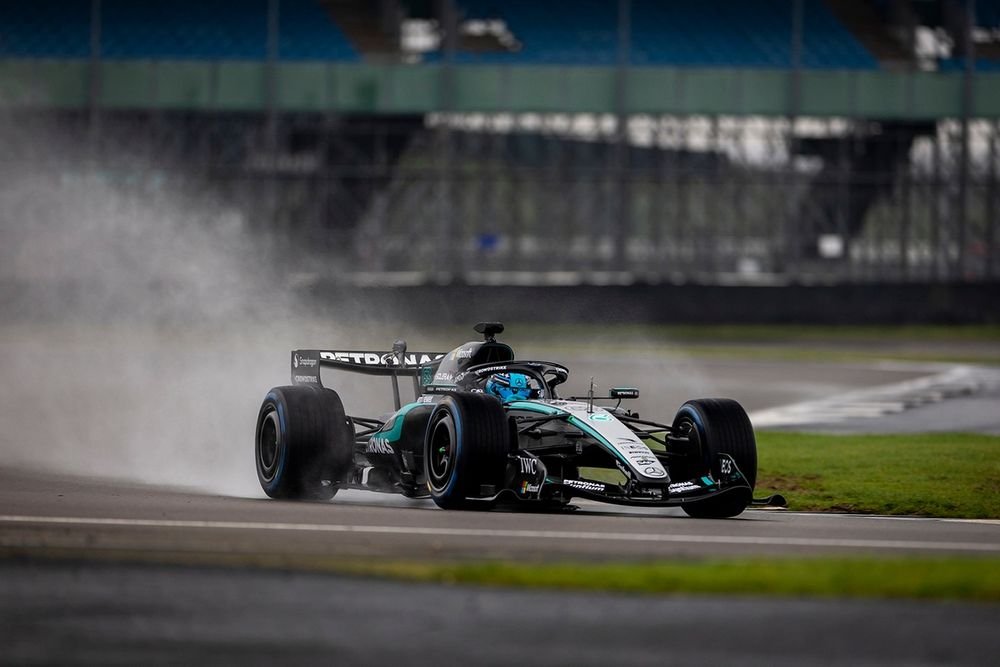
George Russell, Mercedes W17
Photo by: Mercedes AMG
So yes, F1 will be different in 2026, but according to Russell that kind of evolution has always been part of the series. Now the emphasis is more on energy management than ever before, but the Briton – who starts his eighth F1 season this year – says that in essence it is no different from drivers adapting to other innovations in the past.
“It definitely still is Formula 1. It still very much feels like a race car and you’re still very much pushing the limits. But you are driving it differently. But if you look back to the late 80s and 90s and you look at Ayrton Senna’s driving style, where he’s blipping the throttle through the apexes to spin the turbo, that’s also a unique way of driving. And also in the same way as when you went from a gear stick to paddles on the back of your steering wheel. It’s just different and it changes.”
Risk of extreme closing speeds?
The potential safety risk in all this is exactly what Wolff mentioned at the start: significant closing speeds on the straights. Especially on tracks with plenty of blind corners such as Jeddah, it could pose a risk, although Russell – who raised this topic himself two years ago – is less concerned in that regard than before.
The issue could arise in wet conditions, but according to Russell it would resolve itself to a large degree: “There are going to be some examples of major closing speeds, but I don’t think that will be a problem in dry conditions. It would be a problem in low-visibility races.
“However, if there’s low visibility, that obviously means it’s wet. And if you’re driving in the wet, because you’re going around the corners so much slower and the braking distances are longer, you’re re-harvesting much more and you’re spending much less energy. So in wet conditions, there should be plenty of energy to spend across the lap and you shouldn’t have these major closing speeds.”
In that case everyone has sufficient electrical power available thanks to the earlier braking and lower cornering speeds, meaning drivers do not need to harvest in other parts of the circuit and therefore large speed differences should not arise.
The real success of the 2026 rules will have to be proven in practice and will mainly be judged on the racing itself and how easily drivers can follow each other – one of the FIA’s key objectives – but so far drivers at least seem less worried about “unnatural” gimmicks than initially feared. Yes, F1 will be different, but judging by the early signs it won’t be Formula E or Mario Kart.
We want to hear from you!
Let us know what you would like to see from us in the future.
Take our survey
– The Autosport.com Team
Read the full article here