




“There needs to be a business case for these events,” Hearn said to Cigar Talk. “You can’t just do a show and lose 20 million and go on to the next one. How long is that going to last for? It’s not sustainable.”
Hearn said the early run of major cards was driven by scale and ambition, with little concern for how much money was being lost on each show. He credited Turki Alalshikh for elevating the sport, but made it clear that the approach is no longer the same. Events, in his view, now need to stand up as businesses rather than loss-leading spectacles.
“There needs to be a business case for these events,” Hearn said. “You can’t just do a show and lose $20 million and go on to the next one.”
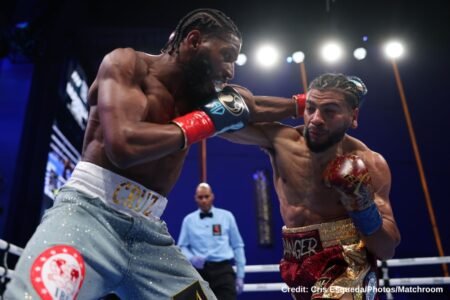
Saudi-backed cards have underpinned many of boxing’s biggest nights over the past year, including events tied to Zuffa Boxing and high-profile fights such as Teofimo Lopez vs. Shakur Stevenson and Ryan Garcia vs. Mario Barrios cards. Hearn did not reference specific shows, but his comments point to a broader model where those kinds of cards were funded at a level that may not be sustainable long term.
That change, he suggested, has already started to show. He described the operation as more streamlined, with spending no longer as aggressive as it was during the initial surge of Saudi-backed cards. The implication is fewer excess costs and more selectivity around which fights get funded.
Hearn still acknowledged the impact Saudi investment has had on boxing, calling its influence undeniable. At the same time, his comments point to a cooling period where financial discipline replaces open-ended backing.
If that holds, the effect will be felt across the sport. Fighters who benefited from inflated purses may find negotiations tighter, while promoters will have to build events that justify their cost. The environment that allowed multiple elite fights to be stacked on one card could become harder to maintain under a model that prioritizes return rather than scale alone.
Hearn’s view is that Saudi Arabia remains central to boxing’s biggest nights, but the terms are changing. The era of unlimited spending appears to be giving way to one where every event has to make sense on paper.

Read the full article here