

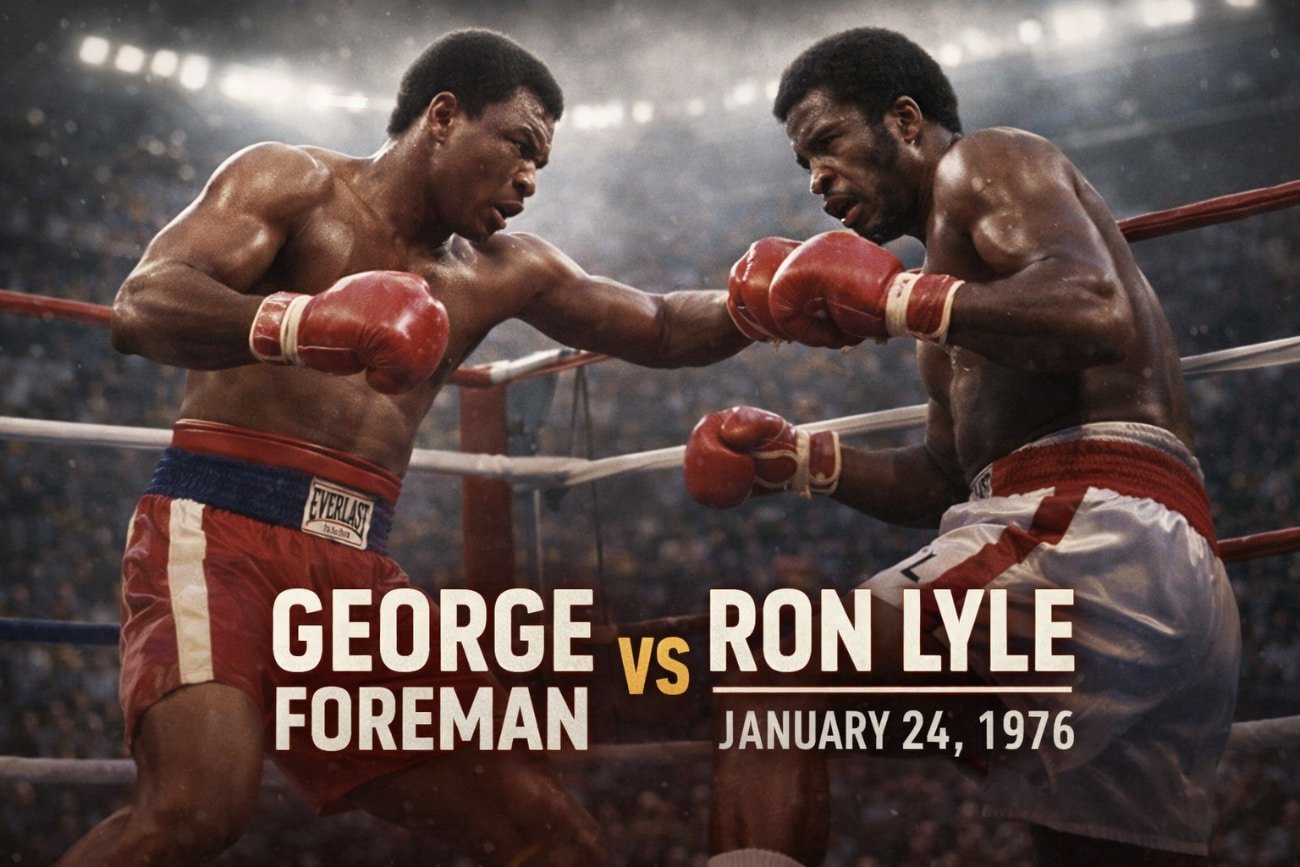
The bout arrived at an awkward moment in heavyweight history. Muhammad Ali had already bent the division around himself twice, first by leaving it and then by returning to reclaim the title in Zaire at Foreman’s expense. Joe Frazier’s reign had been brief. Foreman’s reign had been shorter in spirit. The image of the unbeatable destroyer had collapsed in front of a global audience.
Foreman did not rebound cleanly from the loss in Zaire. It cost him more than the title and unsettled the structure around his career. His business affairs became tangled, his management situation worsened, and a series of lawsuits and injunctions slowed everything. He dismissed Dick Sadler and replaced him with Gil Clancy, but the change failed to bring any real stability.
Even Foreman’s return bouts lacked order. He boxed exhibitions against multiple opponents in single nights while Ali heckled him from ringside, and every interview circled back to the same subject. Zaire. Revenge. Ali. Foreman avoided the press when he could and bristled when he could not, and the confidence that once followed him into the ring no longer did.
Ron Lyle arrived from the opposite direction. His career started late and under harder circumstances, with prison taking years that boxing later gave back. He rebuilt his life and his public image at the same time, working his way to a title shot against Ali through persistence rather than hype. Lyle lost that fight, but he showed something the division noticed. Ali could still win and still control fights, but he could be reached.
That realization mattered to the rest of the division.
Lyle’s reputation grew quickly. He stopped Earnie Shavers after being dropped and earned the Foreman fight not as a novelty, but as a dangerous assignment. When Don King announced the bout for the new Caesars Palace Sports Pavilion, it was sold as Foreman’s first step back toward Ali. Lyle was the obstacle and the risk that came with it.
The building held about 5,000 people, but it felt tighter once the bell rang.
Lyle opened the fight with a wild right hand that missed by a foot, setting the tone immediately. This was not going to be tidy. They circled, jabbed, and waited. Foreman tried to impose order with his jab and physical strength, shoving Lyle away before throwing, a habit that created space Lyle was quick to use.
Late in the first round, Lyle landed a right hand that buckled Foreman’s legs. It was not a flash knockdown, but it announced that the former champion could be hurt. Foreman returned to his corner on unsteady legs and said little between rounds.
Foreman tried to box in the second round, jabbing and circling behind the jab without planting his feet. Lyle ignored it. As Ken Norton observed on the broadcast, Lyle gave Foreman no respect. Lyle’s odd glove movements disrupted Foreman’s rhythm, and when Foreman finally broke through with body shots, the round ended early and cut off any chance to steady the fight.
By the third round, any restraint was gone. Lyle was landing his right hand too often to track, while Foreman stood his ground and hunted power. Lyle backed to the ropes and countered effectively, and both men absorbed punishment that would have ended most heavyweight fights of the era. Neither spent much time protecting himself beyond the next exchange.
The fourth round broke the fight open. Foreman left his arms extended again and paid for it as Lyle landed a series of shots that sent him spinning to the canvas. Foreman rose slowly and clinched, then made a choice. He planted his feet and traded.
Foreman dropped Lyle with hooks and a right hand that crashed him to the floor, but Lyle rose and refused to fold. Foreman pressed for a finish, while Lyle weathered the storm, timed him, and countered. In the final seconds of the round, Lyle landed a right hand that dropped Foreman face first just before the bell, wiping away any remaining sense of order.
The fifth opened at a reckless pace. Lyle charged, Foreman’s punches lacked snap, and Lyle hurt him again as Foreman struggled to keep his guard up. Then Lyle dropped his own hands for a moment, just long enough.
Foreman drew on what was left and staggered Lyle to the corner, holding him there with punches and his own weight to keep him upright until Lyle finally sagged and stayed down. The referee counted, and it was finished.
The fight was immediately celebrated for its chaos, even as critics pointed to the technical breakdowns. None of that changed how it was received. The audience understood exactly what it had seen.
The cost was real. Lyle never reached another title shot, remaining dangerous and relevant without ever finding the door open again. Foreman paid a different price. The loss to Ali had already stripped away the idea that he was untouchable, and the war with Lyle confirmed it. From that night forward, every heavyweight who faced him believed he could be hurt. Many of them did. None of them stopped him.
For a long stretch, it looked like Foreman had spent whatever was left of his peak that night in Las Vegas. He walked away from the sport and built a different life as boxing moved on without him. When he eventually returned, the brute force was gone, but something harder to wear down had taken its place. He fought within himself, waited his moments, and stayed upright.
Foreman Lyle did not send him back toward greatness. It forced him to last long enough to reach it again.
Read the full article here