


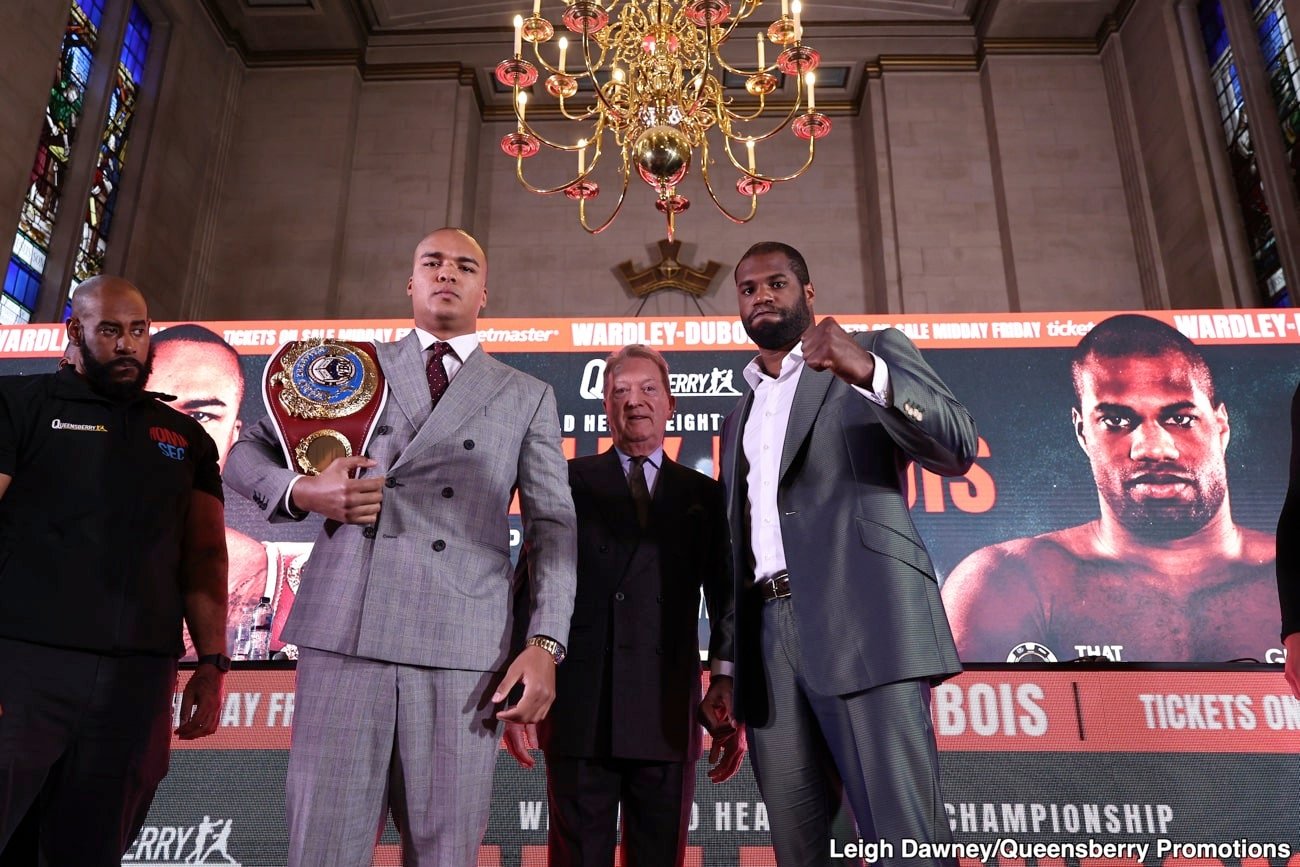

“In some fights, he has shied away from the situation. But in others, it’s swung around about with him,” Wardley said to DAZN Boxing.
“Sometimes you don’t know what you’re going to get because in other fights, he’s bit down. For example, against Filip Hrgovic, he got stuck in that, where it was a back-and-forth fight. He got tagged a few, and he got stuck into that.”
Wardley sounds like he should be running a Fortune 500 company or delivering a university lecture. That executive tone is exactly what makes him so dangerous in these mental face-offs. Most fighters rely on bravado and insults, but Wardley uses logic and observation. It’s a completely different kind of pressure.
Wardley’s ability to articulate a point makes his quieter narrative feel like an objective fact rather than just trash talk. When a guy screams at you, you can dismiss him as being emotional. When a guy speaks to you like a high-level manager conducting a performance review, calmly pointing out where you’ve failed in the past, it’s much harder to ignore.
“Then there have been other occasions where he hasn’t done,” said Wardley about Dubois. “So in that scenario, it depends on Daniel and what Daniel turns up on the night, and how he feels about the situation, and if he feels he can climb his way back or not.”
“And sometimes, if he’s in a situation where he doesn’t think he can, maybe those inner demons get to him a bit, and he just doesn’t want it.”
That comment is a tactical masterclass in psychological warfare. By using that specific phrasing, Wardley isn’t just criticizing Dubois; he’s essentially performing a public autopsy on Dubois’ fighting spirit while Daniel is still in the room.
The genius and the cruelty of Wardley’s approach lie in a few key areas.
Wardley is suggesting that Dubois’ heart is conditional. When he says, “it depends on what Daniel turns up on the night,” he’s labeling Dubois as a front-runner. The implication is that Dubois only shows grit when things are going his way or when he feels he has the upper hand. In Wardley’s eyes, Dubois doesn’t have a “default” setting of resilience; he has a choice, and Wardley plans to make that choice as painful as possible.
The phrase “if he feels he can climb his way back or not” is a direct shot at the Joe Joyce and Oleksandr Usyk fights. Wardley is reminding everyone and Daniel that once the momentum shifts against Dubois, he has a history of calculating the cost and deciding it’s too high. He’s presenting Dubois not as a warrior, but as a businessman who does a cost-benefit analysis in the middle of a round.
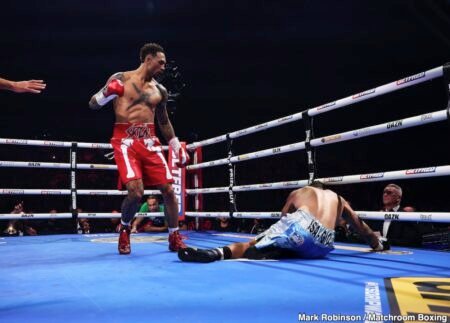
By using the term “inner demons,” Wardley is pathologizing Dubois’ past losses. He’s making it sound like a recurring mental illness that Dubois can’t escape. It’s incredibly effective because it forces Dubois to fight two people on May 9: Fabio Wardley, who is physical and right in front of him, and the old Daniel Dubois, the one who took a knee and stayed down.
Wardley’s executive, calm delivery makes these comments feel like a diagnosis rather than an insult. If he were screaming, Dubois could just write it off as hype. But because Wardley says it with the cool detachment of a professor, it carries a strength of authority that clearly gets under Dubois’ skin.
Read the full article here