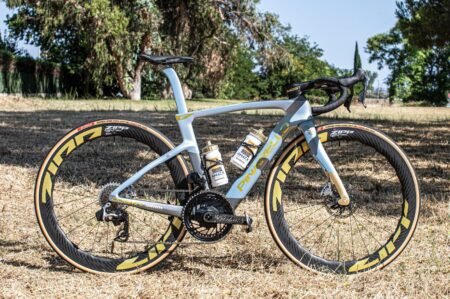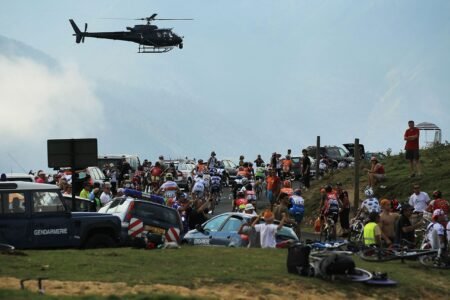





A little while ago, my CW colleague Andy Carr wrote a piece with the central idea that maybe it’s time the UCI stopped manufacturers from selling World Tour spec bikes to amateur customers.
The bikes are, he pointed out, vastly over specified for most people, yet a lot of us feel short changed by riding anything less. So we pay a £12,000 price tag for the bike we feel we need. If we weren’t allowed to actually have such a thing, and couldn’t feel jealous of mates who did, we’d all be richer and happier.
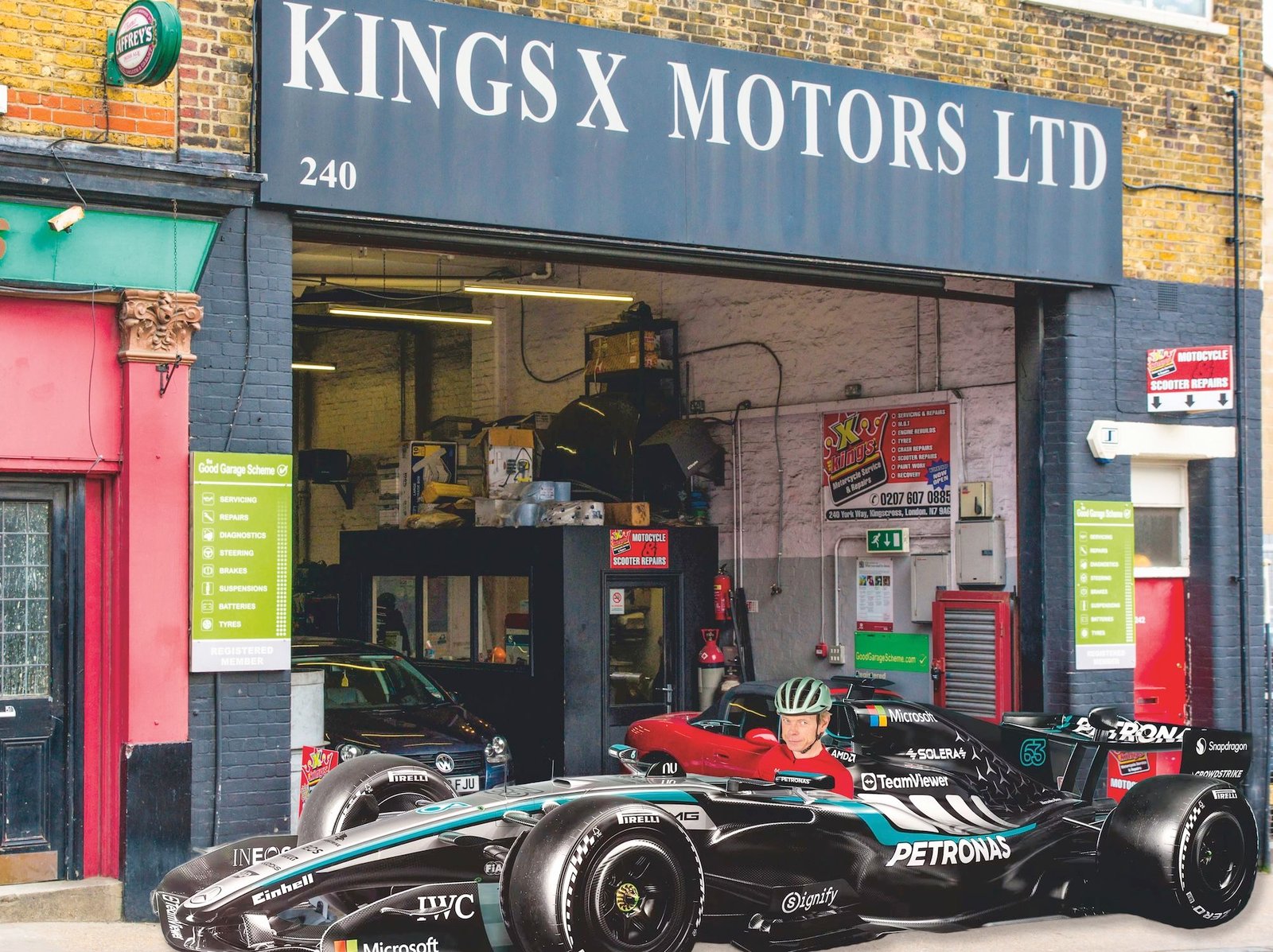
A World Tour bike would become a glamorous, unattainable brand-promotion item. It’s the system that F1 has worked on for decades. You can’t buy an F1 car, but you can buy a Mercedes or a Ferrari and feel you’ve got a bit of that brand’s aura.


I enjoyed his argument, even if at a fundamental level I disagree. I don’t think you need a World Tour bike either, but I will defend to the death your right to buy one if that’s what you want.
If cycling as a sport is anything, it’s a communal experience. Any of us can watch a rider suffer through a Tour de France stage and imagine what it feels like. Anyone who’s ever trained for anything knows what it’s like to head out on a winter day to get a hard session done. We’ve all fallen off at some point and known that microsecond between disaster and impact.
What really separates a World Tour performance from a Club Run ‘C’ performance is not the bike but the rider, and for that to have any value we need everything else to be at least potentially the same. As soon as the pros have access to a whole different level of technology that we’re not allowed to have, you don’t know where you stand. I rode a Strava KoM in Spain last autumn and came in five minutes down on Tadej Pogacar. It’s nice to know that’s all him. If I want to try to take the KoM off him, I can buy a bike like his, hire some friends like his to help, and have right at it.
The problem (if it is a problem) is more one of perception and tradition. For a long time cycling was one of the few equipment-based sports where “the best” was reasonably affordable for someone on a moderate income. That’s not the case anymore, but we’ve also lost track of the fact that the margin by which the best is better than the second or third best has shrunk.

With over 50 time trial national titles to his name, Dr Hutch knows a thing or two about bike racing. He’s also a best selling author, coach and TV commentator. He writes a column for Cycling Weekly magazine every week.
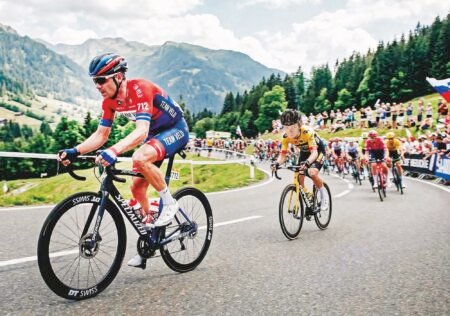
The performance difference between a World Tour bike and one at half the price is almost zero. The Volkerwessels Continental Pro team uses a second-tier Specialized bike, and no one seriously thinks that if you gave the team the double-the-price S-Works version they’d be the Red Bull-Bora-Hansgrohe World Tour team. There’s no way that any of us should feel pressured into shelling out for a World Tour bike because we think it’s going to make us faster in any measurable way. For a lot of us the aggressive geometry probably makes us slower on any ride longer than about an hour.
I’d love it if bikes were cheaper, and I mean all bikes. But still, if you have the money, and the inclination, you should be able to buy what you want. It’s how everything else in the world works.
In fact, in that spirit I called Mercedes F1 and asked if I could buy an F1 car. The guy who I eventually got put through to said yes. He reckoned about £20 million would do it. Although, he added, “Our servicing bill for it will probably bankrupt you.”
It’s probably not that much faster than a 2009 Fiesta anyway. Not if I’m driving it.
Great Inventions of Cycling: Committees
Committees are the only thing cycling loves more than a café stop. In spite of their central role in keeping progress down to as small a scale as possible over the last 150 years or so, the exact date of the first one is still uncertain. A committee was set up to look into it in 1995, and it’s still arguing about whether it was 1868 or 1869.
One of the very first committees was responsible for an early cycling competition, in Liverpool in 1868, where as a compromise between a race and a track-stand competition, they invented sword fighting on bicycles. Similar committees have been producing exactly the sort of sport everyone wants ever since.
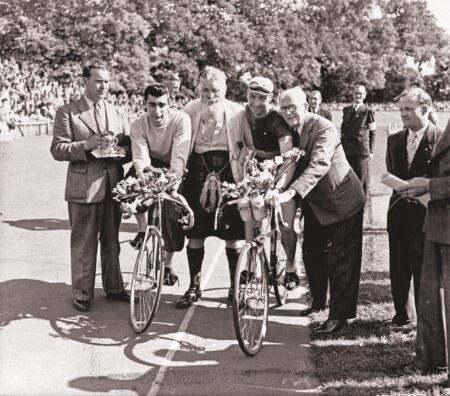
The heyday of the cyclists’ committee came after World War 2, when the British League of Racing Cyclists started its civil war with the National Cyclists’ Union over the right to hold road races rather than just time trials.
All the members of the BLRC’s many committees were cyclists. Practically all the BLRC’s many cyclists were on committees. There was even a committee to decide what committees they needed. The NCU had a similar arrangement. After 17 years of battle, both sides lost.
Committees have become a lot less popular since then, because the increasing social acceptance of divorce means that many fewer people are stuck in unhappy marriages, so there is a much shorter supply of people needing to find to find something cheap to do every evening as an excuse to get out of the house.
Act of cycling driving stupidity
After the recent storms, I was about 15 miles from home towards the end of a long ride when I got stopped by a deep flood, about waist high.
I couldn’t face retracing to the only alternative route, because it would be about an extra 30 miles and it was getting dark, so I phoned my dad for a rescue. He turned up about twenty minutes later, but to the far side of the flood.
“It’s a longer drive to your side,” he shouted.
“I know!” I shouted back.
He made me wade through. I made sure to get in the car while I was still good and soggy, so at least it will stink of flood water for months.
Connor Kelly
Read the full article here