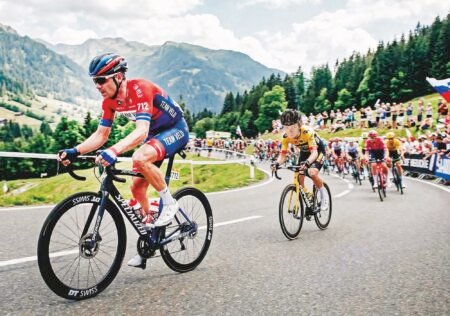




On Friday 2 July 2027, the men’s Tour de France will begin its Grand Départ from Edinburgh. Almost a month later, the Tour de France Femmes avec Zwift will start in Leeds, on Friday 30 July 2027. The last time the Tour touched our shores, it was hailed the “grandest” in its 111-year history by race organiser, Christian Prudhomme. Now, twelve years on, our host nations are hoping to use the event to get more people than ever onto bikes.
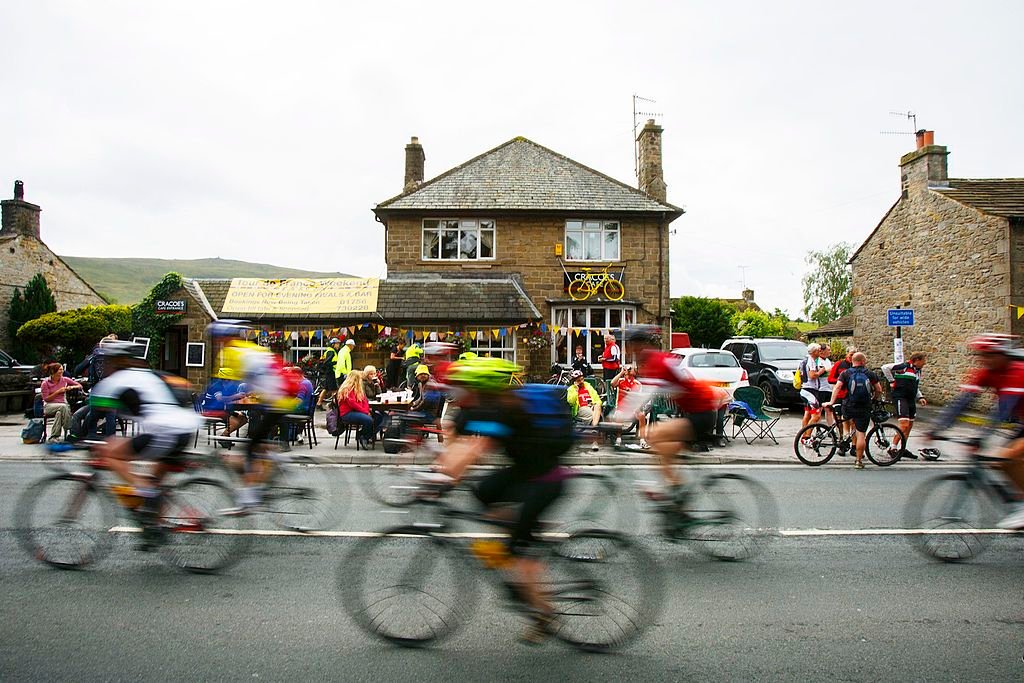
The 2014 Grand Départ in Yorkshire left behind an impressive legacy, in the short term anyway. After the race continued onto the continent, British Cycling reported a 64% surge in participation for their recreational programmes. According to the body, 50,000 people took part in British Cycling Sky Ride events; 130 sportives were registered in Yorkshire, Cambridgeshire and London that same year and nearly 500 ride instructors were trained that year alone.
Now ahead of the Tour’s second visit to the UK, Grand Départ GB’s JOY social impact programme is hoping to use the spectacle as a way to engage more people than ever to get on their bikes and ride.


A coordinated effort across the three host-nations, the initiative focuses primarily on tackling inactivity and improving mental health; supporting communities to thrive, and to make Britain more productive and prosperous.
Scottish organisers have already gotten going. Speaking to Cycling Weekly in March, newly-appointed Social Impact Lead, Victoria Leiper, had already travelled throughout Scotland meeting community groups, talking with local authorities and tracing the Tour’s route all the way from Edinburgh to Dumfries and Galloway.
“We want the excitement of the tour to translate into real, measurable benefits for people and communities, but not just while the tour is travelling through their community, but in the lead up to, and then after,” she said.
Three projects are already confirmed. In Glasgow, Scottish Cycling will match funding from British Cycling to engage young people from disadvantaged communities to develop track cycling and BMX skills at Movement Park. “It’s about engaging young people who might not think that cycling is for them, and supporting local clubs to strengthen talent so that in the future we’re diversifying who appears on the podium,” Leiper continued.
Another programme specifically focuses on perimenopausal and menopausal women, to provide space to talk with one another, alongside a dedicated “trail therapist”. They will be working with the FNY Collective to design the programme, and to develop a toolkit to share it with cycling clubs throughout Scotland.
They’ve even developed a French language project with the National Centre for Languages and the Institute for French in Scotland to address dwindling uptake in language learning.
These additional programmes are made possible in part by a £1 million investment by the Scottish government to help capture the “once in a generation” benefits of hosting the 2027 Tour de France Grand Départ.
Unfortunately for Wales, Beicio Cymru is yet to receive equivalent additional funding. Nevertheless, the team are currently developing a series of programmes designed to encourage girls into cycling, and to help children in deprived areas of Wales to learn how to cycle.
GEMS, a JOY-funded programme, focusses on getting girls’ aged between 7 and 11 to develop their skills on a bike, to enjoy the social world cycling can unlock, as well as offering yoga sessions and reflective journaling as part of the programme.
One of the Wales-specific programmes Beicio Cymru is fleshing out is a nationwide Learn to Ride programme to be rolled out across the whole of Wales, to give every child the chance to learn how to cycle.
“Probably for me and you, it’s crazy to imagine not learning to ride a bike as a child,” Beicio Cymru’s National Development Officer, Ffion James, told Cycling Weekly, “but poverty levels are pretty high in Wales, and especially in some of the cities where many children don’t own bikes, or just don’t have a parent who will teach them. So we want all schools to have a learning programme, like they have a learn to swim programme, to show that biking is a skill for life, just like swimming.”
James is excited by the potential the Tour could offer Wales, but her hopes remain constrained by limited budgets.
“What we’re trying to do is trying to get some more funding, so we can roll out this Learn to Ride programme all across Wales,” she said. “So that by the time the Tour de France comes, every child, hopefully inspired by it, has the opportunity to ride a bike. So that’s our big win, which we’re trying to push.”
Events like the Grand Départ could have a real, lasting impact. For Leiper, the legacy of the last time a big cycling event came to Glasgow is still felt in her city. When the Commonwealth Games came to Scotland in 2014, she was working at a cycling social enterprise in Glasgow. To coincide with the games, they ran a one-off cycling festival that, after a successful first year, ran for another three. It ultimately become Women on Wheels, a social enterprise initiative working with women and refugees, which still operates in Glasgow today.
“That’s a real example of how major events do bring legacy,” she said. “If we could tap into things like that again, you’re supporting communities to lead and run their own events, their own programmes, their own cycle festivals. Who knows what can come from that on a longer term?”
Explore More
Read the full article here