


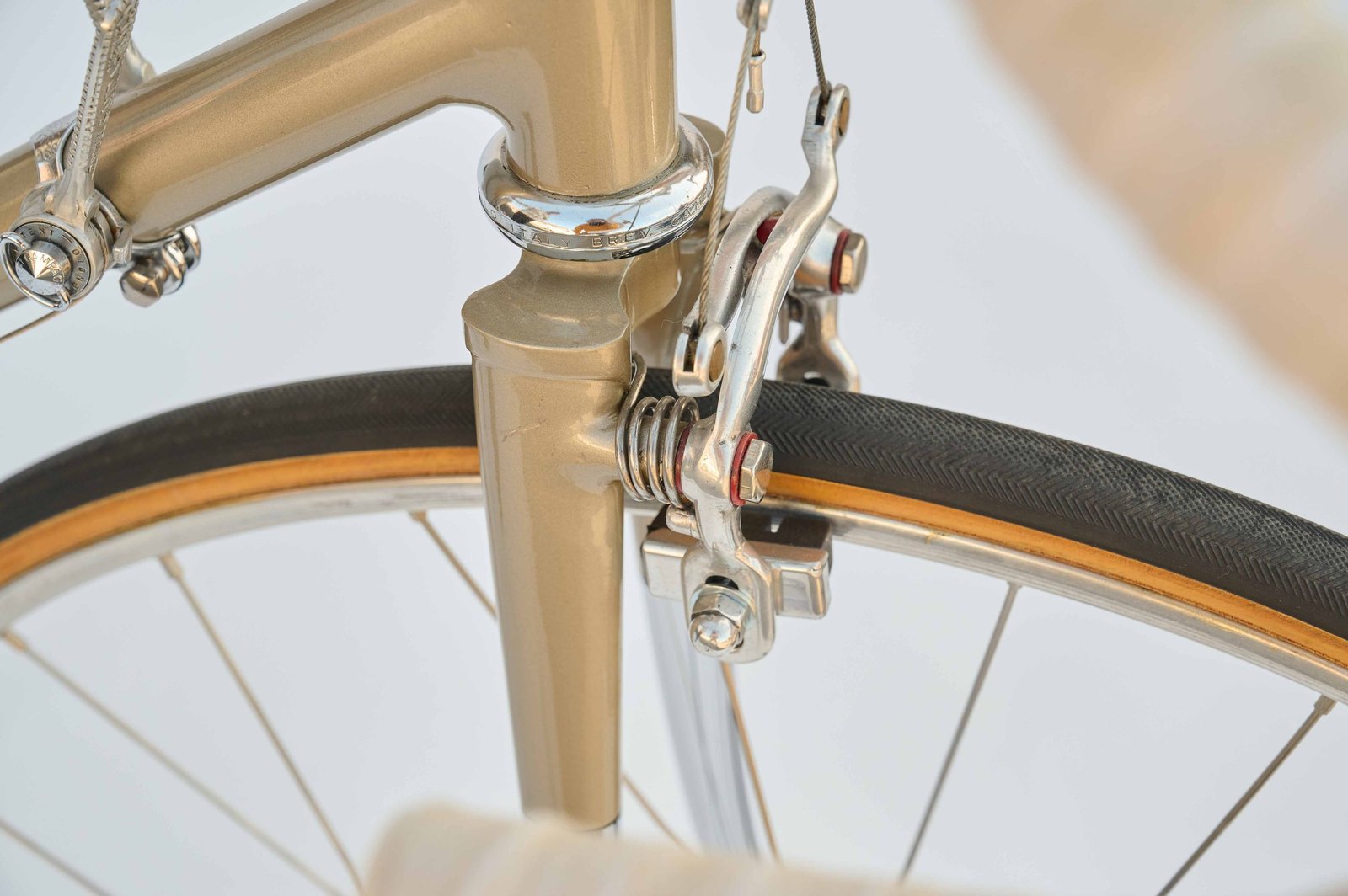
Ken Evans, editor of Cycling Weekly throughout the 1970s, was an ardent short-distance time trials enthusiast, so it’s no surprise his custom 1971 Carlton is a paean to head-down, straight-line speed. Lightness was a consideration, but stiffness, for maximum power transfer, was the priority.
(Image credit: Future / Richard Butcher)
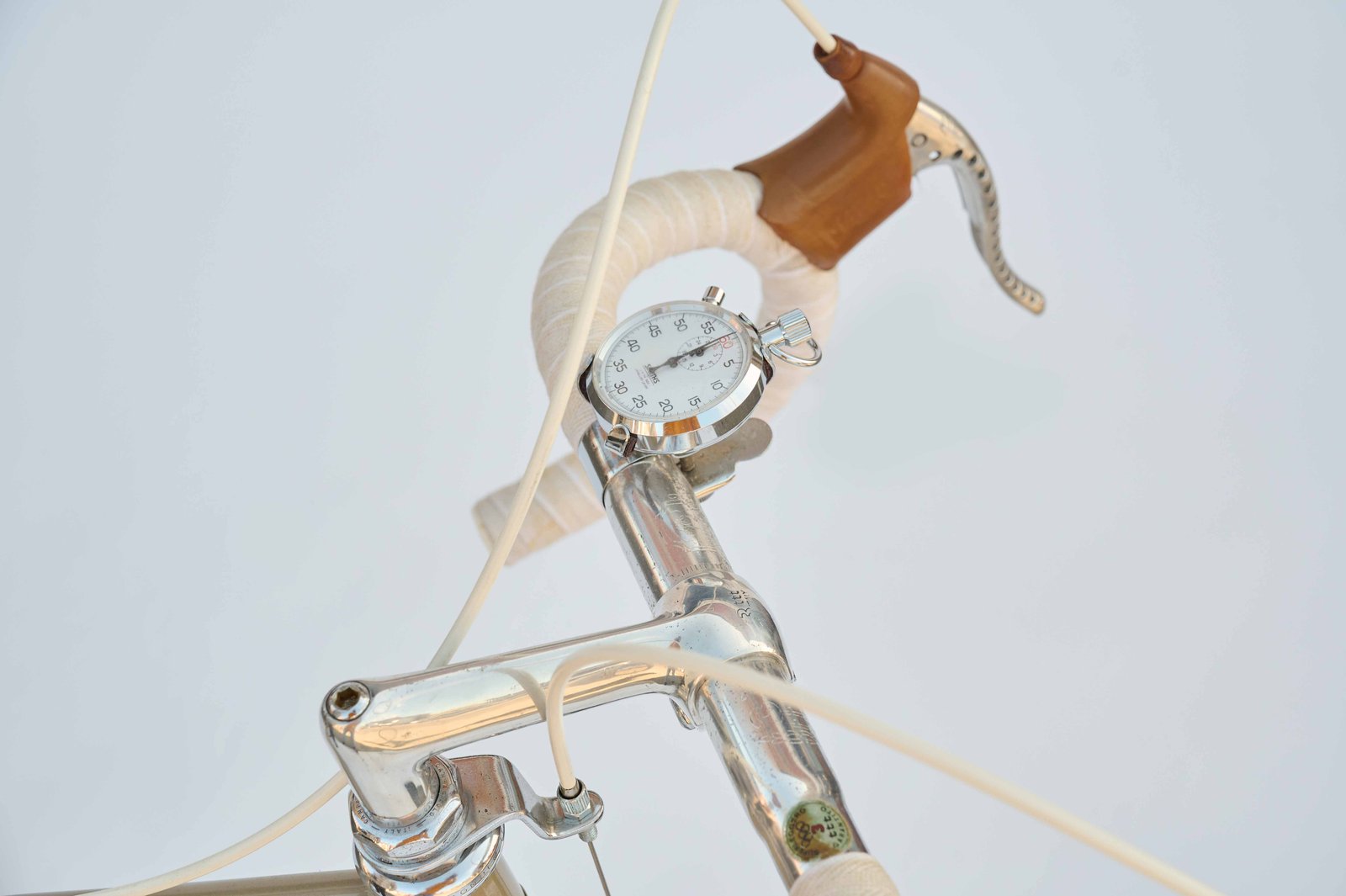
No power needed. A classic odometer is all the data a time triallist needed
(Image credit: Future / Richard Butcher)
“The frame is incredibly unusual,” notes current owner Dave Marsh, of the Universal Cycle Centre, Rotherham. “Regular steel frames are built with different diameter tubing; the top tube, for example, is usually 1”. But, here, all three primary tubes – top, down and seat – are 1 1/8” Reynolds 531 double-butted tubing. This provided a greater surface area for the beautifully lugless, fillet brazing and would have made the frame considerably stiffer.
Because the frame was built exclusively for Evans, Carlton was able to incorporate a continuous seat tube, perhaps to introduce some compliance. It’s a novel approach – only decades later did Gerard Vroomen design something similar with Open’s MIN.D frame.

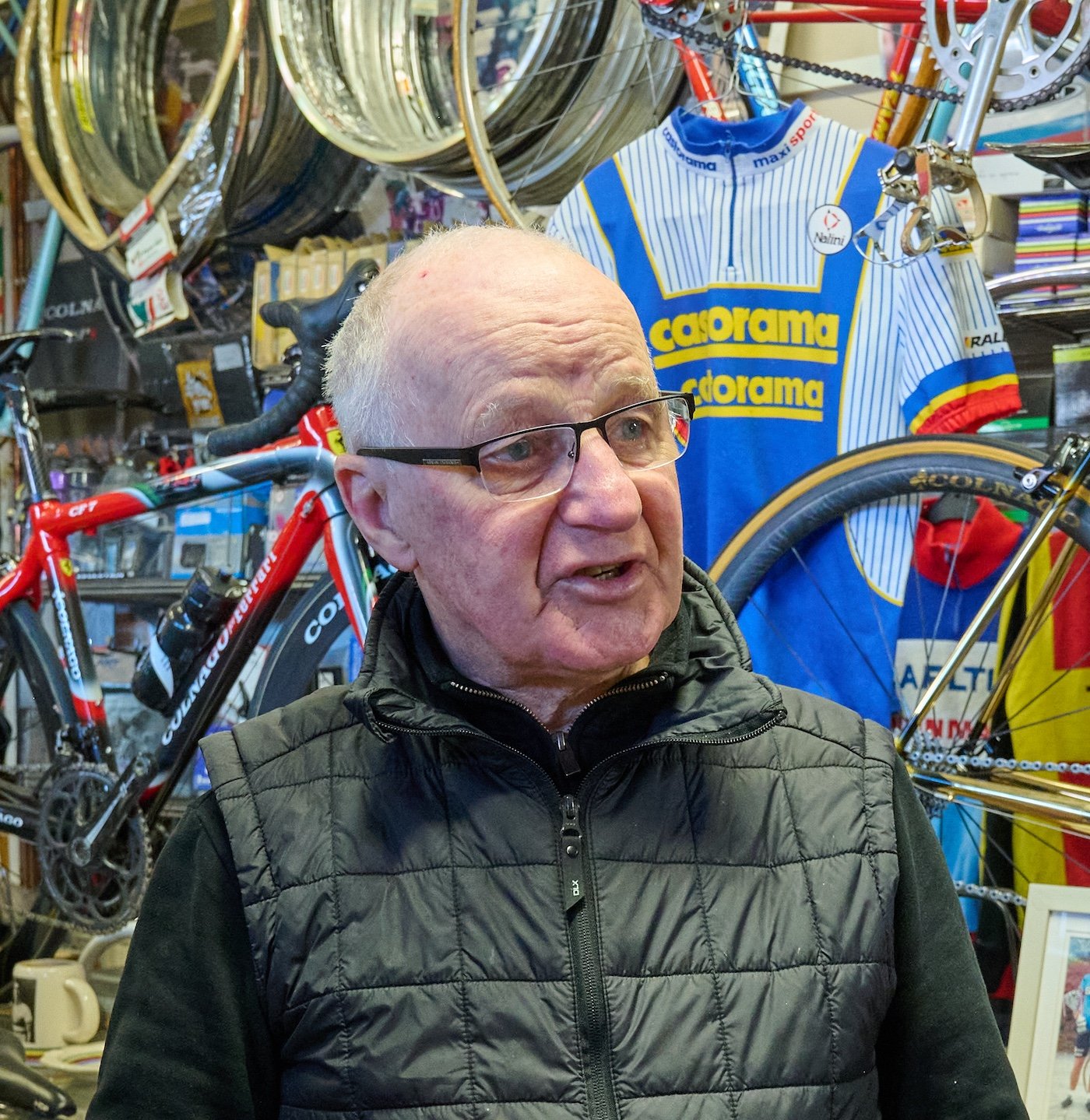
Owner of the Universal Cycle Centre in Rotherham, Dave Marsh has spent his life either racing and riding bikes or working in the cycle trade. He has an extensive collection of immaculately restored classic bikes, many of which are feature in Cycling Weekly.
The sleek, albeit somewhat bizarre, cable routing for the rear brake is typical of Carlton manager and designer Gerald O’Donovan. “He was such a creative talent,” says Marsh, “always experimenting. The cable navigates two eyelets on the top tube, before passing through a tiny pipe brazed directly through the seat tube.”
Whether this solution is more aerodynamic or delivers more power in the braking, due to the direct, straight-line routing, remains uncertain. It is certainly more striking.
The direct-mount brakes are genuinely innovative, a full 40 years ahead of their time. “O’Donovan removed the backplates from a pair of Universal callipers,” says Marsh, “mounting them on prongs brazed to the forks and stays. I’m sure the resulting stiffness improved performance considerably.”
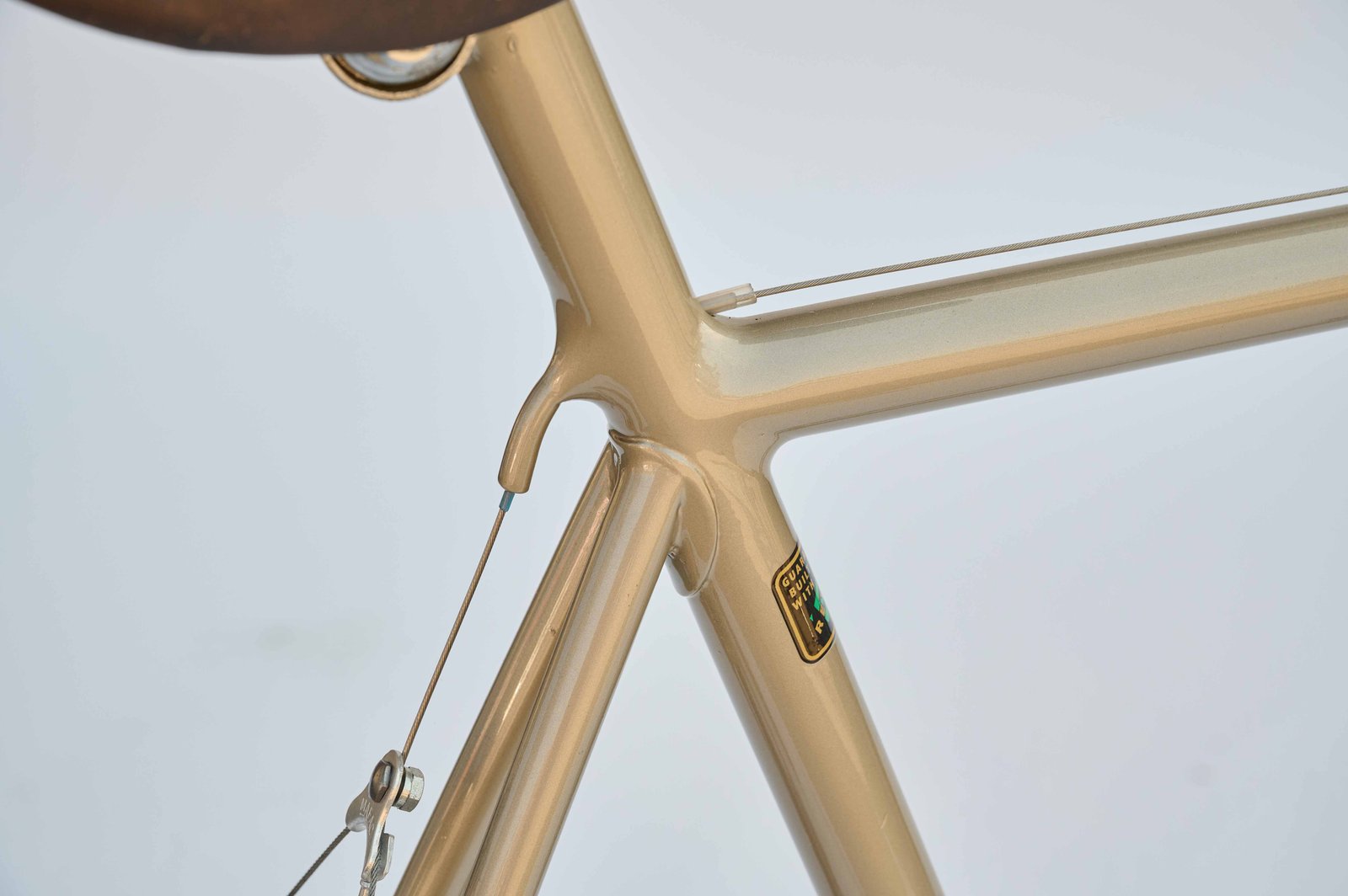
The rear brake cable guide runs clean through the extended seat tube
(Image credit: Future / Richard Butcher)
By comparison, the rest of the build risks appearing humdrum. Campagnolo throughout – a mix of Nuovo and Super Record – except for the aluminium 3ttt bars, stem and factory-drilled Mafac brake levers. The Campy large flange 28-spoke hubs, another nod to stiffness, are laced to lightweight, French-made Super Champion Arc-en-Ciel rims shod with later-era Vittoria Competition Rally 21 tubulars.
Read the full article here