



Juan Manuel Fangio – 38y, 10m, 27d
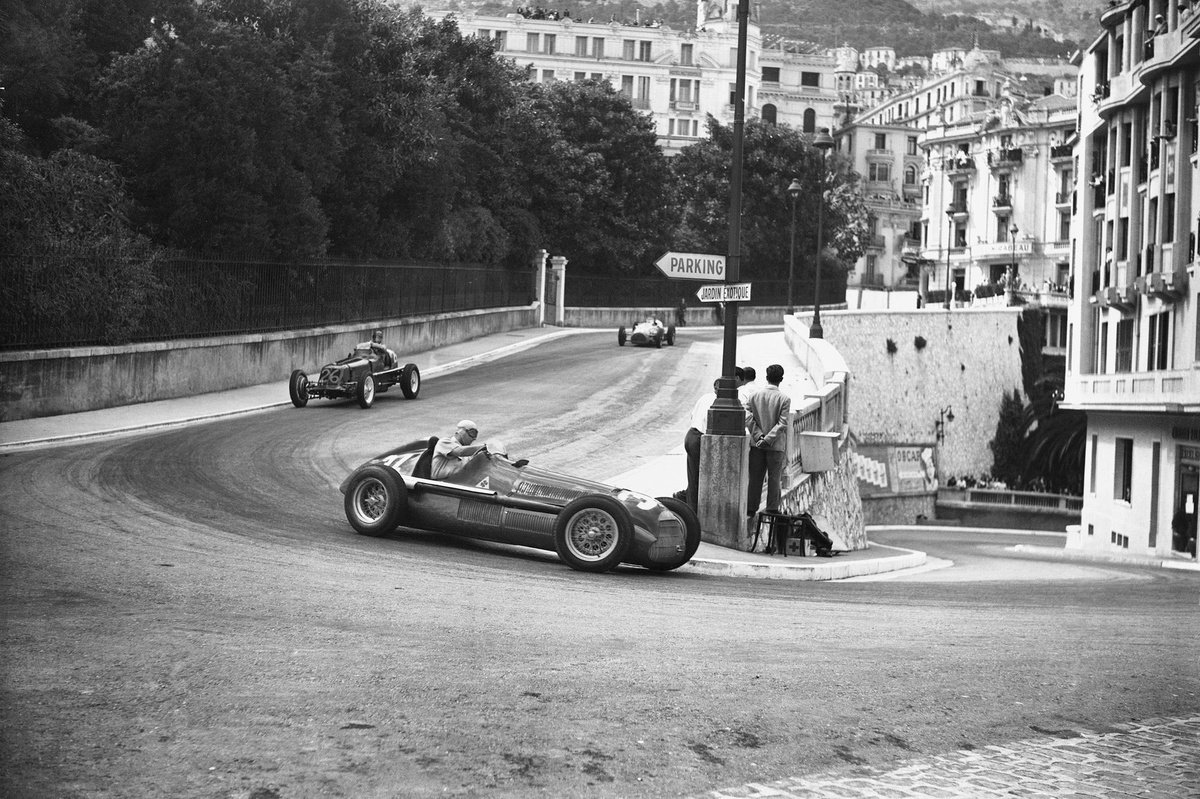
1950 Monaco GP
The first-ever grand chelem – leading the whole race from pole position and setting the fastest lap on your way to victory – occurred in just the second race of the Formula 1 world championship.
Future five-time title winner Juan Manuel Fangio was fastest by 2.6s in qualifying. The 38-year-old Argentine made it past Tabac corner right before a wave from the harbour soaked the track, which wiped out most of the field, including the other four drivers who started from the top five.
“I was very lucky,” Fangio told Autosport, denying suggestions that he might have a ‘sixth sense’. “There had been a similar incident in 1936 and I happened to see a photograph of it at the Automobile Club the day before the race.
“As I came out of the chicane, I was aware that there was something different with the crowd. I was leading, but they were not watching me. They were looking down the road. Instead of seeing their faces, I was seeing the backs of their heads. Something at Tabac was more interesting than the leader.
“And then I remembered that photograph and braked as hard as I could. It was very close.”
Fangio went on to lap all of his rivals. This wasn’t his most fantastic drive by any means, but it still made history.
Alberto Ascari – 33y, 11m, 23d
1952 French GP, Rouen-les-Essarts
Alberto Ascari, Ferrari 500
Photo by: LAT Images via Getty Images
No other grand chelem was achieved until Alberto Ascari and Ferrari dominated the 1952 and 1953 seasons, run to Formula 2 regulations, with their supremacy yielding five grand slams in just 14 races.
The first one of those was the inaugural Rouen-based French Grand Prix, in 1952. Ascari lapped the 5.1km track in 2m14.8s, outpacing Ferrari team-mates Giuseppe Farina and Piero Taruffi by 1.4s and 2.3s respectively.
Ascari completed the 388km race with no pitstops, and even a rain shower couldn’t thwart his dominance. He took the chequered flag 1m10.7s ahead of Farina, with Taruffi a lap down and everyone else further adrift.
Mike Hawthorn – 29y, 2m, 26d
1958 French GP, Reims
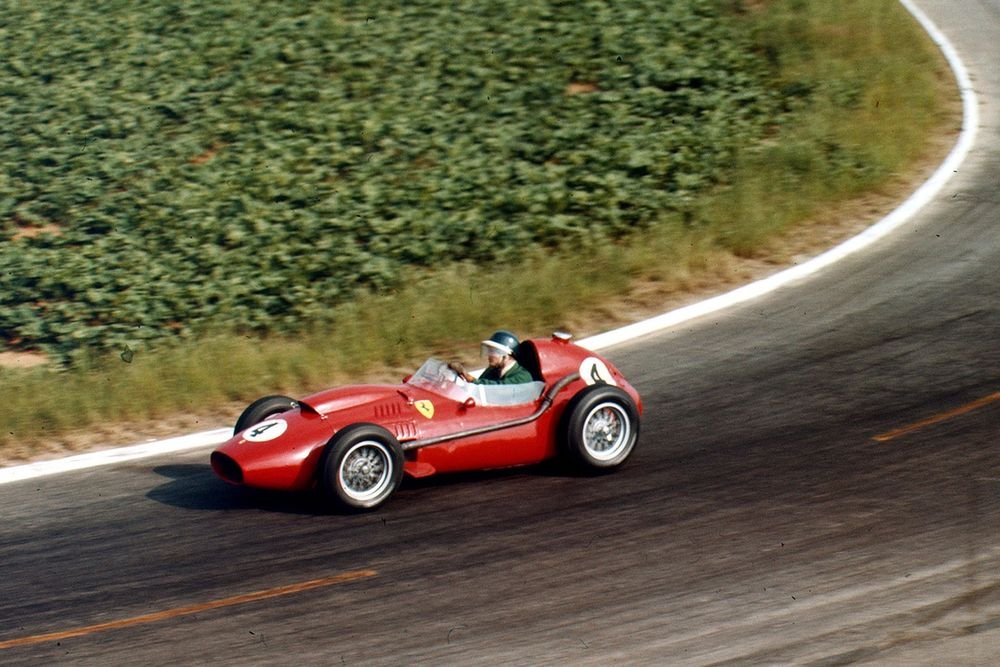
Mike Hawthorn, Ferrari Dino 246
Photo by: LAT Images via Getty Images
The next driver to join the grand chelem ranks was Mike Hawthorn – the first one to do so in his 20s.
The longtime Ferrari racer had been a consistent top-three achiever over the previous years – he became F1’s youngest-ever podium finisher at just 23 in the 1952 British Grand Prix with a privately-entered Cooper. But the 1958 French GP marked just his third – and last – victory.
The only driver to have scored points in every race so far that season, Hawthorn was led by two-time winner Stirling Moss in the standings, but he took pole position at Reims, leading Ferrari team-mate and rival Luigi Musso by seven tenths, with Moss two seconds adrift in sixth.
Musso chased Hawthorn early on but went off the track on lap 10. Three weeks on from surviving a hefty crash at Spa-Francorchamps, the 33-year-old Italian was thrown out of his somersaulting Ferrari and died a few hours later.
Hawthorn went on to win unchallenged, 24.6s ahead of Moss, in what turned out to be his final F1 victory. He was narrowly crowned the world champion, courtesy of Moss’s fair-play, as the latter stood up for Hawthorn when he was facing disqualification from the Portuguese GP.
Hawthorn announced his retirement after winning the title and suffered a fatal road accident just three months later. He was 29 years old.
Jim Clark – 26y, 4m, 17d
1962 British GP, Aintree
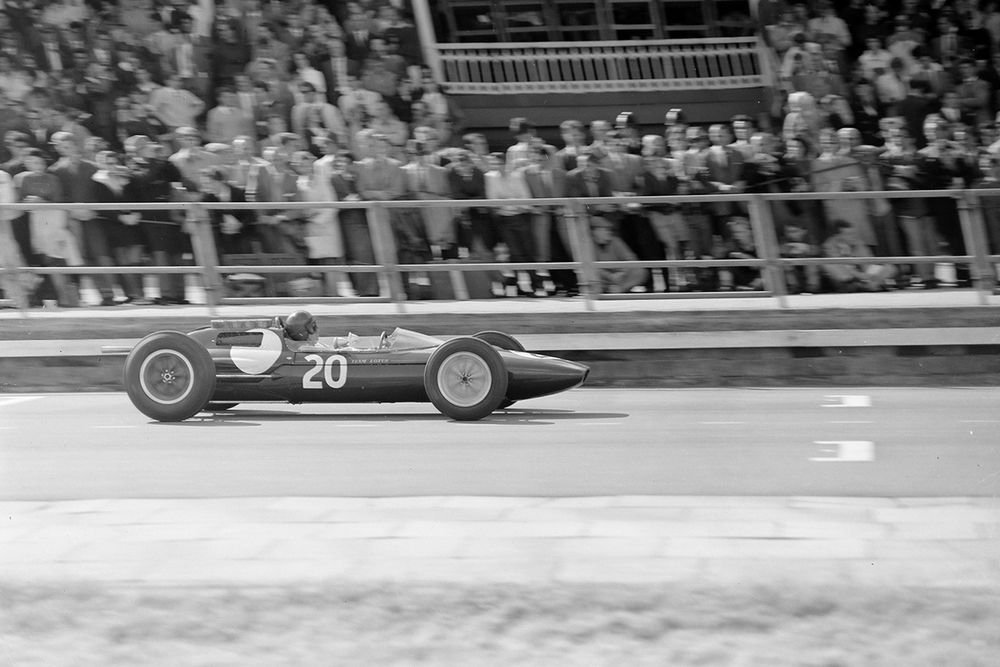
Jim Clark, Lotus 25 Climax
Photo by: Autocar / LAT Images via Getty Images
Back in 1962, Team Lotus introduced its highly successful Lotus 25 – a 14-time grand prix winner – and Jim Clark proved he could get the most of it.
Aged just 26, Clark became a bona fide title contender that year, but mechanical problems took him out of contention in three of the first four rounds, while he took his maiden win at Spa-Francorchamps – from 12th on the grid, so a grand chelem wasn’t on the cards.
At Aintree however, Clark claimed his third career pole of what would be a record 33, outpacing John Surtees by 0.6s, and led his compatriot’s Bowmaker-entered Lola throughout the race. He slowly but comfortably pulled away and won by 49.2s.
Clark may have clinched just two world titles, as unreliability cost him dear in ’62, ’64 and ’67, but he achieved eight grands chelems – still a record to this day – before his untimely death in an F2 race at Hockenheim in April 1968.
Ayrton Senna – 25y, 1m
1985 Portuguese GP, Estoril
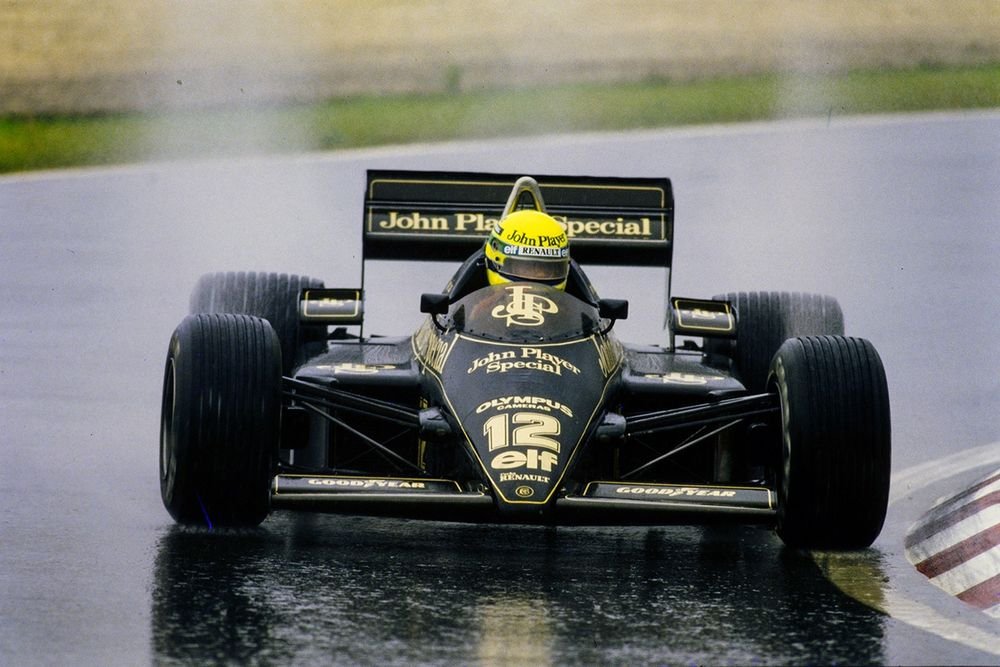
Ayrton Senna, Lotus 97T Renault
Photo by: LAT Images via Getty Images
No fewer than 10 drivers scored grands chelems over the next 23 years, but only Ayrton Senna’s emergence provided an opportunity to beat the ‘youngest’ record.
Senna joined Lotus for what was just his sophomore F1 season after an impressive rookie campaign with Toleman. At Jacarepagua, he qualified fourth and ran third until an electrical failure occurred, and his Estoril performance was genuinely impressive.
The 25-year-old Brazilian took a dominant pole position in dry conditions, his first of a record 65, 0.413s faster than McLaren’s Alain Prost. Rain wreaked havoc in the race, with only nine of the 26 runners classified under the chequered flag.
Senna was 2.65s clear of team-mate Elio de Angelis after lap one, 12.9s ahead on lap 10, and kept pulling away to triumph 63 seconds ahead of Ferrari’s Michele Alboreto. The celebration he shared with Lotus team manager Peter Warr is etched into F1 folklore.
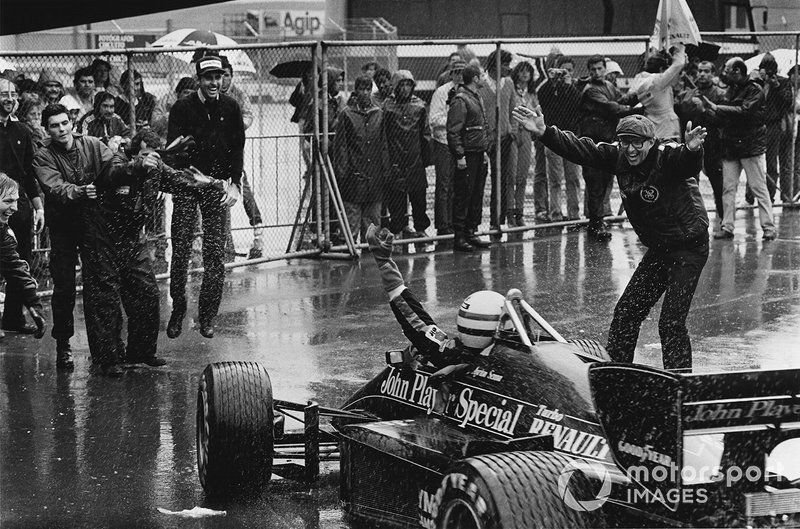
Photo by: Motorsport Images
“The car was sliding everywhere – it was very hard to keep [it] under control,” Senna commented afterwards. “You often saw cars sliding about all over the place purely through lack of grip and too much power. The only problem [I had] with the car was the brakes, but under these conditions you expect that.
“Once you were close to someone, you could not see anything. People think I made no mistakes, but that’s not true – I’ve no idea how many times I went off! Once I had all four wheels on the grass, totally out of control, and the car came back on the circuit.
“Everyone said ‘Fantastic car control’ but it was just luck.”
And when, years later, it was suggested that his 1993 Donington masterclass was his greatest drive, Senna disagreed: “No way! I had traction control.
“OK, I didn’t make any real mistakes [at Donington], but the car was so much more easier to drive. It was a good win, sure, but compared with Estoril ’85 it was nothing, really!”
Sebastian Vettel – 24y, 3m, 27d
2011 Indian GP, Buddh
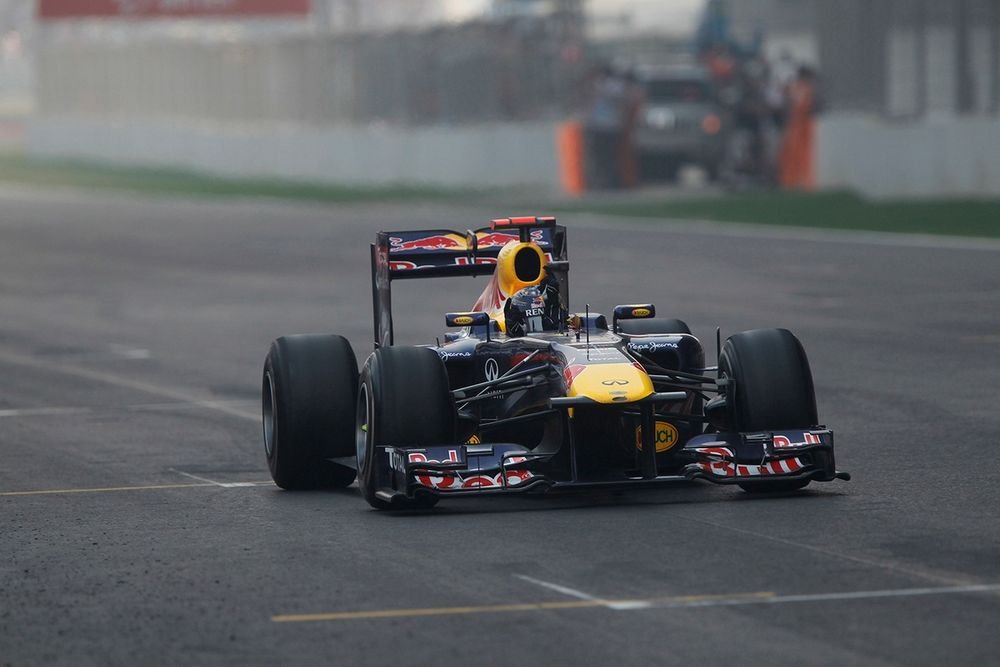
Sebastian Vettel, Red Bull Racing RB7 Renault
Photo by: Andrew Ferraro / LAT Images via Getty Images
Unlike every other driver on this list, Sebastian Vettel was already a world champion when he clinched his maiden grand chelem.
The Red Bull prodigy had come close several times, including the 2009 British GP – where he temporarily lost the lead to team-mate Mark Webber as he pitted three laps earlier – and the 2011 European GP, where he changed tyres one lap before Felipe Massa and therefore conceded first place ever so briefly.
There was also the 2009 Japanese GP, which he led from pole to victory – but Webber snatched the fastest lap away by 0.003s.
Still, Vettel finally put it all together on F1’s inaugural visit to India. He topped qualifying by a healthy 0.296s over Lewis Hamilton, outpaced Webber by 0.271s for the fastest lap, and pulled away from Jenson Button by 4.8s in the first 10 laps, roughly maintaining that gap on his way to an 8.4s victory.
But Red Bull wasn’t thrilled with Vettel’s fastest-lap heroics. As to whether his driver had asked for permission to complete the grand chelem, team boss Christian Horner said: “Of course not because he knows we don’t like it.
“We had done our best to manage it, we had turned all the engine modes down, KERS off, and short of putting a cow on the circuit there was not a lot else we could do.
“At the end of the day we have complete trust in him. I am sure he still had the margin in there, and the main aim for him is to win the race. He knows there are no points for fastest laps, but he likes those little statistics to complete a perfect weekend.”
That day, Vettel also broke Nigel Mansell’s record for most laps led in a season – 739 by the end of the 2011 season to the British icon’s 694 in 1992, though Mansell’s hit rate was higher and Max Verstappen obliterated that one in 2023.
Max Verstappen – 23y, 9m, 4d
2021 Austrian GP, Red Bull Ring
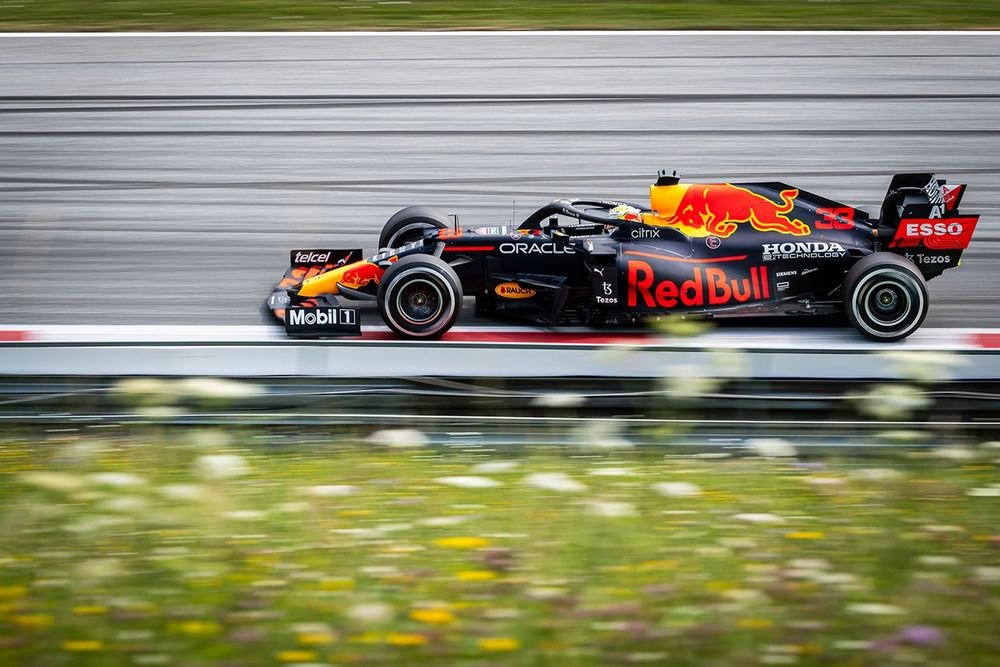
Max Verstappen, Red Bull Racing
Photo by: Jure Makovec / SOPA Images / LightRocket via Getty Images
It can be somewhat quaint that Verstappen became F1’s youngest grand chelem scorer at the 128th time of asking – as many races as the combined Fangio, Ascari and Hawthorn have competed in – but that’s just a reflection of the fact he made his grand prix debut at 17 and never really had the fastest car before 2021.
In all fairness, Verstappen did deserve the grand chelem at Abu Dhabi ’20; he led the whole race from pole, but a late pitstop by Renault’s Daniel Ricciardo – at a time when the fastest lap was worth one point – denied him that accolade.
When F1 arrived on Red Bull’s turf in 2021, Verstappen was comfortably leading the drivers’ championship, with Hamilton 32 points adrift.
The Dutchman beat Lando Norris’ surprising McLaren to pole by 0.048s with a lap he labelled as “pretty bad”; in the race, he easily forged ahead once an early safety car was out of the way. He won by 18 seconds from Mercedes’ Valtteri Bottas, setting the fastest lap by a whopping 1.562s over his closest rivals, courtesy of the latest pitstop of all. But even before that, he was quickest.
“Incredible, to be honest,” Verstappen commented. “The car was on rails. I mean on every tyre set that we put on, it was really enjoyable to drive. Pretty insane.
“I’m a bit amazed myself how today went. I didn’t expect it to be like this.”
Kimi Antonelli – 19y, 9m, 3d
2026 Monaco GP
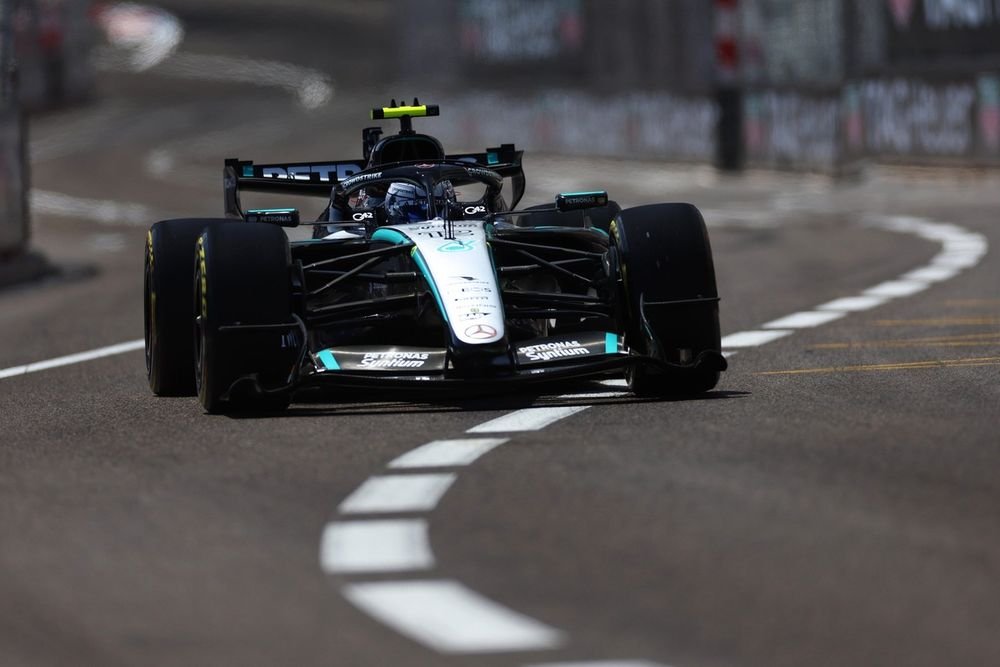
Andrea Kimi Antonelli, Mercedes
Photo by: Alastair Staley / LAT Images via Getty Images
Mercedes wonderkid Kimi Antonelli has improved the grand chelem record to under 20 years of age – a benchmark that is unlikely to be surpassed anytime soon.
After a tough rookie campaign in F1, Antonelli has enjoyed more dominant machinery in 2026 and has himself been a much more complete package as a driver.
The 19-year-old Italian came ever so close to a grand chelem in China this year, as he took his first pole by 0.222s and the fastest lap by 0.125s over team-mate George Russell, but Lewis Hamilton’s fast-starting Ferrari deprived him of the lead on lap one.
In Monaco however, Antonelli outpaced Verstappen by 0.043s for pole – a “magic lap”, the sophomore said – and led a chaotic race from start to finish. He pulled a gap of 29 seconds to Hamilton and then survived a late red flag and standing start to prevail in the eight-lap dash as well.
“I was surprised by the pace, but today I just felt really one with the car and I was just able to set a good rhythm with high intensity and the car was responding really well,” Antonelli commented. “So yeah, definitely I was surprised, but it was just one of those days where everything clicks.”
About the red flag, he added: “Big time I was frustrated, because Lewis was starting next to me this time and knowing how good they start, I was like, ‘Oh man.’ But luckily, the start went OK. Also, he had a lot of wheel spin, so that also made my life a little bit easier into Turn 1. But yeah, it was not easy to refocus after the red flag.”
The youngest-ever polesitter, fastest-lap scorer, race and championship leader, hat-trick and grand chelem achiever is now on target to become F1’s youngest world champion in 2026 – potentially beating Vettel’s record (23y, 4m, 11d) by more than three years.
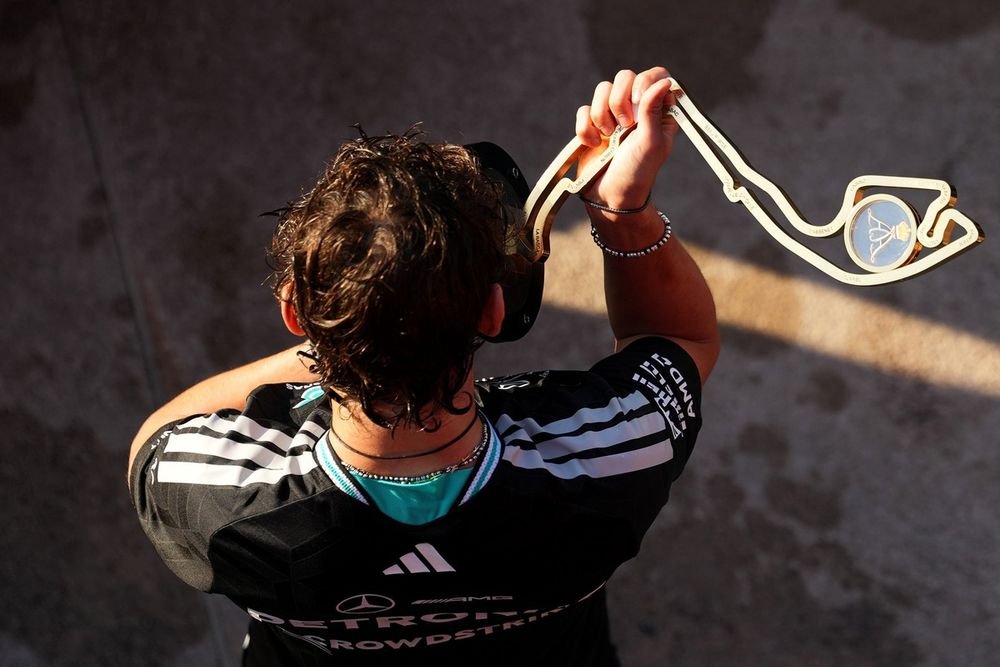
Andrea Kimi Antonelli, Mercedes
Photo by: Alex Bierens de Haan / LAT Images via Getty Images
We want to hear from you!
Let us know what you would like to see from us in the future.
Take our survey
– The Autosport.com Team
Read the full article here