

Equipe Classic Racing unveiled its first-ever championship at the Silverstone International circuit last weekend.
As well as the one-hour contest for a range of pre-1966 GTs and tin-tops, a large selection of Equipe’s racing series were on show, from the small British sportscars of Equipe GTS to Formula 2 and FAtlantic single-seaters.
Siblings lead the way in new championship
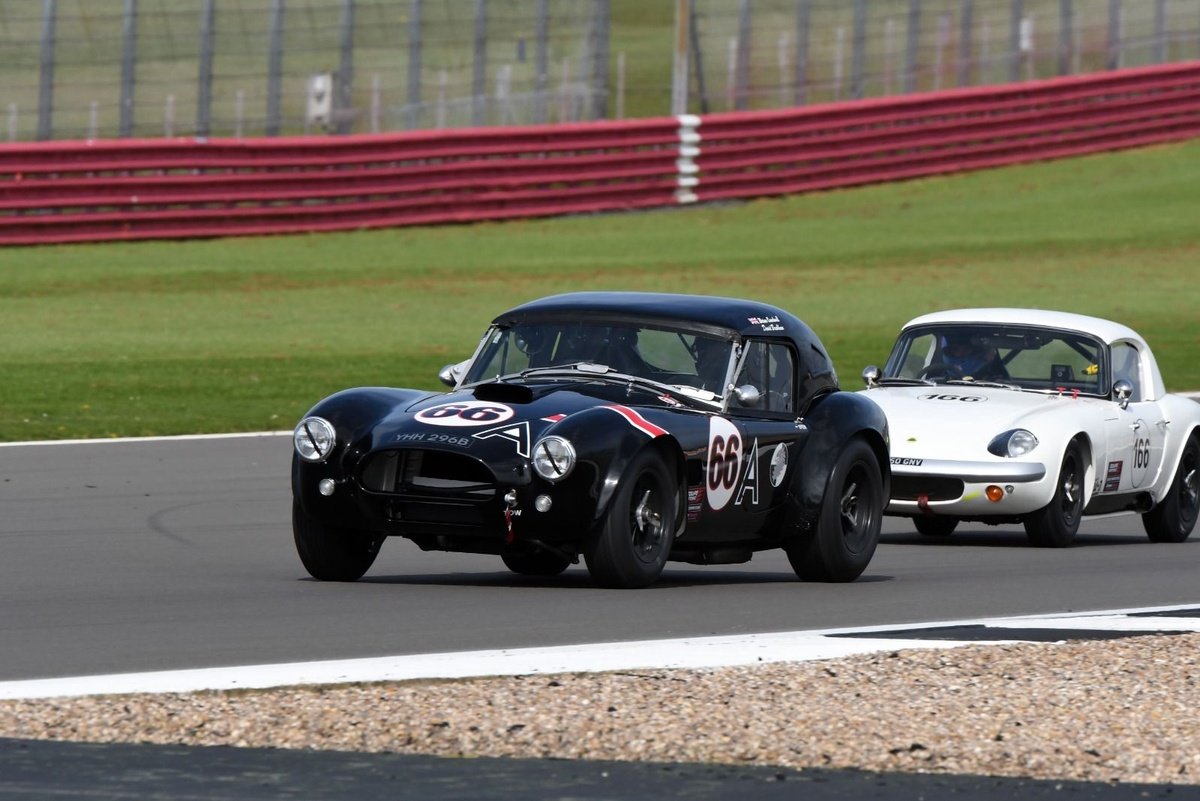
The inaugural Equipe Historic Championship race went the way of Brian Caudwell and his American Shelby Cobra, with brother John finishing runner-up in his AC Cobra.
The contest between the siblings could have been closer had John not missed a gear on the first lap, dropping out of the top 10 and having to weave his way back through the field. The pair pitted at roughly the same time, once the AC Cobra had caught up, and they stayed in that formation for the rest of the race. John Caudwell received the consolation prize of the fastest lap.
Third place was claimed by John Dickson and Stuart Hall in a Lotus Elan 26R. It looked as if they could challenge for the win in the early stages of the race, Hall hounding the polesitting Caudwell Shelby Cobra – and the Elan did lead briefly, but that was during the pitstops. Hall’s own late stop allowed them to stay ahead of Pim Remijn’s 26R, which finished fourth.
Remijn’s cause was not helped by a slow lap about seven minutes from the end, which allowed Dickson to consolidate his place. Remijn won Class 2 (as Dickson/Hall were not entered for the championship), ahead of a gaggle of Marcos 1800 GTs. Sixth-placed Harvey Blake-Jones was the first Marcos finisher.
Chris Ryan (TVR Grantura) made up some positions in the first third of the race, but limped to the end with a cabin full of smoke, which turned out to be caused by a diff leak. He had run as high as third and still won Class 3.
Star Car: Jenvey-Gunn TS6
Jenvey achieved his target of setting a sub-one-minute lap
Photo by: Steve Jones
Mike Jenvey’s Jenvey-Gunn TS6 was the standout performer in the Equipe Sports Prototype series. Originally built in 1994 from a Sports 2000 chassis, it was the oldest car on the grid, yet the fastest. It also runs on sustainable fuel, believed to be the first of its type to do so. The change was instituted when the car got its new engine over the winter, but it has worked so well that Jenvey has gone back to the original engine mapping.
Jenvey, encouraged by his three-strong team, had the secondary aim (apart from winning) of setting a sub-one-minute lap around the Silverstone International Circuit. He managed a 1m00.806s in race one, en route to a 37-second victory over Jude Peters’ Revolution. In race two, both objectives were achieved, with his best lap being 59.880s.
The weather was against him, with crosswinds making life difficult for most drivers and stability being an issue. For the second race, the wind was less strong but, on a completely clear day, the car could go even faster.
Jenvey and his team love a win, but they also love a fastest lap. As a small operation going up against works squads like Revolution’s, the David and Goliath aspect motivates them.
Star Car: March 78B
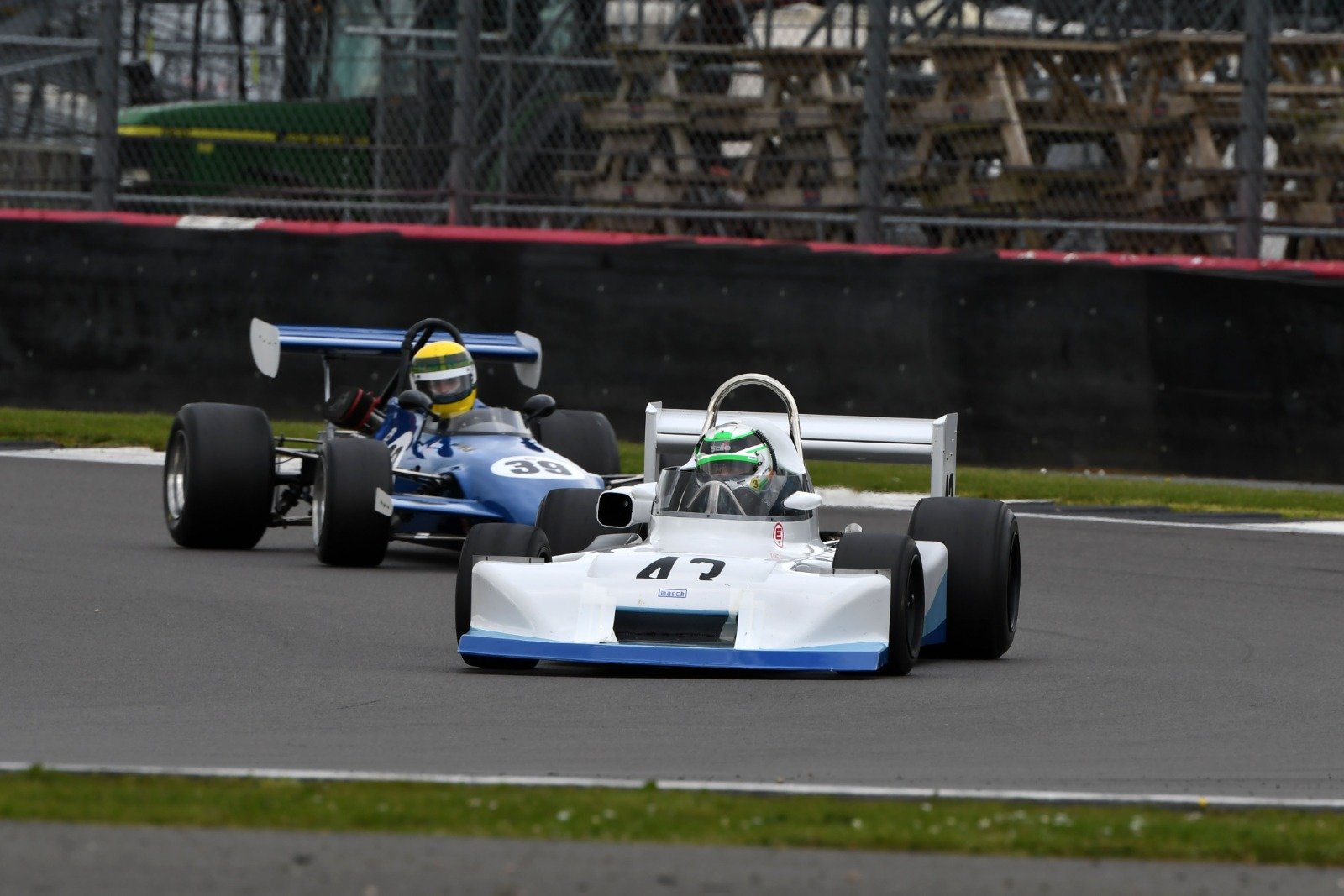
Bradshaw gave Toro Verde team boss Westwood the chance to return to the cockpit
Photo by: Steve Jones
John Bradshaw’s March 78B was not the quickest machine on the Equipe Formula 2 Atlantic grid on Sunday, but it was a notable car and making its return to action. The March was originally raced in Formula Atlantic in the US and Canada in 1978, by future Indianapolis 500 winner Danny Sullivan. But it had had little action between then and Bradshaw buying it. He has returned it to its original blue-and-white Bluebonnet Foods livery, although without the lettering. At the time, the blue colour and the “blue” name led many to believe that the Canada goose on Sullivan’s helmet was actually a bluebird.
This was the March’s first outing since its restoration, with qualifying the first time it had really been driven. Bradshaw’s son Tom, who is racing in British GT this year, would have been the obvious choice as its driver, but he was unavailable due to family commitments. Instead, he called on Julian Westwood, team boss of Bradshaw Jr’s Toro Verde GT squad. The former British Formula 3000 and international Formula 3 racer had not been in a car since the 2020 Bathurst 12 Hour but, in the course of two weeks, he renewed his licence and underwent a medical, having sworn before that his racing days were over. An additional draw was the chance to race a March quite like the one his own father campaigned in 1980.
Westwood was fifth in the first F2 race, despite having to start in the pits due to his tyres being flat. He was then fourth in race two, knocking close to a second off his lap time.
Star Performer: David Sheppard
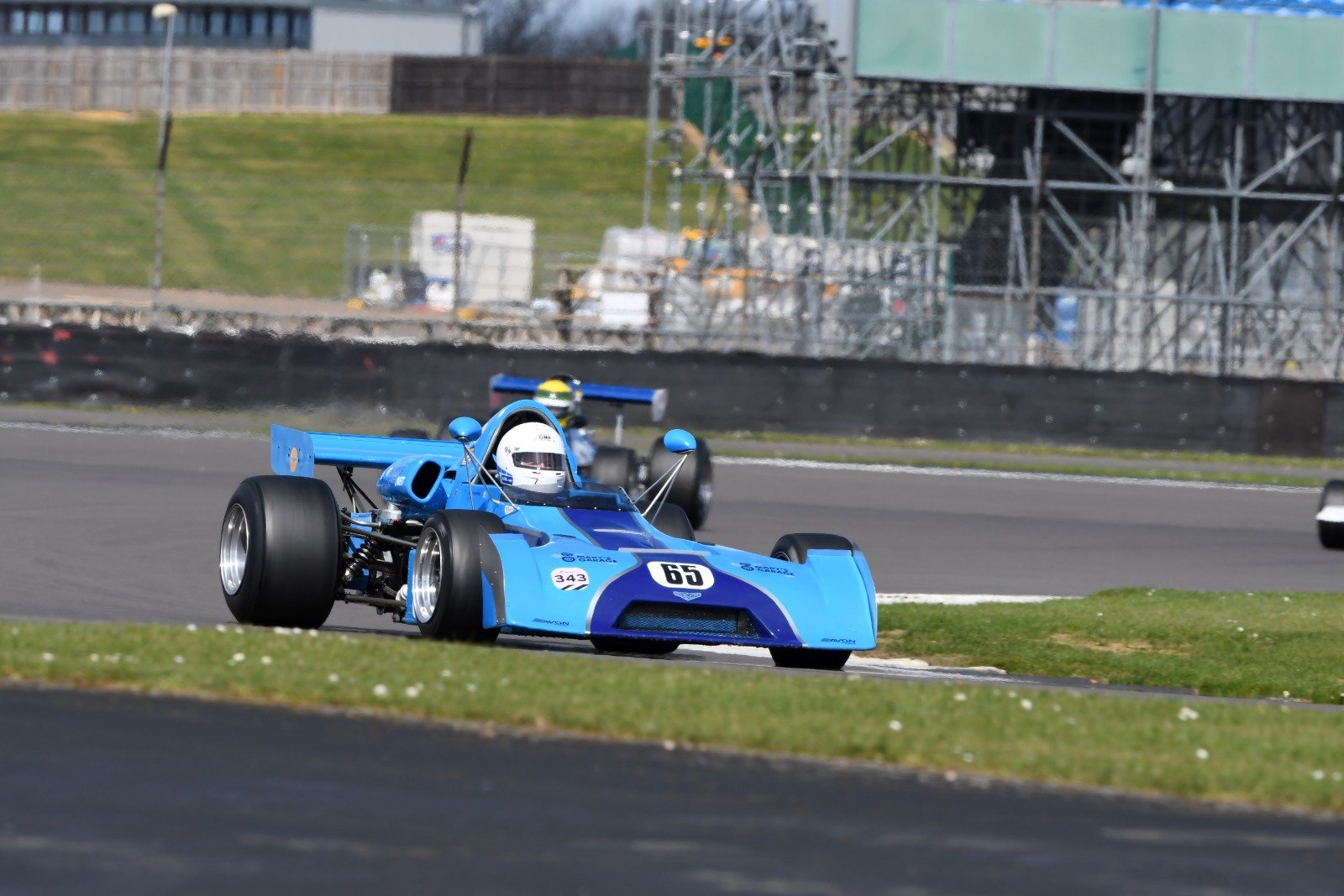
Sheppard sportingly let McGaughay race his Chevron in the second contest after the Scot’s own car expired
Photo by: Steve Jones
The star performer of the meeting wins this on his sportsmanship, rather than his on-track performances. Formula 2 racer David Sheppard handed race two in his Chevron B25 to James McGaughay, who had travelled all the way from Scotland, only for his own Swift Atlantic DB4 to expire drastically during qualifying, with a serious engine problem. McGaughay took it easy as the car wasn’t his, and the cockpit was set up for the much taller Sheppard. “He’d travelled the best part of a thousand miles to get here,” said Sheppard. “I just wanted to put a smile back on his face.”
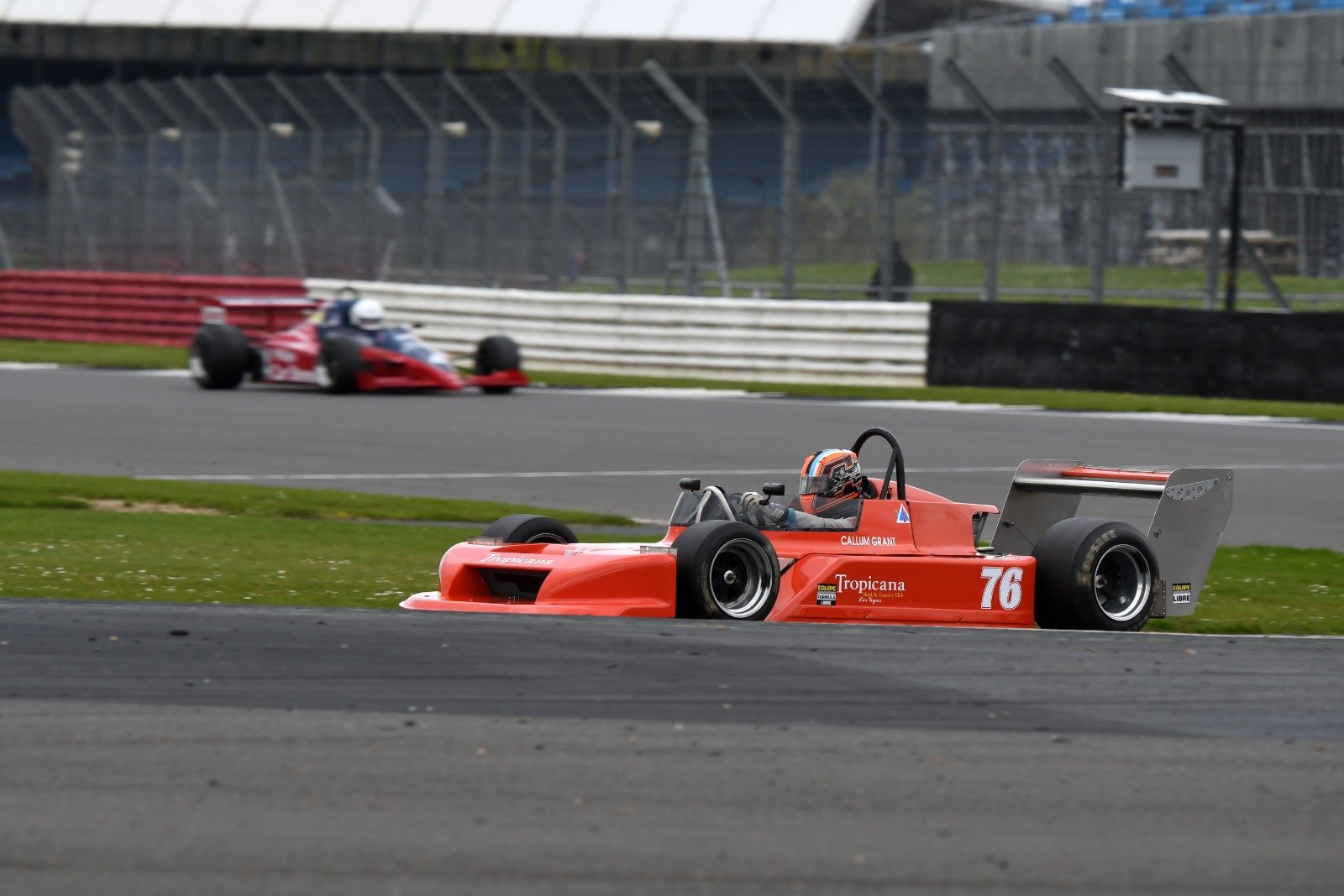
Up ahead of McGaughay, Callum Grant’s March 79B was a double winner
Photo by: Steve Jones
We want to hear from you!
Let us know what you would like to see from us in the future.
Take our survey
– The Autosport.com Team
Read the full article here