


If there’s one player we’re a good deal higher on than the industry, it’s left-handed starting pitcher Jake Miller. Personally, I think Miller has a solid chance to develop into a mid-rotation caliber starting pitcher. Others will note the 2025 injuries that stalled his workload progression and see too much downside risk. More likely, he’s a good swingman who spot starts occasionally, but is still a very valuable member of the Tigers’ pitching staff in the years ahead. We’ll see how it turns out over the next few seasons.
Miller had just turned 21 when the Tigers selected him out of Valparaiso in the 2022 draft. They used their eighth round pick on the lefty, paying him the minimum bonus. That looks like another steal from the college pitching ranks. Miller was unheralded in college despite being a left-hander, in part because his fastball sat in the low-90’s. Over the past three full seasons of pro ball, he’s built that up to sit 94 mph. In the process, he’s developed above average command of a deep mix of secondary pitches, helping them all to play up and work in concert together.
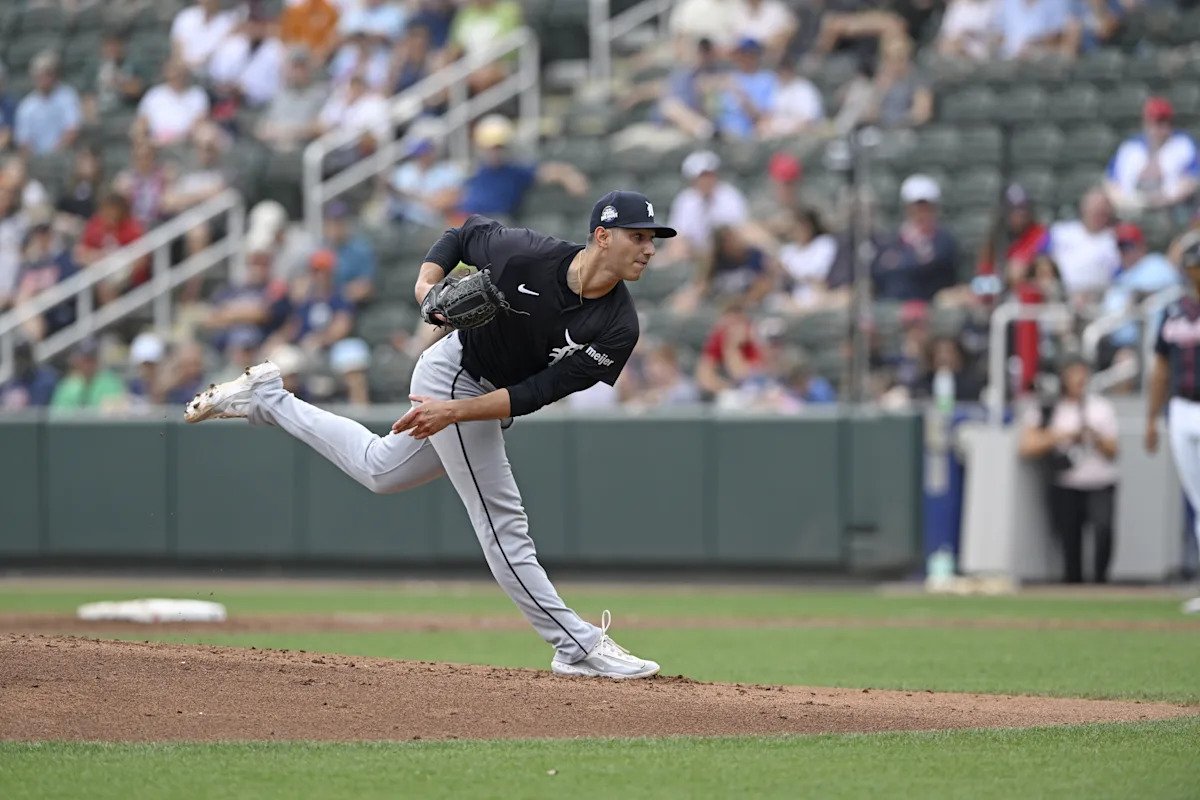
The 6’2” left-hander initially weighed in at a somewhat lanky 185 pounds, but has added 15-20 pounds of good muscle over the last few years. He has a simple compact delivery, working into his motion with a rock step and a fairly high leg kick from a closed stance that gives him some deception, and then firing his quick arm through a standard three-quarters arm slot into release.
In his first full season of A-ball, Miller wasn’t particularly impressive until his command really came together late in the year to finish strong. He stayed in Lakeland to start the 2024 season, but eventually moved to High-A and reached Double-A by the end of the year. He posted a combined 1.85 ERA with a 30.4 percent strikeout rate against a truly miserly 5 percent walk rate over 87 1/3 innings of work. His command of a solid fastball and a plus changeup together was just overwhelming to A-ball level hitters.
Miller is typically 93-94 mph with his fastball, hitting 95-96 at max effort. It’s a straightforward fourseam fastball with a bit of riding action and a pretty flat plane to the top of the zone, but nothing outstanding. His crossfire and quick arm accleration give him some deception, and he moves around on the rubber to get different angles depending on the pitch and hitter, shifting his foot on the rubber into his delivery. All that helps make his release point trickier to track for hitters. It’s really just a perfectly average major league fastball, but he does a lot of little things to help it play up.
Miller began the season with Erie, and put together four good starts out of the gate before going on the injured list. There weren’t any reports at the time, so we had to wait until season’s end to find out what was going on. Rumors were that back spasms were the issue, and Miller had a procedure and missed all of May, June, and July, before making a few rehab appearances in Lakeland to close out the year. His second rehab appearance saw him smoked in the back by a 105 mph comebacker and knocked out the game. Kind of a microcosm of his year than as soon as he got back on the mound, something else went wrong.
The back trouble actually turned out to be caused by hip issues. Miller was announced for the Arizona Fall League last fall to make up some innings, but further medical exams after the reguar season ended showed partial tears to both hip labrums. Miller had surgery on both hips and he’s been completing his offseason rehab work throughout camp. Reports on his progress are positive, but he might take until late April for him to get on the mound for the Toledo Mud Hens, where he was optioned back on March 6.
The best secondary pitch in Miller’s toolkit is a plus circle changeup that really falls off the table with good deception and fade away from right-handed hitters. His command of the fastball-changeup combination is his bread and butter. Miller doesn’t just throw a good ratio of strikes. He already spots the fastball consistently all around the zone, jamming right-handers and adding a bit of cut to the fourseamer to do so, and getting more twoseam looking run on it to his armside. He’s very adept at tying up hitters inside and then getting them to expand the zone chasing fastballs up and away, or by dropping the changeup off the same eye line for whiffs and plenty of weak contact. He’ll use it left-on-left, and his excellent armspeed really helps him sell it and get hitters way out in front.
Miller’s breaking stuff is a more ordinary. He throws a pretty prototypical gryo slider around 84-85 mph, and over the past year shaped his power curveball into more of a sweeper at 79-80 mph. The slider is above average at its best but can be a little too rounded rather than breaking sharply. His consistency needs to improve a bit more with that pitch, while the sweeper is easier for hitters to recognize, but has serious horizontal break and is difficult to square up. The velocity on everything was down a tick or two during his rehab work in Lakeland last summer, and that’s the only Statcast data we have to work from, but when healthy he should be right back to the numbers provided here.
The pitcher who looks most similar to Miller on the Tigers’ right now is lefty Enmanuel de Jesus. They have similar stuff, though Miller at his best has a bit of a velocity advantage, but de Jesus’ ability to spot four pitches and really work hitters over with his command is very reminiscent of Jake Miller at his best. Pitchers like this are often underrated because there is no eye-opening “stuff” data to build a projection from, just a solid, well composed mix of pitches. It would help him to develop the slider into a harder, sharper version that plays more like a cutter, but command still plays even without a true plus pitch in the mix.
Most national sites have Miller as a 40+ future value grade. I’ll go two steps higher. He’s not a high percentage guy to develop into a number three starter in a good rotation, but the likelihood that he makes it as a backend starter, is pretty high in my opinion. Of course, he may be good enough to do that and still used in a hybrid/swingman role anyway. Should he come back strong from rehab and sitting closer to 95 mph consistently, as he has for a few brief stretches in the minors, he’ll push closer to top 100 status nationally.
The Tigers know what they have here, and they added Miller to the 40-man roster last fall to protect him from the Rule 5 draft. Instead of moving him to the 60-day IL this spring to open a roster spot for Enmanuel de Jesus, the Tigers moved Troy Melton onto that list instead. Reports from camp, along with that set of decisions, suggest that Miller is tracking well to get on the mound in April, but we’ll just have to see how it plays out. One way or another, a healthy Jake Miller is a weapon, and a pitcher who will probably help the Tigers out this year. He’ll just need some time in Toledo to get his timing and command all the way back after a tough 2025 season.
Read the full article here