




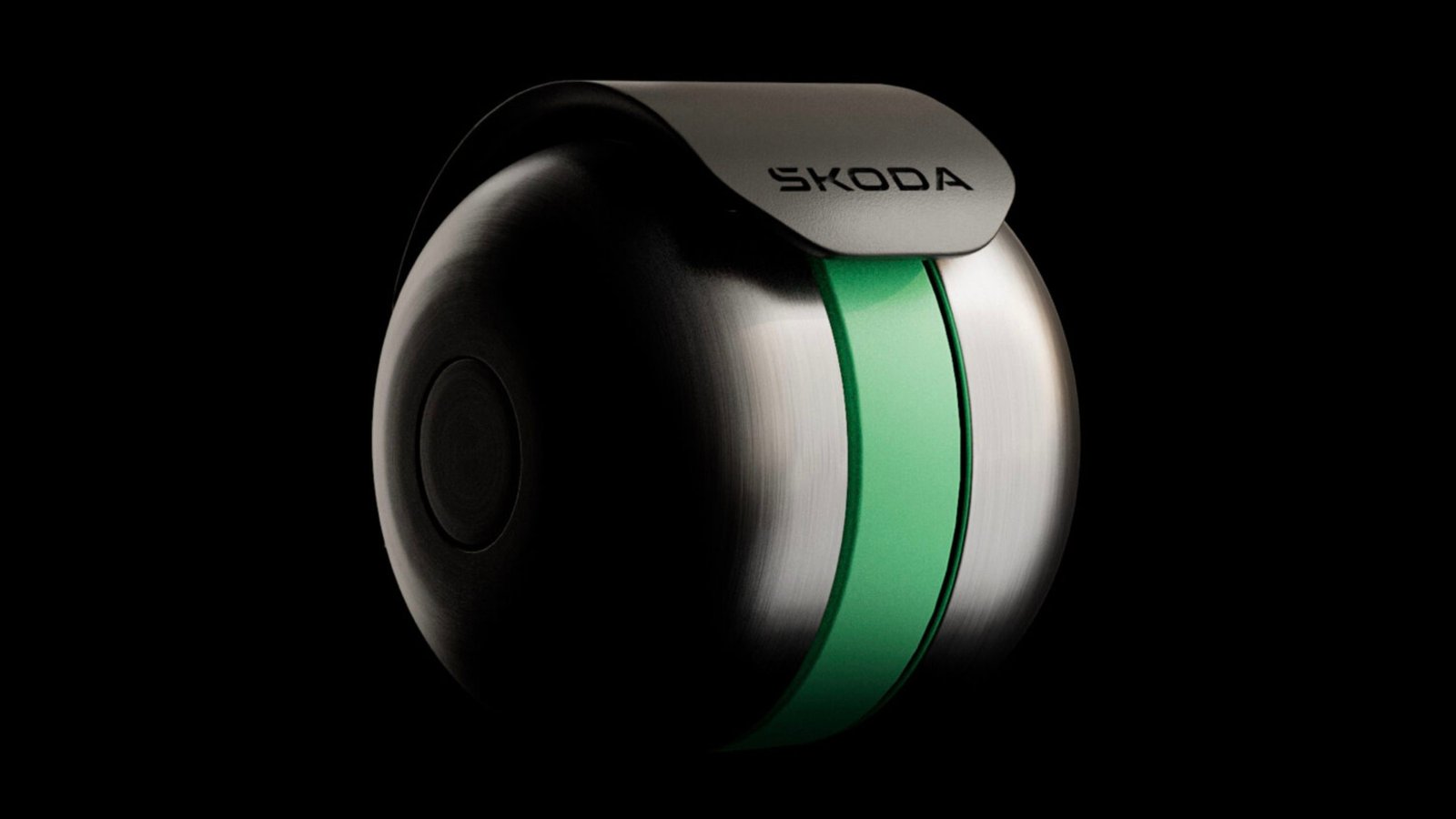
Cyclists are so often painted as villains in interactions with pedestrians, and there are serious ramifications for reckless riding, but how often have you tried to do the right thing by letting walkers know you’re approaching on shared-use paths, tracks and trails, by ringing your bike bell, only to find they’re in another world, cut off from the one we share by noise cancelling headphones?
A solution to this issue could be at hand, in the shape of the Duobell, an innovative new bike bell, created by Škoda and a team of scientists at the University of Salford, which claims to be able to defeat active noise cancellation (ANC) technology and get through to even the most disconnected of dawdlers.
Article continues below
The DuoBell – ‘an analogue solution to a digital problem’
(Image credit: Škoda)
A safety device that Škoda are describing as ‘an analogue solution to a digital problem’, it’s an entirely mechanical bell, which has been deliberately designed to be simple to use and cheap to buy, but it is capable of deceiving smart headphone algorithms to increase the likelihood that pedestrians will hear the noise it emits.
According to Transport For London data, bike/pedestrian collisions escalated by a massive 24% in 2024, and the use of noise-cancelling headphones by walkers was identified as a major contributor to that rise, vastly reducing people’s awareness of approaching cyclists. In response to this, Škoda and a team of researchers and acousticians from the University of Salford, conducted a study looking at how Active Noise Cancellation (ANC) technology, which works by generating counter-sounds to cancel incoming audio signals, affects the audibility of traditional bike bells.
They discovered a narrow frequency band of between 750Hz and 780Hz, which effectively penetrated the ANC filters, and proceeded to design a bell that rings within this ‘safety gap’ range.
“If you tune things lower, those frequencies get through the physical mass of the headphone better,” Dr Will Bailey from the University of Salford told CW. “But it’s also to do with how tonal the frequencies are. It’s defeating both parts of the problem really, the headphone and the noise cancelling.”
However, the lower tones are not as well heard for people who aren’t wearing headphones, and that’s where the Duo part of the bell comes into play. The device also features a second resonator, which is tuned to a higher frequency and emits rapid and irregular strikes, via a specially designed hammer mechanism.
“The whole approach of the Duobell is that it has two tones,” explained Dr Bailey. “You have a lower tone, which is for people wearing noise-cancelling headphones, and then the one tuned to the sort of more traditional frequency range for non-headphone wearing people.”
(Image credit: Škoda)
“Bike bells have barely changed in 100 years, but the world around them has,” said Guy Hobbs from AMV BBDO, a partner in the project. “Škoda DuoBell is the first-ever bell designed to cut through noise-cancelling headphones. A clever analogue hack that outsmarts the AI algorithms inside them. It’s one tweak that will make city streets safer.”
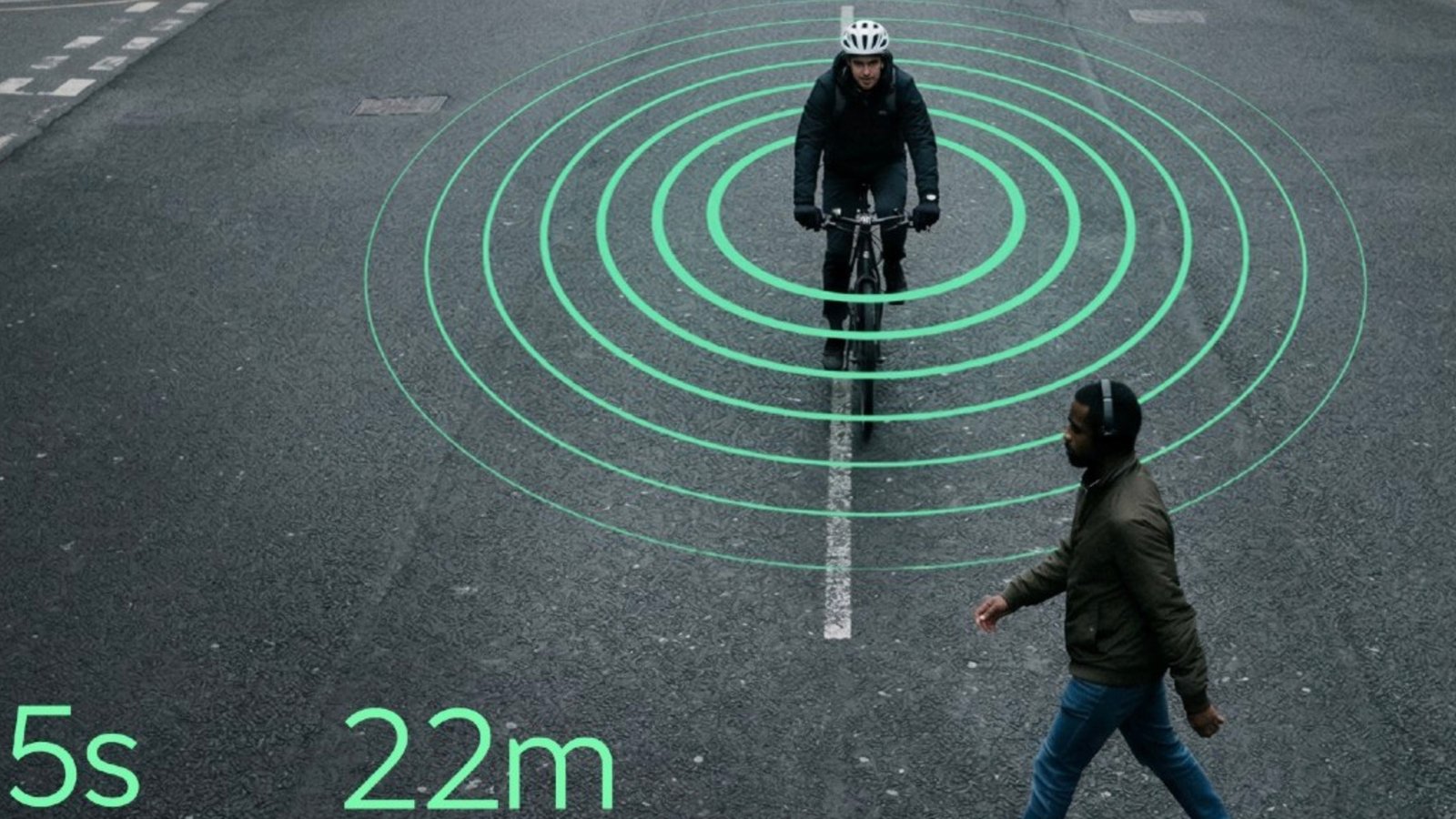
According to a recent release from Škoda, the DuoBell can be heard five seconds earlier and up to 22 metres further away than a standard bike bell. The Deliveroo riders who have been testing the tech have, apparently, been so impressed they want to keep the bells. For the moment, however, we understand that Škoda are not planning to release the model commercially, but are making the research available to improve safety for both cyclists and pedestrians.
“For Škoda, exploration has always been fundamental,” said Meredith Kelly, Škoda Auto’s global head of marketing. “This project is an excellent example of how a simple, yet clever idea can help make exploration safer for everyone.”
Read the full article here