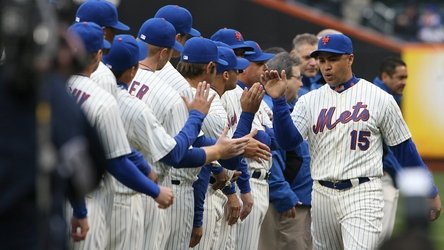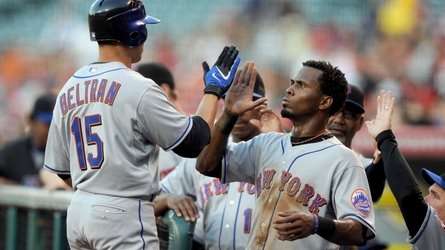



Cooperstown’s Class of 2026 became official Tuesday, with the National Baseball Hall of Fame announcing the induction of outfielders Carlos Beltran and Andruw Jones via the Baseball Writers’ Association of America ballot. They will be inducted this July alongside second baseman Jeff Kent, elected in December via the Era Committee, as the newest members of baseball’s most prestigious club.
While the electees understandably headline the annual Hall announcement, much can be learned about the rest of the ballot, too, as trends involving other candidates can help us forecast the next wave of Hall of Famers. With that in mind, here’s a look at five notable candidates on this year’s ballot, featuring four holdovers making intriguing gains toward election and one newcomer whose solid debut suggests he could be Cooperstown-bound one day.
Chase Utley: 59.1% of the vote, third year
Voting history:
An integral member of the fantastic late-2000s Phillies clubs, Utley has a lot of impressive modern statistical markers rather than gaudy traditional counting stats. With 1,885 career hits, he’s making a push to be one of the rare position players inducted into Cooperstown with fewer than 2,000 career hits. His 259 career home runs stand out relative to his positional peers but pale in comparison to the offensive résumés of the two second basemen most recently elected: Craig Biggio, a member of the 3,000-hit club, and Kent, whose 377 homers are the most ever at the position.
But Utley’s case is rooted in his all-around impact — a balanced offensive profile, a terrific glove at an up-the-middle position, impactful and ultra-efficient baserunning — which manifested in significant WAR totals during his peak that reflected his status as one of the best players in baseball. From 2005 to 2010, Utley ranked second in MLB in fWAR behind only Albert Pujols, a remarkable testament to his star-level performance that might’ve been somewhat overlooked because Utley never finished higher than seventh in MVP voting during that six-season span, while teammates Ryan Howard and Jimmy Rollins claimed the award in ‘06 and ‘07. Utley also never won a Gold Glove Award, but defensive metrics rated him exceptionally well, providing a serious boost to his WAR and bolstering his case as voters consider his candidacy through a more sabermetric lens.
Utley has made steady progress toward induction; he debuted at 28.8% two years ago and has more than doubled that mark two years later. He’s not quite on the doorstep, but anyone who reaches the 50% threshold is a near-certainty to get elected eventually, which means Utley is officially within striking distance of election, perhaps in the next two or three years.
Felix Hernandez: 46.1% of the vote, second year
Voting history:
It’s all about the peak for King Felix, who earned staff ace status with the Seattle Mariners at an astonishingly early age — he debuted as a 19-year-old in 2005 — and dominated in his early-and-mid-20s before his stuff and effectiveness plummeted as he entered his 30s. That Hernandez is on the ballot already is a sobering reminder of just how abruptly his career ended, as he was just 33 when he pitched his final season with Seattle in 2019. At his best, however, even on Mariners teams that were rarely relevant on a national scale, Hernandez transcended his surroundings and became a captivating force whenever he took the mound, and his statistical résumé during his spectacular, seven-year peak unquestionably resembles that of a Hall of Famer.
Because such a huge portion of Hall of Fame hurlers aged far more gracefully, Hernandez’s case to be included in Cooperstown contends that he was so good in his 20s — and pitched so much during that time — that he amassed a Hall of Fame-worthy résumé before the fall-off occurred, and thus should not be kept out because of how ugly the ending ultimately was. A similar case was made about the offense of Andruw Jones, a player who delivered all-time production in his 20s before fading quickly as he aged, and he found his way to Cooperstown after a lengthy stint on the ballot.
This year, Hernandez took a gigantic step forward, an emphatic demonstration that the cliff his career fell off isn’t nearly the demerit many thought it could be when he first appeared on the ballot. Any hesitation among the electorate seems to have already started to dissipate, as Hernandez’s overwhelming brilliance at his best was deemed worthy enough to have the box next to his name checked on nearly half the ballots. We’re still in the early stages of understanding how the Hall electorate will handle this era of starting pitchers, considering their workloads were so much less than that of previous generations, but at the very least, consider Hernandez’s encouraging trend a compelling mark in favor of any Hall case rooted in peak performance over longevity.
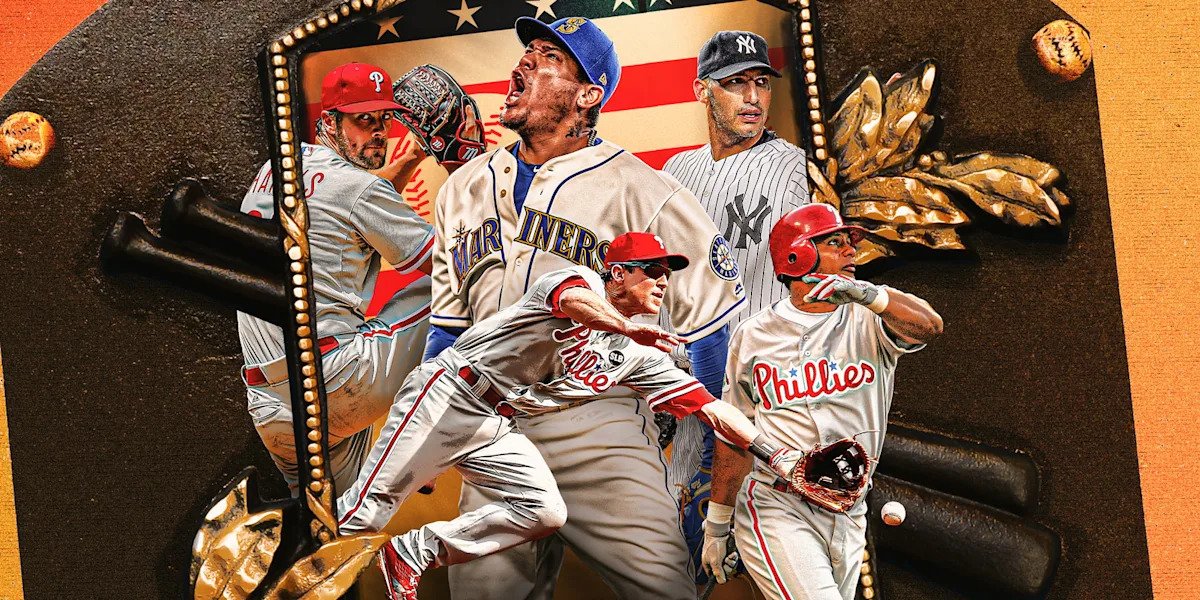
Chase Utley, Felix Hernandez and Andy Pettitte received some of the biggest jumps in support on this year’s Hall of Fame ballot.
(Davis Long/Yahoo Sports)
Andy Pettitte: 48.5% of the vote, eighth year
Voting history:
The pitcher with more postseason frames than any other in the game’s history, Pettitte offers a drastically different kind of candidacy than Hernandez. Anyone who scoffs at Pettitte’s 3.81 postseason ERA is severely underselling how absurd it is to post such a solid mark across what was more than an entire regular-season workload of October innings: 276 ⅔, to be exact. For Pettitte to be that dependable in the highest-stakes games at so many stages of his career speaks to his rare aptitude as a pitcher, and while he certainly benefitted from playing for so many great Yankees teams, he generally made the most of those opportunities. His regular-season résumé doesn’t jump off the page nearly as much, with only three All-Star appearances and a handful of lofty placements on Cy Young ballots scattered across his 18-year career. But Pettitte was really good for a really long time, and it’s not uncommon for that to be rewarded with a spot in Cooperstown.
Pettitte’s case is also complicated by off-the-field considerations. Connections to performance-enhancing drugs — alleged or confirmed via positive tests and suspensions — have been an enormous part of Hall of Fame discourse for years now, but Pettitte occupies a unique position in that arena. He admitted to using HGH at specific intervals during his career, explaining that he sought out such measures only to help his return from injury, not in search of an advantage. Regardless of how Pettitte’s public remorse has been received, his relative lack of progress across his first seven years on the ballot suggested his admitted use was likely being held against him to a certain degree. Then again, his case was never a slam dunk like a Barry Bonds or a Roger Clemens would be sans PED suspicion, which made it hard to assess the degree to which Pettitte’s candidacy was hampered by statistical shortcomings vs. admitted PED use.
For the most part, players connected to PEDs have received a certain amount of support and then ended up stuck in that range for the duration of their time on the ballot. That was true for Bonds and Clemens and even more recently with Manny Ramirez. Pettitte seemed to be tracking in a similar manner his first five years on the ballot, but he has suddenly broken the mold and surged up the ranks of vote-getters, making him one of the more fascinating candidates to monitor over the next two years. He has a lot of ground to make up to get to 75%, so election via the writers’ ballot still feels unlikely, but the fact that we’re having the conversation about his chances is a fairly shocking development.
Cole Hamels: 23.8% of the vote, first year
Hamels represents another important test case for how the electorate will evaluate modern starting pitchers, who had no chance of reaching some of the benchmarks long associated with Hall of Fame starters but might deserve election on the basis of their performance relative to the peers of their era. It’s also worth wondering how discourse surrounding Hamels could impact some of the other starters who have already been on the ballot with comparable résumés, such as Mark Buehrle. Hamels’ case is a scaled-down and more recent version of Pettitte in some regards, as a reliable and durable left-hander whose effectiveness in the regular season over an extended period of time helps compensate for a relative lack of high-end accolades (four All-Star games, four lower-level Cy Young finishes). Also like Pettitte, Hamels has some postseason heroics working in his favor, with a solid October résumé highlighted by his contributions to the Phillies’ 2008 championship run, when he won NLCS MVP and World Series MVP.
Hamels (3.43 ERA across 2,698 innings pitched) and Hernandez (3.42 ERA across 2,729 ⅔ innings pitched) also ended up with staggeringly similar career statlines and workloads, despite taking hugely different paths to get there and offering entirely disparate aesthetics on the mound. That Hamels debuted on the ballot at a similar tally to what Hernandez received a year ago speaks to how their candidacies will surely be contrasted in the coming years. He has plenty of work to do, but perhaps another sizable jump is in store for Hamels in the near future.
Bobby Abreu: 30.8% of the vote, seventh year
Voting history:
A two-time All-Star who never finished higher than 12th in MVP voting, Abreu’s case suffers severely from the abstract Cooperstown litmus test of asking, “Did this player feel like a Hall of Famer when he was playing?” While most observers would say no regarding Abreu, it’s impossible to deny that his statistical achievements across nearly two decades in the big leagues are absolutely worth serious consideration. Abreu was a consistent source of power and speed throughout his career, and his sizable final totals reflect that: He is one of four players in baseball history with at least 250 home runs, 500 doubles and 400 stolen bases, along with Barry Bonds, Rickey Henderson and Craig Biggio. Abreu’s tremendous on-base skills also stand out historically, especially combined with his longevity: Of the 87 players to log at least 10,000 plate appearances in MLB, Abreu’s .395 on-base percentage ranks 16th, behind 14 Hall of Famers and Bonds. That’s pretty good!
Yet Abreu’s dearth of traditional accolades or signature postseason moments, having played mostly for mediocre teams, has obscured the totality of his on-field success. It’s one of the more confounding Hall of Fame cases we’ve seen because of how resounding it looks on paper — and how that contrasts with what his career elicited at the time.
While this year marked the most dramatic gains Abreu has made on the ballot, it doesn’t leave him much room for error. Another serious leap will have to happen next year for induction to seem likely before his 10 years on the ballot expire. At the same time, it’s noteworthy that we are even still pondering his case, considering how close he was to failing to garner the requisite 5% of the vote early in the process. Had Abreu received 19 votes in his first year on the ballot instead of 22, he’d have joined the likes of Kenny Lofton and Carlos Delgado (among others), who fell off the ballot on their first try despite some astounding collections of counting stats.
Abreu, meanwhile, survived the first round of cuts and has made just enough progress since then to be discussed in the annual round of Hall debates. Just as Lofton and Delgado might earn induction one day via the veteran’s committee, that might be Abreu’s most likely path to Cooperstown, considering how much ground he still needs to make up. But let’s not count him out just yet.
Read the full article here