


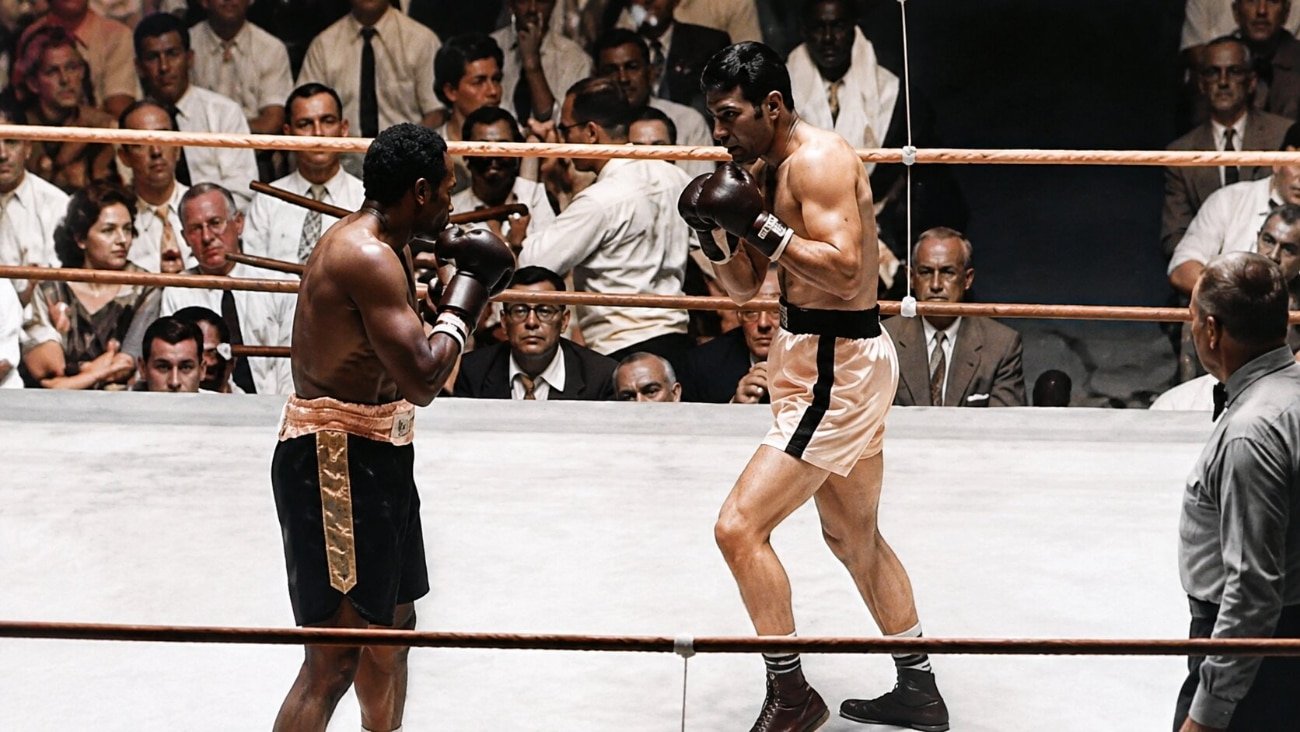

The rematch drew 11,555 spectators, generating a gate of $140,519 to set a Montreal boxing record. Former world heavyweight champion Jack Sharkey served as referee.
Moore, already well into his 40s, had held the light heavyweight crown since defeating Joey Maxim in December 1952. Durelle, 29, remained a leading contender after his ferocious effort in their initial meeting.
Rather than trading immediately with the heavy-handed challenger, Moore fought cautiously through the opening two rounds. His defense limited Durelle’s opportunities to land the kind of power shots that had caused so much trouble in their first fight.
Two judges had Moore in front after two rounds, while the third had the fight even.
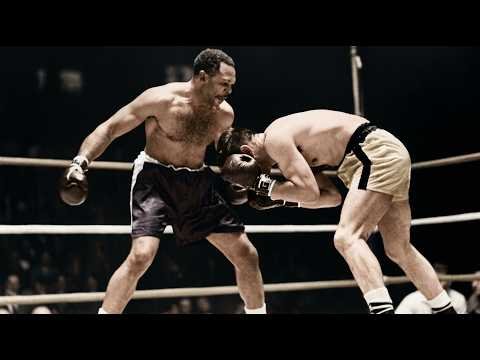
Moore changed the fight completely in the third. A hard right hand dropped Durelle, who beat the count at seven and tried to fight back. The champion quickly closed in.
Three more knockdowns followed as Moore connected with rights and lefts. After the fourth knockdown of the round, Sharkey counted Durelle out at 2:52.
Moore had turned a rivalry born from one of the greatest scares of his championship reign into a decisive three-round knockout.
Durelle faced difficult circumstances before the fight. A boating accident left him with a back injury, and his hometown of Baie-Sainte-Anne suffered the tragic Escuminac Disaster in June, when 35 fishermen lost their lives.
Moore continued his remarkable run near the top of the sport. Durelle later challenged George Chuvalo for the Canadian heavyweight title in November 1959, losing by knockout in the 12th round.
The two rivals eventually became friends. Moore retained enormous respect for Durelle, remembering him as one of the hardest punchers and toughest opponents he faced.
Their first fight became the classic. On August 12, 1959, Moore made the rematch his answer.
Read the full article here