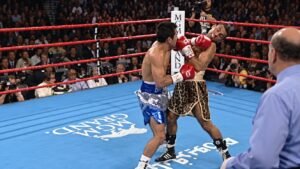



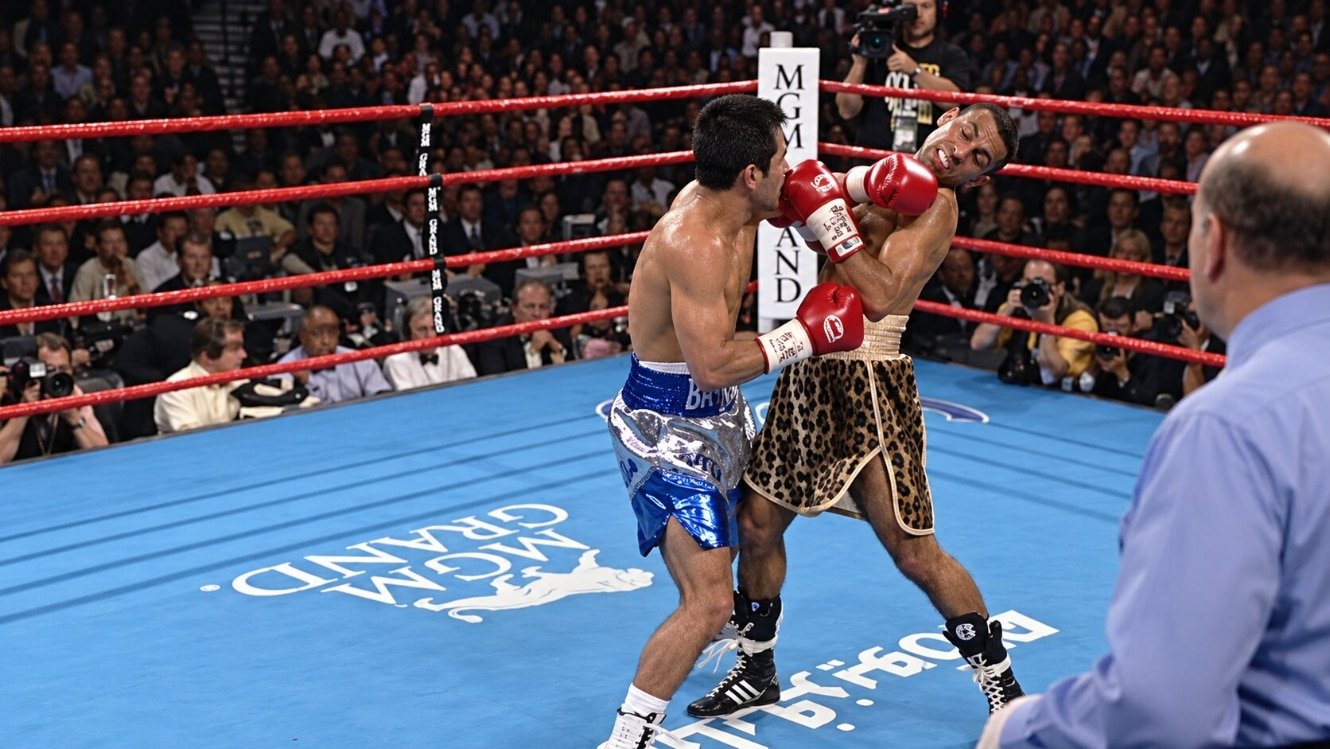
Marco Antonio Barrera took apart Prince Naseem Hamed on April 7, 2001, using disciplined footwork and compact counterpunching to expose the weaknesses hidden beneath the British star’s speed, power, and showmanship.
Hamed (35-0, 31 KOs) arrived at the MGM Grand Garden Arena in Las Vegas as a 3-to-1 betting favorite. His awkward southpaw attacks and explosive left hand had overwhelmed nearly every featherweight placed in front of him. Barrera (52-3, 40 KOs), the WBO super bantamweight champion, was moving up four pounds and was known primarily for his punishing wars.
Instead of giving Hamed the brawl he wanted, Barrera boxed with patience.
The Mexican star stayed at mid-range and repeatedly slid to his left, taking himself away from Hamed’s rear hand. Barrera also placed his lead foot outside Hamed’s right foot before firing the straight right. That positioning forced Hamed to leap across the distance whenever he wanted to land his left hand.
Those lunging attacks left Hamed off balance and vulnerable to counters.
Barrera’s jab supplied the foundation. Hamed often avoided punches by pulling his entire upper body backward rather than slipping with small head movements. Barrera aimed the jab at his chest and chin, disrupting that backward lean while measuring the distance for his right hand.
Hamed’s lack of comfort at close range became another issue. He had bullied smaller featherweights by pushing them away and creating room for uppercuts. Barrera proved stronger in the clinches, controlled Hamed’s arms and refused to give him the space needed to produce power.
The psychological battle failed as well. Hamed prolonged his ring entrance, danced and tried to make the occasion feel like another coronation. Barrera waited without becoming distracted. When Hamed dropped his hands, stuck out his chin or invited a reckless attack, Barrera reset his feet and refused the bait.
That composure stripped away Hamed’s intimidation. The strange angles and exaggerated movements became less effective against an opponent who would not chase him. Every wild miss gave Barrera another chance to answer with a straight right or left hook.
By the later rounds, Hamed had run out of solutions. He continued looking for one spectacular left hand, while Barrera remained balanced and won exchanges with shorter, cleaner punches.
Barrera supplied the night’s defining image during the 12th round. He trapped Hamed’s arms from behind and drove his face into a corner turnbuckle. Referee Joe Cortez deducted one point, but the penalty had no bearing on the decision.
The judges awarded Barrera a unanimous victory by scores of 116-111 and 115-112 twice, giving him the vacant IBO and lineal featherweight championships.
Hamed later pointed to hand trouble as a factor in his decline. He had suffered hand injuries during his career, but they did not explain his inability to control distance, fight inside or adjust once Barrera neutralized his left hand. This was not merely a physical failure. Barrera defeated his style.
Hamed boxed only once more, beating Manuel Calvo in May 2002 before leaving the sport. Barrera had done more than hand him his first and only professional loss. He had provided the blueprint for dismantling boxing’s most unpredictable attraction.
AI-improved image
Read the full article here