


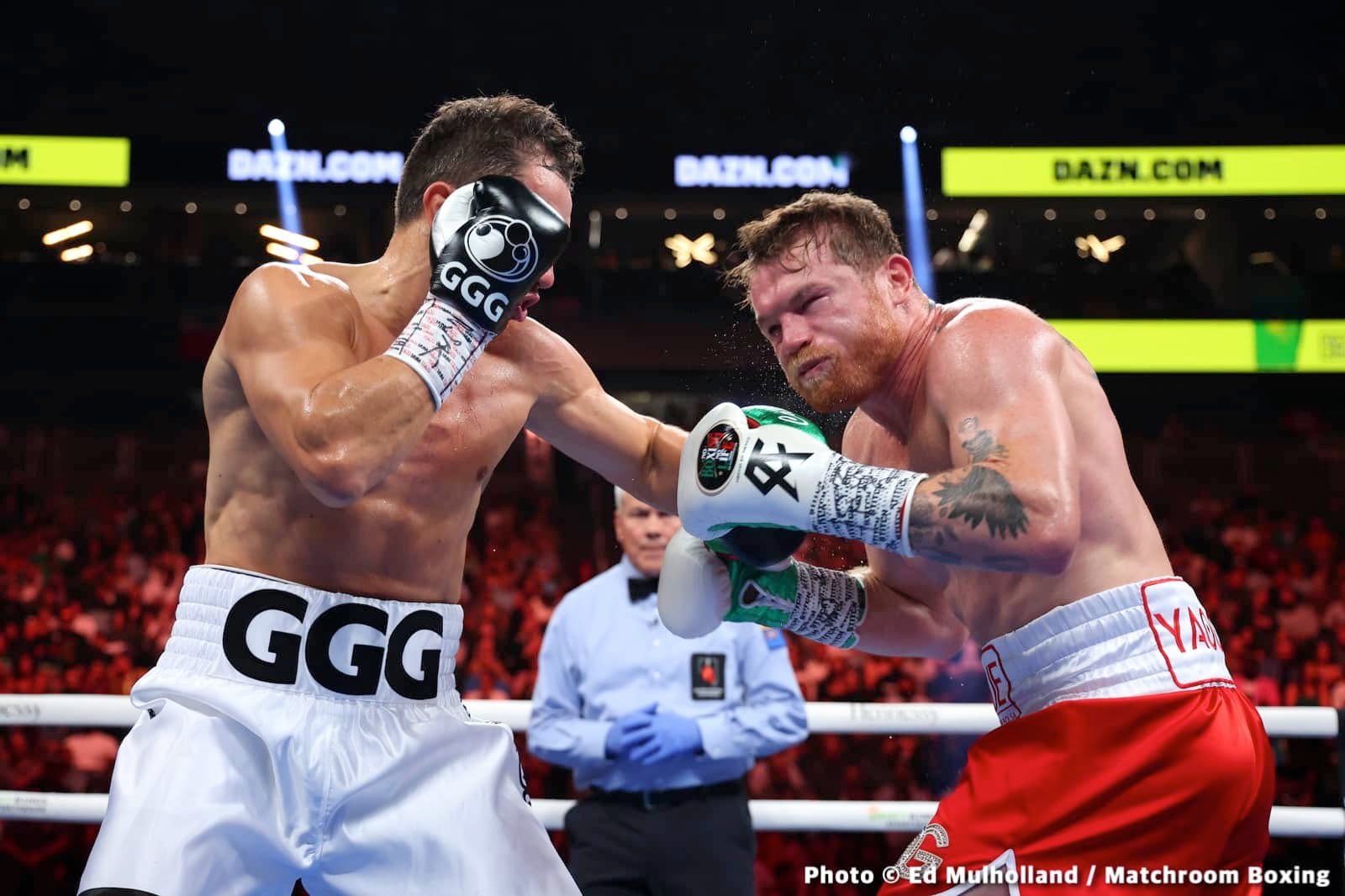

Many viewers believed Golovkin had done enough to win. Instead, the judges returned a split draw. Dave Moretti scored it 115 to 113 for Golovkin, Don Trella had it 114 to 114, and Adelaide Byrd produced the infamous 118 to 110 card for Canelo.
Byrd’s score was impossible to defend. Awarding Canelo ten rounds turned a competitive fight into something that barely resembled what happened in the ring. The result denied Golovkin the biggest victory of his career and allowed Canelo to leave Las Vegas without an official defeat.
Golovkin’s attack also contained a weakness that became more important in the rematch. He landed only eight body punches in the first fight. His pursuit was aimed almost entirely at Canelo’s head, which made it easier for Canelo to anticipate where the punches were coming from.
The rematch was originally scheduled for May 5, 2018, but Canelo tested positive for clenbuterol in two samples collected that February. He blamed contaminated meat, withdrew from the May date, and received a six-month suspension from the Nevada State Athletic Commission.
Golovkin still fought Vanes Martirosyan on May 5, stopping him in the second round. The Canelo rematch was eventually held on September 15, almost exactly one year after their first meeting.
That four-month postponement favored the younger fighter. Canelo was 28 by the time of the rematch, while Golovkin was 36. A few additional months meant little to Canelo but represented more lost time for an aging middleweight champion.
After being criticized for giving ground in the opening fight, Canelo held the center and forced Golovkin to box while moving backward. Golovkin relied heavily on his jab and landed plenty of clean punches, particularly during the later rounds. Canelo attacked the body and landed the harder individual shots.
The body punching difference was enormous. Canelo landed 46 shots downstairs, while Golovkin connected with only six. That work helped Canelo control the middle portion of the fight, although Golovkin was still strong enough to rally late.
Moretti and Steve Weisfeld scored it 115 to 113 for Canelo, while Glenn Feldman had it 114 to 114. I agreed with the two cards for Canelo. Golovkin boxed well, but he surrendered too much ground and allowed Canelo to determine the type of fight being fought.
All three meetings were staged at T-Mobile Arena in Las Vegas, where Canelo was unquestionably the commercial attraction. Golovkin repeatedly accepted the challenger’s preferred location because that was where the money was. The outrageous Byrd card showed the danger of entering an opponent’s territory without making the result undeniable.
Golovkin separated from longtime trainer Abel Sanchez in April 2019, seven months after the second fight, and hired Johnathon Banks.
Banks tried to make Golovkin less dependent on pressure by adding more movement and combination punching. There were flashes of success, but Golovkin was already 37 when they began working together.
Changing trainers at that age was unlikely to produce an entirely different fighter. Golovkin’s jab remained excellent, but the aggressive pressure and right hand that had defined his best years gradually became less dependable.
The trilogy was completed on September 17, 2022, four years after the rematch. Golovkin was 40 and moving to super middleweight for the first time.
He spent most of the opening eight rounds pawing with his jab while rarely committing to the right hand. Golovkin looked reluctant to plant his feet and give Canelo countering opportunities. Age, inactivity and physical wear offered more convincing explanations than the trainer standing in his corner.
Golovkin had also fought only once in the previous 21 months, stopping Ryota Murata five months before the trilogy. Against Canelo, his punches lacked their old speed and menace.
Canelo controlled most of the contest and won by scores of 116 to 112 and 115 to 113 twice. The two closer cards were generous to Golovkin. His late effort made the fight more respectable, but he never resembled the relentless middleweight who had driven Canelo to the ropes five years earlier.
The third bout became Golovkin’s final professional appearance. He later became president of Kazakhstan’s National Olympic Committee and was elected president of World Boxing in November 2025. World Boxing confirmed his election and current position.
Canelo continued fighting at super middleweight, collecting large purses against carefully selected opposition before Terence Crawford defeated him in September 2025.
That is what makes the trilogy memorable beyond the disputed judging. Golovkin arguably deserved the first fight, Canelo earned the second, and time decided the third before either man entered the ring.
Read the full article here