


Cycling’s governing body, the UCI, has called for safety tracking systems to be put in place across all professional road races “as quickly as possible” following the death of Finlay Tarling.
The 19-year-old was struck and killed by a non-race vehicle driver at the Volta a Portugal on 14 August, after he was distanced from the back of the peloton.
Earlier this week, a meeting of the Professional Cycling Council (PCC) took place at the UCI’s headquarters in Aigle, Switzerland, with stakeholders from men’s and women’s professional road cycling in attendance.
Latest Videos FromCycling Weekly
A UCI statement shared on Friday afternoon said a “large part” of the meeting was dedicated to rider safety, and particularly GPS tracking.
“In the absence of a joint proposal from the different stakeholder groups, the UCI stressed the urgent need to put in place, as quickly as possible, a dedicated safety system allowing the real-time location of riders and vehicles to be tracked at all professional road cycling events, starting with those in the UCI WorldTour and UCI Women’s WorldTour,” the UCI said.
A safety tracking system was put in place at last year’s UCI Road World Championships in Kigali, Rwanda, a year on from the death of 18-year-old Muriel Furrer, who crashed in the junior women’s road race at the same event in Switzerland, and was not discovered for 82 minutes.
“Given safety remains an absolute priority, the UCI will therefore establish protocols and a regulatory framework for the use of real-time tracking systems at races,” the UCI said.
“UCI President David Lappartient reiterated that, in discussions on safety, stakeholders need to move past any disagreements on certain issues and act together. In his view, riders’ safety requires this, and safety must never be sacrificed for commercial interests.”
In race classification terms, professional races are those labelled WorldTour, ProTour, 1.1 and 2.1.
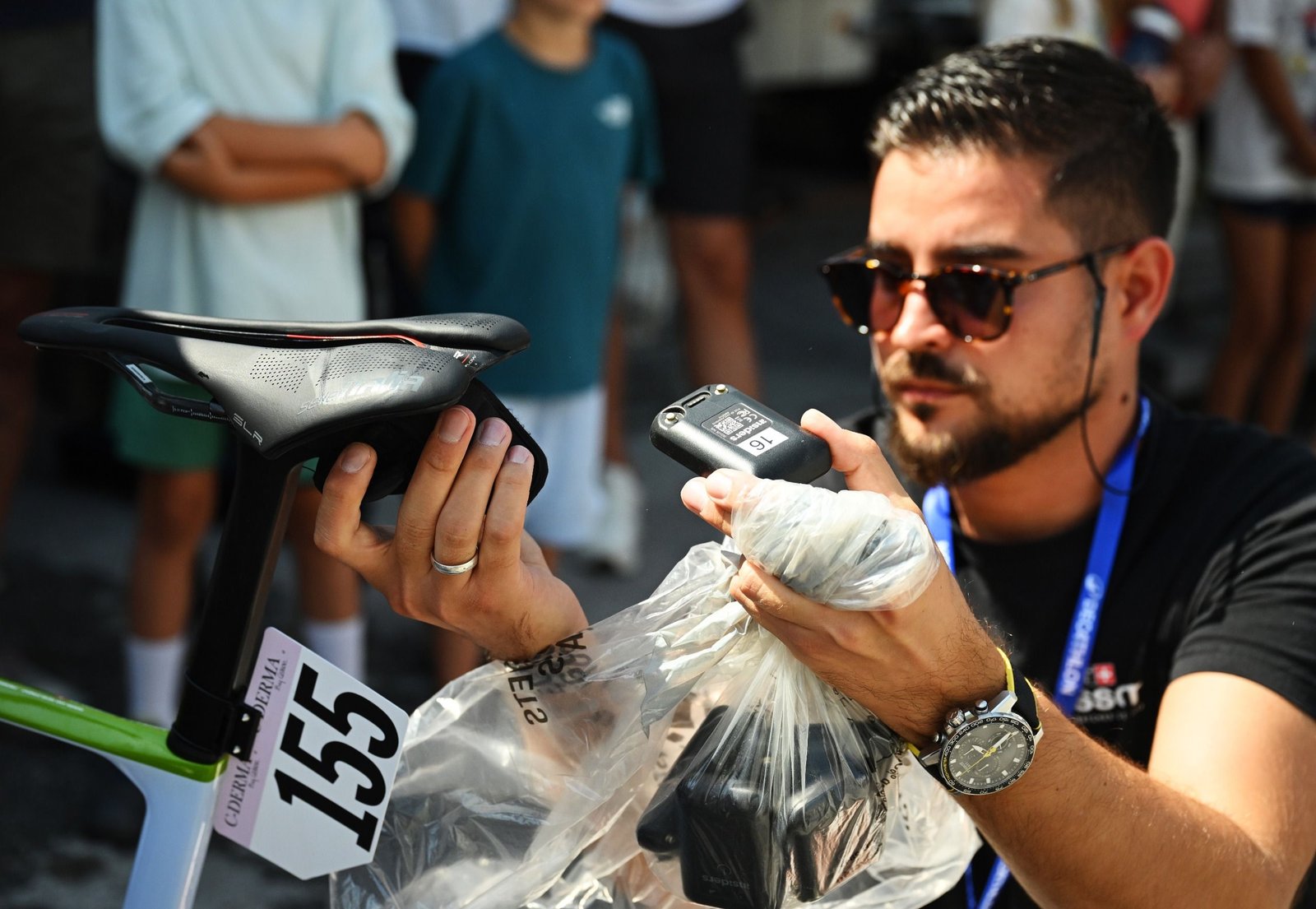
Last year, the Tour de Suisse introduced rider and convoy tracking, claiming to be the first race in the world to do so.
“We cannot completely prevent crashes with these measures,” Tour de Suisse race director Olivier Senn said at the time, “but we are doing everything we can to ensure that all information is available to the teams and that the consequences are as minimal as possible.”
GPS tracking enables real-time monitoring of a rider’s position, and allows for “immediate identification of any unusual situations, such as a rider suddenly stopping on the course,” the UCI said last year.
“In such a case, the rider’s exact position will be transmitted to the relevant parties in the convoy – organisers, UCI Commissaires, medical and security services – so that appropriate measures can be taken without delay.”
Also in its statement on Friday, the UCI announced a meeting will take place at the upcoming Road World Championships in Montréal, Canada on 20-22 September, regarding reform to the structure of professional road cycling. Guidelines will then be unveiled in mid-December.
The UCI also confirmed a date change for the Vuelta Femenina, which will move from the first week of May to 3-10 October in 2027.
Read the full article here