


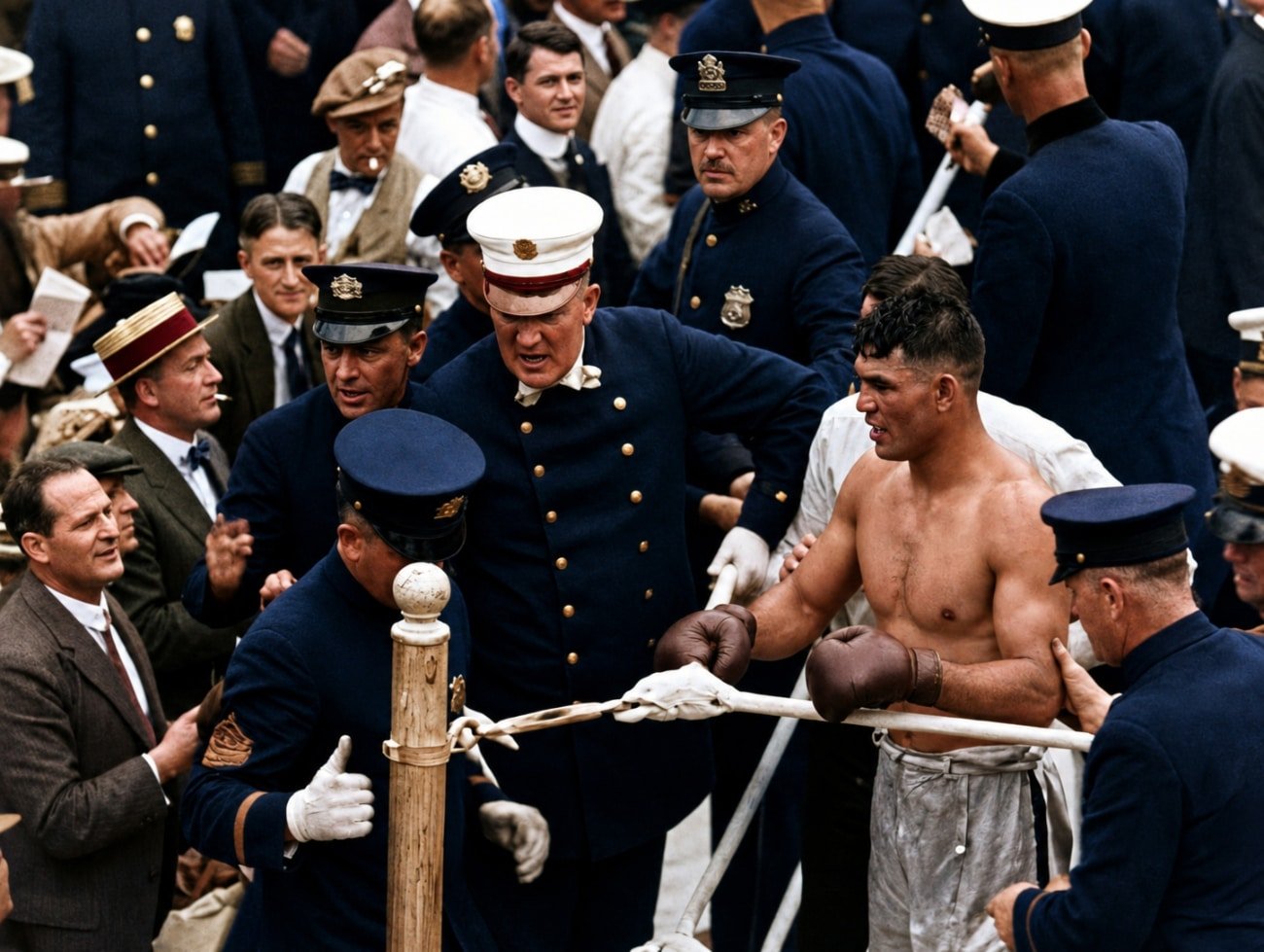

Following Jack Johnson’s 1910 victory over Jim Jeffries, racial violence erupted across the United States. The possibility of another Black heavyweight challenging a white champion encountered resistance from promoters, regulators, and others concerned about another interracial title fight.
Wills paid heavily for that environment.
A Dempsey-Wills fight nearly materialized in 1922 when promoter Tex Rickard selected a date and had tickets printed for a proposed bout in New Jersey. The promotion collapsed when the financing needed to meet Dempsey’s guarantee failed.
Another attempt ran into opposition in New York, where athletic commission chairman William Muldoon resisted an interracial heavyweight championship fight over concerns about racial unrest.
Dempsey also gave his critics ammunition. He drew the color line early in his championship reign before later changing his public position. His long stretches of inactivity intensified criticism that Wills was being denied an opportunity he had earned. Yet Wills himself resisted blaming Dempsey.
“My only regret in life is that I never got a shot at Dempsey, [and] I’m sure I could have beaten him,” Wills later said. “It wasn’t Jack’s fault. He wasn’t scared of anyone. He was a great fighter.”
Dempsey lost the heavyweight championship to Gene Tunney in 1926. Wills never fought for the world title.
The missing fight should count when Dempsey’s championship reign is evaluated. Wills was precisely the type of challenger a champion needed to defeat to remove questions about his dominance.
Placing the entire responsibility on Dempsey, however, ignores the racial barriers, regulators, promoters and failed financing that repeatedly interfered with the fight.
More than a century later, nobody knows what would have happened if Jack Dempsey and Harry Wills had finally met. That unanswered question is why Wills remains an unavoidable part of Dempsey’s legacy.
Read the full article here